Blog Archives
The New World Order

In your memoir, Octagon Pillars and Domes, you take readers on a wild, emotional, and surprisingly personal ride through history, religion, politics, and memory. Why was this an important book for you to write?
In order to understand how we have arrived at this present state of affairs both nationally and globally, especially since the presidency of Barack Obama in 2009, who advanced a globalist agenda beginning with the American Recovery and Reinvestment Act (HR1) and at which time my research began, it was important to take a close look at events that have occurred since WWI, specifically, the rise of class-based Marxism and the establishment of the Federal Reserve Bank by President Woodrow Wilson in 1913 under the advisement of his chief economic advisor and the leader of the Progressive and Zionist movements, Louis Brandeis.
What were some ideas that were important for you to share in this book?
Since the beginning of recorded history in Ancient Mesopotamia and Egypt in 3,500-4,000 B.C., the acceptance of creationism and related causal morality has served as the basis for law. However, due to perceived injustices experienced by Jews under creationist regimes including the Habsburgs and Romanovs during the 18th and 19th centuries, Karl Marx’s classist philosophy challenged these ideas, which gained acceptance by European intellectuals and academic circles at the Frankfurt School during the rise of German Industrialism. Of course, they already were immersed in Hegelian (deconstructionist) philosophy toward achieving absolute knowledge via rationalism. It is my belief in contrast to our founding principles rooted in Natural Law which formerly served as the rule of law, Marxism infected the United States at least by 1913, with the creation of the Federal Reserve, and certainly by the 1919 Paris Peace Conference (Treaty of Versailles), which established The League of Nations, a global peace-keeping force and precursor to the 1948 United Nations’ declaration of Human Rights as the revised rule of law. Since then, Progressive policies have established class protections for individuals and (immoral) behaviors that would have fallen well outside Federal law, according to our founding principles. I also wanted to clear up a common misunderstanding regarding the “separation of church and state,” which according to Thomas Jefferson’s 1802 letter to the Danbury Baptists, was intended to protect the right to worship (God), rather than exclude Biblical morality from legislation, which is an argument that has been misappropriated by The Left.
What was the most challenging part of writing your memoir, and what was the most rewarding?
They are one and the same: researching historical events, with all their details and nuances, which have led us to this moment, in order to gain a clear picture of opposing forces and political occurrences over the last 100 years that have perpetuated Progressive ideology. I will say my research into Egyptology was especially rewarding, inherent to which are the ideas of divine birthright (Horus), salvation, and spiritual rebirth, and which likely served as the template for Christianity.
What do you hope is one thing readers take away from your story?
Marxist class-based protections were established in opposition to political systems perpetuated by Christianity’s old-world order, including the notion of the Divine Right of Kings, Natural Rights, and Democracy, which has far-reaching implications and conclusions. Finally, though it has been implemented under the auspices of humanitarianism, it is apparent globalism, assisted by technology, is an effort by international bankers and global oligarchs to harness formerly distant workers for the purposes of control and taxation. Indeed, the New World Order is upon us.
Author Links: GoodReads | Facebook | Amazon
Humble, Conservative Origins
In the Shadows of the Blue Ridge is a portrait of rural life colliding with political and economic change in Loudoun County, Virginia, and how what was once a sprawling community of dairy farms was urbanized by the construction of Dulles Airport. What inspired you to write this story?
As a native of Loudoun, I’ve witnessed its development over the past 30 years firsthand. In shocking contrast to its current frenzied level of activity, when I was a child, not much happened west of Leesburg, and there weren’t yet any wineries. Indeed, I remember slower, kinder days in Loudoun – long, summer days and nights when all that could be heard were tumbling brooks, crickets, and tree frogs. That memory stands out in stark opposition to today’s traffic, retail shops, and human activity here. I suppose before too much more “progress” occurs, I wanted to remind my readers of Loudoun’s humble, conservative origins in its not-so-distant past, and also discuss the policy and political changes Loudoun County (actually the entire country and planet) is grappling with, which required a deep dive into the classical philosophies on which the U.S. was founded.
As someone who lives just outside Loudoun County, I found your book fascinating. While fictional, it brings the rich history of this area to life and shows awareness of how much it has changed in a relatively short period. What were some ideas that were important for you to share in this book?
The country has experienced rapid cultural change over the past 30 years, specifically since the introduction of Critical Theory into public colleges and universities in the mid-90s. I wanted to chronicle these changes in order to understand how we have arrived at this point of contentious divide between parties. Also, I wanted to emphasize the crucial role of parents in the education and rearing of their own children, who are tomorrow’s citizens.
What is one thing that people point out after reading your book that surprises you?
I suppose I’m surprised about the emotional connection my readers experience with my main character, “Red,” including anger, pity, and pride (the latter over his clandestine political achievements). This feeling unites me with my readers. I find it interesting that our connection is emotional, rather than academic or intellectual.
What experience in your life has had the most significant impact on your writing?
I was raised by old-world aristocratic Germans before the computer chip, when all we had was a piano, a full set of Encyclopedia Britannica, horses, chickens, and a garden. This afforded me time to dream and contemplate life’s mysteries in nature, when, as a child, I myself wandered over Loudoun’s creeks and fields. Due to my childhood, I have experienced the differences of perception and identity under European feudalism vs. American capitalism.
Author Links: GoodReads | Facebook | Amazon
The narrative includes detailed accounts of Loudoun County’s political landscape, featuring figures such as Scott York, Phyllis Randall, Dave LaRock, and Eugene Delgaudio. It highlights political conflicts, cultural shifts, and controversies over social issues, reflecting the tension between conservative and progressive values within the community. The story of Red’s involvement in local politics, legal battles, and personal vendettas illustrates the complex interplay of power, identity, and morality in Loudoun.
Originally a farming community with a focus on livestock, agriculture, and dairy farms, Loudoun County experienced rapid urbanization starting in the 1960s, especially due to the construction of Dulles Airport. This shift led to a decline in dairy farms and an increase in real estate development, significantly altering the county’s landscape and economy. The county became a technology hub, known as “Data Center Alley,” hosting major tech companies and data centers that handle approximately 70% of global internet traffic.
The book delves deeply into the philosophical underpinnings of Western law and morality, tracing ideas from Socrates, Plato, Aristotle, and Cicero to the founding principles of the United States. It emphasizes the role of Natural Law, the Cardinal Virtues (prudence, justice, fortitude, temperance), and the theological virtues (faith, hope, charity) in shaping legal and ethical frameworks. The Founding Fathers of the U.S. are portrayed as influenced by these classical and Christian ideas, embedding them in documents such as the Declaration of Independence and the Constitution.
The history of education in America, particularly in Loudoun County, is outlined, noting early religious instruction and the evolution toward compulsory public education. The document discusses contemporary debates over educational policies, including diversity, equity, inclusion (DEI), and critical theory, highlighting controversies in Loudoun County Public Schools. It also introduces Patrick Henry College, founded to prepare Christian leaders grounded in biblical values and American founding principles.
A detailed profile of George Soros is provided, including his background, philosophy, and economic theories such as reflexivity. Soros’s influence on global politics and progressive movements is discussed, with attention to his support for causes that challenge traditional biblical morality, including LGBTQ rights and abortion. The document contrasts Soros’s views with classical moral philosophy and critiques the progressive rejection of traditional virtues.
The book presents biblical narratives and teachings that emphasize natural law, the Noahide Laws, and the importance of filial piety, empathy, and moral virtue. It recounts stories from Genesis, such as Adam and Eve, Cain and Abel, and the destruction of Sodom and Gomorrah, linking them to contemporary moral debates. The role of forgiveness, reconciliation, and spiritual salvation through Christian faith is underscored as essential to personal and societal well-being.
Throughout, the book acknowledges the struggles with addiction, family dysfunction, and societal change experienced by individuals like Red. It explores themes of identity, abandonment, and redemption, and situating these personal stories within the broader historical and cultural transformations of Loudoun County.
In The Shadows of The Blue Ridge ~ A Farmer’s Plight in Loudoun County
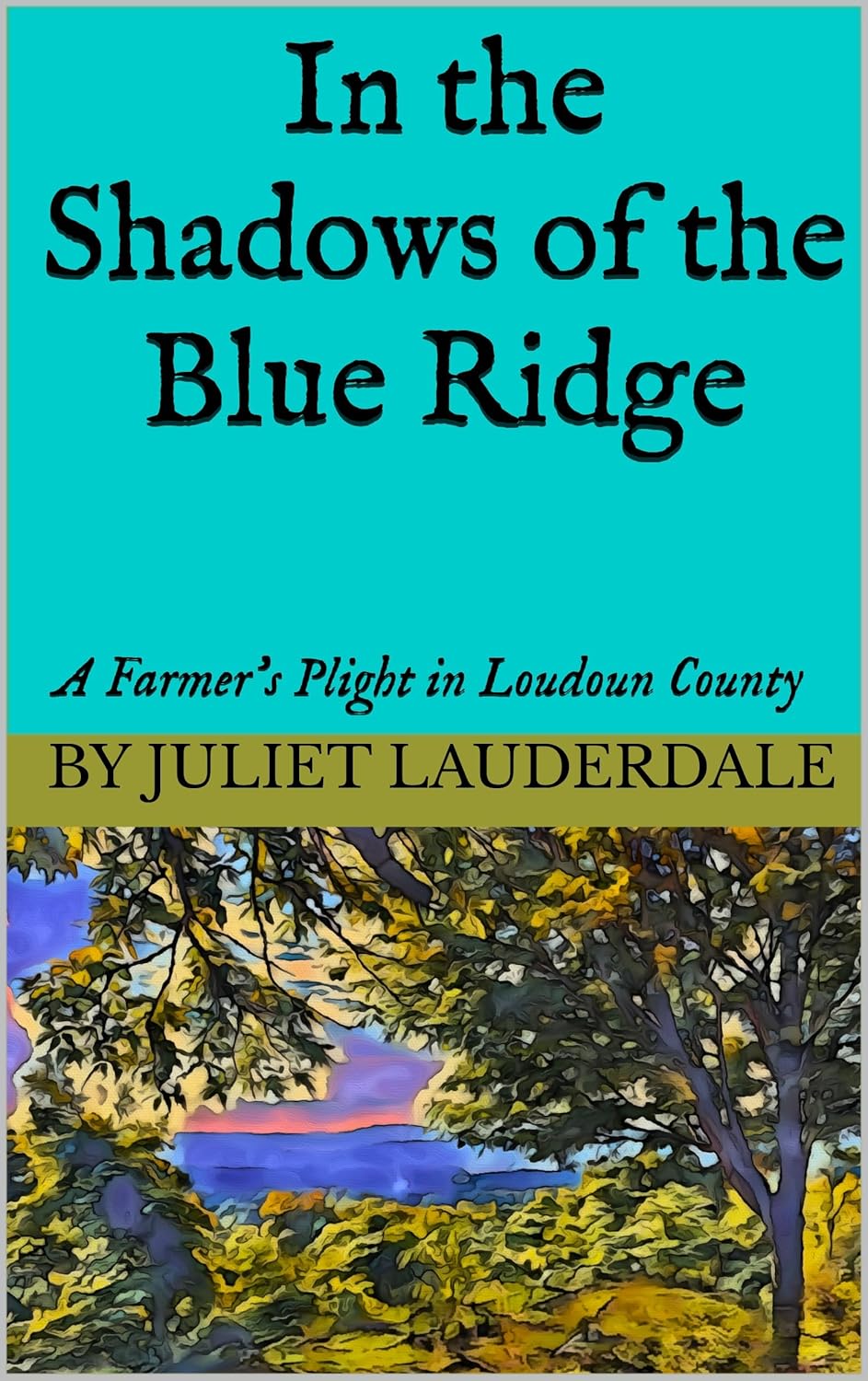

In The Shadows of The Blue Ridge tells the story of Red Smith, a Loudoun County farmer caught between the region’s deep agricultural past and its rapid transformation into a hub for data centers, subdivisions, and politics. Author Juliet Lauderdale braids together local history, genealogy, politics, and Red’s personal struggles with addiction, family dysfunction, and survival in a changing landscape. The book moves from colonial times and Native American displacement, through Loudoun’s rise as the richest county in the country, to the intimate details of Red’s life with his mother, his political dealings, and his inner battles. It is both a chronicle of a place and a portrait of a man who never fully fits in.
The details of Red’s gardening, his mother’s sharp tongue, and the smell of orchards or basements made the pages feel alive. At times, the story wandered, carrying the rhythm of a neighbor sharing memories in a way that felt unhurried and conversational. That gave it a kind of authenticity. The mix of personal narrative, politics, and theology could be dizzying, yet it reflected the chaos of a life lived on the margins of prosperity.
What stood out most to me was the emotional core. I found myself angry with Red, then pitying him, and then oddly proud when he pulled off his small political stunts. The mother-son relationship was heartbreaking, filled with bitterness, need, and the faintest hint of love buried under insults. I also admired how the book tied Red’s story to the land itself. The soil, the creeks, and the ghosts of farmers past seemed as much characters as Red and Jane. It made me think hard about what gets lost when land is swallowed by development.
I think this book is best for readers who want more than a polished narrative. Anyone interested in the human side of rural decline, the clash between tradition and modernity, or the way family history shapes identity will find it worth their time.
Pages: 264 | ASIN : B0FHBPSGDP

In The Shadows of The Blue Ridge ~ A Farmer’s Plight in Loudoun County
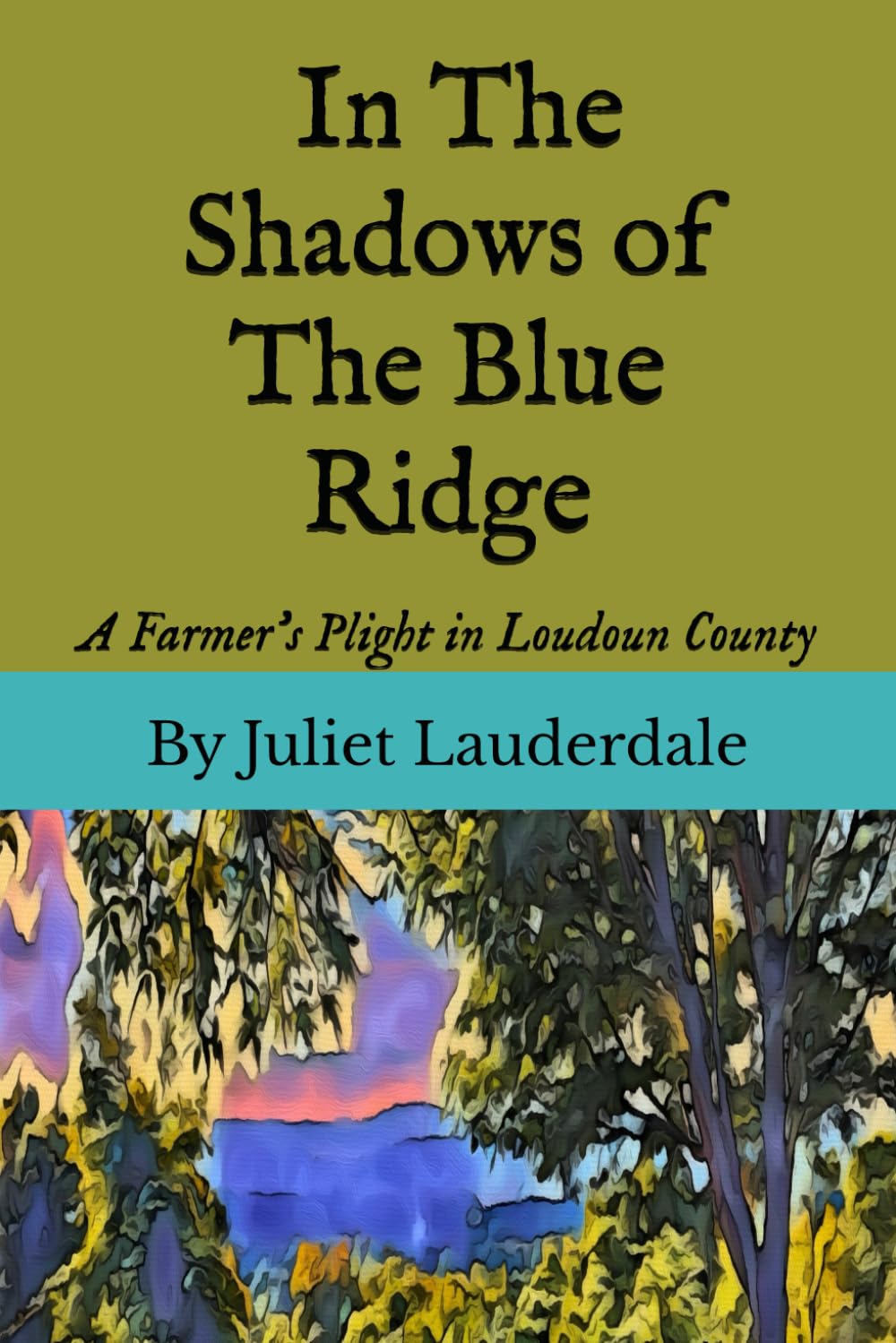

Juliet Lauderdale’s In the Shadows of the Blue Ridge is part history lesson, part personal memoir, and part raw portrait of rural life colliding with political and economic change. It begins with the deep past, Native American roots, colonial land grants, and Loudoun County’s farming heritage, and then moves through centuries of growth, decline, and reinvention. Woven into this historical fabric is the life of “Red,” a descendant of old farming families, whose struggles, quirks, and political entanglements form the beating heart of the book. Lauderdale’s voice moves from scholarly to intimate, shifting easily between researched history and the candid, sometimes painfully honest, accounts of family dynamics, small-town politics, and a community transformed beyond recognition.
The writing doesn’t shy away from awkward truths, petty grudges, or the strange comedy of human behavior. There’s a rawness here about addiction, dysfunction, and generational stubbornness that hit me harder than I expected. Some passages made me laugh out loud, not because they were trying to be “cute,” but because they captured those absurd, unfiltered moments that happen in real life. Other sections felt heavy, almost suffocating, in the way they portrayed bitterness, decline, and the slow erosion of a place’s soul. The historical sections were rich and vivid, but it’s the personal vignettes that really anchored me in the story.
At times, the shifts between historical exposition and personal narrative felt abrupt, but that worked for me. Life rarely comes neatly packaged, and Lauderdale writes as though she’s turning to you mid-conversation, jumping from a 1700s land deed to a 2015 political feud without ceremony. The prose is plainspoken, but there’s a rhythm in it, a mix of blunt observation and wry humor that kept me engaged. I could feel the author’s affection for the land and her frustration with the changes forced upon it. More than once, I caught myself thinking of my own hometown, and how much of it has been paved over in the name of “progress.”
I’d recommend In the Shadows of the Blue Ridge to readers who love local history told with personality, to anyone curious about how politics and land use shape real lives, and to those who appreciate a story that lets people be flawed, contradictory, and human. It’s a portrait of a place, a family, and a man, all stubbornly resisting the tide, even as it swallows them.
Pages: 264 | ASIN : B0FHBPSGDP
Octagon Pillars and Domes


Octagon Pillars and Domes is a wild, emotional, and surprisingly personal ride through history, religion, politics, and memory. The book starts with her work on a government healthcare project and slowly opens up into something much bigger. It touches on her Jewish and aristocratic German roots, the trauma passed down from war, and her search for meaning through ancient philosophy, faith, and modern politics. It’s part memoir, part deep dive into big ideas, and part spiritual reflection.
I really enjoyed this book. It’s not your average memoir. Lauderdale writes from the heart and pulls no punches. She mixes stories from her childhood with reflections on religion and political shifts in a way that made me think hard about things I hadn’t connected before. There were moments when the details got heavy or the history felt like a lot to take in, but even then, her voice kept me going. She’s not trying to sound polished or academic. She just tells her truth, and there’s something refreshing about that.
The best parts for me were when she opened up about her family, her faith, and her struggles. You can feel how much this story means to her. It’s clear she spent years thinking about all of it, and the effort shows. She goes deep into some complicated stuff, but it always feels like she’s just trying to understand the world and her place in it, and I found that really moving.
If you’re someone who likes books that jump between personal stories and big questions about life, history, and faith, I think you’ll get a lot out of this. It’s not a quick read, and it asks you to slow down and sit with some tough topics, but it’s worth it. I’d recommend it to anyone who enjoys thoughtful writing. It’s honest, it’s bold, and it’s unlike anything I’ve read in a while.
Pages: 550 | ASIN : B0F6NZCBR7


