Blog Archives
Sharing the Lives of Free People Of Color

Miles Lassiter(circa 1777-1850) traces the remarkable journey of your ancestor, Miles Lassiter, a free African-American Quaker living in North Carolina before the Civil War, and the impact that he made in history. Why was this an important book for you to write?
There has been much written about the abolitionist support of Quakers, but it was rare for African Americans to be fully admitted to membership in a meeting. To learn that my 4th great grandfather was one of the very few, and the only one in North Carolina at the time of his death seemed significant.
What sparked your interest in genealogy led you to discover this lost portion of your family and its history?
I’ve had an interest in genealogy since childhood. I learned my paternal family story as a child from my father’s sister. However, whenever I asked my mother about her family she said she left North Carolina when she was seven and just didn’t know anything about family that might still be there. Once I moved to the Washington, DC area, I had easy access to repositories such as the National Archives and Library of Congress to begin searching for my maternal ancestors. In addition, I was able to take classes to learn how to research my family and I was introduced to my local Family Search Center (then called genealogy library) which gave me access to the vast research collection of the Family History Library in Salt Lake City.
What were some ideas that were important for you to share in this book?
It was important to share information about the lives of free people of color. It was also important to share the story of my 4th great grandfather specifically. I also wanted to show through my research story how others could research their families.
How has writing Miles Lassiter (circa 1777-1850): An Early African-American Quaker from Lassiter Mill, Randolph County, North Carolina: My Research Journey to Home impacted or changed your life?
The process of researching and writing the many early versions of the story, culminating in the published book, brought me to North Carolina to meet family I had not known, and places that held my history, a place that was my maternal home. It allowed me to become enveloped by the love of a family I almost lost completely because my mother had not grown up around them. It allowed me to take my mother back to that home after 60+ years away. And this year, it allowed me to obtain a William Pomeroy Hometown Heritage Historic Marker for Miles Lassiter.
Author Links: Goodreads | Facebook | Instagram | LinkedIn | Website | Amazon
Margo Williams had only a handful of stories and a few names her mother remembered from her childhood about her family’s home in Asheboro, North Carolina. Her research would soon help her to make contact with long lost relatives and a pilgrimage “home” with her mother in 1982. Little did she know she would discover a large loving family and a Quaker ancestor–a Black Quaker ancestor. This story follows her research journey through records and Carolina countryside as she uncovers her roots.
“This work re-affirms Margo Williams’s commitment to excellence and perfection, both as a researcher and as a historian. The reader is made part of the story, not only in place but in time. But, most importantly, she re-asserts the point that, by and large, the information is available to the researcher. All one has to do is to look for it. A job well done!” — V. L. Skinner, Jr., Fellow, Maryland Genealogical Society.
Margo Lee. Williams was born in New York. She holds an MA in Sociology and an MA in Religious Education. She developed an interest in genealogy early in life, but only after moving to Washington DC did she actively pursue family research. In the 30+ years since, she has researched and written extensively on her family. She is a well-known lecturer for the Family History Centers of the LDS Church in the Washington, DC area, a former editor of the Journal of the Afro-American Historical and Genealogical Society, and through her private research company, Personal Prologue, has developed expertise in identifying heirs for intestate probates. She is currently a National Service Officer with Vietnam Veterans of America. She lives in Silver Spring, Maryland with her daughter, Turquoise Williams.
A Teacher, Evangelist, and Leader
Born Missionary tells the remarkable life story of Islay Walden, a man born into slavery who overcame blindness, poverty, and prejudice to become an educator, poet, and minister. What inspired you to tell the story of Islay Walden?
Islay Walden was the founding minister and teacher at the church and school where my maternal ancestors lived. I was aware that he was a poet, known as the “Blind Poet of North Carolina.” but when I began looking for information on his life, I noted that there was scant information published about him. Most of the information was repetitious and frequently inaccurate. In addition, none of the essays noted that his primary focus was to bring education and the gospel to his community. Poetry was a tool he would use to help him accomplish that. None of the biographical essays noted that he had begun two successful school programs, one in Washington, DC, and the other in New Brunswick, New Jersey before returning to North Carolina. However, his reputation as a teacher, evangelist, and community leader had not gone unnoticed during his lifetime or at his death. Thus, after reading an obituary that extolled his talent as a “born missionary,” I chose that for the title.
How much research did you undertake for this book, and how much time did it take to put it all together?
There was a section about his life primarily focused on his poetry in my previous book, From Hill Town to Strieby, which took about four years to research. This book was published four and a half years later. Once I began seeking research information beyond literary criticism, I found that there was very little official information available. I found that the best guide was Walden’s own poetry, which was heavily biographical, a fact not noted in any of the literary reviews or biographical essays.
What were some ideas that were important for you to share in this book?
It was important to be able to show that while Walden had been successful as a poet, he had used his poetry primarily to further his vocation as a teacher and minister. His desire to bring education and foster the faith of his community were his greatest desires. He believed those were the tools that would help all he encountered and especially his community in North Carolina prosper both materially and spiritually.
What do you hope is one thing readers take away from Islay Walden’s story?
I want people to know that his was a story of resilience and perseverance in the face of adversity. He overcame a legacy of slavery, financial challenges and physical disability to gain an education in order to help all he encountered to have a better life.
Author Links: Goodreads | Facebook | Instagram | LinkedIn | Website | Amazon
Miles Lassiter (circa 1777-1850) An Early African American Quaker from Lassiter Mill, Randolph County, North Carolina: My Research Journey to Home
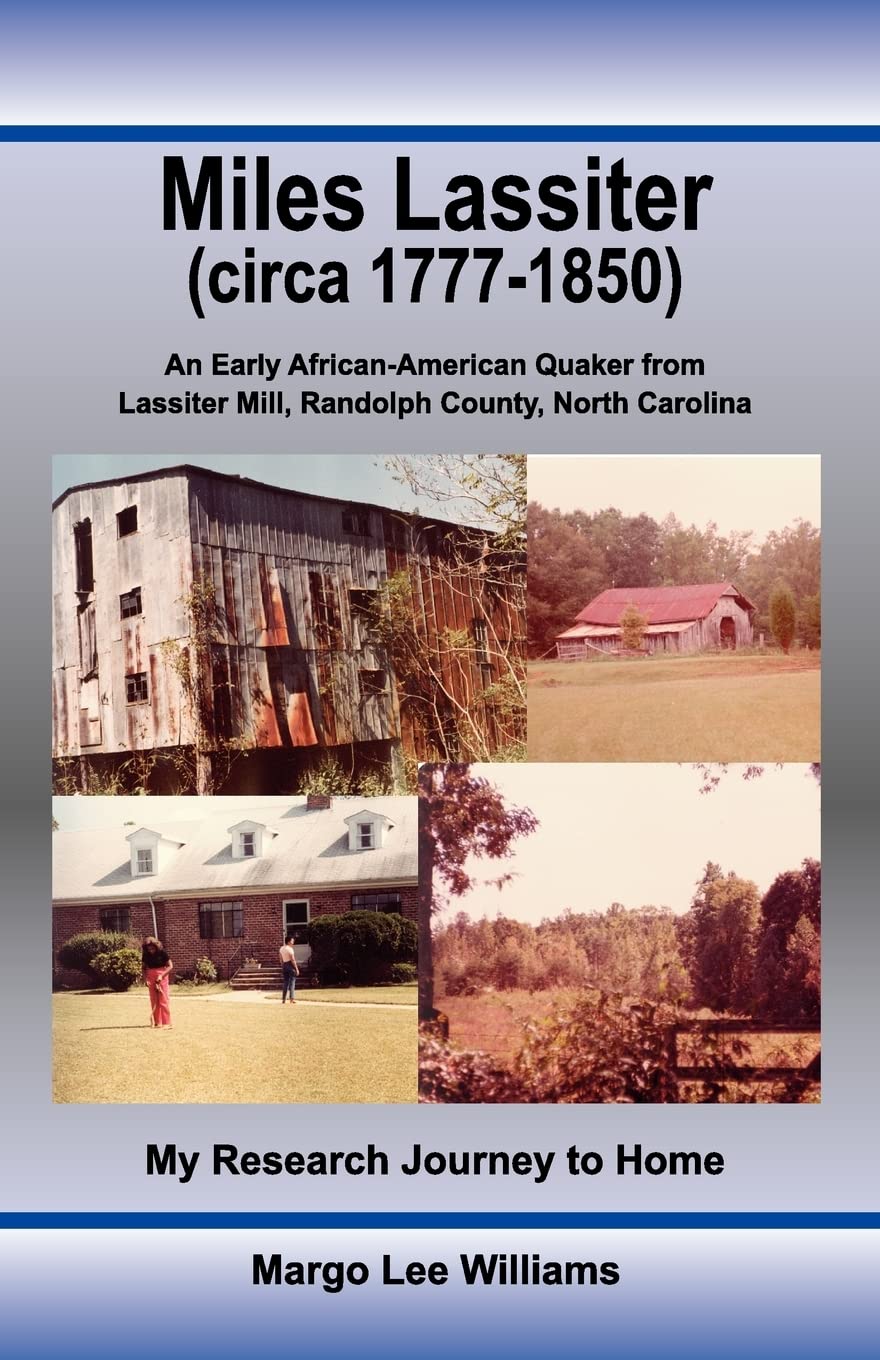

This book is part history, part memoir, and part detective story. Author Margo Lee Williams traces the remarkable journey of her ancestor, Miles Lassiter, a free African-American Quaker living in North Carolina before the Civil War. Through genealogical records, dusty courthouse files, and oral histories, she reconstructs the life of a man whose quiet defiance of the times stands as a beacon of dignity and faith. The narrative also follows her own search for identity and belonging, from vague family memories to a rediscovered home in the Carolina countryside. It’s as much about the process of finding history as it is about the man himself, a story of persistence, connection, and the hidden layers of American life.
I was struck by the warmth of Williams’s writing. She doesn’t just present facts; she brings people to life. The scenes of her research trips, pouring over records, meeting cousins she never knew she had, walking the land her ancestors once farmed, made me feel like I was there beside her. Her tone is tender but firm, respectful yet real. There’s a sense of wonder in her words, the kind of awe that comes from holding pieces of the past in your hands. At times, her attention to genealogical detail can slow the pace, but that same care is what makes the story believable and human. I admired her honesty when she admitted confusion or surprise. It reminded me that history isn’t neat, it’s messy, layered, and full of contradictions.
As someone who loves history, this book hit me deep. It’s rare to find a work that balances emotion with scholarship so gracefully. The story of Miles, a Black Quaker in the antebellum South, is extraordinary. His life defied the boundaries of race, religion, and law. Williams’s discovery that her ancestor was both enslaved and later a respected Quaker moved me profoundly. It challenged what I thought I knew about early African-American history. There were moments I had to pause, just to take in the weight of it all, the perseverance, the quiet resistance, the unspoken courage.
Miles Lassiter is a love letter to ancestors who endured, to forgotten stories waiting to be told, and to the act of remembering itself. I’d recommend this book to anyone who loves history that feels personal and alive, to readers who crave stories of ordinary people doing extraordinary things without fanfare. It’s perfect for genealogists, students of African-American history, or anyone who has ever wondered where they came from.
Pages: 150 | ASIN : B0064FITWQ

Born Missionary: The Islay Walden Story
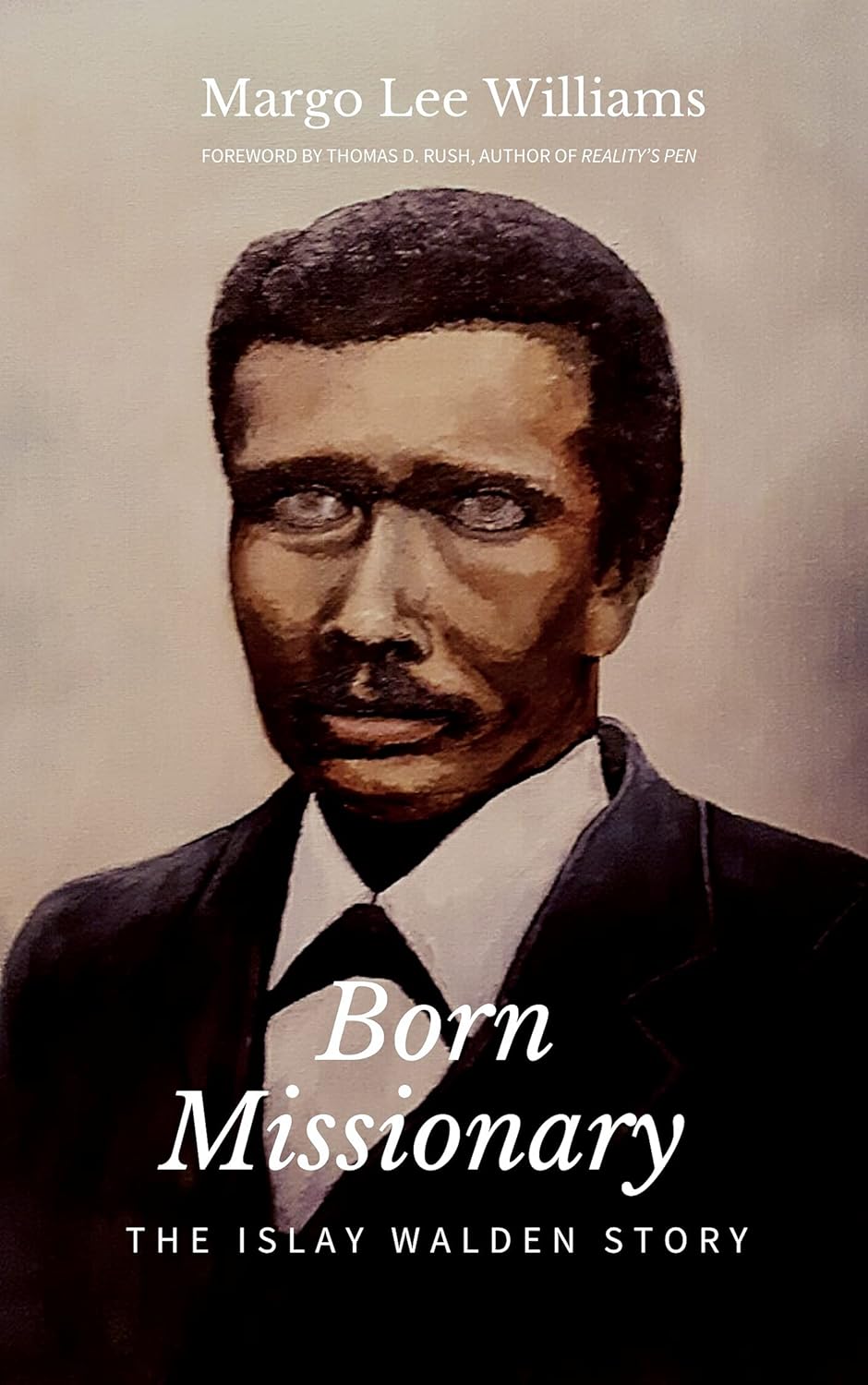
Margo Lee Williams’s Born Missionary tells the remarkable life story of Islay Walden, a man born into slavery who overcame blindness, poverty, and prejudice to become an educator, poet, and minister. The book traces his journey from the plantations of North Carolina to the halls of Howard University and the New Brunswick Theological Seminary, where he became one of the first African Americans ordained in the Reformed Church in America. Through meticulous research and a clear narrative voice, Williams reconstructs a life of faith and resilience. She doesn’t just recount events. She restores the humanity and voice of a man who was almost lost to history.
Reading this book stirred something deep in me. I could feel the grit in Islay’s story. His persistence through blindness and hardship hit me hard. The way Williams weaves letters, poetry, and newspaper clippings into a vivid picture of his struggles makes the past feel close. Her writing feels both scholarly and warm, and she lets the historical documents breathe. I’ll admit, there were moments when the detail slowed me down, but I didn’t mind. The care she took made me trust her. I found myself rooting for Islay, not as a distant historical figure, but as someone I might have known. Williams also captures the contradictions of his time, the faith that built him up, and the racism that tried to keep him small.
Emotionally, I found myself angry, proud, and sometimes just quiet after reading a passage. Williams doesn’t sermonize; she shows the quiet power of purpose. Her portrait of Islay’s devotion to teaching and preaching made me think about how education itself was a kind of rebellion. I liked how she handled the tension between his poetry and his ministry. You can sense that both were ways for him to see beyond blindness, to express what light looked like to him. It’s moving without ever feeling forced.
I’d recommend Born Missionary to anyone who loves history that feels alive. It’s perfect for readers interested in African American heritage, the Reconstruction era, or stories of perseverance that don’t sugarcoat the past. Teachers, pastors, and anyone who believes in second chances will find something here. It’s not just a biography, it’s a reminder of how one life, lived with courage and faith, can echo through generations.
Pages: 121 | ASIN : B091MF5B48
Education and Evangelism

From Hill Town to Strieby explores the life of Reverend Islay Walden, a man born into slavery who overcame blindness and hardship to return home as a minister and educator, and the legacy the Hill and Lassiter families left on the community. Why was this an important book for you to write?
As descendants of the original families that helped found the church and who continue as trustees today, we worried as we watched the last of the generation before us pass away that our history would be lost if we did not make a concerted effort to preserve, share, and uplift it. As the writer in the group, they looked to me to help that happen. In addition, just as other African American community descendants are concerned about erasure, not just benign neglect, we wanted to do all we could to be certain that the history of the church, school, community and its founder, Rev. Islay Walden, would always be an acknowledged and celebrated part of Randolph County, North Carolina history, and be part of the broader American History of African Americans and the rural South. I didn’t want anyone in Randolph County to ever say again as someone once had, “Strieby? Never Heard of It.”
With regards to Islay Walden himself, I had come to realize, as I researched his life, that in his lifetime, he was not an obscure poet, as some had portrayed him. In addition, I realized that none of the biographical essays about him had really understood that his passion was not poetry, regardless of his success. His passion was education and evangelism. No one had reflected on that in writing about him, so I wanted to pay homage to him as a 19th century African American poet, but even more important for me to elucidate was his legacy in education and ministry.
How much research did you undertake for this book, and how much time did it take to put it all together?
At the time that I made the decision to finally write the book, I had been researching the community for over twenty years and had already written a book about the history of one family, the Miles Lassiter family. At the same time as discussions about writing the book, family members were also asking about historical preservation. As part of that, I prepared an extensive, documented history of the church, historic school, and cemetery in application for the county’s Cultural Heritage Site designation, which we received. That application became the first draft. It took two more years of research and writing before the book was completed in 2016.
What were some ideas that were important for you to share in this book?
The level of educational excellence that the school stood for had been praised and celebrated at every turn by the entire community. This was a community with nearly 100% literacy in the early 1900s, when that achievement was rare for any community in the rural South. This community had placed a high premium on education, and members had gone to great lengths to seek additional opportunities, even leaving the community to do so, yet always returning to share love and encouragement with the next generation. In fact, this community had produced at least one young teacher by 1900, and several more soon followed.
What is one thing that you hope readers take away from From Hill Town to Strieby?
I hope readers see that rural communities of color have been seeking the same things that their urban siblings have been seeking — opportunity. They seek educational opportunities, which they hope, like everyone else, will provide them with other opportunities, including economic security, whether they leave the countryside or not.
Author Links: Goodreads | Facebook | LinkedIn | Website | Amazon
From Hill Town to Strieby: Education and the American Missionary Association in the Uwharrie “Back Country” of Randolph County, North Carolina

Author Margo Lee Williams’s From Hill Town to Strieby tells a sweeping story of a Black community in post, Civil War North Carolina that found strength through faith, education, and family. The book traces the evolution of Hill Town and the nearby Lassiter Mill settlement, communities founded by free and formerly enslaved African Americans under the shadow of the Uwharrie Mountains. At its heart is the life of Reverend Islay Walden, a man born into slavery who fought blindness and hardship to return home as a minister and educator. Through meticulous research and family genealogy, Williams captures the interwoven lives of the Hill and Lassiter families, showing how their legacy shaped the creation of Strieby Church and School, a hub of spiritual and educational hope for generations. The narrative moves through centuries, from emancipation to civil rights, offering both history and homage.
Reading this book felt like sitting on a front porch, listening to someone who not only knows the history but lived its echo. Williams writes with a reverence that’s contagious. Her attention to names, deeds, and census records could have been dry in another writer’s hands, but she turns them into a living map of resilience. I found myself pausing often, thinking about what it meant for a man like Walden to walk north on faith, then return to teach others to read and dream. The writing has a rhythm that feels intimate, almost oral, as if the voices of the ancestors rise through every paragraph. Sometimes the detail gets dense, the endless generations and property records can slow the flow, but even those moments carry a sense of duty, a need to set the record straight for families long overlooked by mainstream history.
I liked how Williams weaves emotion into documentation. She doesn’t just present facts; she reclaims stories. Her reflections on Strieby’s survival, even after the school closed, made me think about how heritage lives on in memory and ritual. I admired how she connected the local with the national, the way a small rural church in Randolph County linked to larger forces like the American Missionary Association and Howard University. The writing feels humble but powerful. It’s the kind of storytelling that makes you look at a dirt road or a worn gravestone and see history breathing there.
From Hill Town to Strieby feels like both a love letter and a ledger. I think it’s about what education and faith can build when the world offers nothing but obstacles. I’d recommend this book to readers who care about African American history, genealogy, or Southern heritage, and to anyone who values stories of perseverance.
Pages: 452 | ISBN : 0939479095



 LITERARY TITAN