Blog Archives
Mind Your Growth
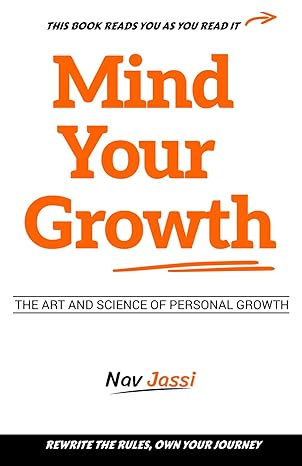

Mind Your Growth is a bold, no-nonsense guide to personal evolution that blends science, philosophy, and some deeply introspective storytelling. The structure is built around five clear phases: understanding yourself, decoding your decisions, defining growth, attracting it, and finally—transcending. It’s not here to pat you on the back. It’s here to shake you awake. Nav Jassi doesn’t hold your hand—he hands you the mirror, points, and says, “Now fix it.”
What got me hooked was how direct and raw Jassi’s writing feels. The preface pulls no punches. It’s basically Jassi saying, “Look, nobody’s coming to save you. Growth? That’s your job.” There’s an unapologetic urgency that runs through every page. I’ve read a ton of growth books, but few have made me stop mid-page and reevaluate my excuses. It’s like the author knows when you’re skimming and slaps your focus back on the text.
Then there’s the section on identity illusion, which I wasn’t expecting to hit as hard as it did. Jassi rips into labels—religion, education, politics—and how we wear them like name tags instead of exploring who we really are. He says, “You are not your title,” and goes on to show how blindly clinging to these labels traps us in other people’s scripts. There’s a moment where he writes, “You must take charge of your own development… not follow someone else’s path.” It reminded me that I’ve been coasting in areas of my life just because it’s what’s expected.
The voice of this book is what really makes it work. It’s not preachy. It’s conversational, weirdly funny, and sometimes poetic. One standout moment? The mind-as-jazz-band analogy, describing thoughts as a chaotic 3 a.m. solo was genius. There’s humor, there’s grit, and there’s soul. I also loved how Jassi connects modern science with ancient wisdom, especially when discussing the spirit as the “quiet engine” that keeps pulling us toward purpose even when life is wrecking us. “Growth by Action” cuts through all the theory and gets real about the one thing most people avoid—doing the actual work. Jassi says that growth isn’t in thinking or planning, it’s in movement, and that resonated with me personally. The chapter’s energy is pure momentum—no fluff, just fire.
I’d say this book is for anyone who’s tired of sugarcoated advice. If you’re in a place where life feels too busy, too noisy, or just kind of stuck—and you want something that pushes you to grow from the inside out—Mind Your Growth is your wake-up call. It’s not just a read. It’s a reset.
Pages: 305 | ISBN : 978-1738347308

The Blessing Book
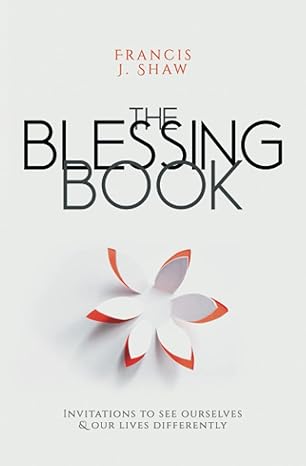
Francis J. Shaw’s The Blessing Book is a gentle and soul-stirring journey through life’s messy, beautiful terrain, shaped into 18 poetic reflections. More than a self-help book or spiritual guide, it’s a tender conversation between writer and reader. With themes like presence, forgiveness, purpose, and love, Shaw uses everyday moments, sneezes, dogs, and sunrises as entry points into deeper wisdom. There’s no rigid structure, no “how-to.” Just soft lanterns of insight illuminating the reader’s path.
What struck me immediately was the tone of the writing. It’s gentle, reassuring, and remarkably personal. In the opening reflection, “Life Interrupted,” Shaw’s voice comes through with such clarity and warmth that it feels as though he is speaking directly to the reader. He takes something as simple as listening and shows us how starved we are for it. “When we speak, we repeat something we already know and when we listen deeply, we hear the real message,” It resonated deeply and stayed with me long after I read it. I found myself nodding, thinking about how often I talk over people, or worse, myself. Shaw makes the ordinary feel sacred.
I especially loved how he weaves in story and metaphor. He describes life as a long journey where he kept asking questions, where, when, why, and how the voice of wisdom finally came through the silence. That bit where he says, “Wisdom whispers,” actually made me pause and put the book down for a second. It’s quiet and easy to miss, and I needed that reminder. Another particularly memorable passage is found in “Reflection 12,” where Shaw explores the theme of stress through the lens of the fight-or-flight response, and then quite unexpectedly draws insight from the flight patterns of birds. By highlighting their instinct to fly at varying heights and to veer right, he offers a simple yet profound metaphor for navigating personal conflict. It’s a surprising analogy, yet it’s remarkably effective.
That said, the book does not avoid addressing difficult subjects. Themes such as pain, anxiety, and grief are present throughout. Shaw approaches them with compassion rather than despair, offering gentle acknowledgment and allowing these experiences the space to be seen and understood without becoming overwhelming. Shaw owns his masks, his lies, the roles he’s played. And then he flips it with compassion, urging us to treat ourselves with the same care we give others. It’s like therapy wrapped in poetry. And maybe that’s what this book is at its core, a poetic kind of therapy.
I think this book is for anyone feeling a little frayed around the edges. Anyone craving something real but not preachy. If you’re just trying to catch your breath in a noisy world, The Blessing Book might be exactly what you didn’t know you needed. It doesn’t fix your life. It doesn’t pretend to. But it makes the mess feel holy, and honestly, that’s a blessing.
Pages: 316 | ASIN : B0992L5B68
The Empty Nest Blueprint for Single Parents

Anthony Damaschino’s The Empty Nest Blueprint for Single Parents is a practical and compassionate guide for single parents stepping into a new phase of life when their children leave home. The book weaves research, personal anecdotes, and a roadmap to help parents embrace the transition with confidence. Damaschino skillfully balances empathy with actionable advice, making this an invaluable resource for anyone navigating the complexities of an empty nest.
As a single parent myself, I found Damaschino’s observations deeply relatable. Chapter 1, “The Empty Nest Realization,” struck a chord with me, as it highlighted how society glosses over this life stage with throwaway phrases. He captures the emotional weight behind the transition, describing how empty nesters often feel invisible while their kids take center stage. This resonated with me because, let’s face it, no one throws a party for the parent left behind to reinvent their life.
One standout chapter was “Parent-Child to Parent-Adult.” Damaschino’s exploration of shifting dynamics between parent and child was eye-opening. He emphasizes the importance of stepping back without severing ties—a fine balance that I’m just beginning to understand. His example of setting boundaries while remaining a cheerleader for your child was comforting, reminding me that letting go doesn’t mean stepping away.
The book also dives into practical matters in “Pre-Launch Advice.” This chapter was my wake-up call. I hadn’t thought about the financial logistics of being an empty nester—like how to stop subsidizing my child’s cell phone without guilt! The real-world tips on budgeting, self-care, and even rekindling hobbies I’d long abandoned felt like a lifeline.
This book is about reclaiming your identity and embracing opportunities for personal growth. I walked away feeling more equipped to face this bittersweet season. I’d recommend The Empty Nest Blueprint for Single Parents to anyone in my shoes—single parents sending kids off into the world. It’s especially valuable if you’re unsure how to navigate the loneliness, logistics, or lingering doubts.
Pages: 388 | ASIN : B0D4S42T7Y



 LITERARY TITAN