Blog Archives
Acceptance is Not Surrender

Brokenness Becomes Beautiful is more than a collection of poetry and reflections; it is an intimate journey through loss, healing, self-acceptance, and the quiet courage of becoming someone new. What does the title Brokenness Becomes Beautiful mean to you personally?
To me, Brokenness Becomes Beautiful is about learning that what has been broken does not have to be hidden.
After my stroke, many parts of my life changed — my body, my speech, my confidence, and the way I saw myself. For a long time, I thought recovery meant trying to return to the person I had been before. Gradually, I began to understand that perhaps I was not meant to go back.
The title reflects that shift. Brokenness can leave scars, but those scars can also become part of something meaningful. Beauty, for me, is not about becoming perfect again. It is about accepting the fragments, carrying them with honesty, and discovering that a different life can still hold purpose, dignity, and hope.
What has living with aphasia taught you about language and communication?
Aphasia has taught me that communication is much larger than words.
Before my stroke, I rarely thought about speaking. Words simply came. After aphasia, even a simple sentence could become difficult. I might know exactly what I wanted to say but be unable to find the words to express it.
That experience has changed my perspective about communication. I have learnt that we communicate through pauses, gestures, expressions, writing, silence, patience, and simply being present with another person.
It has also taught me how important it is to give someone time. When a person with aphasia struggles to speak, it does not mean there is nothing inside. The thoughts and emotions are still there. Sometimes they simply need another way — and a little more time — to come through.
What does self-acceptance mean when someone is adjusting to changes they never chose?
Self-acceptance does not mean that I have to like everything that happened to me.
I did not choose my stroke. I did not choose aphasia, weakness, dependence, or the many changes that followed. There are still moments when I miss the person I once was and the things that once came easily.
For me, self-acceptance means no longer fighting every part of the person I have become.
It is recognising my limitations without allowing them to define my entire life. It is giving myself permission to grieve what was lost while also remaining open to what may still be possible.
Acceptance is not surrender. It is making peace with reality so that I can continue moving forward from where I am, rather than spending my life wishing I were somewhere else.
How has sharing your experience publicly affected your own understanding of recovery?
Sharing my experience has made me realise that recovery is much more complicated than I once imagined.
When I first began writing about my stroke, I was trying to make sense of what had happened to me. But when other stroke survivors, people with aphasia, caregivers, and families began responding to my words, I started to see that many of the emotions I thought were mine alone were shared by others.
Their stories have changed my understanding of recovery.
I no longer see recovery simply as getting stronger, speaking better, or reaching a particular milestone. Recovery can also mean learning to live with uncertainty, rebuilding relationships, finding confidence again, discovering purpose, and accepting that progress is rarely a straight line.
By sharing my journey publicly, I have also had to look at my own experience more deeply. Writing and speaking about what happened forced me to confront emotions I might otherwise have kept buried — grief, frustration, fear, vulnerability, and the struggle to understand who I was becoming. It also made me pay more attention to my mental and emotional well-being, not just my physical recovery.
Over time, I came to understand that healing also means learning how to live with those emotions, rather than pretending they are not there.
Writing has become a way of witnessing my recovery rather than measuring it. I can see that I am still changing, still learning, and still becoming.
Perhaps that is what recovery means to me now: not returning to who I was, but continuing to discover who I can become.
Author Links: GoodReads | X (Twitter) | Facebook | Instagram | Website | Amazon
These poems were not written to offer easy answers. They were born out of searching — through days of questioning, nights of reflection, and the slow, often difficult process of growth. In this collection, Terence explores what happens when life breaks us in quiet, unexpected ways, and how those moments of fracture can become the very places where truth, healing, and transformation begin.
Moving through themes of self-discovery, self-awareness, self-acceptance, self-love, self-healing, self-care, self-growth, and self-empowerment, Brokenness Becomes Beautiful does not turn away from pain or hide behind polished illusions. Instead, it creates a brave and compassionate space where vulnerability is honoured, honesty becomes strength, and becoming is seen as its own kind of beauty.
This is a book for anyone who has ever felt wounded, lost, or uncertain, yet continues to move forward one small step at a time. Gentle yet powerful, Brokenness Becomes Beautiful reminds readers that even in brokenness, something new and beautiful is already taking shape.
The Saved Effect: True Stories of Lives Reclaimed by People Who Were Willing to Act


The Saved Effect by Brad Newbury and Kiera Newbury is a narrative nonfiction book about what happens when ordinary people respond to extraordinary emergencies. Through accounts of cardiac arrest, choking, drowning, and other medical crises, the authors trace how one timely decision can preserve years of relationships, memories, and opportunities. The book’s central idea is simple but affecting: saving a person also saves the future moments that person will share with everyone around them.
Part medical memoir and part collection of inspirational true stories, the book moves between survivors, relatives, bystanders, firefighters, paramedics, nurses, and physicians. That range of voices gives each rescue a wider emotional frame. The emergency itself supplies urgency, but the real focus is the life that follows. Weddings take place, children and grandchildren are born, careers develop, and families get precious additional time together. Those details make this emergency medicine book feel personal even when the authors explain CPR, defibrillation, cardiac rhythms, and the realities of responding under pressure.
The strongest chapters pair tense, clearly described rescues with honest reflections on their long-term impact. Brad Newbury’s account of his father’s cardiac arrest and final months is especially moving because it treats survival as the gift of meaningful time rather than a promise that every medical problem will disappear. Elsewhere, survivors become EMTs, rescuers later need rescuing themselves, and lifesaving knowledge travels through families and communities. These connections give the true survival stories a satisfying sense of momentum and make the book’s ripple metaphor feel earned.
The repeated calls to learn CPR give The Saved Effect the directness of an inspirational self-help book, but its persuasive power comes from the people. The authors make preparedness feel practical, compassionate, and accessible. Readers interested in medical nonfiction, firefighter and paramedic memoirs, real-life rescue stories, CPR awareness, and books about courage will find an emotional and purposeful read here. It leaves you thinking about the lives connected to your own and how much can depend on being willing to act.
Pages: 240 | ISBN : 978-1637635926

Heroes of Change


Heroes of Change is an engaging work of inspirational nonfiction that explores how meaningful change grows through relationships, repeated choices, and shared purpose. Philip Molebash organizes the book around his five-part Heroic Change Model: Awakening, Calling, Leaping, Emerging, and Becoming. Rather than presenting this as a rigid sequence, he treats transformation as an ongoing cycle filled with setbacks, discoveries, and renewed commitments. The result is a thoughtful personal development book that asks readers to reconsider heroism as the everyday work of noticing people, widening the circle of belonging, and continuing to show up.
The book’s strongest material comes from its deeply observed portraits of people building change in distinct settings. Father Greg Boyle and the Homeboy Industries community demonstrate radical kinship; Curtis Jenkins turns school buses, hallways, and security work into spaces of care; Talia Milgrom-Elcott builds collaboration across institutions; Dave Bolotsky brings conscience into commerce through Uncommon Goods; and Rainn Wilson uses humor, spirituality, and inquiry to examine how people find meaning. Molebash gives each story room to breathe, including the missteps, resistance, and uncertainty that make the subjects feel human. The book succeeds because it connects large questions about education, business, justice, and community to specific people and lived experiences.
Molebash’s style is conversational, reflective, and often playful. Childhood memories, movie references, family stories, research, and interviews move together with surprising ease. A kickball do-over becomes a way to discuss grace, a bus driver’s “purpose belt” becomes a practical metaphor for vocation, and a spiral staircase becomes an image of collective growth. At times, the book’s many metaphors and restatements slow the momentum, especially when an already powerful story is followed by several layers of explanation. Still, the warmth of the narration keeps the ideas grounded, and Molebash’s willingness to examine his own ambition, doubt, faith, and need for belonging gives the leadership and personal development themes an appealing honesty.
Heroes of Change is a hopeful leadership book, a study of community transformation, and a personal meditation on becoming. Its central argument is both simple and demanding: people change through people, and lasting progress depends on communities where care, trust, storytelling, and purpose are practiced consistently. The book leaves readers with useful language for recognizing change in their own lives, but its greater accomplishment is emotional. It makes quiet service visible and treats belonging as something active, built one conversation, invitation, meal, classroom, workplace, and second chance at a time.
Pages: 210 | ASIN : B0H3XV8459
Finding Order in Disorder

Finding Order in Disorder is Ishaa Vinod Chopra’s candid account of living with bipolar disorder while moving through fractured family relationships, immigration, an abusive marriage, repeated hospitalizations, divorce, education, and artistic discovery. The memoir follows her from childhood in India through periods in Canada and Germany, showing how instability, rejection, trauma, and mental illness became intertwined. Chopra writes with unusual openness about manic episodes, medication, institutional treatment, domestic violence, and the difficult work of separating a person’s character from symptoms of an illness.
The book’s most compelling quality is its emotional directness. Chopra doesn’t shape her experiences into a tidy recovery story. Instead, she revisits painful decisions, acknowledges her own mistakes, and allows conflicting feelings about her parents, former partners, doctors, and caregivers to remain visible. Interviews, remembered conversations, personal reflections, and drawings created during episodes give the memoir the feeling of a life being examined from several angles. Her voice is earnest and conversational, and even when she moves into advice or philosophy, the ideas remain rooted in experiences she’s actually lived.
Dance provides the book with its strongest unifying thread. Kathak, Latin dance, painting, yoga, teaching, and performance become ways for Chopra to regulate emotion, preserve identity, and reconnect with herself when illness threatens to define her. Her work with children offers another source of meaning, particularly as she considers how early experiences shape adult well-being. The later chapters become increasingly reflective and practical, addressing sleep, medication, counselling, self-respect, relationships, stigma, and patient autonomy. This shift gives the memoir the character of both a personal testimony and a compassionate conversation with readers facing similar challenges.
This book will resonate most with people living with bipolar disorder, survivors of domestic abuse, and families trying to understand the complicated realities of caregiving. It should also appeal to mental health professionals, educators, and readers interested in how art can support recovery and self-expression. Chopra’s story asks readers to look beyond a diagnosis and see a whole person who can be vulnerable, impulsive, loving, creative, difficult, hopeful, and resilient at the same time. It’s a deeply personal invitation to approach mental illness with greater patience, curiosity, and humanity.
Pages: 190 | ASIN : B0BYZJDZ68
The Inner Citadel: From Overstimulation and Burnout to Emotional Growth Through the Power of Solitude
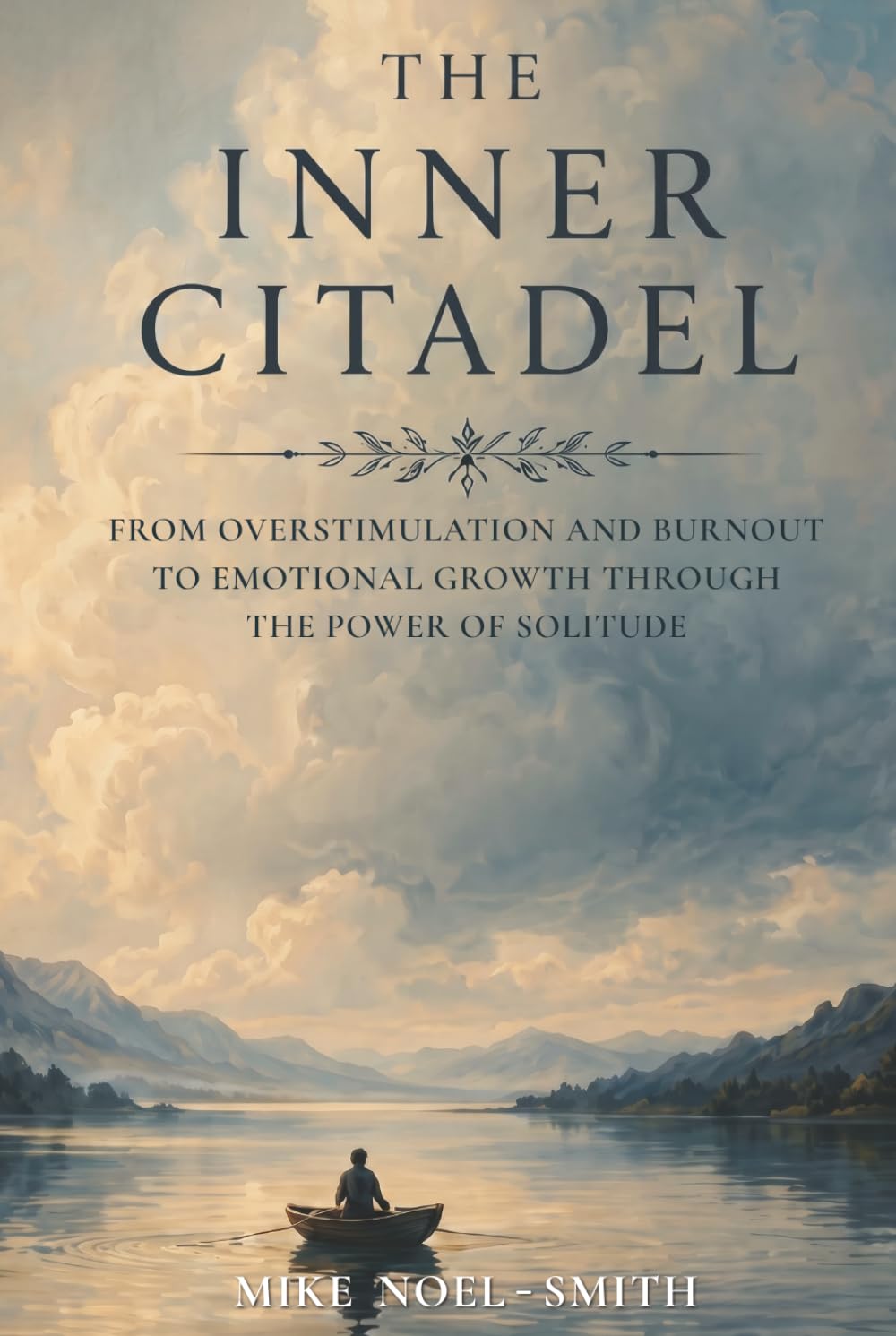
The Inner Citadel is a reflective and practical exploration of solitude as a way to recover attention, emotional balance, and a more grounded sense of self. Mike Noel-Smith begins with the familiar strain of notifications, obligations, constant availability, and mental clutter, then gradually leads the reader toward a quieter way of living. Drawing heavily on his time alone in the wilds of Dartmoor, he treats solitude as an active encounter rather than passive withdrawal. As he puts it, “Solitude did not instantly soothe me; it revealed me.” That distinction gives the book much of its emotional honesty, since silence brings discomfort, loneliness, grief, and fear to the surface alongside clarity and peace.
The central image of the inner citadel gives the book a strong structure. Its walls, gates, and watchtowers represent boundaries, habits, and forms of discernment that protect the inner life from being continually overrun. Across the chapters, Noel-Smith connects solitude with emotional resilience, creativity, clear thinking, self-trust, relationships, nature, ageing, and mortality. The argument expands naturally as the book progresses. Solitude begins as relief from overstimulation, but it becomes a means of living with greater intention. One of the book’s clearest insights is that “quiet is not emptiness, but a threshold,” and Noel-Smith consistently explores what might be waiting on the other side of that threshold.
The book’s most engaging passages come from Noel-Smith’s personal experiences outdoors. Encounters with harsh weather, darkness, animals, physical discomfort, and sudden loneliness keep the discussion rooted in lived experience. His account of meeting a stag at night is especially memorable, capturing the humility and sharpened awareness that can arise when a person stops treating themselves as the center of every setting. The practical exercises at the end of each chapter also make the ideas accessible. Attention audits, short periods without devices, reflective questions, solitary walks, and simple breathing practices give readers manageable ways to test the book’s ideas in ordinary life.
There’s a deliberate, meditative rhythm to the writing, with key thoughts revisited from slightly different angles so they can settle rather than simply pass by. The final chapter’s detailed guidance on spending a week in a wild place adds an unexpectedly concrete conclusion, covering shelter, clothing, food, camp selection, safety, and responsible treatment of the land. It reinforces the book’s larger message that inner reflection is supported by practical preparation and sustained attention. The Inner Citadel is ultimately a thoughtful companion for readers who feel scattered, overstimulated, or disconnected from their own priorities. It presents solitude as a disciplined return to oneself, followed by a fuller and more honest return to other people.
Pages: 321 | ISBN : 978-1919215662
The Stonecaster

The Stonecaster, by Dillon W. Buck, is a modern parable about James, a sensitive boy who receives a mysterious stone that changes color according to the state of his heart. Through childhood wounds, college temptation, heartbreak, work, leadership, marriage, grief, faith, and entrepreneurship, James learns that life is shaped less by what happens to him than by the quality of his response. The stone becomes less a magical object than a mirror, teaching him that every choice sends ripples outward.
I appreciated how the book uses a simple allegorical device without letting it become merely decorative. The color-changing stone could have felt too tidy, but Buck gives it emotional utility: blue for peace, red for misalignment, gold for purpose. It becomes a private weather system, a way for James to notice what he is carrying before he releases it into the world. I was especially drawn to the early chapters, where James’s pain as a misunderstood child is rendered with enough tenderness to keep the lesson from feeling sermonized. The book is at its strongest when it lets discomfort sit on the page before translating it into wisdom.
What also stayed with me was the book’s insistence that growth is not a single luminous breakthrough, but a repeated return. James fails, forgets, chases the wrong things, confuses intensity with love, and mistakes validation for worth. That gave the story some necessary grain. I found the later sections more openly instructional, and at times the parable edges close to motivational speech, but its sincerity carries it through. The most affecting movement is James’s shift from striving for worth to living from it. That idea gives the book its spine, and it turns the final chapters into something calmer than triumph: a kind of earned stillness.
Readers who enjoy inspirational fiction, personal growth books, leadership parables, faith-based self-help, and coming-of-age stories will find The Stonecaster inviting and useful. It belongs beside books like Paulo Coelho’s The Alchemist or Andy Andrews’s work, though Buck’s focus is less on destiny as a far horizon and more on the daily discipline of response. This is a book for readers who want a story that behaves like a compass, gently but persistently turning them back toward intention. The Stonecaster reminds us that the life we build begins with the ripple we choose to send.
Pages: 119 | ASIN : B0H1N8BWDL
Driven by Desire: Path to Unstoppable Success

Driven by Desire is a motivational book about rebuilding a life from the inside out, using passion not as a vague slogan but as a daily discipline. Author JW Radford frames the argument through his own story, especially the shattering sequence of his MS diagnosis, medical retirement from the military, depression, addiction, and that stark ATM moment on the way to Chipotle when “Insufficient Funds” jolts him back into himself. From there, the book widens into a practical philosophy of desire, discipline, authenticity, mindset, long-term goals, review, and steady action. It’s less interested in grand theory than in turning private urgency into a usable system for living and working with intention.
I appreciated the book’s emotional candor. The sections about performing a life he no longer believed in, praying in the driveway before going into the house, and realizing that pretending had become its own form of suffocation give the book its pulse. Those moments have grain and heat. They make the later advice feel earned. I also admired the book’s insistence that passion is not some glamorous flash of destiny, but something closer to commitment under pressure, a choice repeated when you’re tired, frightened, or bored. That idea gives the book real ballast. Radford can write with force and directness, and he leans on the same vocabulary of fire, drive, purpose, and resilience.
Much of the advice is familiar: set goals, review progress, celebrate milestones, guard your mindset, build systems that can carry you when motivation fails. What makes it really work in this book is the way he threads it through lived experience, especially when he contrasts ego desires with authentic ones, or when he argues that sustained effort matters more than waiting to feel inspired. I liked, too, that he keeps returning to adaptation, to the notion that passion has to survive changing circumstances rather than remain frozen in one heroic pose. The recurring emphasis on visible progress, incremental change, and practical follow-through keeps the book from drifting entirely into uplift. The central vision is sturdy and humane: a meaningful life is built by aligning action with what genuinely makes you feel more alive, not merely more impressive.
I found Driven by Desire earnest and genuinely affecting. JW Radford is compelling and his message is conveyed with palpable conviction. I finished it feeling that Radford’s greatest strength is the moral seriousness with which he treats the question of how a person gets back up and stays awake to his own life. I’d recommend it to readers who are at a crossroads, burned out, rebuilding after loss, or trying to recover a sense of purpose that has gone dim. For someone who wants a warm, experience-forged push toward a more deliberate life, it could meet them at exactly the right moment.
Pages: 183 | ISBN : 978-9699896316

A.W.A.R.E. : A Personal Safety Playbook for Leaving the Nest

S. Gale Bleth’s A.W.A.R.E. is a practical and cautionary guide for young adults stepping into college, work, social freedom, and the wider world without the immediate shelter of home. Built around the acronym Alert, Watch, Assess, Respond, Escape, the book argues that most personal safety begins before a crisis, in attention, preparation, intuition, and the willingness to leave a risky situation early. Through recurring campus-centered stories, especially Lili’s devastating experience at a party, Sara’s encounter with the white van, and Jack’s bar-night assault, Bleth turns self-defense into something broader than strikes and escapes. It becomes a mindset, a way of reading a room, a parking lot, a drink, a stranger, and sometimes one’s own fear.
This book treats safety as a form of self-respect rather than suspicion. Bleth’s central idea, that “90 percent” of safety happens in the mind, feels persuasive because she keeps returning to ordinary moments where danger begins quietly. A laptop left in a library, a drink accepted too casually, a car approached without noticing the open van beside it, a concert entered without clocking the exits. Those examples have a plainspoken force. They made me think not only of college students but of anyone who has mistaken familiarity for safety. The book’s emotional weight comes from that tension between freedom and consequence. It doesn’t ask young people to shrink their lives, but it does ask them to stop sleepwalking through them.
A.W.A.R.E. is direct, repetitive by design, and informative. The repeated reminders to “just leave,” trust your gut, use the buddy system, and stay in your Yellow Color Code can feel insistent, but I came to see that insistence as part of the book’s method. Bleth is trying to make the reader remember under pressure. Lili, Bri, and Sara sometimes seem shaped more as instructional figures than fully dimensional people. Still, the clarity has its own integrity. The chapter on consent, with its discussion of the familiar “tea” analogy and its blunt insistence that no means no, lands with necessary moral firmness.
I admired A.W.A.R.E. for its urgency, its compassion, and its refusal to confuse independence with invulnerability. Its best pages feel like the voice of someone who has seen too many preventable harms and is trying, with both hands, to place a flashlight in the reader’s grip. This is a useful, earnest, and often sobering book, and I’d recommend it especially for high school seniors, first-year college students, parents preparing to send a child out into the world, and young adults who want practical safety guidance without being told to live in fear.
Pages: 161 | ASIN : B0GSGXTLLG


