In The Woman Who Emerged: Finally Free, Dr. Karla Hylton Dixon traces her path from a life of invisible suffering into a hard-won sense of freedom, faith, and selfhood. She writes about a controlling marriage, estrangement from her children, suicide attempts, and the hollow ache that followed the loss of every role she once lived for, then describes a slow “holy renovation” in which she asks God to reintroduce her to herself and begins to rebuild from the ground up. The book unfolds across themed chapters from “The Question” to “The Light and The Legacy”, each one mixing vivid scenes, spiritual reflection, key takeaways, a closing prayer or poem, and practical prompts and discussion questions, so it functions as both memoir and guided journey for the reader.
The opening pages on her suicide attempts and the question “How much longer can you go on like this?” were emotional for me because the language is simple yet sharp, and the scenes stay tight on her inner world. I liked the shift between “she” and “I” across the chapters, since it lets her look at her former self with tenderness and a bit of distance, then step forward in the present with a stronger voice. The images come back again and again, light through blinds, rubble, foundations, excavation, and I found those threads helped the book feel like one long, carefully crafted story rather than a loose set of memories. The poetic rhythm swells, especially in the prayers and short poems that close chapters, and I reread lines just to sit with the mood. I did notice that the high emotional pitch and repetition of certain phrases can feel heavy if you read large chunks at once, so I enjoyed the book most when I took it slowly, almost like a devotional, instead of racing through it in one sitting.
I appreciated how clearly she separates survival from living and how she refuses to shame the version of herself who stayed small and quiet for so long, calling that woman a protector rather than a failure. Her picture of healing feels honest: not a brand-new self but an uncovering of the woman who existed before harm taught her to shrink, supported by a strong sense of being known and loved by God. The “house renovation” metaphor for faith and boundaries in chapter 2 stayed with me, with its talk of tearing down rotten walls, adding light, and changing the locks so not everyone has a key to your inner life. I found that picture both gentle and firm, and it gave me language for my own choices about access and trust. I also liked the structure at the end of each chapter, with key takeaways and a simple heart exercise or question, which felt very usable and grounded the more lyrical sections in practical change. The strong Christian framing will comfort many readers, as almost every breakthrough is tied back to prayer and Scripture.
By the time I reached the conclusion and the epilogue, with their mix of prompts on legacy, boundaries, gratitude, and “sacred reset” plans, I felt like I had sat with a wise mentor who had no interest in pretending the work is easy. I felt grief for what she lost, anger at the systems and relationships that kept her quiet, and a deep sense of relief when she begins to claim her own voice and joy. For me, this book will stick as a story of a woman who did not get a neat, happy ending, yet still chose a holy, ordinary, daily kind of freedom.
I would recommend The Woman Who Emerged: Finally Free to women of faith who feel trapped in emotionally harmful relationships, to readers walking through estrangement from family, and to church leaders who want to better understand the inner life of someone who “stayed” for far too long. It will also speak to anyone who loves memoirs about trauma, resilience, and spiritual growth and who is open to a strong Christian lens. For readers ready to slow down, feel deeply, and let someone else’s story spark hard but hopeful questions about their own, I think this book will be a rich and timely companion.
Lunches with Ed is a moving memoir about loving someone through dementia—through home care, nursing homes, Covid windows, final goodbyes, and the small moments that never let go. At what point did you realize this story might help others beyond your own family?
I realized that this story may help others when an unbiased associate read it and became so emotional she called me up in tears expressing how deeply the book touched her. I later found out that she was in the midst of caring for her husband and the book was a comfort to her.
How did your understanding of love change as Ed’s dementia progressed?
I came to really understand the meaning of “in sickness and health”, “for better or worse”. Marital love does not just end because your spouse gets ill. Ed was the same person I loved and he needed me more now than ever. The journey has made me more empathetic and caring.
How did you balance honoring Ed’s dignity while sharing the strange or disorienting behaviors dementia caused?
I sought to portray Ed as the kind and caring person that he always was while trying to present a true picture and not sugar-coat the ebbs and flow of daily life living with dementia. His sensitive, peaceful nature was still there hidden underneath all the confusion. I sought out the best care for him and also tried to shield him from unnecessary intrusions and visitors who were only mere acquaintances.
How do you carry Ed with you now, after telling his story
I carry him in my heart. I think of the good times we had, the laughter we shared. Whenever I think of him I find myself smiling.
When a devoted wife stepped into the role of caregiver for her husband during his journey with dementia, she found solace in journaling — capturing the routines, challenges, and quiet triumphs of daily life. What began as a private coping tool became a heartfelt guide for others walking the same path. Lunches with Ed offers practical insights born from lived experience, not theory. It’s a gentle, honest companion for those navigating the emotional terrain of caregiving — validating the sadness, frustration, and fear that often come with it, while also celebrating the moments of laughter, connection, and unexpected joy. Compact and comforting, this book is designed to be kept close — on a nightstand, in a purse, or tucked into a drawer — ready to remind caregivers that they are not alone. Above all, it’s a tribute to the enduring love that caregiving calls forth, and the strength found in showing up, day after day.
Lunches with Ed tells the story of a woman caring for her husband as dementia slowly changes every corner of their shared life. The book follows Judy Collier’s journey from the first troubling signs to the caregiving years at home, the painful decision to move Ed to long-term care, the strange mix of heartbreak and sweetness in her daily visits, and finally the peaceful end of his life. She lays out the memories through stories, journal entries, and reflections that show love staying steady even as everything else slips away.
The writing feels simple at first, almost like someone talking to a friend over coffee, yet that is exactly what makes it so strong. The plainness pulls you in. You start to feel the fear she tries to hide and the way she keeps moving anyway. There were moments that made me laugh because they felt so human and odd, like Ed grouping his grapes into sets of four or insisting his license was locked in the doctor’s desk. Then I’d turn a page and feel my chest tighten when he wandered outside in the middle of the night or when she held window visits during the long months of Covid. The emotional swings felt real. They felt like life. I found myself pausing often just to sit with it.
What stayed with me most was how she writes about devotion. Not as some grand thing but as a series of small acts that never stop. Holding his hand while he sleeps. Feeding him when he forgets how. Talking to shadows in the corner because it eased his fear. None of it feels dramatic. It feels steady and warm and a little exhausting and also brave in a quiet way. The journal entries hit me especially hard. They show the rhythm of her days shifting between hope and dread. They show how love keeps showing up even when the person you love is drifting somewhere you cannot follow. I felt myself rooting for both of them and sometimes whispering a little prayer under my breath because the truth of it all was so heavy.
I closed the book with a mix of sadness and gratitude. Sadness because the story is real, and loss is real. Gratitude because the author chose to share something so personal and because her honesty might make someone else feel less alone. I would recommend Lunches with Ed to caregivers, family members walking through dementia, readers drawn to memoir, and anyone who wants a reminder that tenderness still matters in hard seasons.
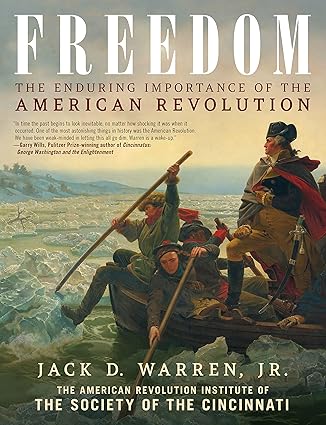
Embark on a meticulously crafted journey through the tapestry of American history with Freedom: The Enduring Importance of the American Revolution, penned by Jack D. Warren Jr. This narrative doesn’t merely recount events but enthralls readers, weaving them through the pivotal years that sculpted a nation from the fervent throes of the Revolutionary War to poignant celebrations of liberty.
Warren’s narrative eloquently traverses through the myriad facets of colonial British America, elucidating the variegated groups and revolutionary intellects that forged the path toward liberty. Moreover, it spotlights poignant tales of conflict and sacrifice, underlining the indefatigable pursuit of freedom that became a hallmark of American identity. As one navigates through Freedom, there is a palpable unveiling of the energies that cemented the foundations of national identity and engendered the establishment of a republican government steadfastly committed to the ideals of freedom and equality.
One astonishing revelation presented by Warren, among myriad, is the historical prerequisite of at least modest property ownership for voting eligibility, a nugget that underlines the continuous evolution of American democracy. The book brims with comprehensive revelations, providing a rich reservoir of knowledge and insight.
Freedom doesn’t merely chronicle history but brings it to life, allowing readers an intimate glimpse into the minds and plights of historical figures. Warren narrates George Washington’s battle for liberty with an evocative immediacy, offering insights into his mental and emotional states amidst the formidable challenges encountered in the rebellion against British rule. In another instance, the reader encounters Phillis Wheatley, a sixteen-year-old who overcame her dire circumstances to bloom into a lauded poet despite being enslaved after being born in West Africa and sold in Boston.
Adorned with reflections from historical figures, astute commentaries from the author, and a gallery of impactful paintings and images, Freedom doesn’t just inform; it immerses and captivates. This compelling read, abundant in rich historical tales, is poised to be a treasure for history and political discourse enthusiasts alike.
The book paints a vivid tableau of history and compels reflection on societal progress. It highlights our transition from an era where public hangings were a norm to their current rarity, providing a sanguine perspective on social transformation. Freedom serves as a potent reminder and instrument, ensuring that we persist in sculpting a future that is ever more just and humane. This masterful work is not only a repository of the past but a beacon that illuminates the pathway toward an equitable future, making it an indispensable read for those who seek to understand and forge ahead, informed by the indelible lessons of history.