Blog Archives
My Crazy Love For A Fun Little Fireball

Where Is Charlotte? Or Where Is __? follows a feisty young girl playing Hide-and-Seek and leading others on an adventure while learning to be assertive. What was the inspiration for your story?
This book was inspired by my crazy love for a fun little fireball. More specifically, 3 yo Charlotte was visiting her grandmother (my partner) and had brought a toy that had the children’s classic, Frere Jacque melody, as background music. Upon hearing the tune, I immediately thought, “I can write lyrics to that… But what?” When it hit me: Charlotte loved to play Hide-and-Seek. And I knew I wanted our hero to be a spunky character. Even at a young age, this little trickster had a confident and assertive voice. And original, simple, and lively poetic lyrics and hiding places simply poured forth. I’d say 90% of the story flowed in one sitting. I believe the book’s magic results from the synergy of pairing a classic children’s song with a universal children’s game, with added spice of vibrant illustrations. Also, writing the book allowed this author to consciously and unconsciously revisit and transform his own childhood angst and hidden self into a vital young character. From initial conception to professionally illustrated, story-song book publication took about a dozen years.
What were some ideas that were important for you to share in this book?
Six key ideas:
- The book’s main themes involve a little girl, a little shy at first, discovering her own voice – whether saying “No She’s Not!” or demonstrating confident body posture and movement while playing Hide-and-Seek.
- Where Is Charlotte? also illustrates our hero becoming more adventurous, going from inside hiding places to “climbing up the big trees” and “floating on a light breeze.”
- By changing Charlotte’s image, age, and physical representation throughout the story, a wide variety of children (and adults) will see themselves in the book’s diversity.
- Charlotte is an assertive, adventurous, and independent spirit – a “child of the wild” who roars like a tiger and gives wolf-like howls. Yet, our plucky protagonist ultimately wants loving “bear hug” connection. Independence and intimacy dance together.
- Along the way, I understood the family and even classroom joy that could be released and shared by replacing “Charlotte” and singing an individual child’s name, allowing each child to be “the star of the story.” (And little boys love to hear and imagine themselves as storybook stars as much as their female counterparts.)
- Finally, I wanted to create a New KISS – Keep It Short & Smart – Book, that would pack a verbal and visual, playful yet meaningful punch that quickly captures and sustains the attention of children and adults in our distracting/distracted times.
What scene in the book did you have the most fun writing?
I believe the most fun scene/theme involves verbalizing and visualizing Charlotte’s bold spirit, especially when our little hero finally emerges from hiding, announcing:
Where is Charlotte?
Here is Charlotte!
Here I am!
I’m shouting BOO!
And then, Charlotte, really projects her self–confidence and imagination, declaring:
Even though your bigger.
I’ll ROAR like a tiger.
Then I’ll give a wolf-like howl… OWWOOO!
Or maybe a bear-like GROWL…
And the visual depiction of hyper-vibrant wildlife imagery and vivid jungle or mountain settings add to the captivating, left- and right-brained experience!
Is this the first book in the series? If so, when is the next book coming out and what can your fans expect in the next story?
I’m working on a new illustrated, tweens to adults’ story-song book series, Little Charley’s Big Secrets. These lyrical, New KISS, books quickly capture emotional and mental health challenges, struggles, and triumphs of Little Charley at home, at school, with peers, etc. Little Charley is depicted as two separate characters, a girl and a boy, in the same classroom. And the books will be sung to the tune of classic children or folk songs, e.g., “London Bridge Is Falling Down,” “Oh Susanna,” etc. While this story-song book targets readers ages 8-10+, its substance and style will also engage the heads and hearts of older teens and adults.
However, with the warm reception of Where Is Charlotte?, I suspect there will also be a new adventure for our plucky protagonist!
Author Links: X | Facebook | LinkedIn | Website
In addition, with the changing of Charlotte’s image throughout the story, a wide variety of children (and adults) will see themselves in the book’s diversity. Charlotte’s escapade will inspire authenticity, self-assurance, and a sense of adventure in all with a youthful heart. Oh yes, and loving “bear hug” connection. Finally, Where Is Charlotte? animates the author’s playfully-affirming mantra: To be your fullest self without being (too) full of yourself!
Bedtime Worries-The What-If Kid


Bedtime Worries is a sweet and rhyming children’s book about Kale, a curious boy whose overactive imagination keeps him up at night. Through a series of heartfelt and often funny exchanges with his patient mom, Kale voices all the “what-ifs” racing through his mind, from fears of monsters under his bed to worries about strange noises in the dark. By the end of the book, Kale not only manages to fall asleep but wakes up feeling confident and self-reliant.
I loved how relatable Kale’s worries were, especially for kids. His questions like, “What if monsters are waiting under my bed?” or “What if a bird taps on my window, wanting to spy?” reminded me of my own childhood fears. The author captures these anxieties vivdly. His mom’s soothing responses, like describing dreams of “lollipops, sugar clouds, and loads of ice cream,” were so tender. It’s clear that she’s trying to build trust while easing Kale’s mind.
I absolutely loved the colorful and expressive artwork that brought every page of Bedtime Worries to life. The illustrations were vibrant and full of personality, capturing Kale’s emotions perfectly. Each page felt warm and inviting, with little details like the soft glow of the nightlight making the story visually appealing.
The writing flows like a lullaby, and the rhymes make it a joy to read aloud. I also appreciated the subtle humor in moments like Kale’s mom yawning and snapping her fingers to signal bedtime rules. Those little touches made her feel real. The ending tied everything together nicely. I loved seeing Kale’s transformation in the morning, waking up confident and eager to take on the day. The last reminder that “worries are normal” is a reassuring message, not just for kids but for adults too.
This picture book is a gem for parents of young kids. It’s perfect for bedtime, especially if you’ve got a little one who’s full of questions and “what-ifs.” Bedtime Worries is a comforting hug of a book, reminding us all that fears can be soothed with love, patience, and a little imagination.
Pages: 30 | ASIN : B0DG45JFM5

Tails Of All Kinds

A Tail Tale is a whimsical children’s book about a boy discovering that individuality and kindness matter far more than magical solutions. What was the inspiration for the setup of your story?
I first drafted this story as a skit for a children’s literature class in college (many years ago!). It started as a simple tale of a boy being fascinated with animals’ tails of all kinds so he wanted to try them on. Then the draft sat in an attic among some old school papers and I rediscovered it a couple years ago. (Moral: be careful what you throw away!). I shared the draft with a couple readers who knew more than I did about writing picture books for young children, and I also took classes on the craft of that genre. I realized that there needed to be a deeper motivation for Wally’s interest. Knowing that children can often be unkind to each other and that bullying can start at a young age, I decided to weave that into the story.
What message do you hope children take away from Wally’s journey?
Wally fears there’s something wrong with him when his new classmates are not welcoming initially, and he thinks he needs to change. When he meets the Snake, who is very different from other creatures because he is “all tail”, Wally develops empathy for him and realizes that he can stand up for himself and for his new friend. The message is that kindness is stronger than magic (in fact, it is magic!), and that developing empathy is the key to understanding others.
Can you share insights into your collaboration with illustrator Sarah Gledhill?
It was wonderful working with Sarah, although we never met or talked since she’s in the UK and I’m in the US. Sarah’s drawings cleverly brought out the personalities and emotions of both Wally and the Snake. We exchanged ideas at many points and I learned a lot from her insights and inspirations.
Were any parts of the story influenced by personal experiences or observations?
My first grandson was about five when i started telling him the story (before publication), and he often asked me to recite it at bedtime. He was starting kindergarten and although he didn’t know yet that the world out there is sometimes unfriendly, I think he was reassured by Wally’s experience of learning that he had something in common with someone who seemed very different, that Wally had the power to make friends and to help other children become friends too.
Author Links: GoodReads | Instagram | Facebook | Website
When Wally’s new classmates aren’t so nice, he decides that maybe he doesn’t want to fit in with them after all. One day after school, he meets the Tailor, a magical figure who creates tails for all the animals. As Wally tries on different tails, he also meets a snake who shows Wally a new perspective on friendship.
Despite the reality of how hard it can be to make new friends in a new place, this whimsical, clever story shows us that everyone has something to offer-and that often, empathy is the best cure for unkindness.
I Know a Guy Named Noah Guy
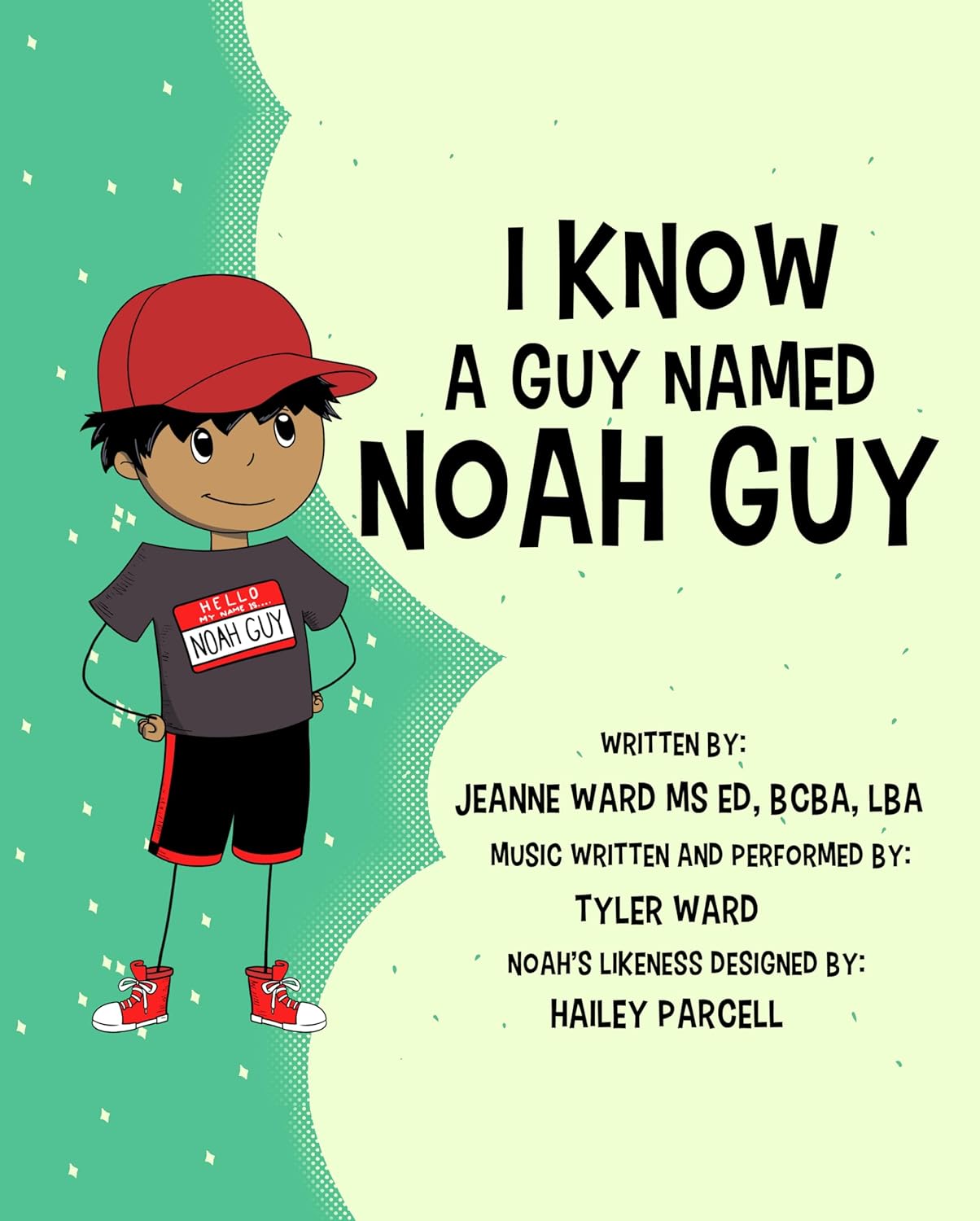
If you’re looking for a children’s book that’s as fun to read as it is to sing, I Know a Guy Named Noah Guy is a total winner. Jeanne Ward’s rhyming picture book is a bright and cheerful adventure starring Noah Guy, the ultimate good friend who knows no bounds (literally—he’s aware he’s in a book!). Readers are taken to outer space, to the zoo and the rodeo, and more on a trip that is pure imagination. Noah’s story keeps kids entertained while subtly teaching important lessons about teamwork, perseverance, and friendship.
What really sets this picture book apart is the music. Yes, there’s an actual music track! Ward’s son, Tyler Ward, turned the story into a catchy song, and it’s addictive. The rhythm of the verses was already delightful, but pairing it with music makes it an absolute blast for kids (and adults) to sing along to.
The illustrations are as vibrant and joyful as the story itself, with colorful scenes that capture the imagination and fun of the story. The playful tone invites young readers to dream big and imagine anything is possible when they work together.
This book isn’t just for bedtime—it’s perfect for group storytime, classroom read-alouds, or even just a fun singalong session at home. I can totally see kids clamoring for repeat reads (and listens).
Whether you’re a parent, teacher, or someone who loves sharing creative stories with kids, I Know a Guy Named Noah Guy is a fantastic pick. The blend of music, rhyme, and heartwarming themes makes it a memorable read that’ll inspire young minds. Highly recommend adding it to your bookshelf—and your playlist!
Pages: 26 | ASIN: B0DRDQJ9FP
Free-Growing Nature

A Parrot Tail Lily follows a gardener who discovers a rare plant growing in his garden and focuses all his attention on that one plant, neglecting the others. What was the inspiration for your story?
The inspiration for this book was not originally related to gardens and plants at all, but rather, they have been used as a metaphor for some important issues. Through the roles related to the garden, I wanted to highlight how even a good thing can become a burden and a problem if the attitude is wrong. In this book, the gardener Cosmo gets into a mental breakdown with his rare plant, and eventually, the whole garden suffers. Even the specialty, the parrot tail lily that gets all possible care and attention, will hardy survive.
Of course, I admire flourishing gardens and have tried to take care of some of my own as an adult, but with hardly any success. I admit I’m more of a friend of free-growing nature – forests, beaches, and flower meadows. Such elements are not included in this book. Instead, it focuses on cherishing a rare object or thing and showing how that can go wrong and ultimately no longer bring joy to anyone.
One metaphor that lurks behind this book is parenting. I have always been worried about parents who start excessively grooming their child who has some special skill. With good intentions, they can eventually isolate the child from their natural environment and a free and joyful childhood life. This situation can be related to some talent at school, music, or sports. A child or young person who is the target of the wrong kind of encouragement can begin to feel unwell. There is a risk that the demands and pressures take over and the growing child’s life becomes too narrow and focuses just on a limited view.
What were some ideas that were important for you to share in this book?
As I already mentioned, the garden, with its plants and the people associated with it, is a metaphor for something bigger. Through it, I can express my appreciation for the diversity of life. While a unique and rare plant deserves attention, it is essential to remember that nature is a whole—more than the sum of its parts.
We must understand the mutual interaction of the different parts of nature and the importance of everyone for the other’s well-being. Plants and flowers need wind, water, sun, warmth, insects, and shelter before they can do well. People also need more than just some rarity to care for. We need the joy of color, abundance, the scent of plants, and the opportunity to admire everything around them. This fairy tale emphasizes how important it is to work together with others and enjoy the results with friends.
However, the core message can be summed up in two words: respect and balance. These concepts can encompass the entire human relationship with nature.
Do you enjoy gardening, if so do you have a favorite plant or flower?
I’m not precisely the gardening type. I sometimes build flower beds, plant seedlings, and tend to them, but too many obstacles often arise.
As a child, I made my first flower bed in our yard, but the neighbor’s overactive children rode their bikes over it just as the seedlings sprouted buds. Sometimes, I had to weed and water my mother’s and neighbor’s flower beds, but other summer activities were much more fun. In recent years, I have mainly focused on plants in the yard of our summer house that wouldn’t be appetizing to the nearby herds of roe deer! They eat almost everything!
Of course, I admire beautiful gardens and their floral splendor, but my particular favorites are wildflowers. I collected dozens of plants from the meadows and forests near my childhood home during summer leaves. This school assignment was quite a chore: collecting plants, taking notes, drying, pressing, attaching the dried plants to cardboard, and labeling them with their Finnish and Latin names. However, the chore was enjoyable and taught me a lot about plants and their growing environment.
However, my favorite natural plants are trees—especially birches and pines. Birches are generally gentle-looking trees that change their appearance with the seasons, while majestic pines are easy to admire when they grow, for example, on a high sandy ridge. I also like the idea of trees sheltering birds.
What is the next book that you are working on, and when will it be available?
As usual, I have many books in different stages. Right now, I spend most of my time collaborating with several illustrators—Bangladesh, India, Brazil, Italy, and Ukraine. Even though the brush is elsewhere, it is nice to follow the progress of the work, comment on it if necessary, and answer any questions the illustrators may have.
I just received the illustrations for two books in my Lyrics of Life Series. The pair will be published later this year. The whole series is based on a new, interesting idea. I have also found more books for the new Wickwick Global Hearts Project. There, I translate the stories from English into Finnish. So far, these books have come from Bangladesh, Turkey, and Ghana. It is nice to connect cultures with this bridge-building project. I believe I will also have the book from Africa ready by the next Bologna Children’s Book Fair. Wish me luck!
It is also enjoyable to follow along and comment on the evolving book layouts. Two unique books illustrated in India are nearing completion: The Old Rose Villa and A Dream House. I created these books based on stories my Indian-born friend shared with me. I can’t wait to see how they will be received, and I hope my friend will also like the result!
It will be nice to meet international publisher friends at the upcoming book fairs in London, Bologna, and Frankfurt and present our work results to them. Of course, I am particularly interested in reader feedback, which is always a pleasure to receive! If I reach the target audience, I haven’t written in vain.
Author Links: GoodReads | X (Twitter) | Facebook | Website | Amazon
As Cosmo concentrates on taking care of the rare flower, he forgets everything else. His whole garden suffers, and eventually, the parrot tail lily dies, too. Was it too lonely to survive?
Cosmo’s young niece Nelly reminds the sad gardener about something he has forgotten. The plants need each other and nature around them – just like humans.
Unconditional Love

A Tree For Me shares the story of a child and their bond with their favorite tree and the unconditional love they have for one another. What was the inspiration for your story?
The inspiration for my poem comes from my childhood. The illustrations depict a tree that I visited as a young girl, tirelessly searching for unconditional love. While working on my memoir, I recalled this beautiful oak tree and the deep sense of love I felt in its presence. Those memories flooded back, and I began to speak them out loud! My tree was always there for me—strong, steady, and a source of unconditional love. This realization shifted my focus from my memoir to a message meant for children: a message of love and acceptance. I wanted to help guide children to find this unconditional love within themselves early on, just as I did. As someone who was orphaned and adopted into a family where I didn’t quite fit, finding that love within was my saving grace.
What were some ideas that were important for you to share in this book?
The core idea is that the love we seek from the outside world must first be nurtured within ourselves. We often need to face our reflections much earlier in life than we might wish to.
The art in this book is fantastic. What was the art collaboration process like with the illustrator Karine Makartichan?
Karine and I clicked right from our first collaboration. I shared my vision for the book, and she grasped it immediately. It felt like a perfect partnership, allowing us to bring the story to life beautifully.
What is the next book that you are working on, and when will it be available?
A Tree for Me is the first in the Nature and Nurture series, and I’m excited to share that the next book,
A Flower for You, is on the horizon and coming soon!
Author Links: GoodReads | Shopify

The Question
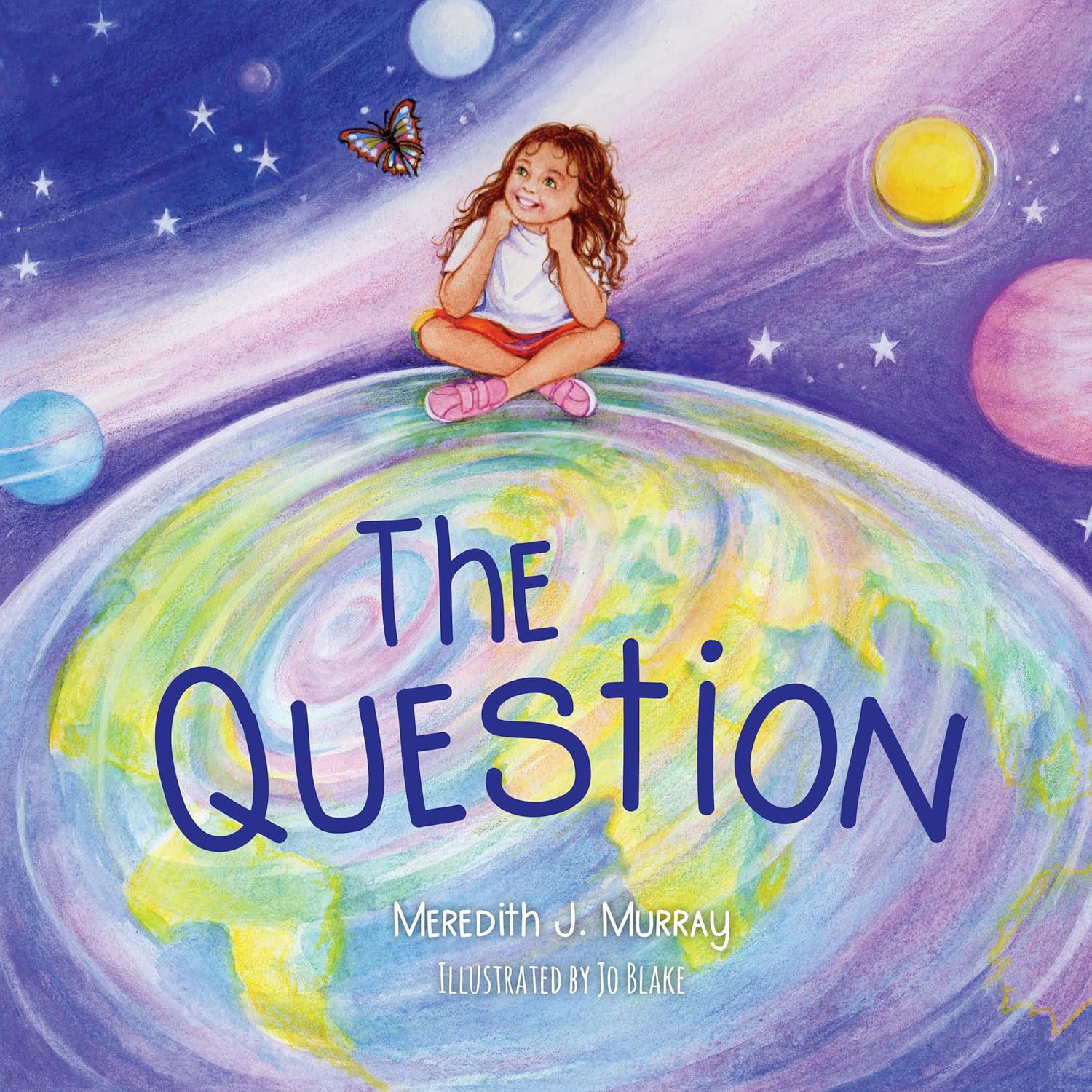
The Question is a beautifully crafted children’s book that takes a fresh approach to the age-old question, “What do you want to be when you grow up?” Instead of focusing on careers or traditional aspirations, the story flips the script and asks, “How will I be when I grow up?” Through lyrical rhymes and Jo Blake’s enchanting illustrations, the book gently encourages readers—both children and adults—to think about personal qualities, kindness, curiosity, and gratitude as markers of a meaningful life.
What struck me first was how seamlessly Murray interweaves a profound message into simple, flowing verses. Lines like, “From what you’ll be to how you’ll be when your childhood has passed,” felt like a lightbulb moment. It challenges the rigid boxes society often creates for kids. I loved how the narrator boldly dreams of a life full of love, gratitude, and exploration rather than being defined by a job title. The rhymes carry a sing-song rhythm, making the reading experience delightful yet reflective.
The illustrations by Jo Blake deserve special mention. They are vibrant and colorful and perfectly convey emotions in the characters. Each scene is evocative and captures the magic of the moment.
One of the most refreshing aspects of this children’s book is its inclusivity and open-endedness. By saying, “Or a they or a them, or have a home filled just with friends,” Murray makes space for different family structures and identities without making it feel forced. The message of embracing individuality and leading a life full of curiosity and kindness is universal. It’s a quiet yet powerful reminder to parents and children alike that life is less about achieving and more about being.
The Question is a heartfelt, thought-provoking read that goes beyond being just a children’s book. Its wisdom, wrapped in lyrical prose and dreamy illustrations, makes it a treasure for readers of all ages. I’d recommend it for parents looking to spark deeper conversations with their kids or anyone who wants a gentle nudge to rethink what truly matters in life.
Pages: 24 | ISBN: 1964934397
Sometimes a Story Writes Itself

Superconscious Dave and the Collective Soup takes readers on an intergalactic adventure with Dave as he discovers a magical realm of connection, wisdom, and playful oddities, guided by a quirky green ape. What was the inspiration for the setup of your story?
In Superconscious Dave and the Collective Soup, the third installment of the wondrous Superconscious Dave series, the story takes an unexpected turn, leading readers on a journey far beyond the initial scope of a simple origin story.
Originally this book was to be Superconscious Dave’s origin story. But sometimes a story writes itself and creates something completely different to what you originally had imagined. So I went with it.
Guided by curiosity and an insatiable desire to uncover the mysteries of existence, Dave delves into the wonders beyond our world, exploring concepts that connect us all through time and space.
Dave’s past adventures have seen him traveling to Australia in his star car and venturing back to ancient Egypt.
In Superconscious Dave and the Collective Soup this time, Dave embarks on a multi-dimensional exploration that transcends our understanding of the universe.
This story navigates the vast and interconnected expanse of the cosmos, uncovering truths that challenge our perception of reality.
What inspired the creation of the “Sea of Ying and Yang” and its fantastical elements?
As a medium, I know we are eternal beings, but no one really knows what existence is like beyond death other than the fact that we can continue to have a mind to mind connection with our loved ones.
As we are all energy, we simply change forms because as we know energy can never be destroyed but can change forms.
The Sea of Ying and Yang represents a multiple perspective of things.
The higher, the lower, the opposites of things. We have all heard of the saying ‘as below and so above. As above, so below’ and this is what I wanted the illustrations to reflect. It’s an adult concept portrayed in fun and playful illustrations.
What were some themes that were important for you to explore in this book?
Magic, mysticism, wonder, exploration, curiosity, and specifically interconnectedness – a collective consciousness that we are all a part of.
Understanding that we are all connected brings a different perspective of how we live in life. How we interact with each other and the flow on effect of our decisions not only to ourselves but to others and ultimately, everything.
What was your collaboration process like with the illustrator to bring your vision to life?
Fun, challenging, and imaginative.
If I showed you my first attempt of what Dave would look like, you would laugh and wonder how a gifted illustrator could create something so magical from a rough drawing and a few descriptive details about Superconscious Dave. But Sue (Susan) did. She is a creative genius.
It helped that Sue and I have been friends for many years, so we already knew how each other worked.
Sue was very patient with me and asked all the right questions and was super keen to create amazing illustrations that I saw in my head but couldn’t visually show her. It was a trial-and-error process.
Author Links: GoodReads | Facebook | Website | Amazon
on his magical quests,
where imagination thrives,
and dreams are blessed.
For Superconscious Dave.
the enigmatic star.
offers a journey like no other.
from near to far.



 LITERARY TITAN