Blog Archives
Deal Hunter


Deal Hunter is a fast-moving sci-fi story that follows Princess Kainda, a young woman who gets blasted out of her controlled royal life and into the path of a rough salvage ship, the Deal Hunter. What begins as a simple rescue turns into a full transformation as Kainda learns the truth about the sabotage that nearly killed her, uncovers betrayal inside her own family, flees to survive, trains to fight, and gradually grows into a leader who challenges pirate clans and rigid political systems. The book winds through battles, bounty hunts, palace intrigue, and a rising sense that Kainda is meant for something far bigger than being a decorative royal figure.
I found myself rooting for Kainda almost immediately. Her frustration with being treated like a pretty tool instead of a person felt sharp and honest. When the explosion sends her spinning into space, her fear is captured with blunt simplicity, and I felt it right in my chest. The dynamic with the Deal Hunter and its robots really pulled me in. The ship becomes more than a tool. It acts almost like a guardian and a reluctant mentor. Watching Kainda stumble through her first moments onboard, half frozen and confused, reminded me how quickly our lives can flip. I liked how the writing sits in those little moments of uncertainty and lets them breathe.
As the book ramps up, the emotional stakes climb right with the action. I enjoyed the mix of tense scenes and Kainda’s stubborn spark as she pushes back against every limit others try to place on her. There were times I wanted to shake some sense into the people around her because their condescension felt so real. I also appreciated how the author keeps returning to the theme of control. Kainda wrestles with the family that smothers her, the pirates who want her dead, and even her own role as a princess. Watching her claim her power bit by bit was satisfying. Some sections move fast, and the pacing jumps, but the heart behind the scenes carries the story. The book has this gritty charm that made me lean in instead of pull back.
Deal Hunter feels like a story for readers who enjoy scrappy heroes, found family energy, political messes, and the thrill of saying to hell with expectations. If you like sci-fi that mixes action with character-driven growth, this book will be a fun ride. I would especially recommend it to anyone who loves seeing a character climb out of the box the world put them in and build something entirely new.
Pages: 245 | ASIN: B0CGHLQX36

Prism

Prism is a science fiction novel that follows Vernon Vining, an investigator with an unusual sensitivity to the natural world, as he’s sent to a distant planet called Prism to solve a life-or-death mystery. The planet is a technicolor ecosystem where everything shifts through endless shades. The local life communicates by flashing patterns of light instead of sound, and the human settlers, who initially thrived, now face a frightening problem after a worker dies from a catastrophic and inexplicable internal breakdown. Vernon and his longtime partner Sam are sent across light-years to figure out what Prism is trying to say and how to stop the danger before the entire colony must be evacuated.
Vernon’s voice is warm and wandering in a way that makes even technical explanations feel personal. He reflects on childhood, on breezes and falling leaves, and somehow those memories fold into his ability to understand alien worlds. I liked that. It made the story feel grounded even while describing shimmering forests and oceans that blink like jewels. The author leans into color as a living force, almost a language, and that choice gives the book a dreamy undercurrent. The pacing sometimes slows, but the wandering feels intentional, as if we’re supposed to drift a little so Prism’s strangeness can seep in. I didn’t always know where the story was taking me, but I didn’t mind being led.
What surprised me most was how gently the book handles first contact without making it sentimental. The native creatures don’t speak. They glow. They flash warnings or greetings that humans barely know how to read. When Vernon and Sam try to interpret those signals, the book plays with the idea that meaning might hide in anything. A ripple in water. A field shifting from green to gold. Even a sudden, planet-wide burst of color that feels like a greeting from the world itself. I found myself wondering, along with the characters, whether we’d notice such messages on Earth, or whether we’ve forgotten how. The mystery at the heart of the plot gives the story momentum, but it never overshadows the quieter reflections about perception, patience, and what it takes to truly listen.
By the end, I felt like I’d spent time in a place that was oddly soothing despite the danger. The book is science fiction, but it carries the tone of a field journal mixed with a travel diary. I’d recommend Prism to readers who enjoy reflective sci-fi, worldbuilding built around sensory detail, and stories where the “alien problem” is really a communication problem at heart. If you like stories that move with curiosity and a steady, thoughtful rhythm, you’ll probably enjoy settling into Prism for a while.
Pages: 227 | ASIN: B0CHL7WRTG
The Need for a Futurist Story
The Chip follows a brilliant CEO who finds the world bends to his every whim after he secretly implants an advanced AI chip in his brain. What was the inspiration for the setup of your story?
The need for a futurist story that would begin with one man that want to manipulate the world and with technology gets this power.
What is it that draws you to the technothriller genre?
Its exciting to picture a world that is not to far away from our ways but just around the corner yet is more interesting to see new technologies to play along the main story.
What are some things that you find interesting about the human condition that you think makes for great fiction?
Í painted a fictional story but given the right circumstances Humans are able to behave in irrational ways that everyone relate or understands it that can actually bring realistic thoughts and emotions to the reader while is a techno thriller story.
What is the next book you are working on, and when will it be available?
I have a story that is starting to boil in my head that is very ambitious. However, right now I am sitting on this book to see some reactions to it.
Author Links: GoodReads | Amazon
Hypocrisy


The novel Hypocrisy drops you right into a wild mix of government secrets, alien power plays, and strange visions that blur the line between what is real and what is imagined. The story opens with Ché Anaconda, a UAP hunter who lives knee deep in lies and threats. From there, the book cuts across galaxies, following Alen Innocent, Honor, Charisma, and a cast of beings who shift forms, twist timelines, and chase after knowledge that could change everything. The plot swings fast, with violence, politics, and cosmic mysteries all happening at once, and it creates this feeling that the universe is breaking open in every direction.
The writing has this bold energy that keeps the scenes jumping. The author clearly loves big ideas. I could feel that passion on almost every page. Scenes would explode out of nowhere. But then I would get pulled back in by some strange image, like blood on a bedsheet turning into a vision. The book has a way of surprising you right when you start to doubt it, and that made the experience weirdly addictive. It felt like watching someone open doors faster than you can peek inside them.
This whole concept of powerful beings feeling lost, insecure, or tired struck me more than I expected. I liked how the book kept poking at the idea that knowledge can be both a gift and a curse. There is something human in the middle of all the chaos. Some moments made me feel a real ache, especially scenes that touch on memory and trauma. Other times, I felt thrown off by the heavy social commentary. Even so, those rough edges gave it a raw emotion that stuck with me.
I think Hypocrisy is perfect for readers who enjoy fast, unpredictable sci-fi with big stakes and messy characters who feel alive. It will hit the sweet spot for people who like their stories loud, strange, and full of cosmic drama, and who don’t mind a little narrative chaos in the mix. If you like to dive into a universe that punches first and explains later, you’ll have a good time.
Pages: 378 | ASIN : B0FV55K9F8
Redemption on a Cosmic Scale
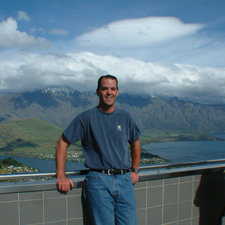
Quantum Genesis follows a scientist on a distant planet whose experiment brings the planet to life, and reveals that an asteroid will destroy all life in ten months, and he must find a way to save everyone. What was the inspiration for the setup of your story?
The inspiration for Quantum Genesis came from my fascination with the intersection of science, consciousness, and the environment. I’ve always been intrigued by the idea that a planet itself could possess awareness and agency—what if the very ground beneath us could respond to our actions? That idea, combined with concerns about ecological balance and humanity’s responsibility toward nature, became the foundation for Ghia and its relationship with Ode. The story evolved into a what-if scenario about creation, consequence, and redemption on a cosmic scale.
One thing that stands out to me in your novel is the creativity embedded in this world. What was your inspiration for creating such an imaginative world?
I wanted to create a world that felt both alien and familiar—a reflection of Earth’s potential future if we continued down a path of unchecked experimentation and environmental strain. The planet Ghia is a canvas for exploring how life might adapt and evolve under extreme conditions, blending advanced technology with an almost spiritual symbiosis between humanity and nature. The visual and atmospheric elements of Ghia were inspired by a mix of astrophysics, quantum theory, and my love for cinematic world-building, similar to how films like *Avatar* or *Interstellar* immerse audiences in otherworldly yet believable settings.
What were some themes that were important for you to explore in this book?
Several key themes run through Quantum Genesis—sacrifice, faith versus fear, and humanity’s fragile relationship with its environment. I wanted to explore what happens when science reaches a point where it begins to blur with spirituality, and how people respond when their entire existence is threatened. Ode’s journey from scientist to reluctant savior mirrors a larger story about growth, humility, and trust in something greater than oneself. Ultimately, it’s a story about survival, connection, and the cost of both progress and redemption.
Will there be a follow-up novel to this story? If so, what aspects of the story will the next book cover?
Yes, *Quantum Genesis* kicks off this trilogy. The second book, *Quantum Mind*, is out now (https://www.books2read.com/quantummind). The third, *Quantum Entanglement*, is in the works, and will delve further into the future. The Quantum Guild of Planets is constantly pushing the boundaries of universal mysteries, and they encounter an alien race intent on severing the bond between planets and their dominant species. The Guild thrives on mutual cooperation, growing through the exploration of differences and individuality. This all culminates in a final showdown that could forever reshape the quantum limits of mind, matter, and destiny.
Here is a pretty good description of the books that are part of the Quantum Genesis Series. https://www.amazon.com/dp/B0CZLNJZN5?binding=kindle_edition
Author Links: GoodReads | X | Facebook | Website
With the clock ticking, Ode must rally humanity and guide them into subterranean caverns where stasis chambers offer their only hope of survival. Empowered by Ghia’s gift—quantum-infused stones with the power to heal, teleport, and manipulate the quantum fabric of reality—Ode faces impossible odds as he races to save his people. But with fear and faith dividing the population, and the planet’s very survival on the line, Ode and Ghia must work together to overcome the impending cosmic destruction.
As the asteroid approaches, the only certainty is this: if you want to survive, you need to go underground.
For fans of sci-fi thrillers filled with high stakes and unexpected twists, “Quantum Genesis ” is a must-read. If you enjoyed books like “The Martian” and “Enders Game,” then you’ll love this gripping tale of survival and sacrifice.
A Struggle Between Two Worlds
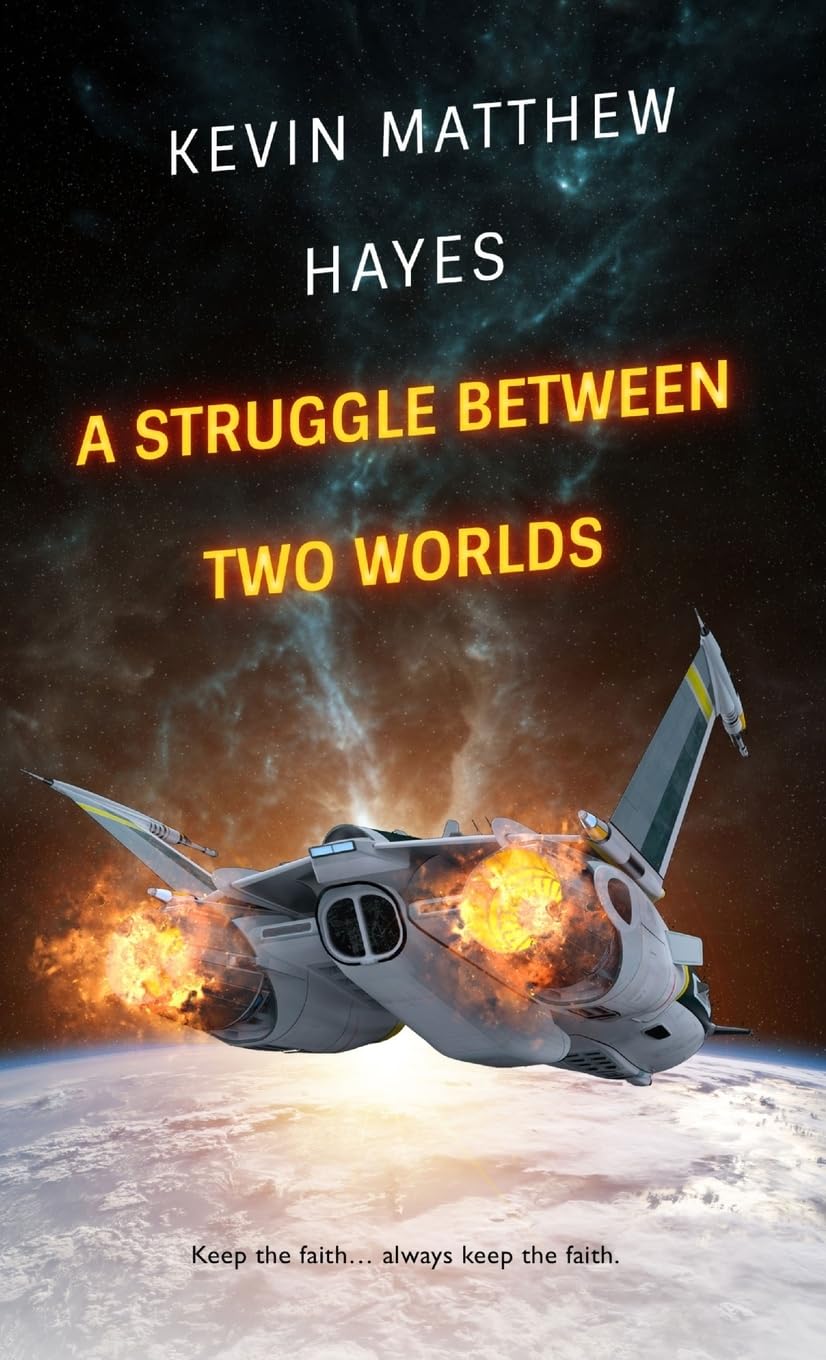
Kevin Matthew Hayes’s A Struggle Between Two Worlds is a bold and heartfelt space war epic that follows Lieutenant Jaxon, a pilot caught between duty and despair in a solar system torn apart by conflict. The story begins with heart-thumping battles above the moons of Mars, shifts into tense debriefings aboard a massive carrier, and spirals into a deeply human story about faith, loyalty, and survival. It’s part space opera, part war journal, and part meditation on what it means to keep going when everything you care about seems to be slipping away.
The writing doesn’t waste time. It throws you straight into the action with vivid detail and the silence of space pressing in from every side. The dialogue feels natural, even when it’s clipped and military, and that helps ground the futuristic setting in real emotion. There’s something lonely about it all, a kind of quiet heartbreak that runs under the explosions and heroics. I could feel Jaxon’s exhaustion, his doubt, and his fear. I also admired the author’s balance between world-building and humanity. The space battles are cinematic, but what lingered with me were the small moments like Jaxon’s conversations with Quincey, the call home to his wife and daughter, and the silence after loss. Those pieces hit hard.
Sometimes the technical talk about ships and missiles drags on a bit, and there are places where the dialogue leans heavy on old war clichés. But even then, it fits the characters. These are soldiers trying to stay sane, clinging to ritual and bravado to mask their fear. The pacing slows in the middle, but the emotional punch makes up for it. I also liked how Hayes doesn’t glamorize war. The battles are terrifying, not triumphant. Every victory feels costly. By the end, when Jaxon faces Markov one last time, it’s not about pride or revenge, it’s about finishing what can’t be escaped. That ending stayed with me. It felt raw and real.
This book would be perfect for readers who love classic military sci-fi or flight stories that dig into the human heart behind the machinery. Fans of Top Gun, Battlestar Galactica, or The Expanse will find a lot to love here. I’d also recommend it to anyone who wants an action story that still remembers what it feels like to be afraid, hopeful, and deeply, painfully human. A Struggle Between Two Worlds isn’t just about space, it’s about the fight we all face between faith and despair, and the small, stubborn will to keep flying anyway.
Pages: 35 | ASIN: B0FRW5JRRQ
Gods and Guardians II Escape from Durgurrum

Gods and Guardians II continues the saga of Arthur, Samuel, and their companions as they’re pulled through portals, thrown aboard Elvish starships, and forced into battles that stretch across galaxies and gods’ domains. Author R.W. Dove blends science fiction with fantasy so smoothly that I sometimes forgot where one ended and the other began. The pacing swings from quiet, reflective moments to grand, cinematic scenes filled with tension, friendship, and wonder. There’s a sense of adventure in every chapter, like the book itself refuses to slow down, and you’re pulled along whether you’re ready or not.
What I liked most was Dove’s ability to make everything feel alive. The ships, the crystals, even the air in the alien halls hum with a kind of magic. The writing has a rhythm that’s old-fashioned in a good way, like classic fantasy storytelling where the author truly believes in the world they’ve built. At times, the descriptions stretch long, yet they never lose heart. I could tell Dove poured himself into this, weaving myth and technology together with such sincerity that it’s hard not to admire it. I felt that some parts could have used tighter dialogue, but even then, the sheer imagination keeps it moving. The story feels vast, full of purpose, and though it leans heavily into the moral struggle between light and dark, it never loses sight of its human center, courage, loyalty, and belief in something bigger.
Emotionally, the book surprised me. I found myself caring about Arthur’s confusion and fear, about the weight of destiny he didn’t ask for. I liked how friendship drives much of the plot; even when gods and kings are scheming, the heart of the book is still about people just trying to do what’s right. Dove’s writing feels hopeful, even when the world he’s describing teeters on the edge of ruin.
If you love sprawling worlds, moral stakes, and a touch of classic heroism, Gods and Guardians II: Escape from Durgurrum is worth your time. This is a story for dreamers, for those who miss the feel of true adventure and heartfelt imagination. It’s a long ride, but one filled with light, danger, and just enough wonder to make you believe in magic again.
Pages: 278 | ISBN : 1968973427




 LITERARY TITAN