Blog Archives
True Leadership Begins Within

Mental Toughness for Leaders is a deep and thoughtful guide on building inner strength and resilience, all wrapped in a clear framework called the SPEAR model—Self-awareness, Path to vision, Emotion regulation, Attention management, and Result visualization.
How much research did you undertake for this book and how much time did it take to put it all together?
This book has been a long journey—it was first started in 2017 and took over eight years to complete as I also practically applied this model in workshops and coaching sessions. That said, between 2020 and 2023, I took a break from working on it to focus on another major project: my award-winning leadership book, “Rise of the Warrior Leader,” which was published in 2023. So, in effect, Mental Toughness for Leaders took around five years of focused writing and research.
The research for this book was both extensive and deeply personal. It draws from my lived experiences—from serving in the South African military to working in the high-pressure, competitive corporate world of London as a banker. Mental toughness wasn’t just a concept I studied—it was something I had to live daily. It played a vital role in overcoming real-life challenges, including those that led to being honoured with the Business Leader of the Year Award in London by the Chamber of Commerce and the New Leader Award in Geneva, Switzerland.
My journey was also deeply inspired by the wisdom and example of African warrior-leaders, whose stories I studied closely. These were leaders who, often facing enemies with superior resources and firepower, knew how to win the battle in their minds before stepping onto the battlefield. They taught me that true leadership is about showing up—with courage, clarity, and inner strength—even when the odds are against you. Their ability to remain mentally composed under pressure and their discipline in staying true to their purpose served as powerful examples of mental toughness in action.
Beyond my own experiences and historical influences, I grounded my insights through extensive reading of leadership literature and by conducting interviews with numerous leaders across various sectors. This combination of personal narrative, practical insight, cultural depth, and academic research forms the backbone of this book.
What were some ideas that were important for you to share in this book?
- Self-Mastery Is the Foundation of Leadership
I believe that all effective leadership starts with self-mastery. Before we can lead others, we must first lead ourselves. This means developing self-awareness, learning to regulate our emotions, and cultivating personal discipline. These are not just buzzwords—they are core elements of mental toughness. When we strengthen these qualities, we equip ourselves to stay calm under pressure, think clearly in uncertainty, and act with resilience no matter the challenges we face.
- Mental Toughness Can Be Trained
One of the central messages I share in this book is that mental toughness is not something you’re simply born with—it can be developed. Like a muscle, it grows stronger with intentional practice. That’s why I introduce practical frameworks like the SPEAR model, which help you build focus, manage stress, and sharpen your resilience. My aim is to provide you with actionable steps to develop your inner strength, so you can grow both personally and professionally.
- Leaders Must Align Vision with Action
In my experience, the most impactful leaders are those who align their vision with their actions. It’s not enough to dream or strategize—you must also take consistent, focused steps toward that vision each day. I explore tools such as visualisation, strategic planning, and reflective questioning to help you stay grounded and on course. When your actions match your intentions, you not only build momentum but also inspire others to follow your lead with confidence and clarity.
What is one thing that you hope readers take away from Mental Toughness for Leaders?
If there’s one core message I hope readers take away from Mental Toughness for Leaders, it’s this:
True leadership begins within.
Mental toughness is not an exclusive trait reserved for the few—it’s a skill we can all cultivate. Through self-awareness, emotional regulation, and intentional action, anyone can lead with clarity, resilience, and purpose. My hope is that this book equips readers with practical tools and inner strength to not only lead others but also to lead themselves through life’s inevitable challenges.
But leadership doesn’t stop at the individual. The “me”—when strengthened—contributes to the strength of the “we.” When many resilient, self-led individuals come together, they create a powerful collective. This connection between personal mastery and collective culture is where the true transformation happens.
This idea lays the foundation for my next book, No Blame Culture, which I intend to release in the coming year. It explores how fostering accountability and emotional maturity within individuals contributes to healthier, more effective teams and organizations—shifting us from “me” to a more empowered and responsible “we.”
Author Website | Instagram | Amazon
What if your greatest strength lies not in your circumstances, but in your ability to harness the power of your mind?
Drawing inspiration from the mental toughness of African warrior leaders who thrived in the face of adversity and overwhelming odds, this book reveals that resilience is not reserved for the battlefield—it’s available to anyone willing to cultivate it.
At the heart of this journey lies the SPEAR model, a practical framework designed for coaches, facilitators, and individuals seeking self-mastery. Starting with Self-awareness and Self-acceptance, this model empowers you to connect with your True Self and uncover what you truly want in life. With a focus on Emotion and Attention Management, SPEAR helps you build the mental resilience needed to navigate life’s challenges with clarity and strength.
The SPEAR model provides actionable tools to enhance performance, foster personal growth, and achieve lasting transformation.
Whether you’re a leader, a coach, or simply someone seeking to unlock your potential, this book offers a proven formula to face adversity with the mindset of a warrior.
Mental Toughness for Leaders


Mental Toughness for Leaders is a deep and thoughtful guide on building inner strength and resilience, all wrapped in a clear framework called the SPEAR model—Self-awareness, Path to vision, Emotion regulation, Attention management, and Result visualization. Through stories of warriors, psychological research, historical accounts, and hard-earned lessons, Author Claudio Chistè gives readers practical tools to face adversity head-on, whether in leadership or life itself. He weaves wisdom from Carl Jung, Viktor Frankl, and even Chief Maqoma, a Xhosa military leader, to drive home the idea that we all have a warrior within, one that must be awakened, shaped, and harnessed through disciplined reflection and emotional control.
From a soldier’s lens, this book resonated with me. The chapter on self-awareness struck me like a rifle butt to the chest. Chistè dives into the psychological landscape with surgical precision, showing how our thoughts and beliefs shape our reality. That part where he talks about sealing your mental container, avoiding “leaks” that drain your emotional and spiritual energy, that’s something I wish I’d known back in Afghanistan. We’d lose good men not to bullets, but to the weight they carried inside. That metaphor of “leakage” explained so much about burnout and disengagement in high-stress teams. He also digs into identity through stories like that of Chief Maqoma, showing how setbacks don’t define us, it’s what we do after that matters.
The SPEAR model itself is strong. Each letter isn’t just theory, it’s backed with real-life stories and reflective exercises. The section on emotion regulation, chapter three, reminded me of my first leadership role under fire. You don’t learn to manage fear; you learn to act through it. Chistè echoes that, but adds a crucial layer: understanding the emotional roots behind our triggers. Too often, we glorify stoicism and call it strength, when in reality, we’re just shutting down. As he says, don’t mistake petrifaction for resilience. That line alone should be on every leader’s wall.
This book is for those who’ve stared down tough moments, whether in combat, business, or personal crisis, and wondered how to bounce back stronger. I’d recommend it to junior leaders in the military, seasoned executives feeling stuck, and anyone struggling to align their identity with their purpose. It’s not just about pushing through pain, it’s about knowing who you are, what you want, and having the tools to stay focused when everything around you is chaos. Mental Toughness for Leaders doesn’t just hand you a sword, it teaches you how to wield it.
Pages: 261 | ISBN : 1037051718

Letting Go of Overthinking and Anxiety in Relationships: 57 Easy Techniques to Stop Overanalyzing, Rewire Your Anxious Thoughts and Build Trust in Your Relationship

Letting Go of Overthinking and Anxiety in Relationships is a compassionate and clear-eyed guide that gently walks readers through the emotional maze of anxiety and overthinking in romantic relationships. With 57 practical techniques, the book aims to unravel the tight knots that overanalysis and insecurity can tie between partners. It balances clinical insight with real-life advice, focusing on emotional awareness, cognitive reframing, and communication strategies that are not only actionable but empathetic.
I found myself moved by how much this book “gets it.” The author speaks to the experience of lying awake at night, spinning in silent spirals of doubt and fear, and validates those feelings without judgment. What struck me most was the simplicity of the tools—many are things you can do right away, without therapy sessions or fancy journals. In Chapter 1, the visualization script of a secure relationship felt like an emotional balm. I paused to do it myself. The imagined warmth, the calm space, the supportive presence of a partner—it was powerful. Later chapters dig even deeper. The section on “Defensive Awareness Check-Ins” offered one of the most refreshingly honest approaches to managing conflict I’ve read. It wasn’t about blame; it was about pausing and choosing empathy over ego.
Chapter 7, Nurturing a Resilient Mindset for Long-Term Relationship Success, is one of the book’s most empowering and quietly motivating chapters. It shifts the focus from fixing anxiety in the moment to building lasting emotional strength that can weather the ups and downs of love. The author emphasizes that resilience in relationships isn’t about being unaffected by conflict—it’s about bouncing back with understanding, empathy, and commitment. What resonated with me most was the idea that resilience is something you build, not something you’re born with. Techniques like setting shared goals, reflecting on past victories as a couple, and practicing emotional regulation in stressful times are all presented as realistic, do-able practices.
I’d absolutely recommend this book to anyone who’s ever felt emotionally hijacked by their own thoughts in a relationship. Whether you’re newly dating or in a long-term partnership, this book has value. It’s especially helpful for folks navigating anxious attachment, or for partners who want to better understand each other’s triggers and emotional patterns. It’s the kind of book you dog-ear, return to, and maybe even read out loud together on a quiet Sunday night.
Pages: 168 | ASIN : B0DTL5VB7Z
Get Your Mind Right


Kenneth Wyche’s Get Your Mind Right is part life manual, part personal manifesto, and part spiritual pep talk. It’s a deep-dive into mindset, self-worth, manifestation, and personal growth, told with the energy of someone who’s lived through hard lessons and came out the other side with clarity and purpose. Structured in 31 chapters, it mixes practical advice with spiritual insight, touching on everything from privilege to resilience, from frustration to faith. Wyche’s central message is this: your mind is the driver of your reality—so get it in gear.
Wyche writes with the conviction of someone who’s both been broken and rebuilt himself with intention. He’s not afraid to say things like, “Life wants to happen for you not to you,” or that pain “isn’t meant to be solved, it’s meant to be endured.” That’s raw, but it’s real. There’s a rhythm to his writing that feels almost sermonic, like spoken word—very fluid, very now. It might not be polished in the classic literary sense, but that’s part of the charm. It feels like a conversation with your wise, slightly intense older brother who’s done the work and just wants you to level up too.
What stood out the most was how Wyche links personal evolution to mindset shifts, particularly in the chapters on manifestation and belief. His breakdown of “The Law of Attraction” and “The Law of Vibration” is surprisingly accessible—none of the overcomplicated spiritual fluff that often clouds those concepts. He’s upfront about his own struggles during the pandemic and how he turned his life around not by magic but by changing his thoughts and actions. The story about going from jobless to focused because of a mental shift was the kind of gritty honesty I appreciate.
Wyche has this tendency to go philosophical for stretches—like in Chapter 6 where he dives into the origins of privilege, hierarchy, and human development. It’s smart, for sure, but these moments made me pause and wonder if the average reader would stay with him through those detours. Still, there’s real value in those explorations—especially when he links them back to the self. His reminder that “you don’t need to work harder; you need to relocate” was a standout—practical and profound. It’s a reminder that sometimes the grind isn’t broken—it’s just misaligned.
Chapter 29, The Value in Adding Value, really struck a chord with me. Wyche flips the usual success narrative by asking not what you can get, but what you can give—and how that giving defines your worth. He challenges you to think deeply about your personal ROI not just in money but in energy, purpose, and impact.
Get Your Mind Right is a mindset in book form. Wyche doesn’t just preach improvement; he outlines how to live with intention, even when life’s messy, painful, and unfair. It’s not a soft read—it asks things of you. It’s for people who are tired of surface-level inspiration and are ready to actually do the work. If you’re in a life rut, if you’re trying to build your confidence, or if you’ve got big dreams and no roadmap, this is for you.
Pages: 163 | ASIN : B0D9WT95PG
Hey Dad…: Everything You Should’ve Learned About Life (But Didn’t).
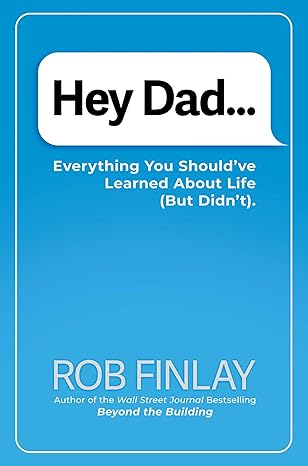
Rob Finlay’s Hey Dad is like a practical survival guide for stepping into adulthood, written with the kind of no-nonsense advice you’d expect from a dad who’s been through it all. The book covers everything from getting a job, handling money, and setting up a home, to buying a car and navigating awkward social situations. It’s packed with real-world lessons, expert advice, and anecdotes from Finlay’s own experiences, including a few missteps along the way. The tone is warm, occasionally humorous, and always direct, like a reassuring pep talk before heading into the chaos of adulthood.
What I love most about this book is its casual and engaging style. Finlay gets straight to the point with practical wisdom. Take the opening story about his daughter calling in the middle of the night to ask if she could put diesel in her gas engine. It’s a moment many parents will relate to, and it sets the stage for the book’s purpose: to fill in the knowledge gaps that young adults often don’t realize they have. The way Finlay writes makes it feel like you’re getting advice from an older friend who genuinely wants you to succeed.
The book’s strongest sections are those where Finlay blends personal experience with expert insights. For example, in the chapter on getting a job, he recounts how he made 500 cold calls before landing his first role, a testament to perseverance that young job seekers could learn from. He also includes practical networking tips and emphasizes the importance of making a good first impression. Similarly, his breakdown of financial literacy is refreshingly simple and clear. He doesn’t overcomplicate investing or budgeting but gives straightforward steps to build a solid financial foundation. This mix of personal trial-and-error stories and expert-backed advice keeps the book from ever feeling preachy.
If you’ve been managing your own finances, maintaining a home, or navigating work-life balance for a while, you might not find many new revelations here. But for those just stepping into independence, this book is a goldmine. Finlay’s approachability makes even the driest topics like credit scores and lease agreements feel manageable.
Hey Dad is a fantastic read for recent high school or college graduates, young professionals, or anyone feeling overwhelmed by the transition to independent adulthood. It’s also a great resource for parents who want to give their kids a head start in the real world without overwhelming them with unsolicited advice.
Pages: 208 | ASIN : B0DWNFRQ7D
Well That Was Fun…Now What?: A Real Plan For Recovery From Setbacks

Let me just start by saying this book gets it. Kareen McKinnon has managed to bottle up the chaos of life’s inevitable curveballs, sprinkle in a bit of sass, and somehow turn it all into an incredibly practical guide for bouncing back. Well That Was Fun…Now What? is not your typical self-help book dripping with toxic positivity or clichés about how “everything happens for a reason.” It’s refreshingly real, sometimes hilarious, and filled with tools you can actually use when life decides to go full soap opera on you. From burnout to reinvention, McKinnon tackles the messiness of failure and growth with humor and honesty, leaving you feeling seen and, most importantly, equipped to handle the mess.
What I loved most about the book was its tone. It’s like having a wise, funny friend who’s been through the wringer but still knows how to laugh about it. Take the chapter on burnout, for example. McKinnon doesn’t just tell you to “listen to your body”; she calls out our modern obsession with ignoring limits, comparing it to “trying to charge your phone with positive thoughts.” She talks about how burnout sneaks up on you. Her tips on creating a “personal dashboard” for warning signs felt so doable and even kind of fun.
The writing is so conversational that you almost forget how much practical advice you absorb. One standout section for me was about reframing your mindset after failure. McKinnon doesn’t sugarcoat anything. She openly acknowledges that when you’re in the middle of your own personal dumpster fire, the last thing you want is someone chirping about silver linings. Instead, she frames it as “rearranging the furniture in your mind.” That metaphor hit me hard because, yeah, the emotional clutter doesn’t go away, but maybe you can move it so it stops tripping you up.
What surprised me most were the stories sprinkled throughout. Real people, real screw-ups, and real comebacks. Sarah turned her failed startup into a consulting gig where she makes more money teaching others what not to do. Or Marcus, who became a 50-year-old intern after his career derailed and ended up running a successful digital marketing firm. These stories reminded me that reinvention isn’t just possible; it’s messy, awkward, and sometimes better than what you had planned. Plus, McKinnon doesn’t romanticize these comebacks. She’s clear that they result from hard work, stubbornness, and asking for help.
Well That Was Fun…Now What?: A Real Plan For Recovery From Setbacks is perfect for anyone who’s had their life turned upside down—whether it’s a breakup, career disaster, or just the sheer weight of existing in a chaotic world. If you like your advice practical, your humor sharp, and your growth messy but meaningful, this is your next read.
Pages: 63 | ASIN : B0DTTD6M46
When I Accept Myself

Laura Linn Knight’s When I Accept Myself offers a transformative toolkit for nurturing your inner child and cultivating a vibrant, positive mindset. This inspiring self-help guide equips readers with four practical tools for healing and embracing their perfectly imperfect selves. Enhanced by Sara Tomate’s cheerful illustrations and Knight’s engaging personal anecdotes, the book invites readers to embody love, kindness, and self-empathy while fostering growth and self-acceptance.
One of the book’s standout principles is its emphasis on reframing mistakes. Rather than allowing errors to spiral into self-hate and shame, Knight encourages readers to see them as opportunities for positive change and empowerment. This practice not only fosters self-awareness but also paves the way for genuine growth and rejuvenation. The book’s affirmations—simple, impactful, and written in the first person—are a cornerstone of its appeal. By speaking directly to the reader, these affirmations feel deeply personal and adaptable to individual struggles. As someone grappling with the weight of external expectations, I found solace in Knight’s reminder. Knight’s prose is concise yet profound, offering clear, actionable guidance for those eager to embark on a journey of personal transformation. Her wisdom is further complemented by Tomate’s vibrant, colorful illustrations, which create a warm and inviting atmosphere. The book’s thoughtful formatting and upbeat design perfectly align with its message of reconnecting with one’s inner child, making the experience both enjoyable and impactful. When I Accept Myself delivers its healing messages with remarkable efficiency, blending accessible language, relatable stories, and delightful visuals. Knight’s empowering insights have inspired me to embrace cheerfulness and prioritize my own desires over external demands, and even the act of reflecting on this shift fills me with a sense of joy. For adults struggling with happiness, presence, or self-contentment, this book offers a beacon of hope and actionable solutions.
In a world overwhelmed by conflict and negativity, books like When I Accept Myself remind us of the profound impact of kindness, self-awareness, and self-love. Imagine a world with fewer bullies, less hostility, and more confident, content individuals. Laura Linn Knight’s work is a step toward that brighter future, making it an invaluable addition to the self-help genre.
Pages: 77 | ASIN : B0DMVKC2SJ

Some Whispers From Eternity

Some Whispers from Eternity takes readers on an introspective journey into the depths of spirituality, consciousness, and human potential through the lens of OM Kriya Yoga. Shomik Chaudhuri weaves his experiences and teachings into a compelling narrative that not only introduces the philosophy of Kriya Yoga but also delves into ancient Vedic practices, chakras, and the Koshas. The book is a call to rediscover inner peace and divine connection in a world riddled with division and materialism.
One aspect of the book that stands out is Chaudhuri’s ability to simplify profound concepts. For example, in Chapter 1, the exploration of the “Science of Ancient Vedic Temples” reveals the intricate harmony between spiritual energy and architectural design. Chaudhuri’s explanation of temples as powerhouses of cosmic vibrations highlights their timeless relevance. I found myself fascinated by how ancient wisdom translates into modern significance—something rarely articulated so clearly.
Chaudhuri’s descriptions are heartfelt and passionate, though they sometimes lean heavily on repeated encouragement to embrace spirituality, particularly in his emphasis on practicing austerities for self-transformation. In Chapter 8, “The Path of Austerities,” I admired the intent and found the message meaningful, though a touch of nuanced storytelling or personal anecdotes could have added variety to the instructional tone. Even so, his sincerity shines through, making it clear that this is a deeply personal and heartfelt work.
What truly moved me was the section on OM Kriya Yoga. Chapter 10 offers a rare breakdown of this traditionally esoteric practice, making it accessible to readers without prior exposure. The detailed instructions combined with the philosophical grounding make this chapter the book’s centerpiece. I couldn’t help but feel inspired by Chaudhuri’s conviction that Kriya Yoga is a tool for individual and collective upliftment.
The conclusion brings everything together, urging readers to integrate spiritual practices into daily life. Chaudhuri’s emphasis on humanity’s collective responsibility to usher in a “Golden Age” is both uplifting and challenging.
Some Whispers from Eternity is an earnest and thought-provoking read. It’s perfect for seekers of spiritual knowledge, particularly those curious about Yoga’s philosophical underpinnings and practical applications. While not light reading, its insights are profound, making it a worthwhile companion for anyone looking to deepen their spiritual journey.
Pages: 236 | ASIN : B0CSFDD8Q5



 LITERARY TITAN