Blog Archives
Brokenness Becomes Beautiful: Inspiring Pieces of Poetry


Terence Ang’s Brokenness Becomes Beautiful is an intimate collection of poetry and personal reflection shaped by his recovery from a stroke and his experience of aphasia. Its eight chapters trace a thoughtful progression from self-discovery to self-empowerment, giving the book the feeling of a guided inner journey. Ang writes with openness about a body that has changed, words that no longer arrive easily, and the difficult work of meeting the person he’s becoming. The result is tender, candid, and deeply attentive to the small acts of courage that recovery requires.
The poems are spare and accessible, often building their meaning through images drawn from nature and everyday life. A cracked vase still holds flowers, a seed grows while hidden underground, and a tiny flame contains the possibility of transformation. Mirrors, wounds, rivers, stars, and light return throughout the collection, gathering emotional weight as the book unfolds. These familiar objects become a language for experiences that can be hard to name, allowing Ang to speak about grief, patience, self-worth, and hope with striking clarity.
Each group of poems is followed by a longer reflection that brings Ang’s lived experience into sharper focus. Here he writes plainly about frustration, vulnerability, physical limitations, and the loss of his former fluency. He also shows how writing has given him another way to listen to himself and reach other people. The contrast between the compact poems and the conversational reflections works especially well, creating a rhythm of feeling, pause, and understanding. Aphasia is part of the book’s very texture, making each act of expression feel deliberate and earned.
This is a companion for readers rebuilding a life, identity, or sense of possibility after an unexpected change. Ang’s encouragement feels personal because it grows from ongoing struggle, not distant hindsight. He understands that healing can mean taking one better step, finding one clearer word, setting one necessary boundary, or simply refusing to disappear. Brokenness Becomes Beautiful offers a warm, honest vision of wholeness as something spacious enough to include every scar. Terence Ang turns the language of brokenness into a new vocabulary for beauty, courage, and becoming.
Pages: 136 | ASIN : B0HC87NGHP

Drinking From God’s Well

Theodore McDowell’s Drinking From God’s Well: Exploring the Journey From Trauma to Renewal and Recovery is a book-length poetry collection shaped as a spiritual and autobiographical account of addiction, mental illness, family trauma, grief, recovery, and faith. Its three-part structure moves from “The Struggle to Survive” through “Releasing the Pain” and finally to “Life on Life’s Terms,” giving the collection a clear emotional progression from crisis toward a more settled form of acceptance. McDowell writes repeatedly from the most difficult regions of his life: homelessness, substance abuse, a traumatic brain injury, bipolar disorder, estrangement from his children, the deterioration of his marriage, his sister’s suicide, his mother’s dementia, and his own encounters with suicidal despair. Yet the collection treats these experiences as parts of an ongoing spiritual life. The result is poetry that functions at once as memoir, confession, prayer, lament, and meditation on how a damaged life can be gathered into meaning.
McDowell’s strongest poetic feature is his recurring network of images. Jazz is especially important. Saxophones, improvisation, rhythm, silence, and blues become ways of understanding marriage, grief, mental illness, and recovery. Nature serves a similar purpose. Redbud trees, morning glories, egrets, lakes, storms, and falling leaves give physical form to emotional states that might otherwise remain abstract. These repeated images also create continuity across poems written from different stages of life. A storm can embody marital conflict in one poem, while morning light becomes an image of reconciliation in another. Water shifts from danger and uncertainty to cleansing, grace, and renewal. McDowell’s Christian imagery is equally persistent, but his faith is rarely presented as effortless certainty. God is questioned, resisted, cursed, sought, and finally experienced through suffering, forgiveness, human intimacy, and ordinary moments. This tension gives the spiritual dimension of the book much of its substance.
The collection is particularly effective when McDowell turns from his own suffering toward the people who endured its consequences. Poems about his wife and children complicate the recovery narrative by insisting that sobriety alone can’t repair years of injury. In “An Amends to My Daughter,” the speaker tries to listen without defending himself as his daughter describes the damage addiction caused during her childhood. The emotional turning point arrives not with easy reconciliation but with her quiet statement, “I finally feel heard.” That moment captures one of the book’s central understandings of forgiveness: healing requires attention, accountability, time, and the willingness to remain present before another person’s pain. Throughout the collection, marriage is treated with similar seriousness. Love appears as desire, memory, resentment, caretaking, endurance, physical intimacy, companionship, and spiritual shelter. McDowell’s imagery can be highly concentrated, sometimes layering biblical, musical, natural, and erotic references within the same poem, but that density reflects the way the book understands memory itself. The past is continually resurfacing inside the present, transformed by age but never entirely erased.
Drinking From God’s Well has broadened from survival and recovery into a meditation on aging, mortality, gratitude, and the sacred character of ordinary life. Grandchildren, morning coffee, gardening, family meals, walks, music, a wife’s presence in another room, and the simple experience of waking sober acquire the significance that earlier poems gave to catastrophe. McDowell doesn’t portray renewal as the disappearance of trauma. In “Trauma and Grace,” he describes the continuing work of recovery as “finding the miracle / within the marrow of suffering,” while accepting wounds and scar tissue as part of the foundation of renewal. That idea provides an apt description of the entire collection. Drinking From God’s Well is a sustained poetic attempt to integrate suffering into a life that can still contain faith, intimacy, beauty, responsibility, and joy. Its final achievement is not a declaration that the past has been conquered, but a vision of a person able to inhabit his whole history and still recognize grace within it.
Pages: 310 | ASIN : B0D48ZDSRL
The Principle of the Five Chairs

Phil Graffoe’s The Principle of the Five Chairs is a practical self-development book built around a simple idea: the people we spend the most meaningful time with gradually shape our beliefs, habits, standards, ambitions, and character. Graffoe turns that idea into the image of five chairs, each occupied by an influence in our lives. His point is that influence usually works through repeated conversations and familiar behavior. Early in the book, he sums up the central principle plainly: “You become like the people you spend the most time with.” That idea gives the book an easy-to-understand foundation and makes it natural to start thinking about who might be sitting in your own chairs.
From there, Graffoe explores different kinds of people who can occupy those seats. He writes about the Chairs of Ambition, Accountability, Wisdom, Character, Action, Courage, and Energy, as well as the damaging influence of Negativity. Each chair represents something slightly different. Ambition pushes you beyond comfort, accountability challenges your excuses, wisdom brings perspective, character raises your standards, courage helps you act despite fear, and energy creates momentum. The examples are usually drawn from ordinary situations involving careers, friendships, health, business, and personal goals, which keeps the ideas grounded. One of the book’s strengths is that the chair metaphor makes abstract subjects like influence and self-awareness feel concrete enough to examine in your own life.
The book becomes especially useful when Graffoe introduces “The Audit,” where readers are encouraged to identify the people who actually have the greatest influence over their thinking. He makes an important distinction here: the chairs aren’t necessarily five separate people, and the different chair labels are categories of influence. The Empty Chair and Reserved Chair expand the idea further by asking readers to consider what kind of influence may be missing from their lives. Maybe someone has encouragement but no accountability, or ambition but no wisdom. This part gives the book a more active purpose because the reader isn’t just observing existing relationships. They’re being asked to think intentionally about the kinds of conversations, mentors, and examples they may need next.
Graffoe’s style is direct, motivational, and intentionally repetitive. Important ideas such as action creating confidence, hesitation costing opportunities, and environment shaping behavior return throughout the book in slightly different forms. At times, that repetition makes the message feel more like a series of connected talks than a tightly compressed argument, but it also reinforces the book’s central theme: repeated ideas have power precisely because repetition influences how we think. The many illustrations support that approach as well. Chairs, paths, waiting rooms, mirrors, and crossroads turn the book’s concepts into visual reminders. By the later chapters, Graffoe also shifts the focus from choosing good influences to recognizing that every reader is already influencing somebody else. That change gives the book more weight because it adds responsibility to the idea of personal growth.
That final shift is what stayed with me most. The Principle of the Five Chairs asks two connected questions: Who is shaping you, and who are you shaping? Graffoe argues that everyday conversations, habits, encouragement, criticism, and examples can remain with people long after the moment itself has passed. His later “Sixth Principle” even extends this beyond long-term relationships by considering brief encounters with strangers or acquaintances that can unexpectedly change a person’s direction. Near the end, Graffoe writes, “The greatest legacy is not what you leave behind. It is what you leave within people.” That captures the book well. It’s a conversational guide to becoming more deliberate about the influences you accept, the examples you follow, and the kind of chair you occupy in someone else’s life.
Pages: 238 | ASIN : B0H6VSVFGQ
The Inner Citadel: From Overstimulation and Burnout to Emotional Growth Through the Power of Solitude
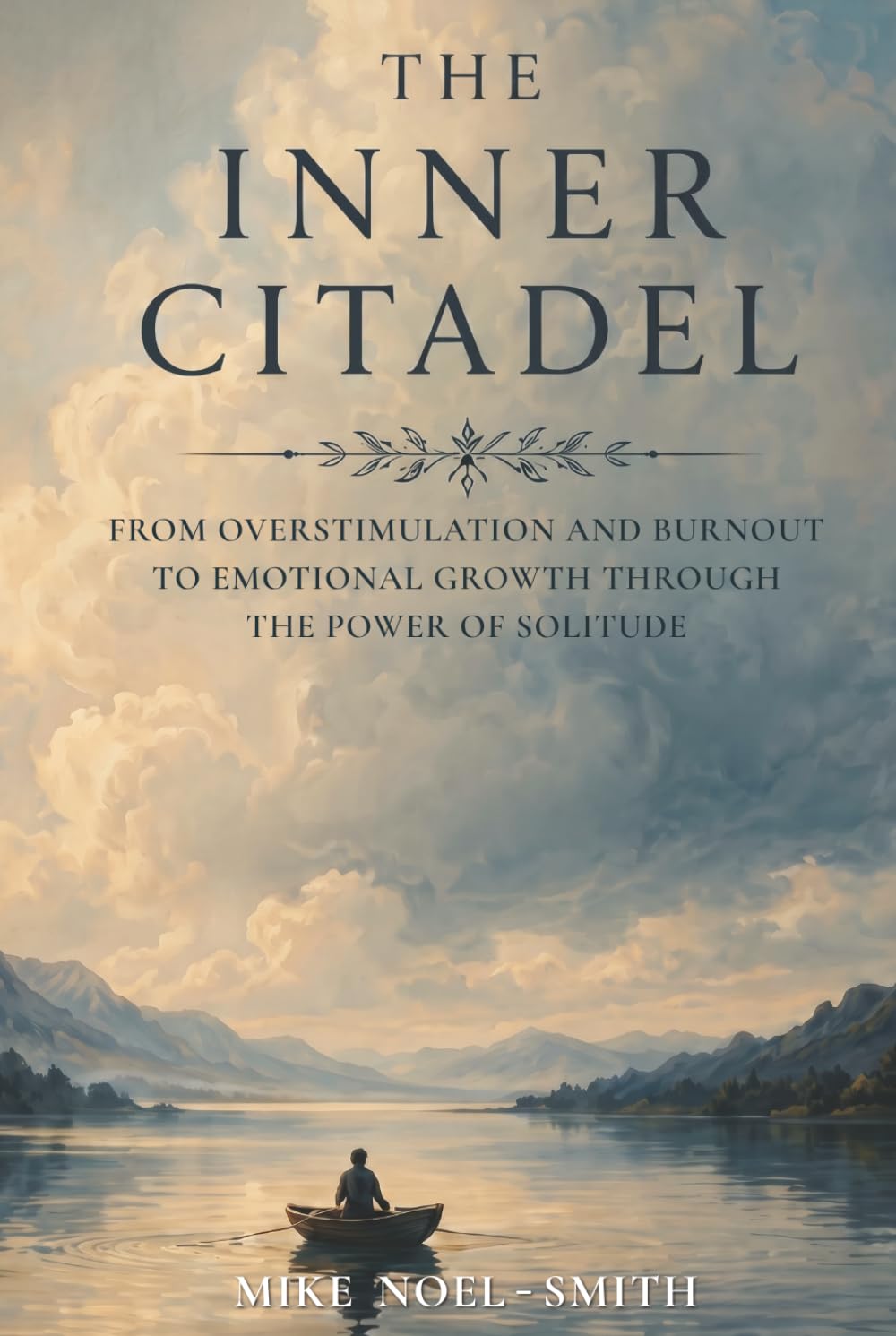

The Inner Citadel is a reflective and practical exploration of solitude as a way to recover attention, emotional balance, and a more grounded sense of self. Mike Noel-Smith begins with the familiar strain of notifications, obligations, constant availability, and mental clutter, then gradually leads the reader toward a quieter way of living. Drawing heavily on his time alone in the wilds of Dartmoor, he treats solitude as an active encounter rather than passive withdrawal. As he puts it, “Solitude did not instantly soothe me; it revealed me.” That distinction gives the book much of its emotional honesty, since silence brings discomfort, loneliness, grief, and fear to the surface alongside clarity and peace.
The central image of the inner citadel gives the book a strong structure. Its walls, gates, and watchtowers represent boundaries, habits, and forms of discernment that protect the inner life from being continually overrun. Across the chapters, Noel-Smith connects solitude with emotional resilience, creativity, clear thinking, self-trust, relationships, nature, ageing, and mortality. The argument expands naturally as the book progresses. Solitude begins as relief from overstimulation, but it becomes a means of living with greater intention. One of the book’s clearest insights is that “quiet is not emptiness, but a threshold,” and Noel-Smith consistently explores what might be waiting on the other side of that threshold.
The book’s most engaging passages come from Noel-Smith’s personal experiences outdoors. Encounters with harsh weather, darkness, animals, physical discomfort, and sudden loneliness keep the discussion rooted in lived experience. His account of meeting a stag at night is especially memorable, capturing the humility and sharpened awareness that can arise when a person stops treating themselves as the center of every setting. The practical exercises at the end of each chapter also make the ideas accessible. Attention audits, short periods without devices, reflective questions, solitary walks, and simple breathing practices give readers manageable ways to test the book’s ideas in ordinary life.
There’s a deliberate, meditative rhythm to the writing, with key thoughts revisited from slightly different angles so they can settle rather than simply pass by. The final chapter’s detailed guidance on spending a week in a wild place adds an unexpectedly concrete conclusion, covering shelter, clothing, food, camp selection, safety, and responsible treatment of the land. It reinforces the book’s larger message that inner reflection is supported by practical preparation and sustained attention. The Inner Citadel is ultimately a thoughtful companion for readers who feel scattered, overstimulated, or disconnected from their own priorities. It presents solitude as a disciplined return to oneself, followed by a fuller and more honest return to other people.
Pages: 321 | ISBN : 978-1919215662
The Resilience Mindset: How Adversity Can Strengthen Individuals, Teams, and Leaders

The Resilience Mindset is Terry Healey’s part memoir, part practical guide to living through adversity without letting it harden or diminish you. Healey begins with the devastating cancer diagnosis he received as a young UC Berkeley student, then follows the long aftermath of surgery, facial difference, recovery, faith, work, support, and self-rebuilding. From there, he shapes those hard-won lessons into his ReBAR framework: Reflect, Build, Act, and Renew. The book widens near the end through stories of people such as Robert Paylor, Shawn Harper, Jamie MoCrazy, and Jason Schechterle, each of whom has faced profound hardship and found a way to keep moving toward purpose.
Healey doesn’t write about resilience as if it’s a glossy slogan on a conference wall. He writes from the raw place where fear has a pulse. The scene after the Tumor Board, when he runs to the restroom after hearing he might lose part of his face and possibly his eye, is painful in a way that feels completely human. So is the moment on the Bay Bridge when Corey Hart’s “Never Surrender” comes on the radio and suddenly, almost mysteriously, the world lets in a little light. I found that tenderness persuasive. The “take it away” guy could have felt too neat in another book, but here the encounter lands because Healey is so alive to the small mercies that arrive when a person is nearly out of strength.
I also appreciated the book’s central idea that confidence can be rebuilt through repeated, deliberate acts. That feels compassionate and useful. The ReBAR framework has a sturdy, workable quality, especially when Healey connects reflection to gratitude, action to risk, and renewal to the daily work of becoming less afraid of change. The book leans into encouragement and statistics. I appreciated how the book leans into encouragement and supporting research, giving its message both warmth and structure. Even when the prose moves quickly from pain toward purpose, that momentum feels true to Healey’s larger vision: resilience as an active, daily practice rather than a place where we stay still for too long. The writing has a warm directness that suits the material. Healey’s voice is earnest, and even when the book becomes more workbook-like, it never loses the sense that someone real is sitting across from you, offering what helped him survive.
The Resilience Mindset understands that adversity is not a single dramatic event, but a long-term internal weather system that changes how a person sees everything. Its best passages are the ones where Healey lets vulnerability and resolve stand side by side. This is a good book for readers facing illness, grief, career disruption, insecurity, or any season that has shaken their sense of self, and it will especially resonate with people who like personal stories braided with practical reflection. I’d recommend it to anyone who needs a steady, humane reminder that rebuilding is rarely glamorous, but it can be deeply beautiful.
Pages: 208 | ISBN : 978-1770418561
Driven by Desire: Path to Unstoppable Success

Driven by Desire is a motivational book about rebuilding a life from the inside out, using passion not as a vague slogan but as a daily discipline. Author JW Radford frames the argument through his own story, especially the shattering sequence of his MS diagnosis, medical retirement from the military, depression, addiction, and that stark ATM moment on the way to Chipotle when “Insufficient Funds” jolts him back into himself. From there, the book widens into a practical philosophy of desire, discipline, authenticity, mindset, long-term goals, review, and steady action. It’s less interested in grand theory than in turning private urgency into a usable system for living and working with intention.
I appreciated the book’s emotional candor. The sections about performing a life he no longer believed in, praying in the driveway before going into the house, and realizing that pretending had become its own form of suffocation give the book its pulse. Those moments have grain and heat. They make the later advice feel earned. I also admired the book’s insistence that passion is not some glamorous flash of destiny, but something closer to commitment under pressure, a choice repeated when you’re tired, frightened, or bored. That idea gives the book real ballast. Radford can write with force and directness, and he leans on the same vocabulary of fire, drive, purpose, and resilience.
Much of the advice is familiar: set goals, review progress, celebrate milestones, guard your mindset, build systems that can carry you when motivation fails. What makes it really work in this book is the way he threads it through lived experience, especially when he contrasts ego desires with authentic ones, or when he argues that sustained effort matters more than waiting to feel inspired. I liked, too, that he keeps returning to adaptation, to the notion that passion has to survive changing circumstances rather than remain frozen in one heroic pose. The recurring emphasis on visible progress, incremental change, and practical follow-through keeps the book from drifting entirely into uplift. The central vision is sturdy and humane: a meaningful life is built by aligning action with what genuinely makes you feel more alive, not merely more impressive.
I found Driven by Desire earnest and genuinely affecting. JW Radford is compelling and his message is conveyed with palpable conviction. I finished it feeling that Radford’s greatest strength is the moral seriousness with which he treats the question of how a person gets back up and stays awake to his own life. I’d recommend it to readers who are at a crossroads, burned out, rebuilding after loss, or trying to recover a sense of purpose that has gone dim. For someone who wants a warm, experience-forged push toward a more deliberate life, it could meet them at exactly the right moment.
Pages: 183 | ISBN : 978-9699896316

Discover Your Gold Mind

Discover Your Gold Mind by David L. Shabazz is a motivational and reflective guide about cultivating what the author calls a “gold mind,” a disciplined inner life shaped by self-awareness, faith, purposeful action, goal-setting, persistence, and care for the body as well as the spirit. Shabazz moves from self-concept and perception to dreams, confidence, perseverance, character, health, income, and legacy, drawing on examples such as Maya Angelou, Joe Dudley, Tom Dempsey, Satchel Paige, Walt Disney, and Maurice Ashley to argue that success begins long before the visible achievement. The book insists that poverty and abundance are not only material conditions, but habits of thought, and that a person’s future is deeply affected by the way they speak to themselves, imagine possibility, and act under pressure.
I found the book most affecting when Shabazz turns from broad exhortation to concrete human moments. The Volkswagen Jetta story, where he realizes he has neglected the value of what he already possesses, quietly becomes one of the book’s best metaphors: we often treat our minds like inherited property instead of sacred equipment. That idea stayed with me. So did the discussion of the Johari Window, especially the “unknown” quadrant, because it gives the self-help material a welcome tenderness. It suggests that we are not merely broken things to be fixed, but undiscovered countries. The book’s recurring emphasis on self-concept, inner speech, and disciplined imagination has real emotional force, particularly when paired with stories of people who had every reason to surrender to humiliation, injury, poverty, or delay.
The writing is warm, direct, and sermon-like, with the rhythm of a speaker who wants to reach the person at the back of the room. I admired that accessibility. Shabazz writes with conviction, and his best passages have the cadence of lived counsel rather than abstract theory. The phrases about goals, thought, discipline, faith, and self-mastery begin to accumulate like a drumbeat. By the time the book reaches practical habits such as planning the day, exercising the body and mind, and building a spiritual foundation, its message feels less like a slogan and more like a daily ethic.
I respected Discover Your Gold Mind for its heart, its moral seriousness, and its refusal to let readers hide behind talent, circumstance, or delay. I’d recommend it to readers who appreciate faith-inflected personal development, students or young professionals looking for a practical push, and anyone drawn to motivational writing that blends self-reflection, discipline, and purpose with a strong sense of spiritual accountability. Its best audience is someone ready not just to be encouraged, but to be confronted with the responsibility of becoming.
Pages: 149 | ASIN : B0GS7LK64L
Unleashing The Power Within: A Journey of Self-Discovery Through Poetry

Unleashing the Power Within is a short, heartfelt collection of inspirational poems that moves through self-worth, recovery, faith, gratitude, nature, and personal renewal. Lisa McCarthy writes as someone who has suffered, endured, and come out the other side determined to speak encouragement over both herself and her reader. The book’s emotional arc gathers force as recurring ideas echo across the collection: breaking free from harm, setting boundaries, trusting intuition, reclaiming one’s voice, and finally rooting identity in God. What gives it shape beyond affirmation is the sense that these poems arise from lived experience, especially when the book turns personal in pieces like “My Freedom Day” and “From Silence to Self-Acceptance,” where liberation stops being an abstract slogan and starts to feel earned.
McCarthy isn’t trying to be sly or ironic, and that lack of distance gives the collection a disarming openness. When she writes about blooming “beneath the ashes and dirt,” or compares healing to pushing toward light, the imagery is simple, but it lands because she means it. I felt that again in the poems about the natural world, especially the red cedar trees, the Gulf of Mexico beach, the lavender fields, and those bright little “Golden Finches in the Rain.” Those poems briefly loosen the book’s grip on exhortation and let it breathe. They offer a quieter kind of restoration, and I found myself wishing there were even more of them, because McCarthy’s voice is often at its most vivid when she pauses long enough to really look.
McCarthy returns to the language of empowerment, destiny, courage, and self-belief. I respected the clarity of the ideas. This is a book deeply invested in healthy boundaries, in refusing negativity, in choosing gratitude, and in seeing survival not just as escape but as transformation. Even when the phrasing is familiar, the conviction behind it feels real, and that reality matters.
I read Unleashing the Power Within less as a formally ambitious poetry collection than as a personal testament shaped into verse, and on those terms it has genuine warmth and purpose. It’s a book about speaking kindly to the bruised parts of the self until they begin to believe they deserve light. I would recommend it to readers who want accessible, faith-tinged, emotionally direct poetry about healing, resilience, and beginning again. For someone coming through loss, self-doubt, or a hard season of change, this book could feel like a companionable hand on the shoulder.
Pages: 96 | ASIN : B0DBVC33S5



