Blog Archives
Intimacy and Immediacy

The Inheritance of Light follows two families through war and migration and generations of grief and survival. Where did the idea for this novel come from?
The Inheritance of Light grew out of family stories, old letters, historical fragments, and the long memory of two families shaped by war, migration, grief, and survival. But the deeper impetus for beginning the novel was also tied to the approaching 250-year anniversary of American democracy and the question of what, exactly, gets handed down from one generation to the next.
Benjamin Franklin’s warning…“A republic, if you can keep it”…has always resonated with me. It captures the truth that freedom is fragile and that democracy requires vigilance, engagement, and moral courage to survive. In that sense, the novel is not only about family inheritance but also about civic inheritance.
I wanted to explore how people inherit more than land, names, and photographs. They inherit wounds, silences, values, resilience, and obligations. The same is true of a nation. Each generation receives both light and burden, and each must decide what it will preserve, what it will repair, and what it will risk passing on.
So, the novel came from both the intimacy of family memory and the larger American question of survival, how people endure hardship without surrendering their humanity, and how a republic endures only if its people remain awake enough to keep it. Around here, we might say freedom is a little like an old porch roof: you cannot just admire it from the yard. Every so often, you have to climb up there with a hammer before the whole thing starts leaking on everybody.
Were there particular traits or patterns you wanted to trace across the Templeton and Sewell families?
Yes, very much so. I wanted to trace the ways certain traits keep showing up in families like old songs nobody meant to teach, but everybody somehow knows.
In both the Templeton and Sewell families, I was interested in resilience, certainly, but not the shiny, sermon-on-Sunday kind. I mean the lived-in kind, the kind that gets people through war, loss, disappointment, uprooting, and the long stretches when life is more grit than glory. I wanted to follow how courage, endurance, loyalty, and a deep sense of duty can be passed down right alongside silence, stubbornness, pride, and unspoken grief.
I was also fascinated by how families develop emotional habits. Some people learn to bear pain quietly. Some learn to press forward no matter what. Some turn to humor, storytelling, or hard work as a way of keeping despair from taking over. In the South, that often means somebody is cracking a joke while the whole house is on fire, then asking who wants iced tea while they look for the hose.
Another pattern I wanted to trace was the tension between independence and belonging. Both families produce people who are strong-willed, sometimes maddeningly so, yet they are also bound by kinship, memory, and obligation. They may leave home, rebel against family expectations, or try to outrun the past, but the pull of inheritance, emotional, moral, and historical, never quite lets go.
I also wanted to show how love travels through generations in imperfect forms. It is not always spoken tenderly. Sometimes it arrives as sacrifice, protection, labor, duty, or sheer persistence. In families shaped by hardship, affection is not always dressed for church. Sometimes it comes to the table in overalls.
So yes, I was tracing patterns of resilience, sacrifice, pride, silence, humor, loyalty, and the complicated ways people carry both wound and wisdom forward. What interested me most was how those traits can save a family, burden a family, and sometimes do both at once.
The novel uses letters, linked episodes, and shifting perspectives—how did you develop this mosaic structure?
I developed the mosaic structure because it felt truest to the way families and nations actually remember. We do not inherit one seamless story. We inherit letters, fragments, silences, conflicting memories, and episodes that only reveal their meaning over time. I wanted the form of the novel to reflect that.
The letters create intimacy and immediacy. The linked episodes let me trace how choices and losses echo across generations. And the shifting perspectives allowed me to show that history looks different depending on who is carrying it. That was especially important in portraying people trying to fit into a new country or culture. Belonging is rarely simple. It involves dislocation, adaptation, misunderstanding, and the struggle to hold on to your identity while learning how to survive in a place that may not fully welcome you. The mosaic form gave me a way to honor those layered experiences without forcing them into a single, tidy narrative.
A family story is rarely one straight sermon. It is more like six cousins talking at once, one aunt crying in the kitchen, somebody reading an old letter out loud, and a newcomer on the porch wondering whether they are ever really going to belong. That felt like the right shape for this novel.
What is the next book you are working on, and when will it be available?
The next book I’m working on is tentatively titled Too Much Gravy for One Enchilada, which ought to tell readers right away that I have not entirely surrendered my fondness for the odd, the heartfelt, or the slightly overstuffed.
It’s a collection of short stories, poems, plays, and essays I’ve written over the years, so in many ways it brings together the different rooms of the same house. Some pieces lean literary, some humorous, some reflective, and some carry the kinds of voices and questions that have stayed with me for a long time. What ties them together is a deep interest in memory, survival, human folly, and the strange ways people try to make meaning out of love, loss, history, and everyday life.
I like to think of it as a gathering of mischief and meditation under one roof. Around here, we’d probably say it’s the kind of book where laughter and heartbreak might sit down at the same table, pass the biscuits, and argue kindly over who gets the last word.
As for availability, it is still in progress, so I’m reluctant to give a firm publication date just yet. Let’s just say late 2026 or early 2027. But it is very much alive on the worktable, and I’m hoping it will make its way into the world once I’ve had time to shape it into the collection it deserves to be.
Author Links: GoodReads | Facebook | Charles L. Templeton | EMergeLit | Website | EMerge Magazine | Flapper Press | Amazon
In a layered portrait of American family and identity, generations of the Templetons and Sewells are carried along the currents of history, each one bearing the hopes and burdens of those who came before.
Through the earliest battles that forged a fledgling nation to the streets of midcentury Washington and the crucible of World War II, their stories are masterfully woven together to paint the resilience, devotion, faith, and bonds that define family in this historical fiction. It’s an epic, both gritty and deeply human, that traces the extraordinary paths of love, identity, and family, showing how the choices of one generation ripple across the next.
Through heartbreak and triumph, devotion and sacrifice, these intertwined lives illuminate what it truly means to honor the past while shaping the future, carrying forward a light that guides generations yet to come.
With profound insight and narrative mastery, bestselling author Charles Templeton brings history and relationships to vivid, unforgettable life in this monumental family saga fiction.
Rose Dhu
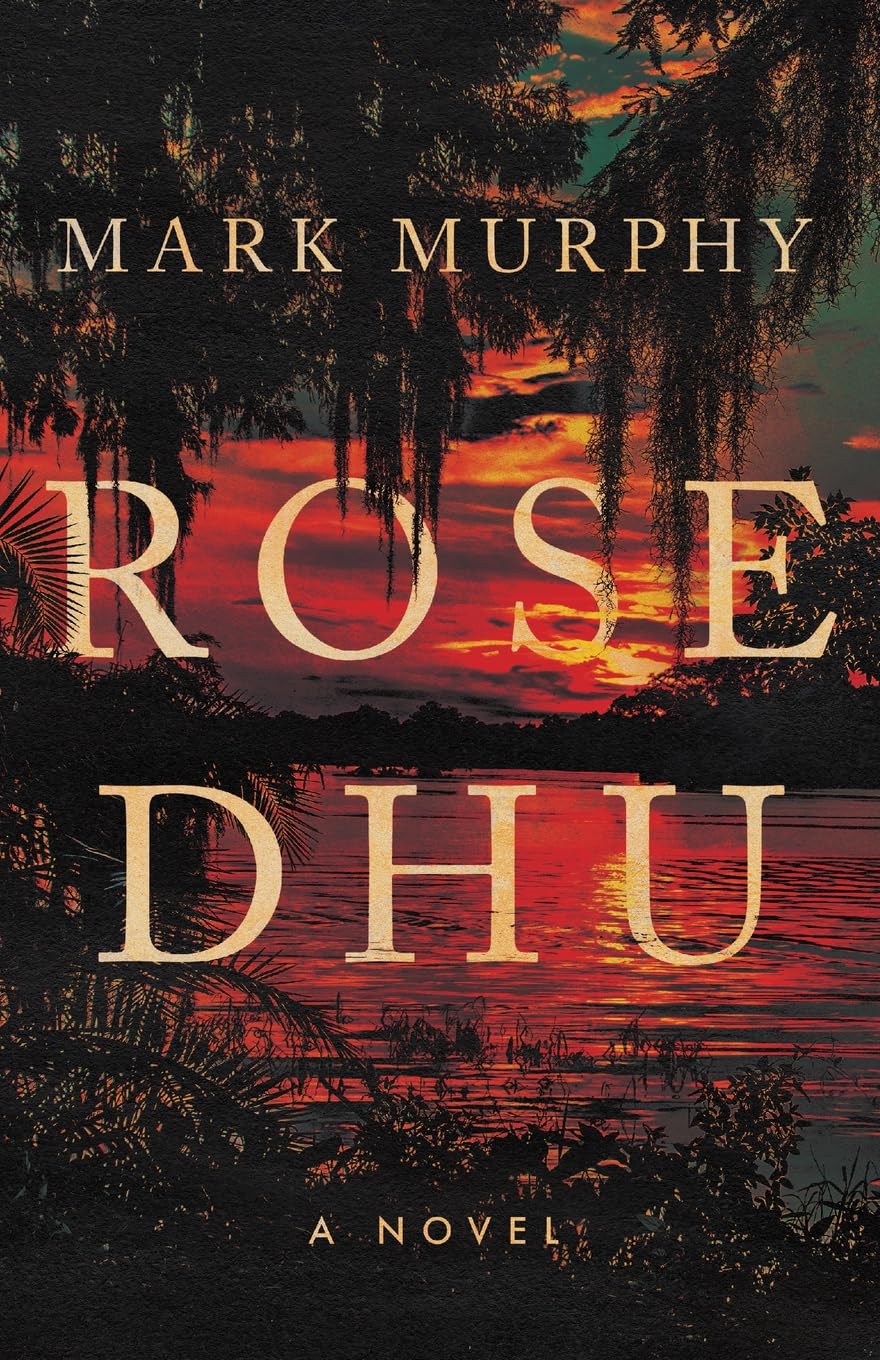

Rose Dhu follows the disappearance of Dr. Janie O’Connor, a brilliant surgeon whose sudden vanishing rattles Savannah. Detective Frank Winger takes the case, and his search uncovers secrets that coil through old money, family loyalty, and violence hidden in plain sight. The story widens from a missing person case into something heavier. It becomes a portrait of power and the people crushed or remade by it. The final revelation, in which Janie reemerges alive under a new identity as Alice Tubman, lands like a quiet shock and changes the emotional color of everything that came before.
Scenes move quickly and often hit with surprising force. I felt pulled in by the atmosphere of Savannah. The place feels damp, shadowed, and tangled with history. Some chapters made me slow down because the emotional weight crept up on me. I found the depictions of trauma raw, but never careless. The book wants you to sit with pain, not look away. That kind of blunt honesty made me connect with Frank more than I expected. His flaws feel lived in. His memories of Afghanistan haunted me in ways I did not anticipate.
There were moments when the story’s intensity nearly overwhelmed its subtler pieces. Still, the ideas underneath the plot stayed with me. What people will sacrifice for those they love. What power looks like when twisted by entitlement. How a life can fracture and rebuild itself into something new. The book is bold about those questions. It pokes at uncomfortable truths, and I appreciate that kind of nerve. By the final pages, I caught myself rooting fiercely for Alice and for Frank.
Rose Dhu reads like a blend of Sharp Objects and Where the Crawdads Sing, only with a darker pulse and a tighter grip on the shadowy power games that shape a Southern town. I would recommend Rose Dhu to readers who enjoy mystery that leans into emotional depth, stories about moral gray zones, or Southern gothic settings with teeth.
Pages: 384 | ISBN : 1967510709

Live What You Beleive

Seeds of Bliss follows a man living in rural East Texas who relies on faith to get through troubling times that those in his hometown are facing. What was the inspiration for the setup of your story?
There are many examples of men in my part of Texas who live what they believe. They are not perfect people, but life has deep meaning to them. Each day is permeated with existential experiences. Some of this story is autobiographical. I am writing what I know.
Are there any emotions or memories from your own life that you put into your character’s life?
I think the love of community is a big part of my life, as it is in Scott Mitchum’s life. Memories of East Texas forests, characters, football games and churches are all a part of my past. The trips to Galveston have been numerous in my life, also.
What were some themes that were important for you to explore in this book?
The theme of living what a person believes, especially the spiritual motivation in mental, emotional and physical decisions, is the most important theme to me.
What is the next book that you are working on, and when will it be available?
I am working on a volume of East Texas short stories and another novel about East Texas. I hope to have at least one of them published this year.
Author Links: GoodReads | Facebook | Website
Seeds of Bliss is about the East Texas town of Lyric, its triumphs and its struggles, and the people who are an integral part of it. The novel focuses on a hometown man, Scott Mitchum, and his daily goal to live out his faith in God, how he translates it into practical actions which he inoculates into his relationships and his will to survive and thrive. The story includes other characters who are positively influenced by Scott, and those who wish him harm primarily because they don’t like him. The setting and plot are filled with the environment, the culture, the humor, and the danger of East Texas.
Seeds of Bliss

Seeds of Bliss, by J. Andrew Rice, offers a multi-faceted exploration of life in a rural East Texas community called Lyric. This narrative delves into a spectrum of themes, including rural existence, mortality, interpersonal relationships, and racial dynamics, all while threading a significant focus on Christianity, belief systems, and faith.
The plot is set in motion with the disappearance of a college student named Amy, an event that serves as a catalyst for unfolding the deeper layers of Lyric and its inhabitants. The author artfully navigates the interplay of religion and everyday life, particularly highlighting how faith is a source of strength during challenging times. This is exemplified in the bond between characters Scott and Robert, and through engaging theological dialogues that encompass a variety of perspectives, including end-times theories and the differing worldviews of Christians and atheists.
Rice’s narrative achieves a commendable balance, juxtaposing serious themes with lighter elements. The setting in Texas is not just a backdrop but a vibrant character in itself, offering insights into the state’s culture, the significance of football, and the nuances of rural life. Concurrently, the story does not shy away from addressing complex issues such as racial tensions, particularly in relation to the character Jesse’s professional journey. This book is a rich and substantial read, perfect for those who savor an immersive, character-driven experience. Its detailed descriptive style adds depth, enhancing the novel’s engaging exploration of diverse theological concepts within an imaginative fictional framework.
Seeds of Bliss is a captivating choice for readers who appreciate drama-filled narratives set within a religious context, as it offers an insightful journey into the complexities of faith and community life in a charming small-town Texas setting.
Page: 353 | ASIN : B0BXMZ7SPK


