Blog Archives
Power, Loyalty, and Legacy

The Cost We Pay follows a grieving father whose quest for vengeance and expanding criminal power collide with a ruthless Chicago mob boss, exposing the destructive line between love, protection, and possession. What was the inspiration for the setup of your story?
First off, I am thrilled to have back-to-back 5-star reviews, first with The Sins We Inherit and now with the sequel, The Cost We Pay. When I finished The Sins We Inherit, I knew the second book couldn’t simply be bigger—it had to be more personal. Cost spends the first novel convincing himself that everything he does is about protecting his family. In The Cost We Pay, I wanted to test that belief.
Maddy’s shooting forces him to confront something he can’t fix, control, or intimidate away. Instead of dealing with that pain, he doubles down on the one thing he understands: control. The tragedy is that he continues calling it protection even as the people closest to him begin experiencing it as possession.
How did you create tension between the Milwaukee and Chicago criminal organizations?
I wanted Milwaukee and Chicago to feel distinct, but I also wanted to bring some realism to the historical connective tissue between organized crime in the two cities. Milwaukee has always existed in Chicago’s shadow geographically, and historically there were relationships and connections between their criminal worlds as well.
In the novel, Cost’s organization is more personal—built around family, neighborhood history, relationships, and loyalty. Chicago operates on a different scale and with different math. John Decesso sees people, businesses, and even relationships as assets. That contrast creates tension before anyone ever fires a shot. Cost is accustomed to being the most powerful person in the room, and suddenly he’s dealing with someone whose reach extends well beyond his own.
Did any secondary character become more important during the writing process than you originally expected?
Definitely Nico Vistoso. After what happens at the end of the first book, it would have been easy to treat Nico simply as someone Cost needs to punish. But the more I wrote him, the more interested I became in his guilt and the consequences of what he’d done. His interaction with Maddy became especially important because it allowed me to explore accountability and forgiveness from a completely different perspective than Cost’s obsession with revenge.
Tiger also became increasingly important even though he’s no longer alive. His journal originally came from an idea I had for a separate story about Tiger’s rise and Cost’s fall. Eventually I realized the journal belonged inside this novel. It gave me a way to expand the mythology of the Caduto family while allowing Tiger’s words to challenge Cost’s romanticized ideas about power, loyalty, and legacy.
Can you give readers a glimpse inside the next installment of The Sins We Inherit Saga?
Book III is the reckoning.
The first two books have been about inheritance, power, consequence, and the choices Cost makes in the name of protecting the people he loves. The final installment will be less about expanding that universe and more about forcing Cost to face everything those choices have created.
At its heart, the question becomes much simpler: after everything he’s done and everything it’s cost him, is redemption still possible—or has the fall already been set in motion?
I want the final book to bring the story full circle. Not necessarily bigger. Just inevitable.
Author Links: GoodReads | Facebook | LinkedIn | Website | Amazon
In The Sins We Inherit, Costantino “Cost” Caduto II thought he had finally buried the sins of his fathers and stood at the edge of a safe life for his daughter Maddy and new fiancé Maria.
Then a bullet ripped through his daughter’s chest and shattered his world. Now, for a father pushed to his limits, there is only revenge and its consequences.
In The Cost We Pay, Cost faces a war on every front:The law closing in, patient and relentless
The Chicago Outfit boss, resourced and poised to take advantage of Cost’s vulnerability
And the man in the mirror, spiraling darker and more dangerous with every decision he makes
Set in the brimming contrast between Milwaukee’s blue-collar days and gritty underworld nights, The Cost We Pay continues the relentless saga of legacy, loyalty, and the price of becoming the thing you hate.
The Cost We Pay – Book II of The Sins We Inherit Saga


Carlo J. Emanuele’s The Cost We Pay is a bruising crime novel about inherited power and the damage done when love becomes possession. After Costantino “Cost” Caduto’s daughter, Maddy, is shot and paralyzed, he channels his grief into vengeance while extending his family’s control across Milwaukee. That expansion draws the attention of Chicago boss John Decesso, a polished manipulator who treats people as assets, gifts, and bargaining chips. The resulting conflict is certainly a mob war, but its real subject is Cost’s conviction that protecting his family gives him the right to control everyone around him.
Emanuele tells the story through several viewpoints, and that broader perspective gives the violence genuine emotional weight. Maddy’s struggle with paralysis, Nico Vistoso’s guilt, Detective D’Angelo’s obsessive investigation, and the growing unease among Cost’s own men all reveal consequences Cost refuses to see. The strongest device is the journal left by Cost’s grandfather, Tiger. Its entries gradually strip the romance from his criminal legacy, showing that fear created obedience at the cost of intimacy, trust, and peace. Some confrontations repeat the same emotional argument, and the prose occasionally explains a character’s motives after the scene has already made them clear. Still, the shifting loyalties and competing versions of family keep the story moving.
This book reminded me of Mario Puzo’s The Godfather. Both books explore a gifted man who believes he can use criminal power to secure his family’s future, only to discover that power reshapes the family it’s supposed to protect. Cost shares Michael Corleone’s talent for turning personal pain into strategy, though he’s more emotionally exposed and far less disciplined. Emanuele also spends more time with the people living inside the blast radius, particularly Maddy. Her plea that “someone has to forgive” becomes the book’s moral center, challenging the family logic that every wound creates a debt and every debt demands blood.
What stayed with me was the gap between the father Cost imagines himself to be and the father Maddy actually experiences. He loves her fiercely, but she needs his presence more than his empire, and the book understands how difficult that truth is for him to accept. The final chapters bring the various conflicts together in a violent, satisfying reckoning, then close on a cruelly precise collision of hope and accountability. The Cost We Pay is a dark, emotionally direct family saga with the machinery of a gangster thriller and the conscience of a story about fathers, children, and the legacies they choose to continue.
Pages: 363 | ASIN : B0HFZ7VXN7

My Two Passions

The Winter Verdict follows a lawyer and dedicated skier who decides to take an early morning run, and gets brutally attacked on the mountain, finding himself and his family at the center of a conspiracy that stretches across the world. What was the inspiration for the setup of your story?
I began working on the storyline for The Winter Verdict in late fall when my thoughts always turn to skiing. My family and I are avid skiers, and we spend most weekends during the winter in Windham, New York, which has become our second home. Windham is a beautiful small ski town with wonderful people and gorgeous views. It quickly became the inspiration for the fictional town of Castle Ridge. I also thought it would be fun to set a legal thriller in a small ski town instead of a big city metropolis, like I did with my first book, The Manipulator. So, I decided to marry my two passions: skiing and writing legal thrillers, and the result is The Winter Verdict.
How important was it to ground the story in family stakes rather than just plot escalation?
It was the main focus of my story. First and foremost, Tom Berte is a husband and a father, and family means everything to him. His day job happens to be working as a top-flight litigator, which gets him into all sorts of legal entanglements, corporate espionage, and international conspiracies with potentially deadly consequences. At the heart of The Winter Verdict lies not only the quest for justice, but Tom also battles to protect his family and the lives of millions of innocent victims.
How did you approach blending courtroom instincts with high-stakes action?
Being a successful trial lawyer involves good storytelling. And the stories I like to write about involve family relationships, lots of dramatic scenes, and literally life and death stakes. I can create all of that by using legal maneuverings for dramatic effect and to add a layer of complexity and heighten the tension. I don’t intend for the legal wranglings to take center stage or dominate the storyline; instead, I use the law as a backdrop for the high-stakes pursuit of justice and the battles Tom faces in combating terrorists intent on committing unspeakable atrocities.
What will the next book in that series be about, and when will it be published?
The third book in the Tom Berte Legal Thriller Series is System of Justice. A shocking murder strikes the Supreme Court, killing Tom’s former mentor. A young law clerk is accused of committing the murder, and when she reaches out to Tom, he can’t ignore her desperate pleas for help. Reluctantly stepping into criminal defense for the first time, Tom swiftly finds himself maneuvering through Washington’s hidden corridors of power. But he soon uncovers a dark secret that could mean the difference between the law clerk’s guilt and innocence. The only problem is that Tom can’t reveal the secret. The case becomes a game of life and death, where proving the law clerk’s innocence might cost Tom his life.
System of Justice will be released later in 2026.
Author Links: GoodReads | BlueSky | Facebook | Website | Amazon
Tom Berte, a former Department of Justice lawyer, thought he’d left his past behind when he moved to Castle Ridge with his family. But when a brutal attack leaves him fighting for his life, Tom and his family find themselves at the epicenter of an unfolding conspiracy that stretches from the local ski resort to a desert compound on the other side of the world.
At the heart of the mystery is Phoenix Holdings Group, a shadowy international conglomerate with its sights set on Castle Ridge Ski Resort. When a catastrophic “accident” at the resort claims dozens of lives, Tom uncovers a chilling connection to his own assault and a ruthless plot that could endanger millions.
With his wife and daughter’s lives hanging in the balance, Tom must navigate a treacherous path of legal intrigue, corporate espionage, and looming revenge.
For fans of John Grisham and Michael Connelly, strap in for a heart-pounding legal thriller with The Winter Verdict—where the pursuit of justice is as precarious as a black diamond run.
Moments of Vulnerability

A Dangerous Man follows a grief-driven vigilante known as Ghost who targets traffickers and organized crime syndicates while the FBI tries to track him down and stop him. What was the inspiration for the setup of your story?
Wow… it’s been such a long journey. At the original time of writing ADM (2016/17), the concept was nearly 16 years in the making or consideration. The inspiration came about from seeing what seemed like constant news cycles of child abuse, abductions, saved children from debaucherous circumstances. I was a young father at the time, and even though I worked in law enforcement as a corrections deputy then, I felt completely ignorant and helpless to do anything about these tragedies. There was no outlet. So, I returned to developing stories so that real justice could be dealt out to the kind of monsters that would do such horrendous things. Up until the time I finally started putting words to the page – there is actually a short story version that I’d written first – I was doing research. It’s the kind of topic that kicks open a door that I couldn’t close, much of which predicted and showed signs of evidence to the timely information the public as a whole are learning today.
Ghost is both terrifying and oddly compelling—how did you approach that balance?
I think what balances Ghost being both terrifying and compelling is that, despite his next level attributes, he’s got an emotional grounding to him, humanizing him, and making him relatable. It is easy to say that A Dangerous Man is a hyper-masculine novel, which is fair and true and purposeful. Beyond that, I also knew women eat up these stories, too. I wanted Ghost to be multi-layered from a singular perspective. Yes, he’s a father, but I wanted him relatable as a parent overall. I am deeply protective of the ones I love, especially my child, and I think Ghost transcends just being a father. With a lot of female readership, I think that aspect makes him relatable. I’ve heard so many times from women that they sometimes don’t like Ghost, but they absolutely love how he handles the consequences he imparts. This is further coupled with moments of vulnerability or openness – the memories that reveal he’s so much more than vengeance incarnate. Or that he used to be.
What questions about justice did you want readers to wrestle with rather than answer?
To be honest, I had no questions about justice in mind for the reader to wrestle with rather than answer. At least, not that I remember. I reveled in the ambiguous morality at the forefront of who my anti-hero was. I simply wanted to put it on full display for entertainment’s sake. Simultaneously, I knew it would be an injustice not to present the dichotomy of the circumstances viewed by the public. I know first-hand having worked in law enforcement that what I’m calling justice is not shared by all. There’s discourse to be had there. There are many clips of families forgiving murderers when the latter is being sentenced to life in prison for their crimes. It adds to the tension and suspense of the story, and my only aim was to properly serve the story and build further intrigue. Ghost’s accolades would not be universally received were they true and so publicly well known. There would be plenty of condemnation for his vigilante acts by diverse outlets. Similarly, there would also be plenty of praise and encouragement. I think at the present time, however, the latter option would become a great majority today with what people are learning.
When will Book Two be available? Can you give us an idea of where that book will take readers?
I do not have a specific date for the coming sequel of A Dangerous Man, but it is coming, and it will be in 2027. The untimely delay is due to an assortment of other projects already in motion, and mostly not wanting to continue working with the vanity/hybrid press under which ADM’s first edition was published. So, I forced myself to hold off, but I’ve had an immediate trilogy planned for a decade at this point. And once again, the revelations coming out in the world surrounding the topic of trafficking are timely to events in Ghost’s next foray, A Violent Man.
As for where the sequel will take readers… Well, there’s only one way to go. Deeper into the abyss.
Author Links: GoodReads | X (Twitter) | Facebook | Amazon
His crusade of retribution has freed countless trafficking victims from captivity, sweeping across the United States like a storm, and leaving a bloody path of destruction in his wake.
Who is he?
He was a father, a husband, and a former government operative who lost everything he cared for to a merciless Russian crime syndicate. And he’s arrived in Boston to bring his odyssey of vengeance to a close.
Can he be stopped?
Pursuing him is a relentless FBI agent with more at stake than enforcing the law, a hard-boiled detective suspicious of every piece of the puzzle, and a pair of cunning twin assassins who might rival his skill.
At what cost?
They’ll risk everything being drawn into the chaos of one man’s war for justice. Motives will be questioned, loyalties will be tested, and no one will come out unscathed – if at all.
Organized Crime Stories

Lords of Sixty-Third Street follows a Chicago reporter who is investigating his friend’s brutal murder, leading him deep into mob deals, street gangs, and political corruption. What was the inspiration for the setup of your story?
I wanted to write a story that corresponded with all of the gang violence headlines in the Chicagoland area. It seems that every time we watch the news, there is gang-style violence, and innocent people are always getting killed. Also, I liked the ‘Bugsy Siegel’ story and wanted to mix that in with this storyline.
The story jumps between the investigation, mob crews, and gang life without feeling scattered. How did you manage that balance?
I wrote the storyline as though I were watching the movie…different scenes, different characters, different plot structures.
An intriguing aspect of your story is the contrast between the Outfit’s old rules and the chaos of younger street gangs. What interested you about that generational divide?
Like the current organized crime stories, there seems to always be conflict between the ‘old guard wise guys’ and the young, violent gang members who run the Chicago streets without any rules, morality, or scruples.
What is the next book that you are working on, and when can your fans expect it to be out?
Russo’s Revenge, coming out in March, is about a Chicago Cop who is wrongly accused of selling drugs and weapons on the Chicago streets, and looks to pursue redemption and clear his name. The next book, hopefully this summer, is When A Thief Comes To Rome, about a Chicago ex-convict who is hired by the Sicilian Mafia to steal a rare, valuable artifact from a Roman Catholic church in Trastevere, Rome.
Author Links: GoodReads | Facebook | Website | Amazon
McKay becomes entangled with both the Outfit and the street gangs, even taking in a young member of the O-Block gang, DeMarco Stevens. McKay attempts to save this young teenager from the city’s cycle of violence. But there is betrayal and violence at every level. The Sixty-Third Street crew is already skimming cash from its investors before the casino opens its doors.
With mob boss Little Tony DiMatteo’s blessing, everyone is getting a piece of the action, even though some are not willing to pay for it, including Chicago’s corrupt mayor, Bradley Jefferson. Giannini is under pressure to ensure all the investors are playing by the rules while trying to cover up the embezzlement by his Sixty-Third Street crew.
As Giannini’s Windy City Casino is about to have its grand opening, the Outfit’s Bugsy Siegel is going to realize his magnificent dream. But with all of the city’s bloody violence and corruption, is everyone willing to pay the ultimate price?
Lords of Sixty Third Street

Lords of Sixty-Third Street is a gritty crime thriller set on Chicago’s South Side, opening with the shocking murder of Tribune reporter Michael Anderson. From there, the story widens into an underworld web: a mob crew scrambling to protect its interests, a ruthless street gang fighting for power, and a fellow reporter determined to uncover the truth. The book has the bones of a classic crime novel but wraps it in local detail, political corruption, and the messy humanity of people who live and die on those blocks.
I was pulled in right away. The opening chapter is brutal. It sets a tone that never really lets up, and I caught myself tensing as the scene unfolded. Author Edward Izzi writes in a straightforward, almost journalistic style that fits the subject matter, especially when he switches into Larry McKay’s first-person point of view. Larry’s voice feels worn down in the way longtime reporters often are. His sarcasm, his grief, and even his guilt feel believable. And the pacing surprised me. The chapters bounce between the investigation, the mob’s internal politics, and the O-Block gang’s chaos, but it never feels scattered. Instead, it feels like standing in the middle of a neighborhood where everything is happening at once.
What I liked most, though, was how the author handles violence and power. He doesn’t shy away from either. Some scenes made me uncomfortable, not because they were poorly written but because they felt too close to stories that make the news in real life. The book keeps circling back to what desperation and loyalty can make people do. There’s also this tension between the old guard, the Outfit, with its rules and rituals, and the young gang members who don’t care about structure and burn everything they touch.
By the time I reached the end, I felt like I had watched a full neighborhood ecosystem twist around one terrible act of violence. It’s the kind of story where nobody gets out clean, and honestly, that feels right for this genre. If you enjoy crime fiction that leans into atmosphere and moral gray areas, especially stories rooted in Chicago’s history of corruption and street politics, this one will hit the spot. Fans of gritty crime thrillers will appreciate how fully it commits to its world and its characters.
Pages: 378 | ASIN : B0FXVVHLD5

Rose Dhu
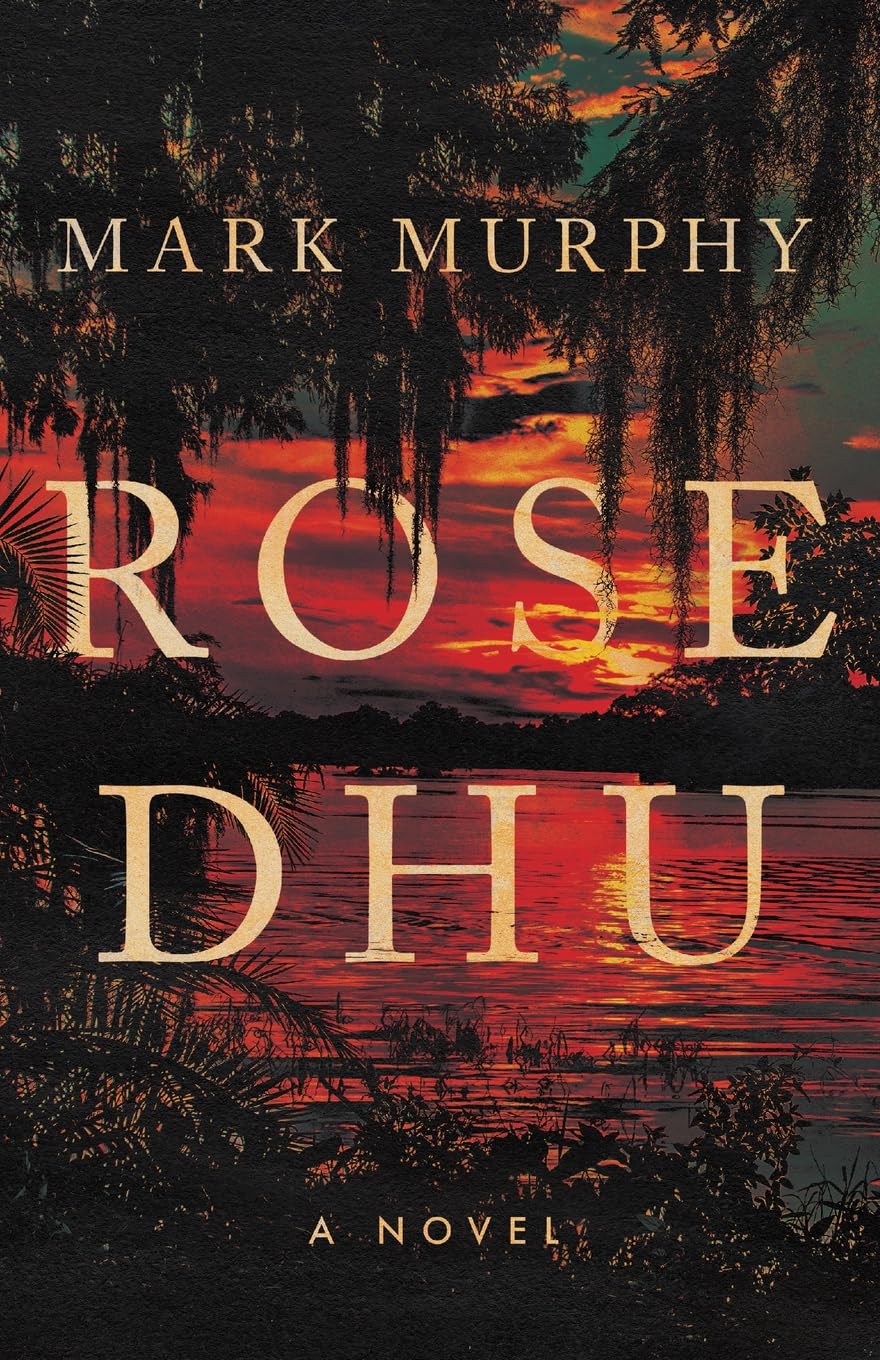

Rose Dhu follows the disappearance of Dr. Janie O’Connor, a brilliant surgeon whose sudden vanishing rattles Savannah. Detective Frank Winger takes the case, and his search uncovers secrets that coil through old money, family loyalty, and violence hidden in plain sight. The story widens from a missing person case into something heavier. It becomes a portrait of power and the people crushed or remade by it. The final revelation, in which Janie reemerges alive under a new identity as Alice Tubman, lands like a quiet shock and changes the emotional color of everything that came before.
Scenes move quickly and often hit with surprising force. I felt pulled in by the atmosphere of Savannah. The place feels damp, shadowed, and tangled with history. Some chapters made me slow down because the emotional weight crept up on me. I found the depictions of trauma raw, but never careless. The book wants you to sit with pain, not look away. That kind of blunt honesty made me connect with Frank more than I expected. His flaws feel lived in. His memories of Afghanistan haunted me in ways I did not anticipate.
There were moments when the story’s intensity nearly overwhelmed its subtler pieces. Still, the ideas underneath the plot stayed with me. What people will sacrifice for those they love. What power looks like when twisted by entitlement. How a life can fracture and rebuild itself into something new. The book is bold about those questions. It pokes at uncomfortable truths, and I appreciate that kind of nerve. By the final pages, I caught myself rooting fiercely for Alice and for Frank.
Rose Dhu reads like a blend of Sharp Objects and Where the Crawdads Sing, only with a darker pulse and a tighter grip on the shadowy power games that shape a Southern town. I would recommend Rose Dhu to readers who enjoy mystery that leans into emotional depth, stories about moral gray zones, or Southern gothic settings with teeth.
Pages: 384 | ISBN : 1967510709
Morally Compromised Characters
Street Brotherhood follows a teenage boy in 1970s New York, as his search for loyalty and belonging pulls him into a dangerous brotherhood where survival blurs the line between family and gang. What was the inspiration for the setup of your story?
The story is about building a family of choice when your family of origin has betrayed you. It’s about brotherhood forged in the face of adversity, boys who are thrust into bleak and dangerous situations due to familial and systemic neglect. But it also shows how these kids don’t just endure and accept their fate. They strive to exploit it. Street Brotherhood is the second book in the Street series, picking up where the first book left off, but each of them works perfectly as a standalone.
What drew you to set Johnny’s story in 1970s New York, and how did that time and place shape the characters’ lives?
The city plays a huge role in this book. New York in the 1970s was on the brink of financial collapse. Municipalities were struggling under massive layoffs, landlords were selling–or torching–buildings to get out from the debt, and crime was skyrocketing. Johnny’s story reflects all of that. He is cunning enough to see the cracks in the system and is able to use them to his advantage. The story could not have been told in any other place or decade without being inauthentic because the conditions changed. Many of the scenarios are tied to my own experiences, since I came of age at the same time, hanging out in those same streets.
Johnny is both sympathetic and frustrating. How did you balance writing him as flawed yet compelling?
From a writing perspective, the flawed and morally compromised characters are the most fun for me. I love pushing those boundaries for the reader: How bad can a character act while still commanding sympathy? Johnny is a street-smart gang leader, with lofty aspirations, living in a very adult world. But he’s still a teenager. Sometimes his youth is an asset, but other times it’s a liability. That becomes apparent in some of the choices he makes. His gang can also be loyal to a fault, by letting his decisions play out. Peppering in the scenes from Johnny’s childhood helped me make him more sympathetic, while also explaining some of his defects.
The violence feels necessary rather than gratuitous. How did you approach writing those scenes to maintain authenticity without sensationalism?
Great Question. Violence in movies and on TV is so pervasive we become numb to it. On the page, however, it translates differently. My early drafts were dripping with brutal details, but thanks to my beta readers, I toned a lot of it down. I learned that what’s not said can be even more ominous. In Street Brotherhood, the violence is necessary in order for the story to be realistic. But violence is also action, and too many details will slow down the pacing, so I tried to maintain a balance.
Author Links: GoodReads | Website | Amazon
Johnny becomes involved with Marco, a tempestuous drug supplier who inspires admiration, but also rueful reminiscence of Johnny’s father. His demands challenge Johnny’s morals, but the payout is hard to ignore. As is Johnny’s aptitude for carrying out his lethal tasks.
Amid his nefarious entanglements, Johnny falls for Jessica. She is witty and self-assured, opening him to normalcy and tenderness for the first time. But as his worlds spin ever closer, will he escape the brutality of his past or be forced to embrace it?


