Blog Archives
A Maker of Magic


A Maker of Magic by Mark Piggott is an expansive military fantasy built around Levi Richter, a rare Enchanter who can create spells and magical weapons but struggles to cast magic conventionally. Alongside Danielle Nichols, the formidable Blademancer known as the Sword of the Lawgiver, Levi grows from a gifted student into an inventor, soldier, nobleman, and possible fulfillment of an ancient prophecy. The long war between Engressia and the undead Ebon Abyss gives the story its scale, while Levi’s loyalty to his family gives it a clear emotional center. At heart, it’s a heroic adventure about turning an unusual talent into a source of strength.
The book’s most enjoyable material involves magical engineering. Levi’s rune dial, Mysterium armor, repeating ballistae, specialized weapons, and Violet Amerlyte explosives make invention part of the action instead of background decoration. That approach recalls Brandon Sanderson, particularly Mistborn, in the way established magical properties become tools for solving tactical problems. Piggott’s version has the atmosphere of a forge and an armory, with considerable attention paid to how each weapon is constructed, tested, and used. Readers who enjoy watching a protagonist think through a problem before smashing through it will find plenty to appreciate.
The emotional side is equally earnest. Levi and Danielle’s lifelong romance anchors the story, while his relationships with his parents, siblings, Lapis, and the people of Stormwind reinforce its interest in family, service, faith, and inherited responsibility. The dialogue is direct and often playful, especially when Levi trades insults with his brothers or corrects Lapis’s mangled expressions. Characters regularly state their motives and feelings plainly, giving the novel a broad, accessible storytelling style. Its villains are vividly cruel, its heroes openly principled, and its battles carry the moral clarity of classic quest fantasy.
A Maker of Magic is a bighearted and action-heavy fantasy for readers who like detailed combat, magical craftsmanship, loyal companions, bold romance, and heroes willing to carry enormous responsibilities. Levi’s progression from underestimated Enchanter to genuine force of change is satisfying because his victories grow from curiosity, preparation, and devotion to others. The final revelation also casts the apparent triumph in a more complicated light and opens an intriguing path beyond this volume. It’s an energetic tale with the confident sweep of a saga that has more story left to tell.
Pages: 309 | ASIN : B0HC9TSPZ7

World Lines: From space-time to apocalypse


World Lines by EB Diamond is a science fiction adventure with the restless mind of a thought experiment and the voice of someone telling you an increasingly strange story across the kitchen table. At its center is Professor Nathan Sloan, a physicist whose fascination with space-time becomes a deeply personal quest to understand what happens when a human “world line” refuses to behave normally. His theory suggests that certain people, known as Alternates, can cross time, space, and dimensions along unusual paths, turning ideas like ghosts, prophecy, disappearance, and even immortality into problems that might be plotted on a graph. Around that premise, Diamond builds an adventure involving ancient Egypt, a neutrino mine in Newfoundland, a missing graduate student, an Air Force pilot in North Africa, a mysterious emerald ring, an eccentric businessman, a shape-shifting mathematician, and RCR23, a decidedly peculiar robot who becomes one of the story’s most important links between realities.
I think what gives the novel its personality is the way Diamond mixes serious scientific curiosity with absurdity, wordplay, literary references, and a narrator who’s perfectly willing to interrupt the proceedings. Physics and metaphysics bump into Alice in Wonderland, The Wizard of Oz, Moby-Dick, fairy tales, religion, archaeology, computer technology, and jokes about the habits of scientists. TD1 and TD2 can argue about invisible particles or a fisherman’s “magnetic pole” while the fate of civilization hangs somewhere in the background. Marco Spelling can worry about turning a profit from a disaster-prediction business while realizing that a successful prediction might leave nobody around to collect the money. That humor isn’t decoration. It’s part of the book’s way of thinking. Diamond repeatedly follows logic until it circles back on itself, becomes ridiculous, and then unexpectedly raises a question worth considering. The result is a novel that feels curious, playful, argumentative, and cheerfully unwilling to stay inside a single genre.
Beneath all that intellectual play is a surprisingly human story about people trying to recover what they’ve lost. Sloan’s obsession reaches back to the death of his wife, Jean, and his discovery of an impossibly modern ring in an ancient setting. His daughter Darien, tough, impatient, resourceful, and fiercely loyal, takes up the search when Richard Watson disappears during Sloan’s experiment. Andrew McBarrister, the enigmatic Alternate who appears in different identities and different moments, gives the novel another emotional thread as protector, observer, mathematician, and Fisherman. The characters keep asking scientific questions, but many of the questions underneath them are painfully ordinary: Where did someone we love go? Can we reach them again? Does death represent an ending, a transition, or simply a point we can’t see beyond? That emotional current gives weight to a story filled with cosmic forces and multidimensional speculation. The apocalypse may provide the scale, but mortality provides the stakes.
By the end, World Lines brings its scientists, soldiers, Alternates, skeptics, believers, and competing explanations together at the Newfoundland mountain, where the abstract questions become immediate and physical. The conclusion is eerie, sad, strange, and fittingly circular. Diamond doesn’t turn the book into an answer key. The novel remains committed to uncertainty, leaving the reader to decide how much has been proved, how much has been imagined, and whether those categories were ever as separate as we thought. That openness feels entirely appropriate for a book so interested in the boundaries between science and faith, life and death, reality and story, and one moment in time and another. World Lines invites you to look at a straight line, wonder where else it might lead, and entertain the possibility that an ending is simply the point where our view runs out. World Lines turns the mysteries of time, death, and the universe into a funny, imaginative adventure that leaves you wondering whether the impossible is simply reality seen from the wrong dimension.
Pages: 244 | ASIN : B0D9TQNDQX
Literary Titan Gold Book Award: Fiction

The Literary Titan Book Award honors books that exhibit exceptional storytelling and creativity. This award celebrates novelists who craft compelling narratives, create memorable characters, and weave stories that captivate readers. The recipients are writers who excel in their ability to blend imagination with literary skill, creating worlds that enchant and narratives that linger long after the final page is turned.
Award Recipients















The Voice of Cuba by Amarilys Rassler
Visit the Literary Titan Book Awards page to see award information.
Literary Titan Silver Book Award

Celebrating the brilliance of outstanding authors who have captivated us with their skillful prose, engaging narratives, and compelling real and imagined characters. We recognize books that stand out for their innovative storytelling and insightful exploration of truth and fiction. Join us in honoring the dedication and skill of these remarkable authors as we celebrate the diverse and rich worlds they’ve brought to life, whether through the realm of imagination or the lens of reality.
Award Recipients





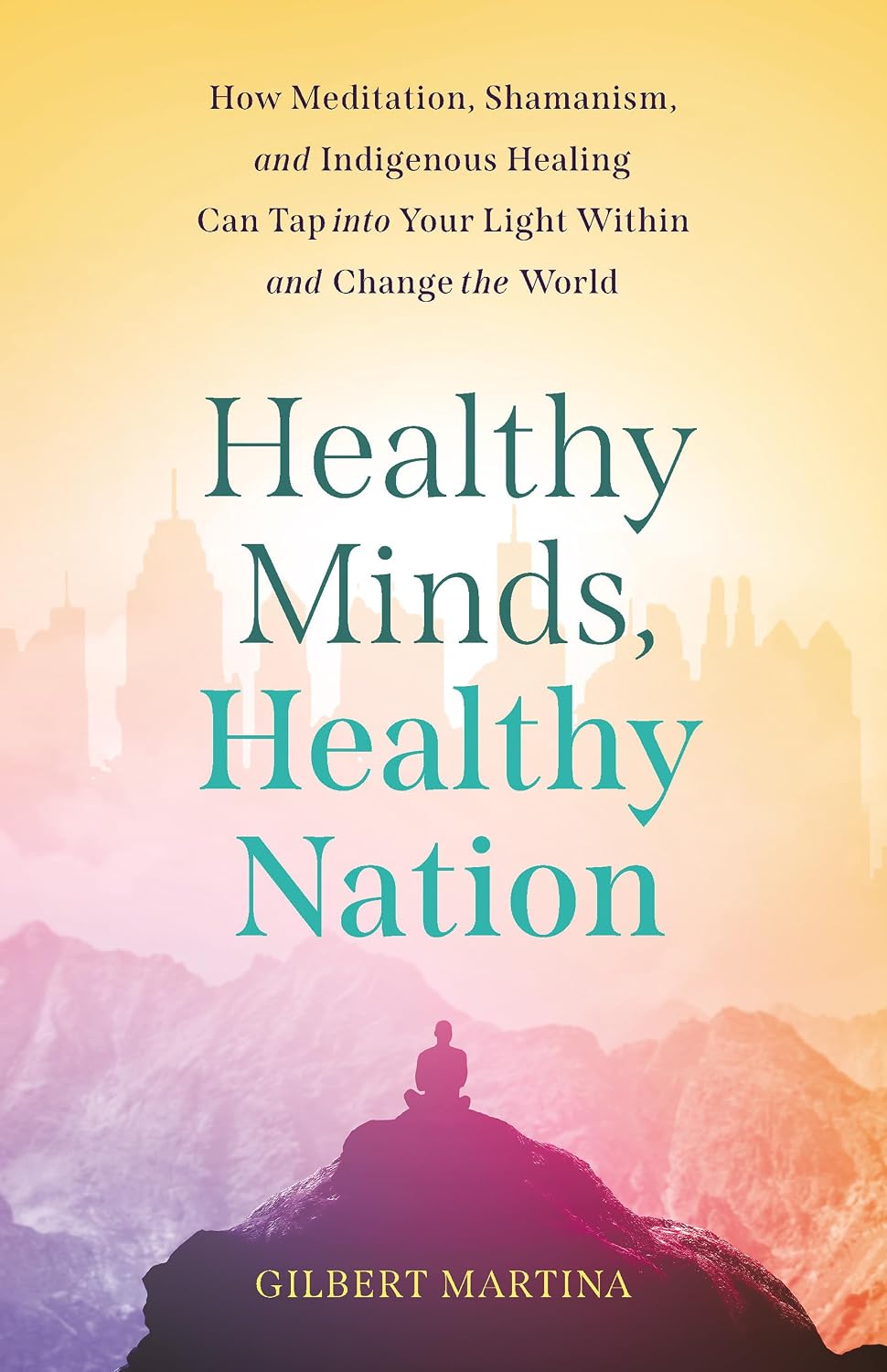
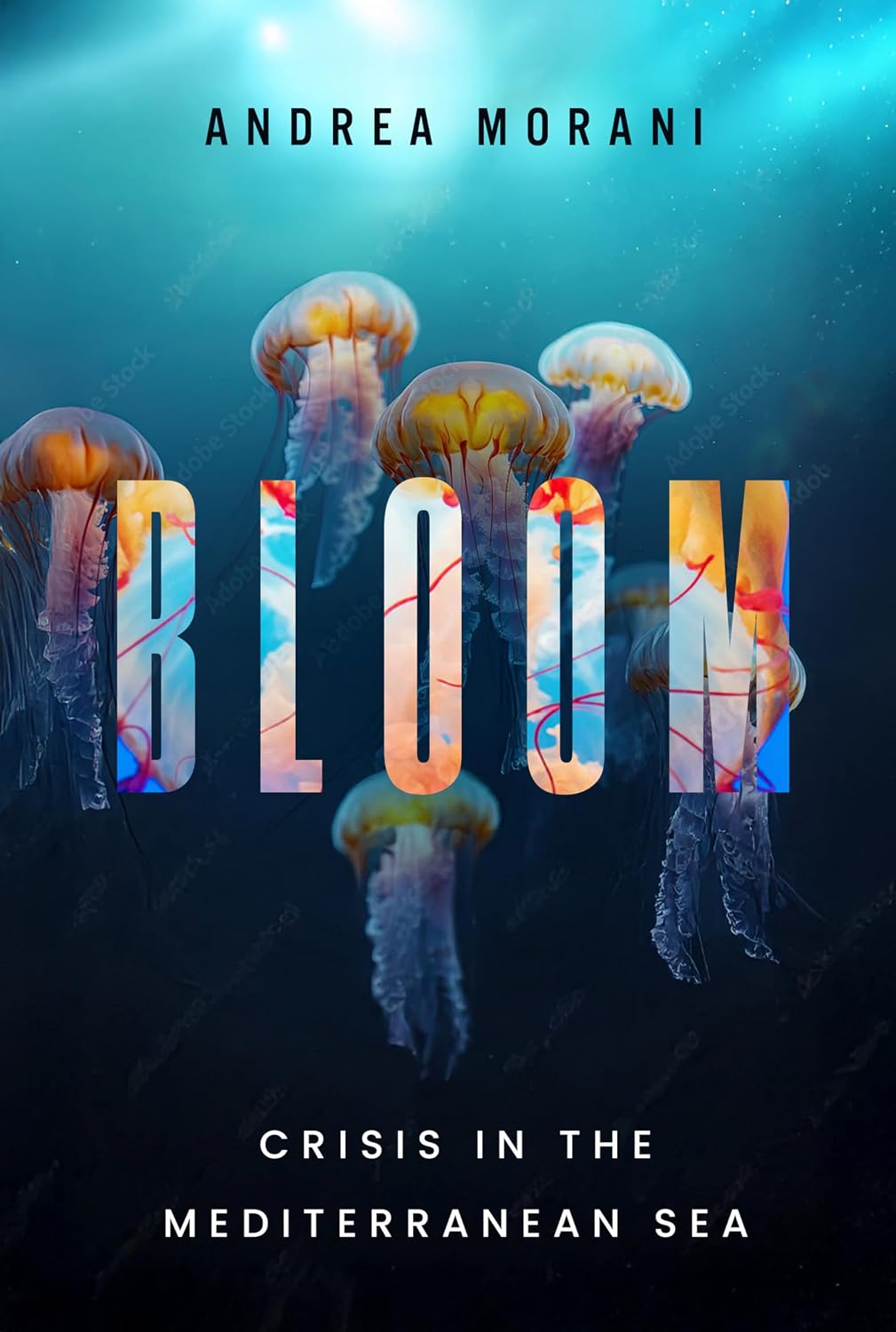

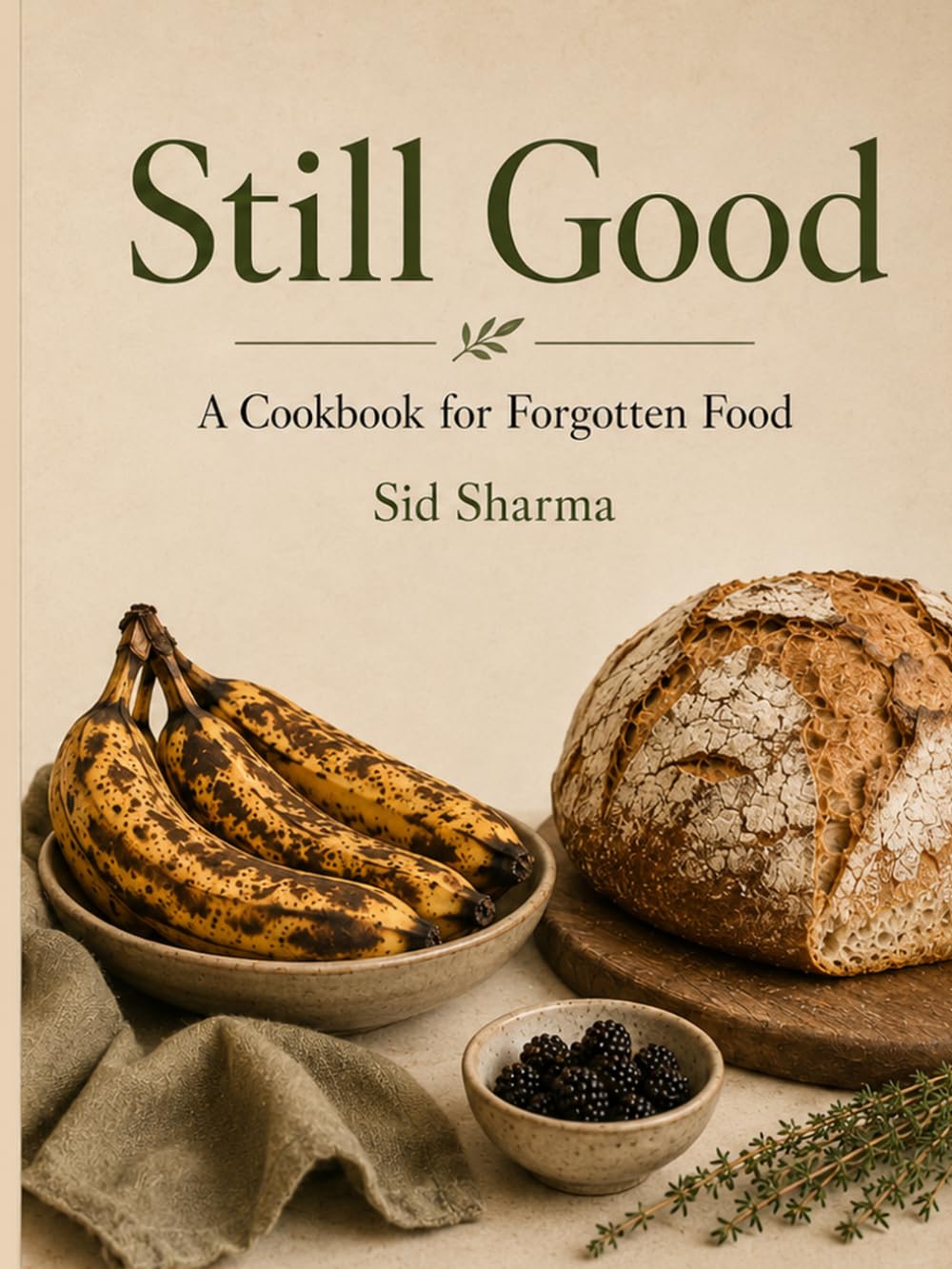


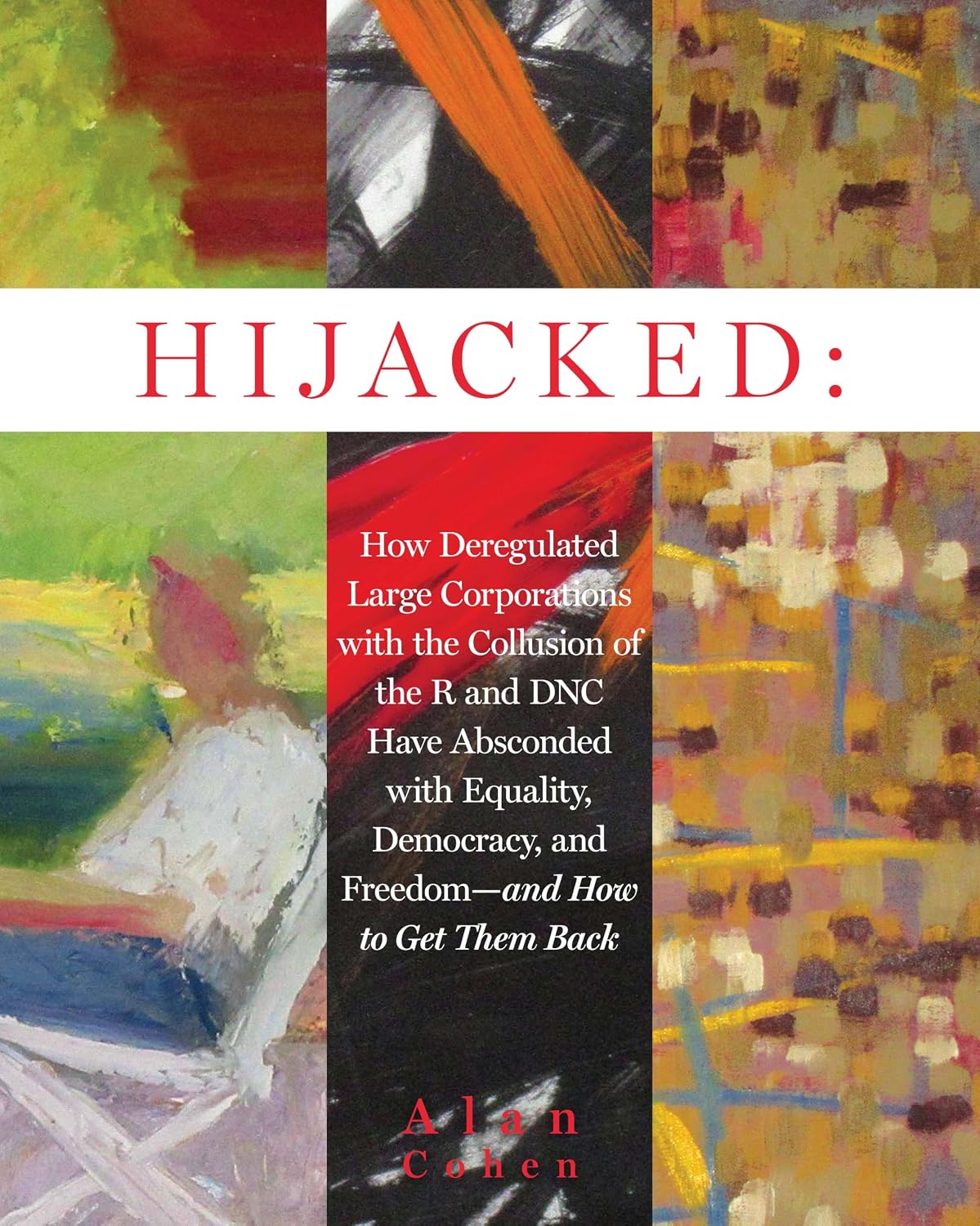




ȚEPEȘ: VLAD III DRACULA by Sebastian Valerius
Out of the Water by K Browning
The Galaxy of Kon-Ki: Waking on Earth by Colin Nimer
Visit the Literary Titan Book Awards page to see award information.
We Don’t Have To Wait For Heroes

The Final Sundering follows unlikely allies whose separate quests collide as ancient weapons, hidden civilizations, and the truth behind the Sundering threaten their freedom. What do you hope readers take away from the characters getting to choose what kind of lives and communities they want to build?
One of the reasons I like very real characters is that I have a secret hope that people will see the world around them and maybe believe that they, as just a regular person, can make a change. We don’t have to wait for heroes. We can be that hero. Struggle is as real as dreams; contending with one can bring the other, and I believe anyone can do it.
Bear, T’az, Thervan, and the other characters often deal with ordinary concerns alongside enormous fantasy events. How important was it to keep the dialogue and relationships grounded and conversational?
It is critical to me that the huge events are almost secondary. These people have lives, friends, and families. The events define the story and the reason these characters exist, but to survive, they have to ground themselves. I’ve been on patrols in the jungle and had the oddest conversations about life and the universe with the soldiers around me. One night, a storm caused the bank we were walking on to fail, and we all ended up sitting chest-deep in a muddy stream by a field. Lightning crashed around us. Someone started singing I Wish It Would Rain Down, by Phil Collins. There you sit. Just soaked, tired, and almost overcome, carrying a machine gun and six hundred rounds of ammunition, but singing and laughing at just how silly it all is. Maybe it’s weird, but all these characters were sitting with me in that stream.
The novel gradually reveals that much of the accepted history of the world is incomplete or false. How did you decide when to reveal those larger truths without giving away too much too early?
Easiest question. They have no answers. They live in subsistence farming societies where the aristocracy and the priesthood have all the money and power. I asked myself that question: when would you know? In a way, as the author, I’m sitting in Mirsha’s position. I know, and I want them to know. Dumping it on them too early could cause overwhelm and failure. What if a soldier on the field of Trenton, Gettysburg, or Waterloo suddenly knew everything about the universe, aliens, and space wars? Would they do anything? Would it change anything? Or would they freeze and do nothing? The last one has been my experience. You can’t just lead a horse to water and force them to drink. Mirsha points them at things. The Tablets of Marikinet, Valereth, Onterach, and lands across the desert and seas, in an effort to get them to go voluntarily into change.
Mirsha wants a new world. Could she just snap her fingers and change it? Maybe. But wouldn’t they be more likely to just put her on the pedestal and bow to her? What if people made the change? What if they led themselves to freedom and victory?
That’s what Mirsha wants.
Author Links: Amazon | GoodReads | Facebook | Website
For generations, ancient forces have ruled from the shadows, shaping kingdoms, feeding on conflict, and keeping humanity small. Now, for the first time, those forces face something they never anticipated: people who refuse to play by the rules.
A reluctant general holds a fragile new society together against impossible odds. A cursed warrior carries a sword that offers her everything — and takes a little more of her with every battle. A scarred knight wields a weapon that has destroyed every man before him, armed with nothing but the stubborn refusal to become what it demands.
Across deserts, uncharted seas, and mountains older than memory, unlikely allies converge — warriors and witches, pirates and princes, dragons and outcasts — drawn toward a reckoning that has been building for thousands of years.
Some fights cannot be won by strength alone. Some transformations cannot be undone. And some sacrifices, once made, echo across eternity.
The Final Sundering is the thundering conclusion to the Metamorphosis by Decree series — a story about power, love, and what ordinary people are willing to give so the world can finally change.
To Tell a Story

Out of the Water follows a prince who doubts his worth and must uncover the secrets of his bloodline and three magical rings as a growing conflict threatens the kingdoms of earth, water, and fire. What is the most rewarding aspect of writing a series?
To tell a story. Show how, through fictitious characters, people can change, and not always for the better. Choices bare consequences. Out of the Water is an excellent example of just that. You can learn what not to do when writing characters similar to Svaryur and Drifa.
How did you develop the Einns and the rules surrounding their magical powers?
Einn in Icelandic means one. The residents in Huldar usually only have one Einn. That’s where it started, with one magical power progressing into three separate Einns. Fire, Water, and Joro (in Old Norse for earth). Fire comes from the heart, Water from the mind, and Joro from the lungs. Einns have limits.
Svaryur’s character changes significantly throughout the novel. At what point did you realize how dark his transformation would become?
When he would use his own son in Into the Fire to get what Drifa wanted.
Svaryur never really did what he wanted, only Drifa.
Can you give us a glimpse into the next installment of The Huldar Chronicles? Where will it take readers?
The final Chronicle, End of Joro, is the ending. Aron’s great- grandson, Hakon has taken the stage. He will take readers on a journey of Hope. “For when we fall we must continue to rise.”
Author Links: GoodReads | Amazon
I Like Nightmares
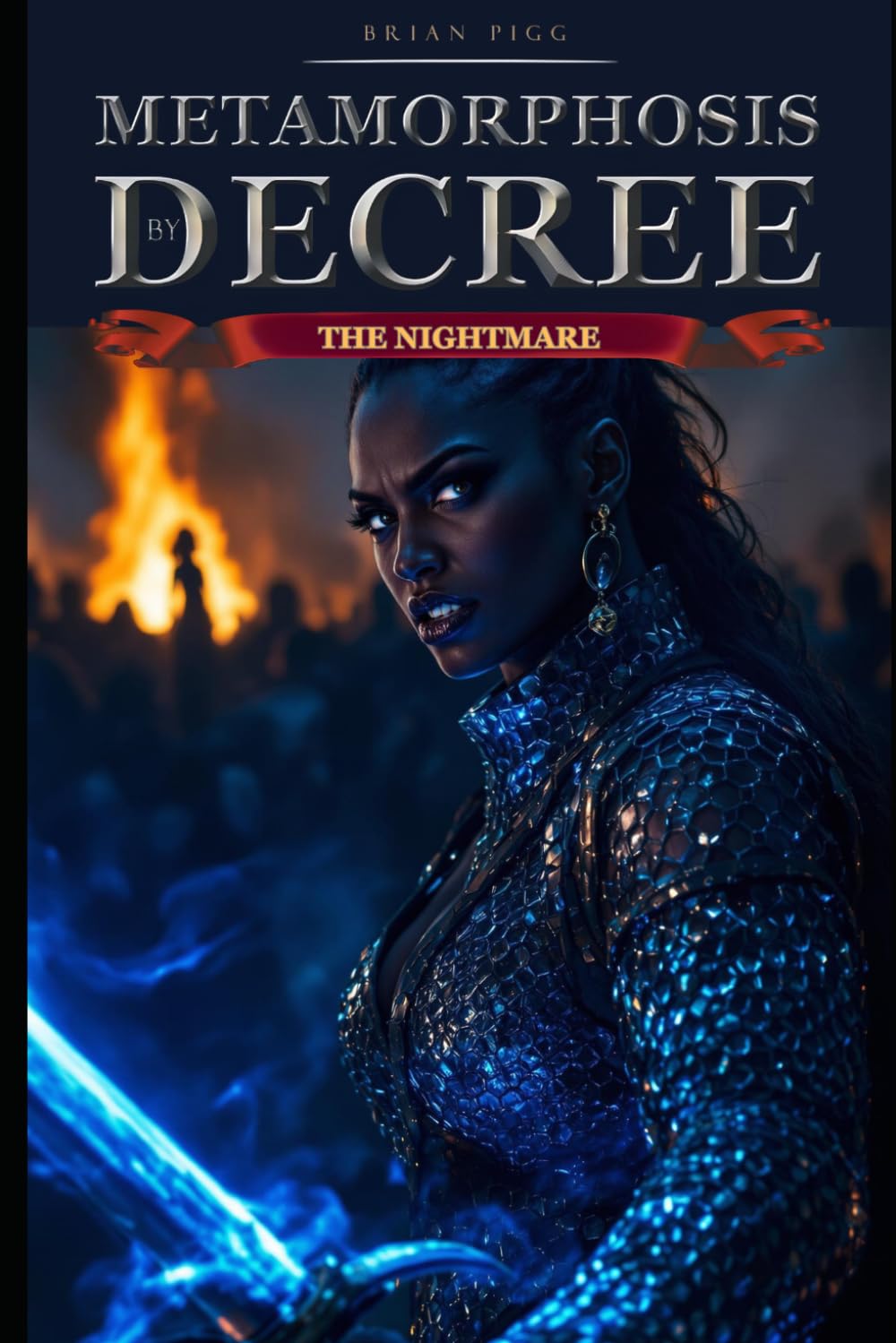
The Nightmare follows a young priestess as an ancient mage weaponizes her fears, forcing her to confront a corrupt religious order, buried truths, and the nightmares her choices may unleash. What were some sources that informed this novel’s development?
Some of it is just from my life, but things like Rush’s 2112 influence me in the background. It’s hard to say current events, but that can’t be denied. I want to show characters overcoming the past, the forces that be, the rich, whatever, and finding their own paths.
The novel treats nightmares not simply as supernatural attacks but as fears that influence characters’ choices. How did that idea shape the story and its title?
I like nightmares as a response to the raid on the Black Tower. It has the deviousness I expect the Black Mages to excel at. The desire to have an enemy create the environment in which they suffer. It leaves their hands, arguably, clean, and yet promotes their mystique. Since I’m delving into characters and their responses to stress, fear, love, and everything else, this is going to fail. In the end, even though the bad guys win, the characters cement their beliefs and push forward even stronger.
Kate discovers that the Code governing her society is built on lies, yet she wants reform without becoming another tyrant. What interested you about exploring that tension through her character?
You can’t tell by her fate, but I love Kate. She’s what every system wants. A young, vibrant person who believes and wants to believe. That’s why Haervan cuts her so much slack. She’s the perfect junior priest. Devoted. Knowledgeable. Vocal. The system, like most things, is at best a two-sided coin, and as she sees the other side, she has to reconcile that and still believe. I find her compelling. Kate’s belief, knowledge, and determination are what will drive a world to change.
The story combines intimate moments of friendship, romance, and family with gods, political upheaval, and epic battles. Why was it important to give ordinary relationships space within a large-scale fantasy story?
I like real people. It’s one of the genius parts about hobbits in all the Tolkien books. They aren’t heroes. They have lives and families. I like to show that people are people, and that makes them amazing. The solo hero stories have never interested me. I don’t like Superman-type characters. People have reasons they do things. One reason Mirsha has Kate suffer is so that T’az (a mercenary) will commit and go through hell to win. Would someone who fights for coin, even if they’re good, risk everything if the one person they loved didn’t die? So I ask myself while I’m writing what a character is doing, and more importantly, why. They could all fold up and fit in. It makes sense, and it is safe, but that why is always there. Once it comes to the front, change is going to happen.
To have people be real. Tangible. They have all the things we all have. Thoughts, doubts, love, rejection- all of it makes people who can stand in front of a charge of knights and not break. Those things are the why.
Author Links: Amazon | GoodReads | Facebook | Website
As revolution ignites across the land, T’az must navigate impossible choices while wielding a mysterious magical sword that hungers for battle. Torn between conflicting loyalties and haunted by her own demons, she discovers that some bonds transcend death itself. With unlikely alliances forming between humans, mythical creatures, and forces beyond the grave, our heroes must uncover long-buried truths about their world’s forgotten history. But ancient powers are stirring, and sinister forces manipulate events from the shadows. In a realm where everything that once existed still endures, the fate of all may depend on understanding the deepest mysteries of the past—before the gathering darkness consumes everything they hold dear.
A Vision Of The Last Scene
Metamorphosis By Decree: The Beginning follows a young priestess chosen by her goddess to recover sacred tablets, forcing her to confront forbidden magic, buried history, and a religious establishment determined to preserve its power. What was the inspiration for the setup of your story?
The Beginning was actually a dream or a vision of the last scene in the Emperor’s throne room. I had to write a story to get there. That was the last time that happened. In every other book, I have a beginning and struggle to find the end. Because I love characters and how they interact, overcome obstacles, and grow, I sometimes worry.
Kate’s faith in Mirsha remains strong even as her trust in the religious establishment collapses. What interested you about separating personal faith from institutional loyalty?
This is essentially my background. I grew up believing my parents’ religion. I’m an American, so as a kid in the seventies and eighties, we really bought into the propaganda. It turns out, nothing is really like that. I’ve served my country, worked for decades; none of it meant anything. So, it influences my characters. They have to find what’s real.
One of the things I love is the underdog. Not a fan of the hidden hero, secret jedi, or whatever. I like real people that do incredible things for love, or friendship. The sacrifices make sense to me.
The Black Tower connects magic, sacrifice, family betrayal, and generations of hidden history. How early in the writing process did you know what Verig, Theris, and the Tower would ultimately reveal?
The end of that book was the beginning. It made sense, and the world it existed in spun into being as I tried to figure out what I was writing down and why. I like thinking about the worlds from a character’s perspective. They wouldn’t know how big the world is. They wouldn’t know other things exist. They don’t have the internet and live in an isolated society. Discovery is fun.
Later in the Danagors, one of the characters convinces Mirsha to let her try again. The God isn’t going to start the whole world over, so Pelwin is sent to our world to try again. In that scenario, suddenly everything changes. She has the internet and an education. So, a very similar story becomes completely different because the world changes.
Kate, T’az, Hestal, Bernard, Bear, and Thervan gradually become a community of outsiders. How did you approach giving each member of such a large traveling party a distinct personal arc?
This is the key to everything in everything I write. All of the characters have stories. I’m fond of NPC’s. Building a world requires them, unfortunately. A book in which everyone’s story is told would be huge and probably boring. To make a group work, the dynamics have to work. Everyone has to give and compromise. At the same time, they need to find the lines they won’t cross. That’s the dynamic that interests me, and for me, that’s what drives a story. You can put characters into any situation. If you’ve built them and rounded them out, their reactions and motivations are a lot clearer.
Author Links: Amazon | GoodReads | Facebook | Website
But as Kate’s small company faces undead horrors, soul-stealing demons, and creatures beyond imagination, she begins to suspect that her sacred quest may not be what it seems. The deeper they venture into the cursed lands, the more the foundations of everything she’s believed begin to crumble. With her companions dying around her and enemies closing in from all sides, Kate must discover not only the strength to survive the ultimate evil—but the courage to question everything she’s ever been taught about the gods, the Code, and the very nature of truth itself.


