Blog Archives
Quiet Recognition

The Worry Whisper follows a young girl who is anxious about reading aloud in class, and with the help of her little brother and grandmother, she learns how to manage her feelings. When did you first imagine the “worry whisper” as a bird?
The idea of the “worry whisper” as a bird came to me quite naturally—and, in many ways, from my own childhood.
I was an anxious child. I didn’t have the language for it then, but I remember how it showed up in small, everyday moments. I would overcompensate in ways that felt automatic—talking really fast when I was nervous, or doodling when what I actually wanted was to be quiet and still. There was always this subtle hum in the background, something I couldn’t quite name but could definitely feel.
When I began shaping the story, I wanted to give that feeling a form—something a child could see and relate to without fear. A bird felt right. It can appear unexpectedly, perch close by, and make itself heard in different ways—sometimes softly, sometimes more insistently. That’s what worry felt like to me. Present, persistent, but not something that needed to be chased away.
More than anything, I wanted children to understand that worry isn’t something to silence or fight. It’s something to notice, to understand, and to gently learn how to live alongside. The “worry whisper” as a bird wasn’t a single moment of invention—it was a quiet recognition of something I had known all along.
What inspired you to reframe worry as something to listen to rather than fight?
That shift came from both lived experience and reflection over time.
For a long time, I treated worry as something to get rid of—as if the goal was to silence it completely. But the more I paid attention, the more I realized that fighting it often made it louder. It would show up in different ways—restlessness, overthinking, that urge to rush through things or fill the silence. The resistance didn’t quiet it; it amplified it.
Over time, I began to see worry differently—not as an enemy, but as a signal. Something in me was asking for attention, for care, for a pause. When I stopped trying to push it away and instead listened, even briefly, it softened. Not because it disappeared, but because it felt acknowledged.
That perspective is what shaped The Worry Whisper. I wanted children to learn early what many of us figure out much later—that emotions don’t need to be battled to be managed. When we listen, we create space. And in that space, we regain a sense of steadiness and choice.
Why was it important that Aarya didn’t “defeat” her fear by the end?
It was important to me that Aarya didn’t “defeat” her fear because that’s not how emotions actually work—especially not for children.
Fear doesn’t disappear in a single moment of courage. It comes and goes. It changes shape. And sometimes, it shows up again right when we think we’ve moved past it. I wanted the story to reflect that reality in a gentle, honest way.
Growing up, I often felt like I was supposed to “get over” my anxiety—to be braver, quieter, more in control. But what I really needed wasn’t to defeat those feelings; it was to understand them. To know that I could feel nervous and still move forward. That both could exist at the same time.
With Aarya, the goal wasn’t to eliminate fear, but to change her relationship with it. She learns to notice it, to listen to it, and to not let it decide what she can or cannot do. That felt like a more meaningful kind of strength—one that children can return to again and again, long after the story ends.
What conversations do you hope this book sparks between children and adults?
I hope The Worry Whisper opens the door to quieter, more honest conversations—ones that don’t rush to fix, but instead make space to understand.
For children, I hope it gives them language for what they’re feeling. That they can say, “I think my worry whisper is talking,” instead of shutting down or acting out. And for adults, I hope it’s a gentle reminder to pause and listen—not just to the words, but to what sits underneath them.
I also hope it shifts the dynamic from problem-solving to connection. Instead of “How do we make this go away?” the conversation becomes “What is this feeling trying to tell us?” or “What might help you feel a little steadier right now?” Those are very different starting points.
And perhaps most importantly, I hope it normalizes these experiences. That a child sees they’re not alone in feeling this way, and an adult recognizes that what looks like resistance or avoidance might actually be a child asking for support—just not in words they’ve learned yet.
If the book can help even one family move from reacting to understanding, from fixing to listening, it has done what I hoped it would do.
Author Links: GoodReads | Facebook | Website | Unscripted Growth | Instagram | Amazon
In The Worry Whisper, eight-year-old Aarya Bloom feels a quiet flutter in her chest — like a small bird tapping gently from inside. Tomorrow, she must read aloud in class. She loves stories. She loves words. But what if she makes a mistake? What if her voice disappears?
With the help of her playful little brother Kiyan and the gentle wisdom of Grandma Bloom, Aarya learns that worries aren’t enemies to fight — they are whispers reminding us that something matters.
Through lyrical storytelling, warm family moments, and beautifully relatable emotions, this heartfelt picture book helps children:
Understand what anxiety feels like in their bodies
Develop emotional awareness and self-compassion
Build confidence in speaking and trying new things
Practice calming techniques through reflection and imagination
Perfect for children ages 4–8, The Worry Whisper is ideal for:
Kids who struggle with performance anxiety or school fears
Parents looking to support emotional regulation
Classrooms teaching social-emotional learning (SEL)
Bedtime conversations about courage and resilience
Part of The Bloom Series, this story gently reminds young readers — and the adults who love them — that bravery isn’t the absence of fear. It’s learning to listen kindly… and still fly.
Includes reflective questions for children and a thoughtful message for adults to continue the conversation beyond the final page.
Because sometimes, a whisper can’t outshout a good laugh.
The Worry Whisper
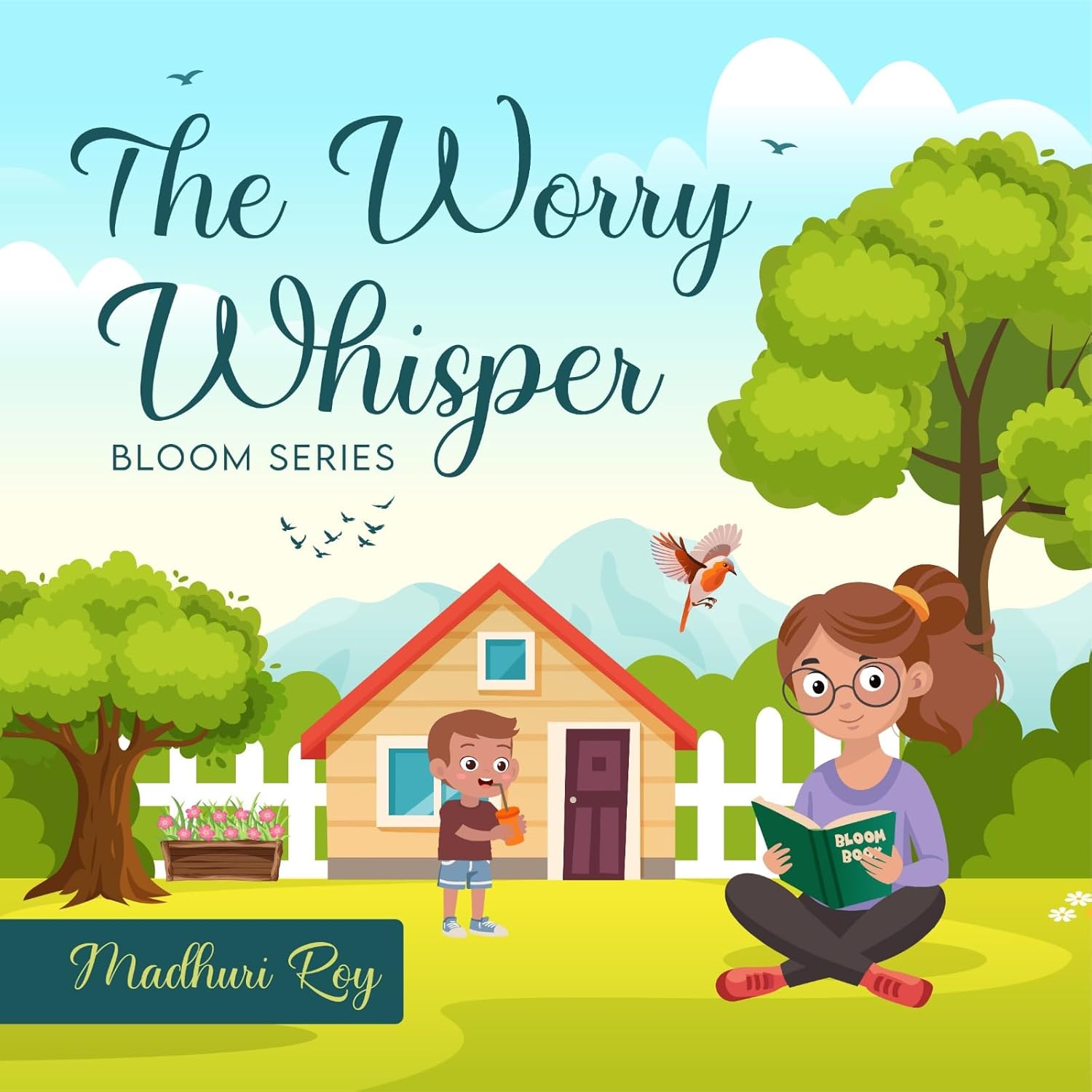

The Worry Whisper is a gentle picture book about Aarya, a child unsettled by the prospect of reading aloud in class, and the way her anxiety slowly shifts shape through love, language, and a little family wisdom. What begins as a vague flutter on a quiet Sunday becomes something more pointed as she imagines stumbling over words, losing her voice, or being laughed at. The book follows that inward tightening with unusual patience, then offers Aarya a way through it by turning worry into an image she can hold: a small bird that whispers because something matters. By the time she stands in front of her class, remembers Grandma Bloom’s counsel and Kiyan’s goofy, liberating “Mess up. Survive,” the story has moved not toward the banishment of fear, but toward a calmer companionship with it.
What I liked most is that the book doesn’t treat worry as a villain to be defeated. It gives anxiety a body, a rhythm, a texture. That fluttering bird in Aarya’s chest is a lovely metaphor because it feels accessible for a child, but it also rings emotionally true for an adult reader. So many books about fear rush to reassurance, but this one lingers in the discomfort long enough to honor it. Aarya’s dread feels real when she worries that her voice might hide forever, and the relief feels earned because the book never asks her to become fearless. It only asks her to listen kindly, breathe, and keep going. That’s a wiser and more humane idea than the usual tidy lesson.
The writing is soft, repetitive in a purposeful way, and often quite musical. The prose leans on breath, whisper, flutter, and hush, and that gives the book a soothing cadence that suits its subject. It’s genuinely lovely, especially when the whisper softens “like wings coming to rest,” or when Aarya realizes, with quiet astonishment, that the words are still hers. I also appreciated the tonal counterweight provided by Kiyan, whose juice-box raspberries, upside-down noodly antics, and shouted encouragement keep the book from floating away into pure gentleness. The artwork has a soft, comforting brightness that fits the story beautifully, using warm scenes and emotive characters that will capture a child’s eye while parents read.
The Worry Whisper is touching, emotionally intelligent, and more thoughtful than many children’s books about anxiety. I admire the way it frames courage not as the absence of fear, but as the decision to speak while fear is still in the room. The reflective questions and notes to adults at the end extend that idea nicely, opening the story into conversation rather than sealing it shut with a moral. I’d especially recommend it for children who feel overwhelmed by performance anxiety, school nerves, or big invisible feelings, and for caregivers or teachers who want language that is gentle without being evasive. It’s a small book with a tender, steady heart, and it knows exactly who it’s trying to comfort.
Pages: 38 | ASIN : B0GMDPPXT2



