Blog Archives
Live for the Moment

Therein Lies the Pearl follows two resilient women in a medieval world ruled by men and sharpened by war who discover that survival, faith, and quiet courage can shape history just as surely as swords. What first drew you to the period surrounding the Norman Conquest?
From traditional sources, everybody knows of the events leading up to and including the Norman Conquest of 1066: the death of the childless king, the men fighting for the crown, the subsequent rebellions and invasions. But what if you could experience a past event from the perspective of someone left out of the history books? Someone whose voice had been ignored because they were not powerful, wealthy, or famous?
The origins of Therein Lies the Pearl started with a visit to Edinburgh Castle. There, a small Romanesque structure made of stone sits at its summit, the place known as St. Margaret’s Chapel.
The first time I sat on the wooden bench beneath the stained glass window, I found myself lost in thought, wondering about this woman who had been called the “Pearl of Scotland.” From my Catholic upbringing, I knew a few skeletal details of her life–like the fact that she wanted to be a nun but somehow wound up married to a king and that she later came to be known as the patron saint of mothers and families. On a more personal level, I also liked the idea that her feast day was celebrated in my own birth month of November. Beyond that, I had no concept of just how fascinating her life had been.
There was no question in my mind that I wanted to write a book about Margaret, one where she would be a central character. But let’s face it, sometimes virtuous people can be boring (from a reader’s standpoint), so I needed something to spice things up a bit.
In came Celia.
Celia is not conventionally “likable.” Why was that important to you, and what does Margaret bring to the story that contrasts with Celia?
The feisty girl from Normandy is a completely fictional character. Unlike Margaret, she is thoroughly immersed in the secular world, and her very survival depends upon pluck, grit, and daring. In the beginning, Celia served as the perfect foil to the would-be nun, but oddly enough, the more pages I wrote (in my marble notebooks), the more the two women seemed to be mirror images of one another. The circumstances that surrounded each may have been vastly different–Saxon princess vs. simple farm girl–but the truth was they each had to find ways to maneuver amidst a world that did not have their best interests at heart.
When their lives eventually did intersect, they were supposed to be enemies. At least that was the distinction placed upon them by the men in power. However, the more time they spent together, observing and evaluating one another, the easier it was to shed that imposed label. And the bond they formed, based on mutual respect and admiration, could not be broken by any king, priest, or duke. Even death itself wasn’t able to diminish their connection.
What were some themes that were important for you to explore in this book?
One of the most obvious themes, of course, is female resiliency and agency in a male-dominated world. Despite their limited power in effecting sweeping changes, Celia and Margaret have an impact on their immediate surroundings because of their uncommon courage and unwavering devotion to doing what they believe is right.
Another theme involves strength. The word itself resists a single interpretation. Celia seems to embody the stereotypical picture of the undaunted warrior, but Margaret, in her own way, is just as strong. In fact, Celia initially judges her incorrectly, thinking that Margaret’s piety and contemplative nature convey weakness. As time passes, Celia realizes how wrong she was. Margaret possesses a sustained inward power that commands respect through consistent action, not outward noise or aggression.
Lastly, I think one of the greatest messages of the novel is to live for the moment. As recounted on certain pages in the novel, what we want in life and what we get may not always match. But we mustn’t go through our days worrying about that imbalance. Instead, we must “keep reaching out toward life, blissfully thankful for the ignorance.”
Why is it important to tell history from the margins?
I think that question lies at the heart of the historical fiction genre.
If you want a telescopic version of events, pick up a non-fiction text and read a generalized presentation of what took place. Get to know all the “big names,” the movers and shakers of history. But if you want to listen to voices that, perhaps, were not given a chance to speak in such chronicles, then grab a historical fiction novel and experience the event from the microscopic lens of someone who is living, breathing, and navigating his/her way through those same events on a personal and intense level. Telling history from the margins offers the reader a more nuanced understanding of the past–like getting to experience the Norman Conquest from the perspective of two women who carve their destiny armed only with strength, resilience, and faith.
Author Links: GoodReads | X (Twitter) | Facebook | Website | Amazon
The events leading up to the Norman Conquest of 1066 are well documented in the annals of history: various men are fighting for possession of the English throne, each believing himself to be the chosen one. The situation intensifies when King Edward, childless and already in failing health, sends for his nephew, Edward the Exile, to return home. What will this mean for Harold, Earl of Wessex and East Anglia? For William, Duke of Normandy? And when Edward mysteriously dies almost immediately after coming ashore, what will become of his son Edgar, the last surviving son of the royal dynasty? This story is not of the men, however, but of two women–Celia, a resilient young girl from Normandy, and Margaret, daughter of Edward the Exile. As they struggle to survive amidst adversity, loss, and death, their disparate worlds intersect, and they soon come to realize they are kindred spirits–brave, steadfast, and true. From beyond the grave, they implore us to listen to their retelling of the events that altered the course of history forever.
Therein Lies the Pearl
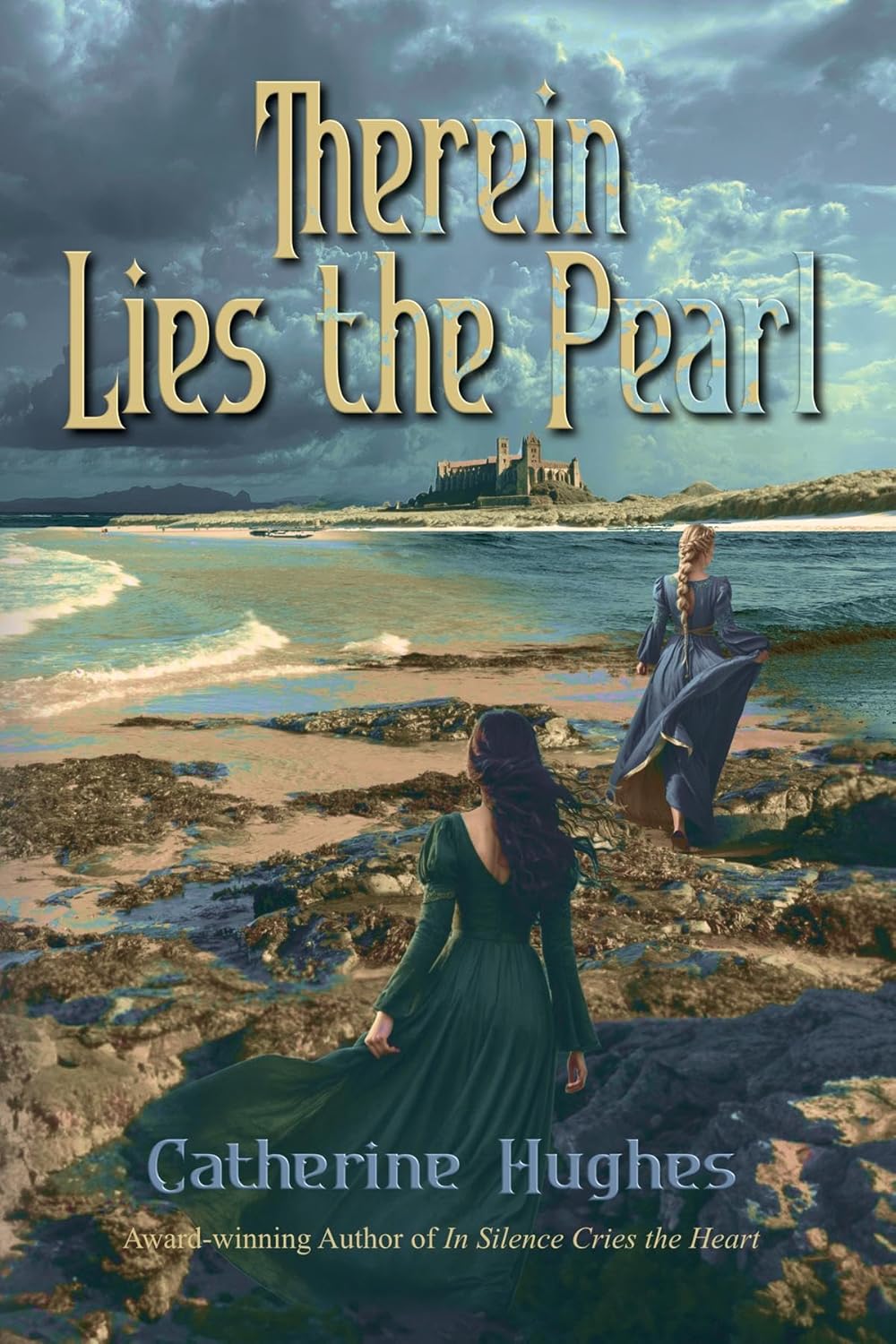

Therein Lies the Pearl by Catherine Hughes is a historical fiction novel set in the 11th century, moving from rural Normandy into the orbit of Duke William and then across the Channel into England in the years around the Norman Conquest. The story follows Celia as loss and duty harden her early, especially after her mother dies in childbirth and Celia becomes the steady center for her baby sister, Vivienne. Over time, Celia is pulled into larger forces and unfamiliar institutions, including religious life and English politics, with friendships and loyalties tested as power shifts and violence spreads. The book frames all of it with a storm at sea in 1068, a moment that feels like the story’s emotional bookend and its reckoning.
I liked the writing’s physical closeness. Hughes keeps putting your hands in the work: bailing, washing, digging, carrying, feeding. It is the kind of detail that makes survival feel earned, not symbolic. Celia, especially, is drawn with a sharp edge that I came to trust. She is not “likable” in a neat way, and that is the point. When she is tender, it lands because you have seen how hard she fights to keep tenderness alive in a world that keeps trying to stamp it out. The language is earnest and old-world without getting showy, and it often uses simple, concrete sensations to keep you grounded, like cold water, rough cloth, and the hush of spaces where people are not saying what they mean.
The author’s choices around history are interesting, too. This is not a battlefield chronicle, even though wars and rulers matter. It is a story about how big events leak into kitchens, convent halls, and friendships. One scene that was particularly impactful for me was the chaos around William’s coronation, where misunderstanding and fear turn into fire and violence, and the personal cost lands right inside the political moment. I also appreciated the way the book admits what it is doing: it is fiction inspired by historical events and family stories, not a literal record. That honesty makes it easier to relax into the novel’s emotional logic, especially when the plot shifts into court pressure, religious scrutiny, and the quiet bargaining people do with themselves to endure.
By the end, I felt like I had lived beside these characters, not just watched them. The final movement, looping back to the storm framing, brings a stark, fateful mood that fits what the story has been asking all along about agency, sacrifice, and what we owe the people we love. I would recommend this most to readers who like historical fiction that prioritizes interior life and lived detail over nonstop action, and to anyone who enjoys stories about resilient women navigating faith, family, and power without being turned into saints. If you want a medieval world that feels muddy, intimate, and emotionally serious, you’ll enjoy this novel.
Pages: 518 | ASIN : B0G67J1G46



