Blog Archives
Therein Lies the Pearl
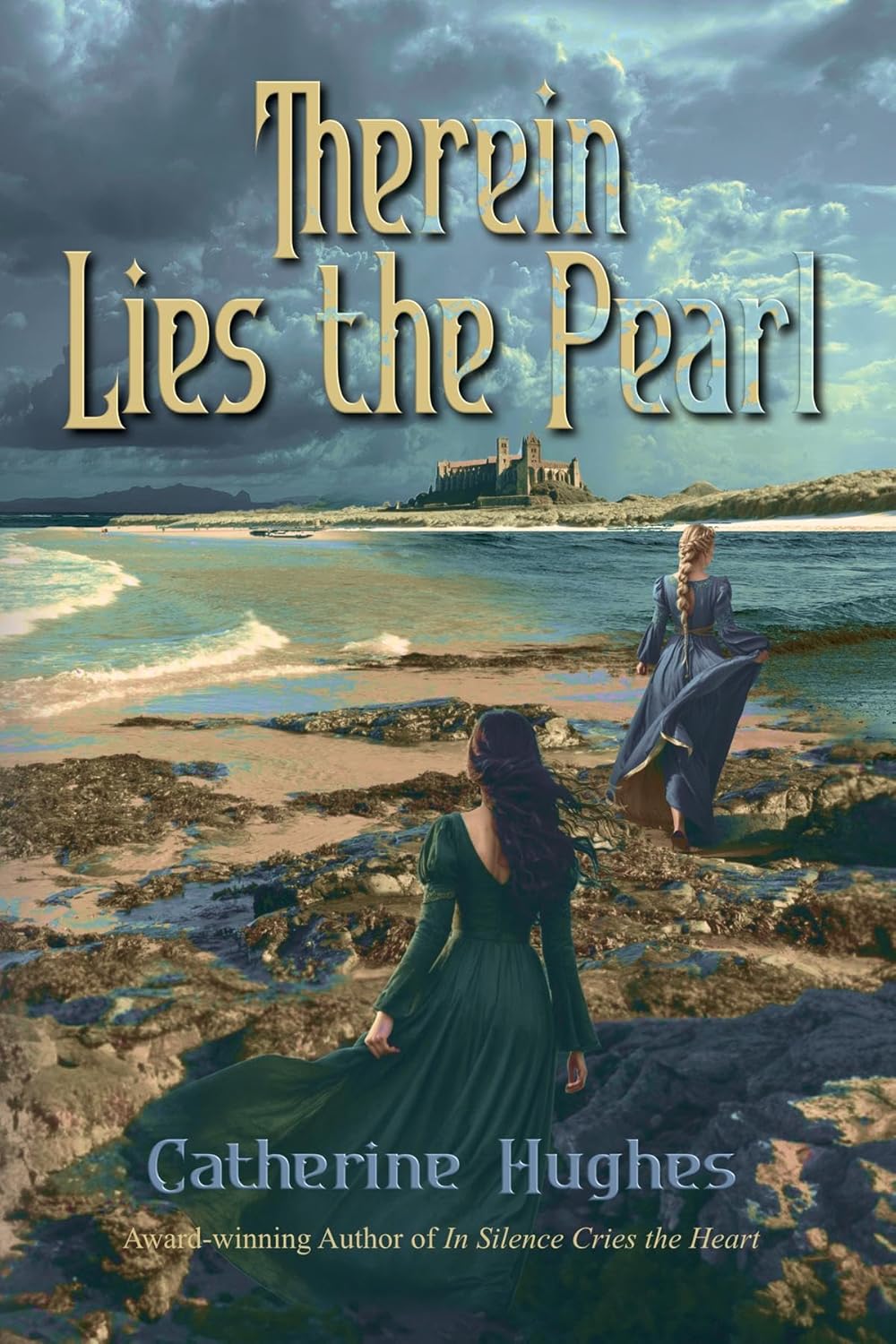

Therein Lies the Pearl by Catherine Hughes is a historical fiction novel set in the 11th century, moving from rural Normandy into the orbit of Duke William and then across the Channel into England in the years around the Norman Conquest. The story follows Celia as loss and duty harden her early, especially after her mother dies in childbirth and Celia becomes the steady center for her baby sister, Vivienne. Over time, Celia is pulled into larger forces and unfamiliar institutions, including religious life and English politics, with friendships and loyalties tested as power shifts and violence spreads. The book frames all of it with a storm at sea in 1068, a moment that feels like the story’s emotional bookend and its reckoning.
I liked the writing’s physical closeness. Hughes keeps putting your hands in the work: bailing, washing, digging, carrying, feeding. It is the kind of detail that makes survival feel earned, not symbolic. Celia, especially, is drawn with a sharp edge that I came to trust. She is not “likable” in a neat way, and that is the point. When she is tender, it lands because you have seen how hard she fights to keep tenderness alive in a world that keeps trying to stamp it out. The language is earnest and old-world without getting showy, and it often uses simple, concrete sensations to keep you grounded, like cold water, rough cloth, and the hush of spaces where people are not saying what they mean.
The author’s choices around history are interesting, too. This is not a battlefield chronicle, even though wars and rulers matter. It is a story about how big events leak into kitchens, convent halls, and friendships. One scene that was particularly impactful for me was the chaos around William’s coronation, where misunderstanding and fear turn into fire and violence, and the personal cost lands right inside the political moment. I also appreciated the way the book admits what it is doing: it is fiction inspired by historical events and family stories, not a literal record. That honesty makes it easier to relax into the novel’s emotional logic, especially when the plot shifts into court pressure, religious scrutiny, and the quiet bargaining people do with themselves to endure.
By the end, I felt like I had lived beside these characters, not just watched them. The final movement, looping back to the storm framing, brings a stark, fateful mood that fits what the story has been asking all along about agency, sacrifice, and what we owe the people we love. I would recommend this most to readers who like historical fiction that prioritizes interior life and lived detail over nonstop action, and to anyone who enjoys stories about resilient women navigating faith, family, and power without being turned into saints. If you want a medieval world that feels muddy, intimate, and emotionally serious, you’ll enjoy this novel.
Pages: 518 | ASIN : B0G67J1G46

A Love That Transcends Time

In Silence Cries the Heart follows an American schoolteacher on a trip to Scotland who uncovers the tragic history of a couple from the 17th century and a mystery surrounding their love. What was the inspiration for the setup of your story?
During the summer of 2019 while on a tour of Scotland, I and my fellow travelers stopped at Urquhart Castle, the ruins of which rest on the banks of Loch Ness. Visiting the dungeon there, I read a placard that mentioned the name of its most famous prisoner, Domhnull Donn, a cattle thief who had been executed not so much because he was a reiver but because he had the audacity to fall in love with the laird’s daughter, Mary Grant. When I asked the tour guide for further information about this doomed pair, he really didn’t know a whole lot beyond what was stated there on the display.
For some reason, I just couldn’t shake the memory of the castle, the dungeon, and the two lovers themselves, so when I got home to New York, I started digging around to find whatever I could about Donal and Mary. During that research, I found a particularly wonderful book by William Mackay called, Urquhart and Glenmoriston, Olden Times in a Highland Parish (1893) which included intriguing comments about Domhnull, calling him “the Rob Roy of his generation” who “had more poetry in his soul than the famous Macgregor had.” In addition, Mackay also recounted Domhnull’s capture, his final days, and even his last words before succumbing to the ax. I started to think, What kind of love could be so strong that it would be worth dying for?
I knew I had the shell of a tremendous story from history; I just needed to flesh it out.
Were you able to achieve everything you wanted with the characters in the novel?
I believe so. I hope readers will be captivated by the story of Mary and Donal and feel transported back to another age and time.
There is so much to be said about love in this book. What do you hope your readers take away from your story?
Two things actually. First (as stated earlier), I hope that they will be enchanted by a love that transcends time. Second, I hope that they will come to realize that silence is something to be welcomed, not avoided. For it is in silence where we learn so much about the soul–the spirit that connects all human beings from ancient times to today. Silence is something we have so little of today. Think of all of the buzzing notifications we get on a minute-to-minute basis: FB updates, incoming text messages, Instagram posts, etc. We simply can’t escape the noise and the distractions. But the truth is, we need silence. It’s a requisite for self-discovery. Only in the silence do we get to know ourselves, and when we can do that, we can then identify the part inside of us that’s the same stuff inside every other person–even those who lived in the Scottish Highlands back in the 1600s.
Thus, the Dedication at the opening of the novel:
“To the voices of yesterday that can be heard in the silences of today”
What is the next book that you are working on, and when can your fans expect it to be out?
I’m currently working on another dual-narrative novel, but this one is set in the years before the Norman Conquest. It’s a tumultuous time, and powerful men are jockeying for possession of the English throne.
Various rulers stake their claim, each believing he is the rightful leader to wear the crown. But the waters grow even muddier when King Edward the Confessor, childless and already in failing health, sends for his nephew, Edward the Exile, to return home. What will this mean for Harold Godwinson? For William, Duke of Normandy? And when the Exile mysteriously dies almost immediately after coming ashore, what will become of his son Edgar, the last surviving male member of the royal dynasty of the king?
While these men assume a significant role in the novel, the two main players are women: Melisende, a simple farm girl from Caen, Normandy, and Margaret, daughter of Edward the Exile and future queen of Scotland. Their two lives eventually intersect when Melisende is forced to spy on Edgar, Margaret, and Margaret’s suitor, Malcolm III of Scotland. Facing adversity, loss, and death, each woman is transformed by those experiences to see her own lustrous reflection mirrored in the other. Enemies no more, they emerge as kindred souls: triumphant, brave, and able to endure. Thus, the title, Therein Lies the Pearl.
Author Links: GoodReads | Facebook | Website | Amazon
In Silence Cries the Heart
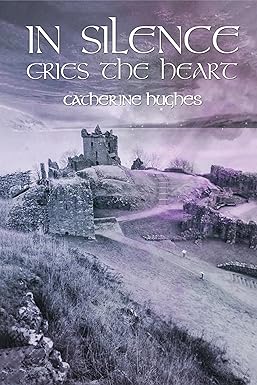
In Silence Cries the Heart transports readers to the atmospheric landscapes of Scotland, where the past and the present are blended in a historical fiction novel that is rich with emotional depth and lyrical storytelling. The narrative weaves between the poignant tale of 17th-century lovers Mary Grant and Domhnull Donn and the contemporary journey of Caitlyn, a woman whose discovery of their story changes her life. The setting goes from the hauntingly beautiful Loch Ness and Urquhart Castle, remnants of a turbulent history, to the modern world, capturing the essence of a Scotland that is as mystical as it is grounded in reality.
The author’s writing shines with a passion for Scottish history and culture, encapsulated through detailed descriptions and compelling characters. The vivid portrayal of the highland landscapes serves as a character in its own right, imbuing the narrative with a sense of place that is both enchanting and haunting. The parallel storylines are skillfully interwoven, maintaining a balance that enhances the book’s thematic depth. While the narrative excels in its atmospheric setting and rich historical details, I feel that it can occasionally linger on descriptive passages that slow the pace.
The exploration of themes such as love, destiny, and the power of history is poignant and thought-provoking. Author Catherine Hughes delves into the human condition with sensitivity, examining how the past influences the present and the timeless nature of certain human experiences. The heartache of Mary and Domhnull’s doomed love is mirrored in Caitlyn’s own journey of self-discovery and liberation from societal norms.
Hughes’ choice to intersperse the novel with Gaelic phrases and traditional Scottish folklore enriches the authenticity of the setting. These elements, combined with the lyrical quality of her prose, created a mesmerizing reading experience for me.
In Silence Cries the Heart is a compelling read for those enchanted by Scotland, historical fiction enthusiasts, and anyone who appreciates a beautifully written tale that bridges time. Its intricate narrative and eloquent prose make it a great book for a wide audience, particularly readers who enjoy stories where history and modernity converge with a touch of romance and mysticism, just like in Diana Gabaldon’s popular Outlander series.
Pages: 360 | ASIN : B0CKLXTLXQ

In Silence Cries the Heart

Catherine Hughes’ novel, In Silence Cries the Heart, weaves a captivating narrative through a dual-timeline structure. The protagonist, Caitlyn, embarks on a tour of the historic Undlay Castle, where she uncovers the poignant tale of Mary and Donal’s forbidden romance, revealed to her through two profound dreams. The first occurs after she faints at the castle, and the second unfolds as she peers into an adder’s stone. Set in contrasting eras, 2018 and 1665, the novel explores themes of love and autonomy in choosing a life partner. Born into nobility, Mary is pressured by her father to marry within their social class. Defying her father’s wishes, she falls for Donal, a cattle thief, and plans to elope with him, a decision that brings dire consequences.
Hughes skillfully navigates the historical backdrop of Mary and Donal’s story, set in 1665, with Caitlyn’s contemporary journey in 2018, drawing parallels between the past and present in love and choice. The novel delves into the restrictive societal norms of Mary’s time, contrasting them with Caitlyn’s modern perspective. Catherine Hughes’ narrative technique is particularly noteworthy. Rather than presenting Mary and Donal’s story as a mere tale within Caitlyn’s tour, Hughes opts for a more immersive approach, using vivid dreams to draw Caitlyn—and the reader—deeper into the historical romance. This method elevates the story’s impact, especially as the novel concludes with a nod to the tale’s veracity during the tour.
The character of Mary is intriguingly multifaceted. Hughes artfully navigates the complexities of Mary’s persona, balancing her resilience and independence with the profound impact of her love for Donal. This dynamic portrayal showcases Mary’s strength, which is evident in her passionate advocacy for Meggie and her active involvement in the Cameron brothers’ execution. Simultaneously, it explores her vulnerability, particularly in her interactions with Hilda and the decisions driven by her deep love. This nuanced depiction adds depth to Mary’s character, making her relatable and inspiring as she navigates the challenges of love and societal expectations.
In Silence Cries the Heart presents a layered and engaging narrative, offering a fresh take on the romance genre. Hughes’ use of a story within a story, combined with a blend of historical and contemporary elements, creates a rich tapestry that thoughtfully explores themes of love, choice, and societal constraints.
Pages: 360 | ASIN : B0CKLXTLXQ


