Blog Archives
The Story That Wanted To Be Told

Morgan’s Landing follows a local police detective from a small Maryland town who is investigating the disappearance of a fourteen-year-old girl from the town’s wealthiest family and digging up buried secrets in the process. What was the inspiration for the setup of your story?
It began with the idea that even in a small town full of friendly neighbors, people would rush to judgment and start blaming each other if a young girl disappeared. I’ve always enjoyed police procedurals and had written one, Guilty Knowledge, with an urban setting, but I thought it might be interesting to trace the actions of a small town detective investigating within his own community.
It seemed like you took your time in building the characters and the story to great emotional effect. How did you manage the pacing of the story while keeping readers engaged?
I don’t think I managed the pacing so much as I let it flow naturally. I told the story that wanted to be told in the way the characters would let me tell it. I think being engaged in the story myself is the best way to encourage readers to stay with me on the journey.
What were some themes that were important for you to explore in this book?
I was more interested in how a small town detective would go about investigating a case than in what the solution would turn out to be. The dynamics of a family in which the members seem to be at odds and each has his or her own version of the story also intrigued me.
Is this the first book in the series? If so, when is the next book coming out, and what can your fans expect in the next story?
While it isn’t impossible for Detective Jim Brady to have another case in the future, Morgan’s Landing was never intended to be part of a series. I feel as if I’m done with these characters—or they’re done with me—but I never know when something may spark the next story, and if it turns out to fit into the world of Morgan’s Landing, so be it!
Author Links: GoodReads | X | Facebook | Website
Detective Jim Brady, married and the father of two, has been on the Morgan’s Landing police force for twelve years. He identifies a few suspects in the girl’s disappearance—Is it the fired school janitor, a paroled sex offender, Julie’s computer teacher…or his own teenage son? Jim can’t believe his son could be involved, but his wife is convinced the boy is hiding something.
He needs to find Julie before the worst happens—and keep the peace at home.
Morgan’s Landing
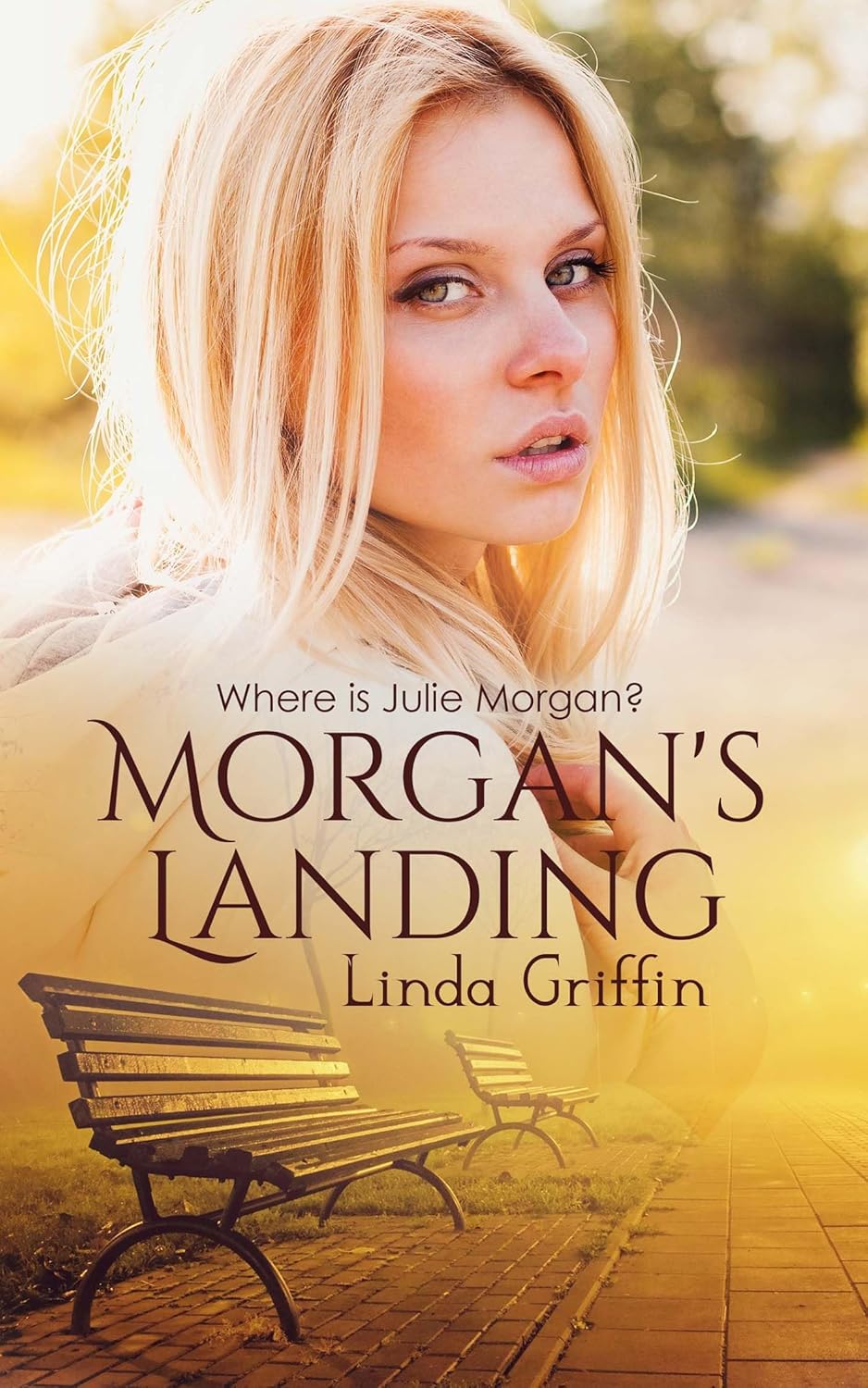

Linda Griffin’s Morgan’s Landing opens in a small Maryland peninsula town that feels both timeless and uneasy. The story begins with the sudden disappearance of Julie Morgan, one of two identical twin sisters from the town’s wealthiest family. As local police officer Jim Brady leads the investigation, the community’s calm surface ripples with suspicion, guilt, and buried secrets. What starts as a missing-person case grows into a layered exploration of fear, family, and moral grayness. Griffin draws readers into a slow, tense mystery that feels grounded in place and character, not just plot. Every chapter pulls back another curtain, revealing a town that’s anything but sleepy.
I found myself deeply drawn into Griffin’s writing. Her style is clean but textured, the kind that lets scenes breathe. The dialogue feels lived in, and the pacing has a natural rhythm, never rushed. What impressed me most was how she handles emotion. It’s never melodramatic and always relatable. Jim Brady, the detective at the heart of the story, feels real. He’s tired, decent, sometimes unsure, and completely believable. I could feel the weight of the case pressing on him, the strain of being both a cop and a father. Griffin doesn’t write heroes; she writes people. And that, for me, made the story hit harder. The setting itself feels like a character, the fog, the quiet streets, the water’s edge, all of it whispers the kind of secrets small towns keep.
The book’s emotional pull goes beyond the mystery. I kept thinking about the way Griffin looks at truth and guilt. Her characters live in moral gray zones, where even good intentions can twist into harm. At times, I felt frustrated, even angry, at how ordinary cruelty hides behind politeness and routine. But that’s the point. Griffin wants us to sit in that discomfort, to see how easy it is to miss what’s right in front of us. The writing feels empathetic, especially toward the young characters caught in situations they can’t control. I found myself caring about them in a way I didn’t expect.
By the final pages, I wasn’t just thinking about the mystery anymore. I was thinking about how fear changes people, how love and shame can live side by side. I’d recommend Morgan’s Landing to anyone who likes small-town mysteries with heart, readers who appreciate stories about people rather than just plot twists. It’s perfect for those who enjoy Tana French’s slow-burn style or Louise Penny’s quiet intensity.
Pages: 104 | ASIN : B0DZY1YR6V

The Tribune

The Tribune by Paul E. Roberts is an ambitious and vividly detailed historical adventure that straddles the line between modern mystery and ancient warfare. The novel begins in the present day, following David Thompson, a struggling American PhD candidate in Roman history, who is whisked away to Romania by a mysterious phone call from an old friend. This call triggers a journey into the Carpathian wilderness in search of a long-lost Roman eagle standard—an artifact tied to one of history’s forgotten battles. The narrative then plunges into the past, weaving in the gripping tale of Septimus Flavius Patrionus, a young Roman tribune caught in the chaos of a doomed military campaign. What unfolds is a tense and haunting exploration of war, identity, ambition, and historical truth.
I admired the realism and the research, and how Roberts doesn’t pull punches when it comes to the grit and grime of soldiering, ancient or modern. The Roman scenes are brutal, rich, and immersive. I found myself far more emotionally invested than I expected, especially in Septimus’s transformation from uncertain young officer to man grappling with the brutal reality of leadership. The writing walks a fine line between clarity and rawness—straightforward and punchy one moment, introspective the next. The pacing isn’t perfect, it meanders at times, but I didn’t mind. It gave me space to breathe and soak in the mood.
Where the book really gripped me was in the blend of timelines and the emotional weight that ties the characters together across centuries. David’s desperation, his doubts, and his academic hunger mirror Septimus’s fears and hopes in a surprisingly touching way. The discovery of the eagle becomes more than just a plot device, it’s a symbol of lost causes, pride, and the weight of legacy. I love that the book isn’t afraid to be dark, mysterious, or even a little weird. The dialogue is modern and clean, and the humor feels lived-in, not forced, but rising naturally from the characters’ bond and exhaustion.
The Tribune hit me harder than I expected. It’s not just about history, it’s about how history lives in us, haunts us, and sometimes gives us purpose. This is a book for anyone who loves historical fiction with grit, academic thrillers with heart, or stories that make you question where fact ends and myth begins. If you’re drawn to the dark corners of the past or have ever stood in front of an ancient ruin and felt the weight of time press on your chest, then this one’s for you.
Pages: 233 | ASIN : B0F5GM6QQJ


