Blog Archives
Unavoidable Element of Time

What’s It Like To Be Old? is a candid poetry collection that addresses what happens when the self still feels vividly alive, but the body has other ideas. Were there any poets or other writers who influenced your work on this collection?
I guess life was the main source of ideas and insights for this book. I have always admired Thomas Hardy’s excellent poetry, much of it written in the context of his old age. And of course Dylan Thomas and W. B. Yeats made famous statements about old age. But those tended to the heroic, and I wanted to explore the day-to-day consciousness of being old, a rather different thing than a defiant whoop. I did not find many writers who looked steadily at the life of the old, happy, painful, resigned, or entered into a psychological state that I defined as ripeness from Shakespeare’s touching lines.
How do you know when a poem is truly finished?
My poems often come out from a deeper place in my mind where they seem to be always already finished. I might struggle to find words for the middle, but the beginning and end seemed already written, and when the final lines came out, though I might mess with them a bit, I knew the poem was written: a rather mysterious process, I grant.
What was the biggest challenge you faced in putting together this poetry collection?
I had a great number of poems on the subject of what it is like to be old. I had recently entered into the life of older people, my 70s, when I would hit upon a statement, or a dramatic voice of someone, or a point of view, and so on, and I would create a poem. I edited all the poems very carefully, but then came the hard part: picking the ones worth putting in a book of poems on the subject. If they had made it through my editing process, they had some value, and it was hard to know which to select. I settled on distributing them into a kind of plot of poem sections that would eventually constitute the major sections of the book. It was then easier to see in a comparison of those in each section which would provide a new perspective and a superior poetic statement. Still, I was sorry to see certain ones have to go.
Can we look forward to more work from you soon? What are you currently working on?
I have finished four more books that are already slated for publication: these are a book on life in the unavoidable element of time, entitled Being in Time and Change, a work that follows many of the themes of time in What’s It Like To Be Old? Another is called Political Poems and asks the reader to think about our national and social hopes and despairs– so potent just now; it focuses on dominations and their harm. Next is a book of vivid impressions of life as we experience it daily; it is called Seasons: Moments and explores directly our brilliant or terrible life on the planet. Then there is another book of poems focused on my wonderful dog, Maisie, and her remarkable experiences in a life outside in Central Park.
I am now pulling together and editing a collection of reflections on dying and death, and our response to these realities. As with my other poems, they offer a panoply of points of view, personal, social, or eternal. I am liking these poems as I go through them, even though the subject itself is so unlikeable.
Author Links: GoodReads | Amazon
What’s It Like To Be Old?
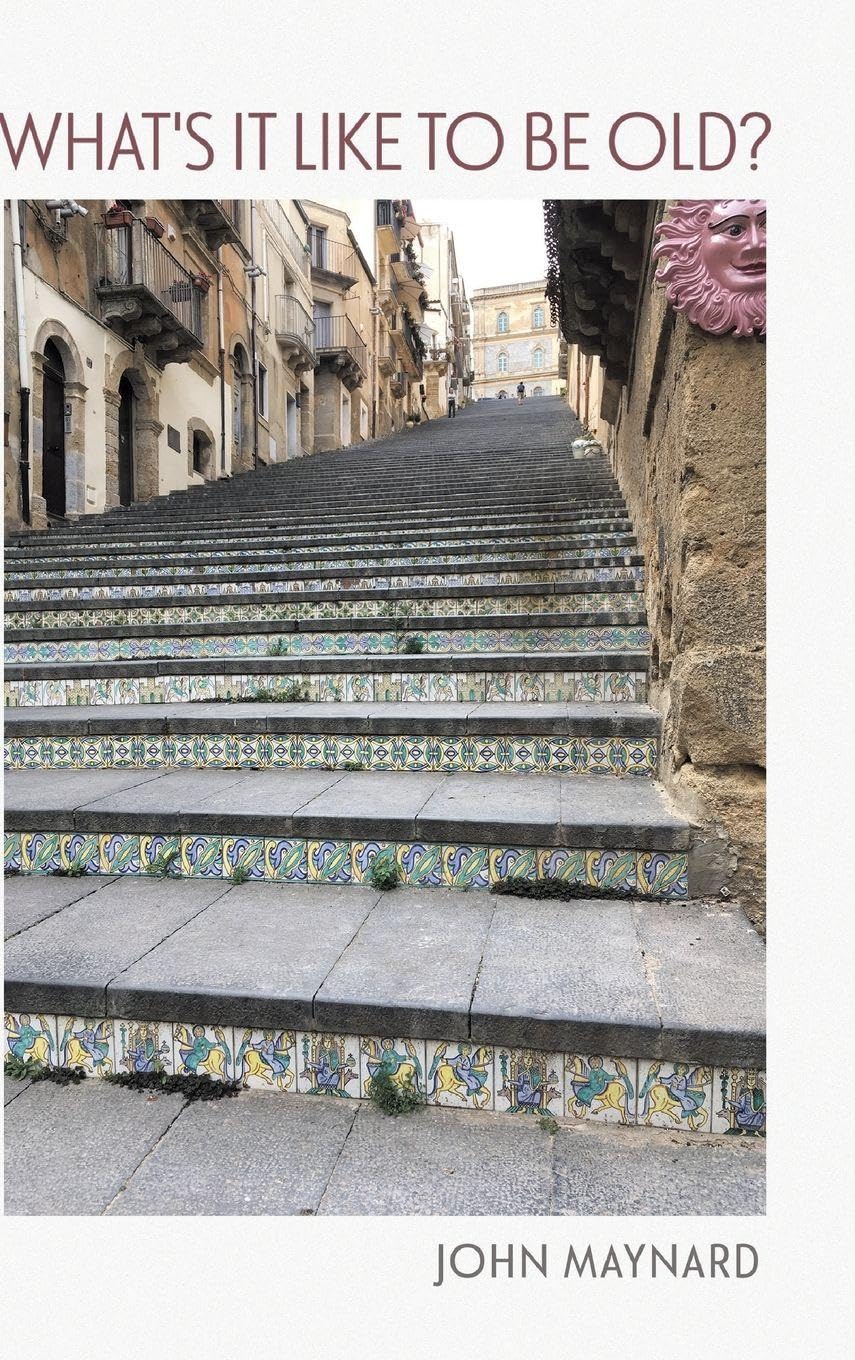

John Maynard’s What’s It Like To Be Old? is a candid, restless, often funny poetry collection about aging as both bodily fact and inner weather. Across sections like “Consider Old Age,” “Evaporating Immortality,” “Limits,” and “Ripeness,” Maynard keeps circling the same hard question from different angles: what happens when the self still feels vividly alive, but the body begins sending smaller, colder messages? The poems move from blunt jokes about pills, poop bags, doctors, and ice cream to startlingly tender meditations on desire, friendship, pain, memory, and the stubborn wish to keep saying yes to life.
I liked how little vanity there is in the voice. Maynard doesn’t smooth old age into wisdom, and he doesn’t turn it into one long lament either. He lets it be ridiculous, sexual, embarrassing, frightened, bored, grateful, and suddenly radiant. A poem like “Jump-Shot Air Ball” could have been only comic, with its missed poop-bag toss and pratfall, but beneath the joke, there’s a real tremor: Is this what decline looks like when it first starts arriving in ordinary gestures? Then later, in “Old Glory,” a flag barely moving in the wind unexpectedly moves, not because of easy patriotism, but because endurance itself has begun to feel mysterious. That emotional turn felt earned to me. The book is best when it catches those small, almost private jolts of recognition.
The writing has a rangy, plainspoken looseness that I found more affecting than polished lyricism would have been. Maynard often favors short lines, singsong rhymes, and conversational pivots, sometimes to comic effect, sometimes to make the poem feel like a thought trying to steady itself while walking. I didn’t love every rhyme or every joke equally; a few pieces lean into bawdy humor or blunt complaint that they feel more like table talk. But even that roughness belongs to the book’s honesty. The ideas are strongest when they resist consolation. In “False Alarms,” the body becomes a series of warnings until one day the warning is real, while “A Sudden Jumping Joy” insists that older people aren’t simply morose, they’re capable of fierce happiness when life grants even three good days, or three good hours. That felt painfully true.
By the end, I felt What’s It Like To Be Old? had done something quietly brave: it had made aging feel less like an abstraction and more like a lived room, cluttered with prescriptions, jokes, losses, appetites, dogs, doctors, memories, and light. The book’s candor gives it weight, and its tenderness keeps returning just when the bitterness might have taken over. I’d recommend it to readers who appreciate reflective, accessible poetry about mortality, especially those interested in the emotional comedy and ache of later life.
Pages: 90 | ASIN : B0GNXK5Q9G



