Blog Archives
Stained Glass Tainted by Dementia


Stained Glass Tainted by Dementia is a book-length work of poetic nonfiction about a son watching his mother disappear into dementia while trying to understand the family, faith, grief, and love that shaped them both. Theodore McDowell writes in short, poem-like pieces that feel intimate and immediate, almost like entries in a spiritual journal. The book begins with his mother as a figure of wonder, especially in the opening memory of a cathedral, candlelight, and childhood awe. When he writes, “Mom was more beautiful than stained glass,” he gives the reader the emotional key to the whole book.
The first half follows the author’s mother through memory care, illness, and death, but it also keeps returning to who she was before dementia took hold. She’s a nurse, a gardener, a dancer, a mother, a woman shaped by poverty, marriage, faith, fear, and resilience. McDowell doesn’t flatten her into sainthood. He lets her be complicated, loving, wounded, and sometimes unable to protect the people she loves. That honesty gives the book its weight.
One of the strongest things about the writing is the way ordinary caregiving moments become sacred without losing their physical reality. Washing a face, feeding puree, changing clothes, sitting in silence, and watching someone search for a name all become acts of witness. The religious imagery is everywhere, but it’s grounded in bodies, rooms, porches, wheelchairs, storms, and nursing home hallways. The line “I am their memory keeper” captures the role McDowell takes on throughout the book, carrying what his parents can no longer hold.
The second half opens the book outward, moving from the author’s mother to a wider collage of people living with dementia and those caring for them. These pieces give the book a larger human reach, showing spouses, children, caretakers, and patients caught in different versions of the same unraveling. Music, gardens, birds, oceans, and old dance halls keep returning as places where memory flickers back to life. Even when the scenes are painful, the writing keeps looking for dignity in the person who remains.
This is a deeply personal book, but it’s also a meditation on what love asks of us when memory breaks down. McDowell’s style is lyrical, prayerful, and often raw, with images that linger after the page turns. The book is at its best when it lets grief sit beside tenderness, anger beside forgiveness, and faith beside doubt. Stained Glass Tainted by Dementia reads like a long act of remembrance, one that honors a mother, mourns a disease, and gives language to the slow work of saying goodbye.
Pages: 239 | ASIN : B0GFB3Z3L6

Unavoidable Element of Time

What’s It Like To Be Old? is a candid poetry collection that addresses what happens when the self still feels vividly alive, but the body has other ideas. Were there any poets or other writers who influenced your work on this collection?
I guess life was the main source of ideas and insights for this book. I have always admired Thomas Hardy’s excellent poetry, much of it written in the context of his old age. And of course Dylan Thomas and W. B. Yeats made famous statements about old age. But those tended to the heroic, and I wanted to explore the day-to-day consciousness of being old, a rather different thing than a defiant whoop. I did not find many writers who looked steadily at the life of the old, happy, painful, resigned, or entered into a psychological state that I defined as ripeness from Shakespeare’s touching lines.
How do you know when a poem is truly finished?
My poems often come out from a deeper place in my mind where they seem to be always already finished. I might struggle to find words for the middle, but the beginning and end seemed already written, and when the final lines came out, though I might mess with them a bit, I knew the poem was written: a rather mysterious process, I grant.
What was the biggest challenge you faced in putting together this poetry collection?
I had a great number of poems on the subject of what it is like to be old. I had recently entered into the life of older people, my 70s, when I would hit upon a statement, or a dramatic voice of someone, or a point of view, and so on, and I would create a poem. I edited all the poems very carefully, but then came the hard part: picking the ones worth putting in a book of poems on the subject. If they had made it through my editing process, they had some value, and it was hard to know which to select. I settled on distributing them into a kind of plot of poem sections that would eventually constitute the major sections of the book. It was then easier to see in a comparison of those in each section which would provide a new perspective and a superior poetic statement. Still, I was sorry to see certain ones have to go.
Can we look forward to more work from you soon? What are you currently working on?
I have finished four more books that are already slated for publication: these are a book on life in the unavoidable element of time, entitled Being in Time and Change, a work that follows many of the themes of time in What’s It Like To Be Old? Another is called Political Poems and asks the reader to think about our national and social hopes and despairs– so potent just now; it focuses on dominations and their harm. Next is a book of vivid impressions of life as we experience it daily; it is called Seasons: Moments and explores directly our brilliant or terrible life on the planet. Then there is another book of poems focused on my wonderful dog, Maisie, and her remarkable experiences in a life outside in Central Park.
I am now pulling together and editing a collection of reflections on dying and death, and our response to these realities. As with my other poems, they offer a panoply of points of view, personal, social, or eternal. I am liking these poems as I go through them, even though the subject itself is so unlikeable.
Author Links: GoodReads | Amazon
Stained Glass Tainted by Dementia
Stained Glass Tainted by Dementia is a lyrical work of poeticized nonfiction about a son watching his mother vanish into dementia while trying to preserve the woman she was: devout, wounded, resilient, flawed, and beautiful. Theodore McDowell structures the book first around his mother’s decline and death, then widens the lens into a collage of dementia as experienced by patients, spouses, family members, and caretakers. The result is less a conventional memoir than a sequence of elegies, prayers, memories, and reckonings, all circling the same terrible truth: love does not prevent loss, but it can bear witness to it.
What moved me most was the book’s refusal to make dementia neat. McDowell does not soften the disease into a sentimental lesson. He shows its bewilderment, its humiliations, its repeated thefts of language, identity, and family roles. Yet the writing keeps searching for grace in the wreckage. A mother becomes stained glass, a garden becomes consecrated ground, a jazz trio briefly restores old romance to dull eyes. These images could have felt ornate, but at their best, they act like small lamps in a dark ward, illuminating what clinical language cannot reach.
I also appreciated the emotional candor beneath the beauty. This is not simply a son praising his mother; it is a son sorting through devotion, anger, religious inheritance, family violence, forgiveness, and guilt. That complexity gives the book its pulse. At times, the intensity of the imagery is almost overwhelming, but that excess feels tied to the subject itself. Grief is not tidy prose. Dementia breaks continuity, and McDowell answers with fragments that shimmer, bruise, and repeat like memory trying to repair itself.
The target audience for this book includes readers of memoirs, grief literature, dementia narratives, caregiving books, poetry, spiritual memoirs, family trauma, and literary elegies. Readers who admire Joan Didion’s The Year of Magical Thinking may recognize a similar attempt to make art out of bereavement, though McDowell’s voice is more prayerful, more image-soaked, and more overtly devotional. Stained Glass Tainted by Dementia is a sorrowful, luminous book that turns memory into a chapel for the vanishing.
Pages: 239 | ASIN : B0GFB3Z3L6
What’s It Like To Be Old?
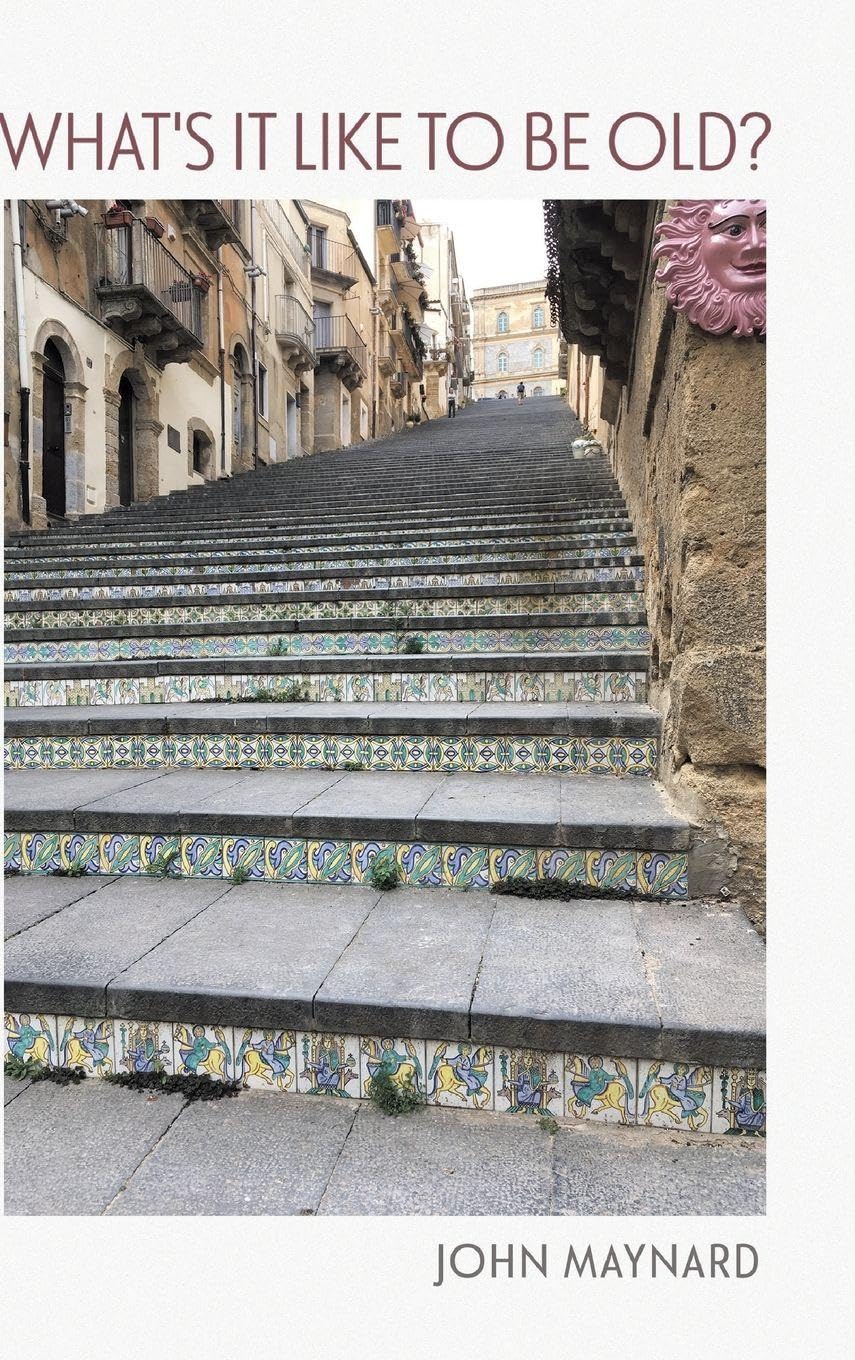
John Maynard’s What’s It Like To Be Old? is a candid, restless, often funny poetry collection about aging as both bodily fact and inner weather. Across sections like “Consider Old Age,” “Evaporating Immortality,” “Limits,” and “Ripeness,” Maynard keeps circling the same hard question from different angles: what happens when the self still feels vividly alive, but the body begins sending smaller, colder messages? The poems move from blunt jokes about pills, poop bags, doctors, and ice cream to startlingly tender meditations on desire, friendship, pain, memory, and the stubborn wish to keep saying yes to life.
I liked how little vanity there is in the voice. Maynard doesn’t smooth old age into wisdom, and he doesn’t turn it into one long lament either. He lets it be ridiculous, sexual, embarrassing, frightened, bored, grateful, and suddenly radiant. A poem like “Jump-Shot Air Ball” could have been only comic, with its missed poop-bag toss and pratfall, but beneath the joke, there’s a real tremor: Is this what decline looks like when it first starts arriving in ordinary gestures? Then later, in “Old Glory,” a flag barely moving in the wind unexpectedly moves, not because of easy patriotism, but because endurance itself has begun to feel mysterious. That emotional turn felt earned to me. The book is best when it catches those small, almost private jolts of recognition.
The writing has a rangy, plainspoken looseness that I found more affecting than polished lyricism would have been. Maynard often favors short lines, singsong rhymes, and conversational pivots, sometimes to comic effect, sometimes to make the poem feel like a thought trying to steady itself while walking. I didn’t love every rhyme or every joke equally; a few pieces lean into bawdy humor or blunt complaint that they feel more like table talk. But even that roughness belongs to the book’s honesty. The ideas are strongest when they resist consolation. In “False Alarms,” the body becomes a series of warnings until one day the warning is real, while “A Sudden Jumping Joy” insists that older people aren’t simply morose, they’re capable of fierce happiness when life grants even three good days, or three good hours. That felt painfully true.
By the end, I felt What’s It Like To Be Old? had done something quietly brave: it had made aging feel less like an abstraction and more like a lived room, cluttered with prescriptions, jokes, losses, appetites, dogs, doctors, memories, and light. The book’s candor gives it weight, and its tenderness keeps returning just when the bitterness might have taken over. I’d recommend it to readers who appreciate reflective, accessible poetry about mortality, especially those interested in the emotional comedy and ache of later life.
Pages: 90 | ASIN : B0GNXK5Q9G
The Face of Expression 3: Fall of A King
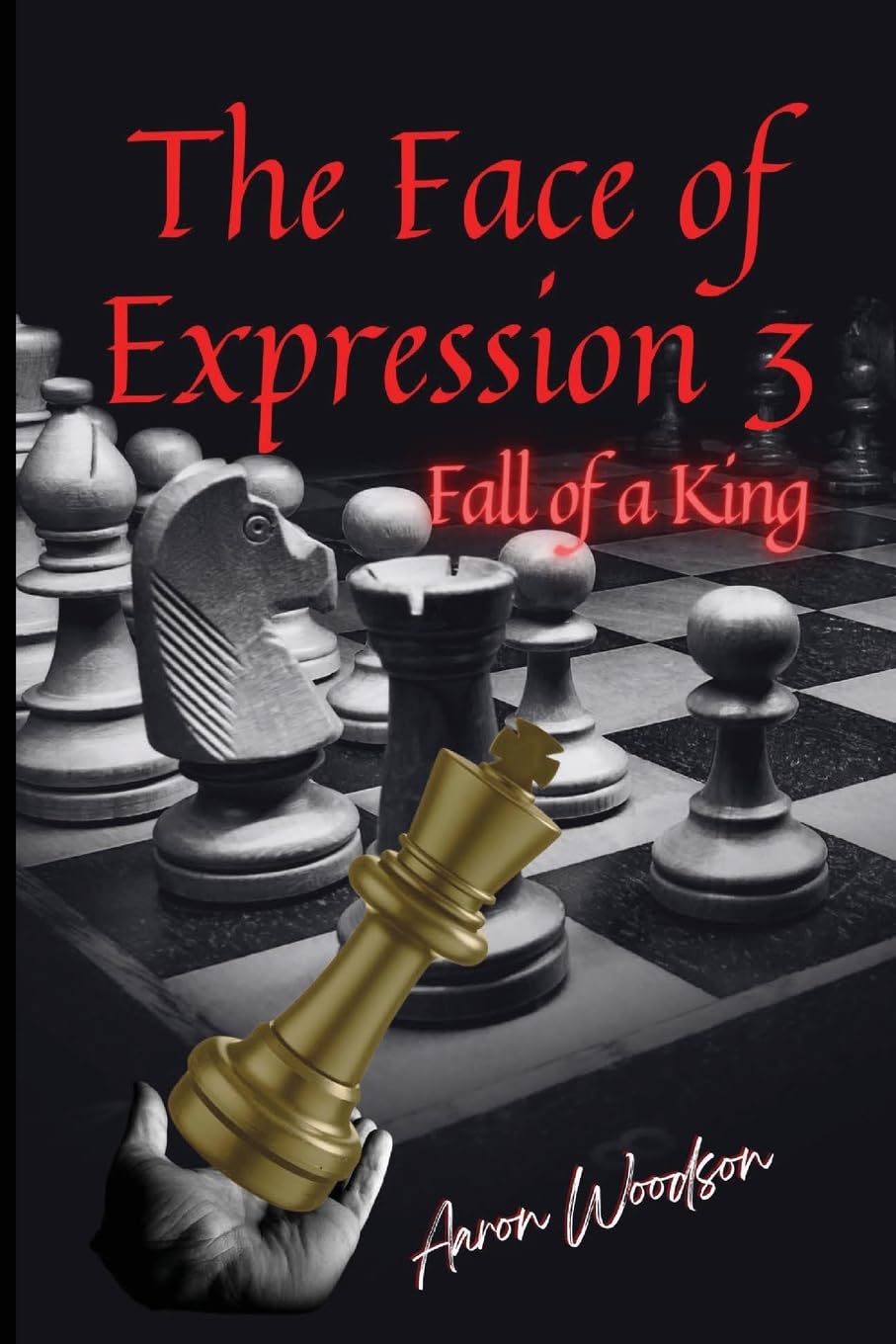
The Face of Expression 3: Fall of a King by Aaron Woodson is a sprawling, deeply personal poetry collection about faith, masculinity, love, Black identity, heartbreak, endurance, and spiritual repair. It moves like a long testimony, beginning with surrender in “Chess With God,” swelling into declarations like “Leading With Love,” “Black By Popular Demand,” and “Heart of A Lion,” then circling through romance, loneliness, self-worth, social pain, fatherhood, exhaustion, and legacy before arriving at the title poem, “Fallen Kings,” and the quieter ache of “Swan Song.” The book feels less like a neat, curated volume and more like a life poured straight onto the page, sometimes polished, sometimes raw, but almost always emotionally direct.
I felt the force of that in poems like “Still on My Feet,” where the speaker is bruised but refuses to retreat, and in “Quitting,” where the honesty turns darker, wearier, and more vulnerable. Woodson writes often from the posture of a king, a soldier, a lover, a believer, but the most moving moments come when the crown slips a little and I can see the tired man underneath it. In “Anchor,” the prayer isn’t ornamental. It sounds like someone genuinely close to breaking, asking God to hold him in place before the storm takes him. That kind of naked need gives the collection its heartbeat.
Woodson’s style is conversational, repetitive, sometimes sermon-like, and he often leans into big declarations rather than subtle turns. I admired the sheer openness of the voice. Poems like “Waves” and “Pilot” stretch an idea almost playfully until it becomes metaphor, memory, flirtation, joke, and testimony all at once. “Black By Popular Demand” has a proud, pulsing confidence that feels communal rather than merely personal, while “Hello Handsome” turns self-affirmation into something funny, sensual, and strangely tender. The ideas in the book are not shy ones. Love heals. God rescues. Blackness is beautiful. Men hurt. People fail each other. Grace remains.
By the end, I felt like I’d spent time with someone determined to bless the wounds that shaped him, not deny them. The Face of Expression 3 isn’t a delicate book, and it isn’t trying to be. It’s loud, searching, romantic, wounded, faithful, proud, and full of hard-earned hope. This collection works best when read as a testimony in motion, not as a pristine literary object. I’d recommend it to readers who enjoy confessional, faith-centered poetry with a strong spoken-word current, especially those drawn to reflections on Black manhood, resilience, love, and spiritual recovery.
Pages: 414 | ISBN : 1953526322

A Balanced Perspective

Spirit of the Cowboy is a poetry collection in which you use the cowboy myth to explore desire, wounded masculinity, and the emotional fallout of America’s inherited scripts. What inspired you to write and publish this collection?
This probably sounds extremely left-field, but I was watching a documentary about Jean-Michel Basquiat, and the reporter said something along the lines of, “Every great artist has a throughline in their work that gives the collective whole a unified vision.” That night, a chord was struck in me as I had a slew of test dummy projects under my belt, but didn’t understand what I was creating for other than therapeutic self-expression. Spirit of the Cowboy was born the moment I realized that my life’s work is and will be Coding a New Masculinity.
What first drew you to the cowboy as the central figure for thinking about masculinity and desire?
Brokeback Mountain only scratched the surface for me, reinstating the cowboy as a quintessential symbol of both perception and longing, but left me needing more than another closet to cry in. I wanted to bust the entire privilege of being born a man wide-open, digging deeper into the open wound that being a male attracted to another male entails in the 21st century. We have more language and societal awareness than perhaps ever before in history, yet we are still bruising each other as we become either more or less ourselves in the process of living.
How did you balance personal vulnerability with the larger political and cultural critique running through the collection?
In pursuit of a balanced perspective, I approached this project with a sort of directorial lens, reminding myself often that in order to honestly interrogate my origins, I must also extend the frame to capture America’s.
When writing this book, what did you hope readers might recognize in themselves?
I hoped readers might recognize that the resilience founded upon their rough edges and sharp tongues can co-exist with a genuine sense of belonging and a desire for softer expressions of love.
Author Links: GoodReads | Website | Amazon
The Fraud of Eternity
The Fraud of Eternity is a compact, bleakly beautiful collection of poems that circles around death, suffering, and spiritual exhaustion in the industrial landscape of Lowell, Massachusetts. The book moves through four sections, from the cosmic brutality of “The Slaughterhouse” to the brick mills by the Merrimack, then into personal hauntings and finally toward a kind of hard, earthbound acceptance. The voice keeps reaching for images of slaughter, mud, ice, and machinery, and it does that through very strict rhyme and meter, what the author calls “The Dyad,” mostly ABAB patterns that hold the emotion inside tight little cages. References to Baudelaire, Rimbaud, and the French Symbolists appear both directly and through the tone, and the notes at the end make that lineage explicit.
As a reader, I was first grabbed by the sheer force of the language. The images have teeth. “The Monolith,” “The Wheel And The Knife,” and “The Venom Of Thought” all hit with a kind of controlled violence. The clock shaving off skin, the river turned into steel, the falls chewing the water like granite jaws, scenes like that stay with me. The strict rhyme and meter work well here. They act like restraints, and the emotion pushes against them until it starts to vibrate. I appreciate that discipline. In a time when so much poetry goes loose and drifty, the choice to stay formal feels bold and very deliberate. At times, I caught myself reading lines aloud just to feel the rhythm click into place, and that is usually a sign that the craft is doing its job.
The book insists again and again that heaven is empty and that the real, honest place is the “slaughterhouse” of the earth, the warm mud, the mills, the graveyard on a cold Sunday. Poems like “The Morning Star Rejected” and “The Warmth Of Hell” lean hard into that stance, and I felt both fascinated and unsettled. It is a defiantly anti-transcendent vision. No soft afterlife, no comforting light, only heat, soil, and repetition. For me, the most moving pieces are where that philosophy meets human tenderness. “Edson Cemetery (Sunday)” has a quiet envy of the dead that cut deeper than the louder cosmic lines. “The Dyad” turns a metaphysical idea into an intimate portrait of love as two pillars holding up one roof, never merging, still sharing the strain. The pairing of “Fear Not Death (Original)” and “Fear No Death (Eulogy)” adds another twist, one dark and nihilistic, the other gentler and consoling. That contrast made me feel like I was watching the poet argue with himself, and I liked that tension.
I would recommend The Fraud of Eternity to readers who enjoy dark, formally structured poetry, and to people who already feel at home with Baudelaire, Poe, or Jim Morrison’s more apocalyptic writing. It suits anyone who wants a serious, unflinching look at despair, religion, industry, and the body, and who does not mind walking through a very shadowy landscape to get there. If you want poems that stare straight into the night and refuse to look away, this collection will feel like exactly the right kind of trouble.
Pages: 38 | ASIN : B0GF9T4RCZ
A Revolution of One

A Revolution of One gathers the poems, prose, fragments, and messages of James Munro Leaf into a raw and startling portrait of a mind fighting to stay open to beauty while battling its own darkness. The book moves through friendships, love affairs, political fire, theatre, travel, and long stays in psychiatric institutions. It circles again and again around one central idea. That art and courage might hold back despair for a moment, even if they cannot defeat it for good. The pieces feel found rather than polished, scattered like notes left on a desk after a long night. They come together into a kind of memoir told sideways. A life seen in shards.
The writing has this mix of clarity and frenzy that left me wide awake. Some lines felt soft and tender. I kept feeling pulled between admiration and sadness, almost like watching someone run full speed into a storm because they refuse to bow their head. Leaf’s honesty is so bare that I sometimes had to pause just to take a breath. He writes about love like it is a lighthouse. He writes about mental illness like it is a hunt he must survive. And he writes about ordinary people with such respect that even a stranger on the subway feels illuminated. His voice has a kind of youthful fire that doesn’t feel young at all. It feels ancient and worn at the edges.
I also found myself moved by his beliefs about art. He refuses to treat it as decoration. He wants it to matter. He wants it to change something inside a person. And I felt a kind of ache too. His desire for meaning often bumps up against a world that shrugs back. His political anger hits the page with a force that made me nod one moment and wince the next. His love poems feel fragile and wild at the same time. His pieces from psychiatric wards hit with an honesty that left me quiet for a while. Nothing here feels moderated or smoothed. It is all edge and pulse and longing.
A Revolution of One is messy in the way real lives are messy. It left me grateful. I think this collection will speak to readers who have struggled with mental illness, to artists who feel trapped between idealism and daily life, to anyone who has ever tried to hold onto hope while the world shakes under their feet. If you want something that feels alive, frightened, brave, and stubbornly human, then this book will be perfect for you.
Pages: 167 | ASIN : B0G8KJ7Q9F


