Blog Archives
The Small Hours


The Small Hours, by Edward Averett, follows Michael Virtue, a Spokane psychologist whose life cracks open after his best friend Mason dies and his marriage begins to collapse. Drawn back toward an old family wound, Michael travels to Andalusia to uncover what happened to his uncle Robert, an American who vanished during the Spanish Civil War. What begins as a search for a grave becomes something stranger and more haunted: Robert is alive, hidden for decades by Carmen, while the village, Delia’s dangerous past, and Eugenio Robles’s inherited hunger for revenge all converge around one buried truth.
I found the novel most powerful when it sat with the emotional residue of history rather than rushing toward answers. Robert’s letters home have a trembling innocence at first, especially when he writes as if Spain will be an adventure, something noble and bracing. Watching that innocence darken after Max’s death and Robert’s own violence gives the book a real ache. I also admired Carmen, who could have been written simply as a keeper of secrets, but instead becomes the moral center of the story, fierce, wounded, funny, and almost mythic in her endurance. Her question to young Michael about whether America is where one can find the heart’s desire stayed with me because it’s both naïve and devastating. The book understands that war doesn’t end when guns fall silent; it goes on living in kitchens, in rumors, in bodies, in the way neighbors know everything and say almost nothing.
The writing has a pleasingly weathered texture. Averett can be blunt, even bawdy, especially in Michael and Mason’s scenes, but he also has a gift for sudden tenderness. The opening motorcycle wreck, with the goats chewing at Michael’s ruined Oso, is almost comic, yet it leads directly into one of the book’s deepest currents: the absurdity of survival. I didn’t love every tonal swerve equally. Delia’s fugitive backstory brings heat and momentum, but at times it crowds the quieter, more elegiac novel hiding underneath. Still, I appreciated the messiness. The book is interested in people as contradictory creatures, not tidy symbols. Michael can be perceptive and emotionally evasive. Robert can be both victim and killer. Eugenio is frightening precisely because his cruelty grows from a story he has been taught to worship.
By the end, The Small Hours left me with a sad, steady feeling, the kind that comes from a story about people trying to live after history has already made its claim on them. Its final movement, with Robert stepping into daylight and the village closing ranks around him, feels earned and quietly shattering. I’d recommend this to readers who enjoy historical fiction with layered timelines, morally complicated characters, and a reflective rather than purely plot-driven approach to war, memory, grief, and redemption.
Pages: 463 | ASIN : B0FH7CLCDH

People Can Become Unrecognizable
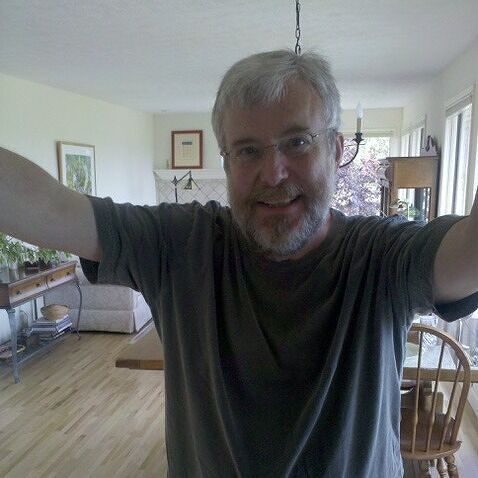
The Small Hours follows a psychologist who, after finding out his closest friend has died, and his marriage is over, returns to the unsolved mystery of his uncle’s disappearance during the Spanish Civil War. What was the inspiration for the setup of your story?
When I was living in Spain in 1981, a man in a nearby village came out of hiding 42 years after the end of the civil war and a full five years after the death of the dictator, Francisco Franco. I was impressed by the kind of fear Franco generated in people and began to investigate the topos or the moles as they were known by.
The stories of Michael and Delia are complex, and their personal battles are fascinating. What are some things that you find interesting about the human condition that you think make for great fiction?
Having worked as a psychologist, I was always fascinated by the human condition because I’ve known what humans are capable of. Under stress, people can become unrecognizable with the way they individually handle it. Plus, as we all now know, we become as adults the culmination of years of childhood learning, good or bad, and this can create astonishing consequences worthy of fiction.
What were some themes that were important for you to explore in this book?
Loyalty and goodness are themes that I am smitten with. In this book, it was not easy to approach these themes in the midst of a civil war. I am always pleased when people do the right thing in spite of what the consequences might be.
What is the next book that you are working on, and when can your fans expect it to be out?
My next book is called When They Were Gone and considers what can happen to a family when tragedy strikes. It takes place in the 1960’s. I expect that it will be published in spring of 2026.
Author Links: Amazon | GoodReads | Website
Will Michael solve the mystery of his Uncle Robert’s disappearance? Will Delia continue running and, should she? Will Maria del Carmen and the villagers of La Jolla de Malaga prevail in the covert continuation of the erstwhile civil war, or will the evil that lingers decades after any civil war ostensibly ends, proceed unchecked?
The Small Hours
The Small Hours follows Michael Virtue, a psychologist whose life starts to unravel after the death of his closest friend and the slow collapse of his marriage. While he tries to keep himself afloat, he becomes drawn back into the long unresolved mystery of his uncle Robert, who vanished during the Spanish Civil War. The story moves between letters from the 1930s, Michael’s midlife turmoil in the late 1980s, and the old scars still lingering in Andalusian towns. The more he digs, the more he learns that war does not end when the guns go quiet. It stays in the people who survived it and in the families who never got answers.
The writing feels calm on the surface, but underneath it hums with grief and regret. I kept noticing how the author lets moments stretch out. A small gesture becomes heavy, and a stray memory turns sharp. It feels real. Michael is not a tidy hero. He stumbles. He doubts himself. He drinks too much. He tries to fix things he does not know how to fix. I found myself both frustrated with him and rooting for him. The letters from Robert were my favorite part. They carry this sweet mix of hope, fear, and youthful bravado. They made me ache because I already knew what Michael didn’t. The tone of the book is warm. It held me in a quiet sadness that felt honest rather than forced.
There were places where the story surprised me. Some characters walk in with very jagged edges. Delia, especially, knocked me off balance. She is blunt and unpredictable and sometimes a little wild, and she shakes Michael awake even when he doesn’t want to be awake. The Spanish sections were the most vivid. The villages feel sun-bleached and haunted. Every old stone seems to carry a memory. I could almost smell the dust and the sea air fighting each other. The pacing sometimes meanders, but I didn’t mind. It felt like wandering through someone’s emotional attic, bumping into things they forgot they had stored away. The author lets sorrow echo, and for me, that made the book feel relatable.
By the time I reached the end, I felt like I had sat with a friend who finally said something they had needed to say for twenty years. This book would be perfect for readers who like stories about family secrets, grief that does not behave, and the strange ways the past keeps tugging at the present. It is also a good fit for anyone who likes slow-burning emotional journeys and stories that blend personal history with real historical wounds.
Pages: 463 | ASIN : B0FH7CLCDH


