Blog Archives
Moments Rooted in Gratitude

Field of Memories is a memoir told through a long chain of short, self-contained stories sharing moments from all stages of life and touching on themes of gratitude, faith, and remembering. How did you decide which memories belonged in the book?
Choosing which memories to include was one of the most challenging aspects of writing Field of Memories. Ultimately, my guiding question became not which memories mattered most to me, but which ones might resonate most deeply with a reader. I included recollections that carried universal emotions and experiences—those common threads of humanity that connect us across age, circumstance, and belief. By focusing on moments rooted in gratitude, faith, and remembrance, I hoped to create stories that felt both deeply personal and widely relatable.
Why are sensory details—cars, smells, objects—so important in your storytelling?
Sensory details anchor my stories in a specific time and place. They allow me to translate what I see and feel so vividly in memory into language that the reader can experience. By layering these details into my storytelling, I invite the reader to move beyond observation and into immersion, to not just read the story but to travel alongside me through it.
How has your understanding of grief evolved over time?
It has been essential for me to honor my grief, not as something to overcome, but as a spiritual journey deserving of reverence and patience. Grief is the deepest evidence that love existed—that it does not disappear when someone is gone. Over time, my understanding has softened and matured. Healing has arrived in quiet, incremental ways, not because the loss has faded, but because I have learned how to carry love and loss together. Grief no longer feels like an interruption to life; it has become a companion that has expanded my capacity for compassion, presence, and meaning.
If you could add one more vignette today, what would it be about?
I would include a vignette about an influential elementary school math teacher who made it his personal mission to ensure I truly understood fractions and percentages. I struggled at first, but instead of letting me fall behind, he was determined to help me build both the skills and confidence I needed to succeed. Through his patience, unwavering kindness, and individualized attention, my understanding grew—and so did my belief in myself. By the end of the year, I was an A student. Mr. Smith’s dedication transformed my experience with learning, and his compassion left a lasting impression.
Author Links: GoodReads | Facebook | Website | Amazon
Norris’s writing is imbued with a profound sense of nostalgia, celebrating the warmth and comfort of family bonds, the innocence and wonder of youth, and the resilience that emerges from overcoming loss. The stories span several decades, beginning with the author’s earliest years and progressing through significant coming-of-age moments, family traditions, and historical events that have left an indelible mark on her life. Central to the narrative is the enduring influence of the author’s mother, whose presence and guidance serve as a touchstone throughout the collection. The joys and sorrows of growing up are explored with sensitivity and insight, highlighting the universal experiences that connect us all.
A key theme in “Field of Memories” is the importance of preserving family stories for future generations. Norris emphasizes how these stories serve as a bridge between the past and the present, allowing us to honor our heritage and pass on valuable lessons to those who come after us. The narrative is enriched by vivid character sketches, introducing readers to a cast of neighbors, teachers, friends, and relatives who each contribute to the rich tapestry of the author’s life. These characters are portrayed with warmth and authenticity, reflecting the complexities and nuances of real human relationships.
Throughout the book, Norris reflects on universal experiences such as childhood innocence, friendship, grief, forgiveness, and the bittersweet passage of time. Her stories are interwoven with poems and reflections, offering readers moments of both laughter and tears. The inclusion of poetry adds a lyrical quality to the narrative, deepening the emotional resonance and inviting readers to pause and contemplate the themes presented.
Ultimately, “Field of Memories” is a celebration of legacy, love, and the power of storytelling to connect generations. Norris’s writing encourages readers to reflect on their own lives, to cherish the memories that have shaped them, and to recognize the enduring value of sharing stories with others. The collection serves as a reminder that our experiences, both joyful and sorrowful, contribute to the fabric of who we are, and that by honoring these memories, we can find meaning, healing, and connection.
Field of Memories


Field of Memories is a memoir told through a long chain of short, self-contained stories. Childhood in 1950s California. The family moves to Idaho. A parade of neighbors, pets, cousins, choir trips, candy trucks, and church mornings. Later, marriage, grief, travel, Auschwitz, dementia, and the slow ache of saying goodbye to parents and friends. Each vignette is small in scope but big on feeling. Together they form a life story that leans hard into gratitude, faith, and the power of remembering.
I found the story to be very smooth and polished. The tone stays warm and steady even when the subject is painful. The language is plain, almost conversational, and that gives the stories a kind of kitchen-table honesty. I liked how often a scene hangs on one concrete detail. A blue Studebaker. The smell of Toni home perm solution. A chipped tablecloth chewed by the neighbor’s dog. Those small bits made the memories feel lived in, not staged. I appreciated how confidently the prose leans into sentiment, and how many of the endings clearly spell out the lesson, almost like the comforting moral at the end of a fable.
The ideas underneath the stories resonated with me in a gentler, slower way. The book circles again and again around kindness, the cost of cruelty, and how ordinary people carry each other through time. The chapter about Matthew and the teacher who says, “stay with your own kind,” made my stomach knot, because the racism is so casual and so early. The Auschwitz visit in “Never Forget” pulled the lens wide and dropped the whole earlier world of penny candy and Levi’s into a much darker frame. I appreciated that shift. It kept the book from drifting into pure nostalgia. I also felt a strong spiritual thread. It shows up in quiet moments, like the customer-service call that turns into a mini sermon about grief, or the way the author talks about her mother “changing addresses” instead of simply dying. I responded to that mix of tenderness and steadiness, even if now and then it brushed close to sentimentality for my taste.
I would recommend Field of Memories to readers who enjoy reflective, faith-tinged life writing, especially anyone who grew up in mid-century America or loves stories about close families and small towns. If you like to sit with a cup of coffee and dip in and out of short, heartfelt pieces that celebrate parents, grandparents, neighbors, and the strange beauty of getting older, this collection fits that mood very well.
Pages: 188 | ASIN : B0G72F556R

The Lie That Changed Everything: The Memoir of a Little Rascal
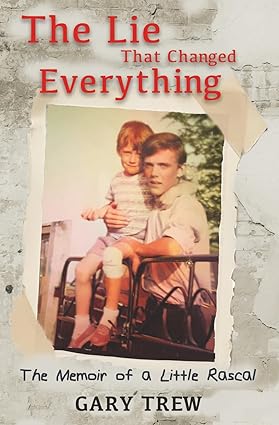
From the first page, Gary Trew makes it clear this is no sugarcoated stroll down memory lane. The Lie That Changed Everything is a memoir that blends sharp humor, biting honesty, and painful recollections into a story that feels both chaotic and deeply human. Trew recounts his early years with a mix of wit and grit, pulling readers through family dysfunction, childhood scrapes, and the bruising aftermath of being raised in a world where love often arrived tangled in trauma. It’s a tale of survival told with an irreverent laugh, even as it shines a light on moments of loneliness, rejection, and heartbreak.
I was taken in almost immediately by Trew’s voice. His writing has a rhythm that swings between wild comedy and gut-punch sadness, and that constant shift kept me hooked. Some chapters had me laughing at his absurd family stories, while others had me pausing to let the weight of what he endured sink in. The mix is unusual, but it works. He doesn’t let the pain take over, and he doesn’t let the jokes cheapen the truth either. At times, I found myself frustrated with the sheer cruelty he describes, but then he’d toss in a line of dark humor, and it felt like sitting in a pub listening to a mate tell a story he can only tell because he survived it.
There were moments where the writing felt a little jagged, but that roughness actually added to the authenticity. It made me feel like I was being trusted with unpolished truths rather than a neatly packaged memoir. I also found myself admiring his willingness to talk about shame, resentment, and fear without dressing them up. His honesty struck me as both brave and disarming. The book reminded me that family histories are rarely tidy, and sometimes the best way to survive them is to laugh at the madness and keep moving forward.
By the time I reached the final chapters, I felt both drained and strangely uplifted. This isn’t a book for someone who wants a gentle or inspirational memoir. It’s for people who appreciate raw honesty, gallows humor, and the messy beauty of a life that didn’t follow the script. If you’ve ever grown up feeling like the odd one out, or if you’re drawn to stories that reveal both the scars and the resilience of childhood, this book will resonate.
Pages: 278 | ASIN : B0FGKN1M47

Be Kind To Others

Fahrenheit 2600 follows a teen boy battling his demons who, after getting into some trouble, meets a dreamer with a crazy plan and forms a bond of friendship in a steel foundry. What were some ideas that were important for you to share in this book?
I wanted to capture the spirit of 1970s Australia—the grit, the slang, the music, and the quiet dignity of people who broke their backs every day just to get by. But I also wanted to explore the irony behind the old adage, “they don’t make them like they used to.” The so-called good old days weren’t always so good. Yes, we worked hard and faced real physical challenges, but there was also a kind of silent suffering that went unnoticed. Pain buried under pride, humour, and often long shifts at a factory.
Today’s world—while more comfortable—comes with its own brand of pain. We may not be toiling on production lines, but we’re caught in the exhausting, cerebral maze of social media, identity, and constant comparison. The struggle has shifted—from the body to the mind—and both eras carry their own kind of scars. I wanted to give that some air, to draw a line between those two worlds, and maybe bridge the generations a little.
What was the most challenging part of writing your memoir, and what was the most rewarding?
My first book, Wog in a fish shop of which Fahrenheit 2600 is a sequel, was a challenge in a different way. I forced myself to revisit a tough childhood, but I wanted to tell it with humour and warmth. I wrote it in an anecdotal style, leaning into the absurdity of certain moments to make it more entertaining than heavy.
Fahrenheit 2600 was tougher in that I didn’t just want another collection of memories—I wanted it to feel like a proper story, with a clear protagonist, stakes, and a reason to keep turning the pages. That shift from memoir to narrative was an enormous leap for me. The hardest part was editing it down—it was nearly twice the length at one point. Being brutal with the cuts, killing off scenes I liked for the sake of pace and structure, that was painful but necessary.
One thing that really helped me through the process was something my daughter, Jess Leondiou, taught me. She’s a journaling advocate who is podcasting about the benefits of writing down both positive and negative thoughts and can help rewire the brain. That practice helped me push through the doubts and stay clear on why I was writing this book in the first place.
What do you hope is one thing readers take away from your story?
It might sound like a cliché, but I truly believe the most important thing in life is to be kind to others. No matter how they present themselves—More often than not they are carrying some kind of internal struggle. In Fahrenheit 2600, I wanted to show that via the conflict between the main character and the antagonist, who at one point are on the brink of actual violence. But as the story unfolds, something shifts. There’s a twist near the end that I hope catches readers off guard—in a good way—and shows just how complex and surprising people can be when you look past the surface. If that moment leaves readers thinking twice before judging someone too harshly, then that’s a good thing.
Author Links: GoodReads
Fahrenheit 2600
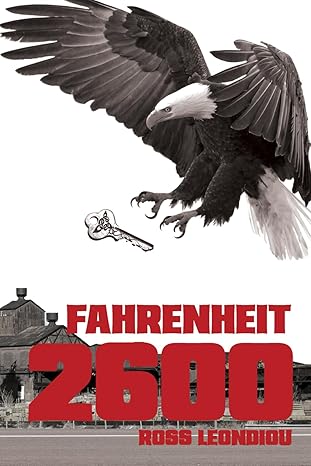

Fahrenheit 2600 is a raw, funny, and emotionally jagged memoir that plunges us into the smoky foundries and chaotic adolescence of 1970s Adelaide. It’s a follow-up to Wog in a Fish Shop, picking up with Ross—now a teenager—ditching school, diving into grueling night shifts at a steel factory, and navigating the messy business of identity, friendship, drugs, and growing up Greek-Australian in a time and place where racism was casual and relentless. Told in vivid scenes and bold honesty, the book captures both the despair and hilarity of youth with a punch to the gut and a smirk on the face.
One of the things I loved most about this book is how unfiltered it is. Ross doesn’t sugarcoat anything, not the work, not the people, not even himself. The opening chapter, where he describes sitting in his freezing car before a night shift, feeling broken and staring at a road-killed cat, just hits. The metaphor is subtle but powerful: he’s roadkill too, flattened by the hopeless routine of factory life. “I live in myself like a mouse lives inside a cage,” he writes. That line was lodged in my head for days. He paints the factory not just as a place but as a spiritual void, a black hole that sucks away your dreams. Yet even in that bleakness, there’s humor. There’s grit. There’s Roberta Flack on the radio and the absurd comfort of a half-smoked cigarette. You feel it all.
But Ross isn’t just bitter—he’s observant, reflective, and surprisingly tender. Especially when he talks about Stag, his wild, fearless best friend who kind of becomes a stand-in for freedom. Their friendship is beautiful and unhinged. There’s a sweetness to it that makes you nostalgic for a kind of reckless, deep-in-your-bones teenage bond. I was moved by how openly Ross recalls their connection. It made me think about my own teenage years, the weird mix of invincibility and vulnerability.
Ross Leondiou has a voice like no one else—rough around the edges but poetic in all the right places. Sometimes, it’s downright brutal, like when he gets arrested for punching a cop and ends up in solitary confinement. Those chapters don’t ask for sympathy, they just lay it out: the fear, the shame, the weird mix of institutional coldness and sudden kindness.
If you like memoirs that aren’t trying to impress you but instead invite you into someone’s honest-to-God life, this is it. If you’ve ever felt stuck, angry, out of place, or just a little broken—this is your book. Fans of gritty coming-of-age stories, readers who dig working-class perspectives, or anyone who grew up straddling cultures will find something to love. It’s definitely not a “light read,” but it’s the kind that stays with you.
Pages: 398 | ASIN : B0DLFZXCG2
Steel Soldier: Guadalcanal Odyssey
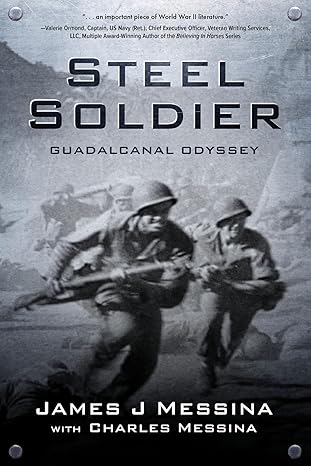
Steel Soldier is a deeply personal memoir of James J. Messina, a young Marine from a steel town in Pennsylvania, who found himself swept into one of the fiercest battles of World War II: Guadalcanal. Told in vivid vignettes and brought to life with images and hand-drawn illustrations, Messina’s account captures not just the brutality of war, but the camaraderie, innocence, and gritty determination that defined the “Greatest Generation.” Coauthored by his son Chuck, the book is both a labor of love and a preservation of living history.
What struck me right away was the honesty in the writing. Messina’s voice doesn’t dress things up, he tells it like it was. That first chapter, where he recounts his decision to join the Marines instead of going back to the wire mill, felt raw and real. His disappointment at being turned away by the Navy and then stumbling into the Marine Corps recruiting office by chance shows how much of life, even in wartime, is decided by the smallest twists of fate. And when he writes about his father’s reluctant blessing, I felt a tug in my chest. The emotion’s all there, simple and direct.
The battle scenes are gripping, not because they’re loaded with military jargon or dramatic flair, but because of how plainly they’re told. In Chapter 8, “Battle of Little Tokyo,” there’s a moment when he describes a fellow Marine getting shell-shocked. It’s just a few sentences, no fanfare, but it hit me like a punch to the gut. You can feel the fear, the exhaustion, the surreal nature of it all. And yet, even in those moments, Messina manages to hold on to humanity. There’s a scene in “The Banana Caper” (Chapter 12) where he and a few others sneak some bananas during a brief lull in fighting. It’s almost funny—boys being boys—but it’s also a sharp contrast to the chaos around them. Those little pockets of normalcy are what make this story unforgettable.
I also enjoyed the illustrations. They’re full of heart. And Chuck’s dedication to preserving his father’s story, especially after the heartbreaking loss of the second volume to water damage, adds another layer of emotion. His note about finding his father’s book collection in the attic made me tear up. You get the sense that this wasn’t just a project, it was a promise.
Steel Soldier isn’t just for military history buffs or fans of war memoirs. It’s for anyone who values truth, grit, and the strength of everyday people. This isn’t a sweeping epic or a tactical breakdown of battles, it’s one man’s truth, told without pretense. I’d recommend it to readers who want to understand what war really feels like, not from a general’s view, but from the boots on the ground.
Pages: 372 | ASIN : B0C96LP71N
Party at the End of the Rainbow

Ronald Schulz’s Party at the End of the Rainbow sweeps readers into the tumultuous world of the late 1960s and early 1970s, vividly narrating the rebellious counterculture movement through the eyes of its participants. The book delves into the ideals, misadventures, and disillusionments of young revolutionaries like the author himself, mixing personal anecdotes with the wider cultural and political shifts of the era. From anti-war protests to wild music festivals, Schulz doesn’t shy away from the messiness, confusion, and passion that defined his generation’s quest for change.
Schulz’s storytelling is raw, and his writing reflects the era’s frenetic energy. I found myself captivated by his vivid descriptions of the chaos and camaraderie of protests like the Weatherman rampage. His memories of idealistic clashes with authority—like his encounter with Judge Epstein—set the tone for a life fueled by defiance. Schulz’s passion for the counterculture’s ideals is infectious, yet he tempers his enthusiasm with sharp observations about its flaws, such as the naivety that allowed people like Marvin to exploit the movement. These personal reflections added layers of complexity to the narrative. What stood out most were Schulz’s reflections on psychedelics as both a gateway to enlightenment and a dangerous playground. His portrayal of their role in breaking societal norms is fascinating, as he recounts the cultural baggage unspooled during these mind-expanding journeys. Yet, he doesn’t romanticize the era’s drug use, acknowledging the risks and manipulations, such as the CIA’s controversial involvement. This balanced perspective enriched the book, grounding its lofty ideals in the harsher realities of experimentation and exploitation. While Schulz’s broader reflections on societal structures are thought-provoking, the book shines brightest in its intimate moments. His interactions, like the comical awkwardness of meeting a radiant hippie girl at Kickapoo or the tender companionship with Natasha, brought humanity to the revolutionary fervor. These glimpses of vulnerability were refreshing amid the political fervor.
Party at the End of the Rainbow is a heartfelt and unvarnished memoir that speaks to anyone curious about the counterculture era. Schulz paints a vivid picture of the revolutionaries’ idealism, their frustrations, and the turbulent world they tried to change. I’d recommend this book to readers interested in the raw energy of the ‘60s, those intrigued by the intersections of politics and personal identity, and anyone who’s ever wondered what it means to fight for a dream—flawed and fleeting as it may be.
Pages: 276 | ASIN : B0D33TZ6Z6
Everything Old Is New

Terror at the Sound of a Whistle is the memoir of a successful career woman who attains all she dreamt of only to realize she may have lost the only thing of worth. You tell your story with novel-like quality; what inspired you to share your story and tell it in this fashion?
I have, as near as possible, a photographic memory. I remember not just incidents from the past but whole conversations and details of where and when. I suppose for most people, it is a strange phenomenon. I draw upon it for my writing, whether non-fiction or fiction. When I started writing Terror, it came back. I heard Jimmy’s voice and mine. I felt the fear. Saw the beauty. I had known great love during that time. I wrote as if I were there once again. I was in my mind and heart.
What were some ideas that were important for you to share in this book?
I started writing this book when I was a law major in college. My father and I had many discussions about the illegal supper club and gambling casino that he and his business partner ran in our huge Victorian home when I was growing up. Dad had become obsessed with how national and local politicians and those with money and power often decided our country and legal issues. When the club operated, gambling casinos were illegal, and bars had to close at midnight. The city had a vice department that raided places like ours, but if you ran a clean operation like my parents and Jimmy’s, you paid under-the-table money, graft, and were given a free pass. Our parents were notified ahead of time when there would be a raid. They emptied most of the money from the cash registers and stuck it in the cushions of our rocking chairs. Then came the fake raid. It affected our lives immensely. I wanted the injustice brought out in the book. I knew what happened then so long ago was as relevant as what is happening today. If not more so… Everything old is new.
How did you balance the need, to be honest and authentic with the need to protect your privacy and that of others in your memoir?
I waited until our parents had passed away, and all those of us left would not be hurt. We knew. We understood. Years before, I had tried to make it into fiction by adding a phony character at the beginning and end. My agent at Curtis Brown LTD, Clyde Taylor, loved it as the true story it was without the made-up character. Clyde was also my mentor, and he was working on marketing a novel I had written when he died unexpectedly. At the time, I was getting very ill with a malady called Trigeminal neuralgia, and the devastating loss of Clyde’s demise and my illness proved too much to start seeking a new agent. I put away all my work but never stopped writing. Now, I have short stories coming out by Running Wild Press. Also, two novels will be released in the near future.
How has writing your memoir impacted or changed your life?
My writing brought to life my desire to give credence to the impact our early lives have upon us as humans. I believed my experiences had elements everyone faces, and I could help others. Our feelings and emotions of those early experiences impress upon us images of all we experienced when we were small, as though we were little sponges. It is said you can’t go home again. I say, you never leave.
Author Links: GoodReads | Facebook | Website


