Blog Archives
Rabbi, Your Cleavage is Showing


Rabbi, Your Cleavage Is Showing is a memoir about becoming whole while being told, again and again, to make yourself smaller. Michal Mendelsohn begins with a lonely childhood in New York, where family silence, emotional distance, books, and music shape her inner life. “Books nourished my soul, much as music did,” she writes, and that line captures one of the book’s steady currents: even when people fail her, language, learning, and song keep opening doors.
The book then widens into a vivid coming-of-age story in Israel. Mendelsohn’s arrival during wartime, her kibbutz life, her struggle to learn Hebrew, and her service as a lone soldier in the IDF all give the memoir an urgency that feels lived-in rather than polished for effect. She writes about fear, hunger, illness, homesickness, danger, and belonging with the same matter-of-fact candor, which makes those chapters some of the most absorbing in the book. Israel isn’t treated as a backdrop. It’s the place where she starts to recognize her own toughness.
At its center, though, this is the story of a woman entering the rabbinate when the room was still arranged for men. Mendelsohn doesn’t frame her path as symbolic from a distance. She brings us into interviews, classrooms, pulpits, hospital rooms, funerals, gossip-filled hallways, and board politics. The title moment, when someone tells her, “Rabbi, your cleavage is showing,” becomes more than an awkward comment. It stands in for the constant scrutiny placed on a woman whose body, voice, clothing, authority, and ambition are treated as public property.
What makes the memoir engaging is Mendelsohn’s voice. She can be blunt, funny, wounded, reflective, and argumentative, sometimes all on the same page. She’s especially strong when writing about the daily work of being a rabbi: the teaching, the rituals, the pastoral care, the strange requests, the emotional weight, and the unexpected comedy. The later chapters, especially those on Jewish women, feminism, and “firsts,” give the personal story a broader context without losing the conversational feel that runs through the book.
By the end, Rabbi, Your Cleavage Is Showing feels like a memoir of vocation as much as survival. Mendelsohn isn’t only recounting what happened to her. She’s asking what it means to build a life of service when the institutions you love don’t always know how to love you back. “This is my story, and mine alone,” she says early on, and the book honors that promise. It’s intimate, opinionated, searching, and deeply rooted in the belief that faith is most alive when it’s wrestled with honestly.
Pages: 312 | ASIN : B0GML87Y17

Hope and a Greater Compassion

In The Momma Puzzle. you share the childhood memories, stories from relatives, and letters that shape your experiences over decades of trying to understand your mother who died by suicide when you were a young girl. What inspired you to share your story with readers?
Ever since my mother died, I knew that I wanted to write a book about her. But I was warned as a child never to talk about her suicide. Through the weight of that secrecy and taboo and repression, I sensed there was an important story there to tell.
I wanted to tell Momma’s story in a way that would allow readers to see her as a human being, not merely as a terrible person, or a bad mother, or some kind of monster.
As a writer, and as her daughter, I was also embarking on a journey, through the process of writing the book, to discover as much as I could about who she had been and why she had to die in the way that she did.
How did your understanding of your mother change as you moved through letters, photographs, and medical records?
Since this is a memoir, the characters are, or were, real people. But for the purposes of writing the book and telling a story, these real people become created characters. I try to stay as close to the truth as possible, though, and use the process of writing to get even closer to the truth—even to create truth along with meaning, which gets at the value of art.
The character of Momma first appears as a young woman in the 1950s—the fresh, young, enthusiastic, adventurous college student who departs for a job in Saigon as a foreign service secretary. Through letters home to her best friend, and to my future father, Momma keenly observes life and politics in Vietnam; later she’s a newlywed, soon with one child, then two (the younger of whom was me); then comes her downward spiral toward suicide.
The character of the narrator (based on myself) is at first full of questions about Momma, and by the end reaches some understanding of who Momma had been, that her struggles were set in motion long before the narrator (I) was conceived.
Did writing the memoir change any of your relationships with surviving family members?
My relationships with my surviving family members have either improved or are stable/ unchanged since writing my memoir.
What is one thing you hope readers take away from your memoir?
I hope readers will take away hope and a greater compassion for people who die by suicide.
Author Links: GoodReads | Facebook | Website | Amazon
Where Fear Meets Faith: Heartfelt Stories of Connection, Surviving Cancer and Living Life
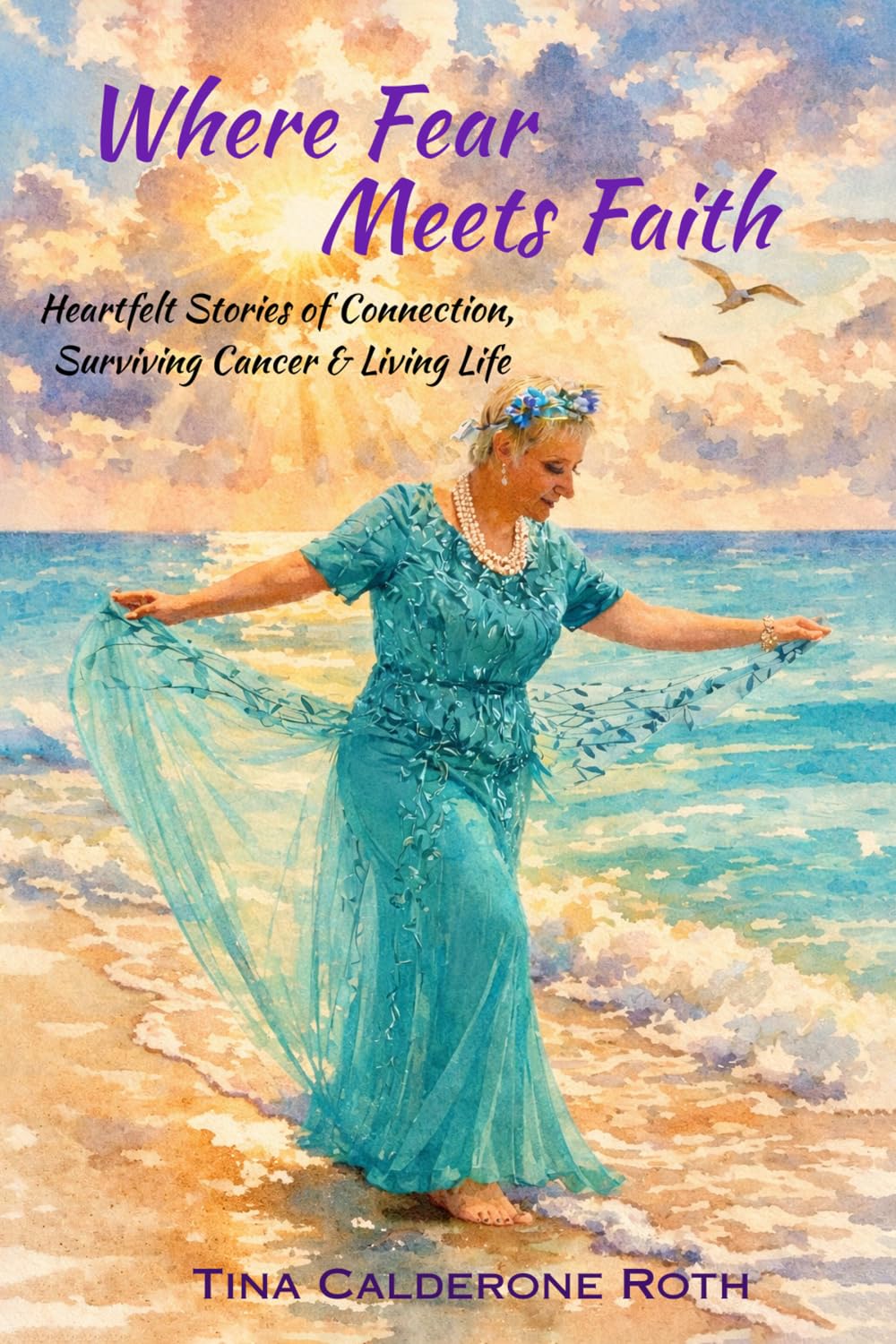
Where Fear Meets Faith, by Tina Calderone-Roth, is an inspirational memoir built from short personal essays about cancer, family, faith, gratitude, healing, and legacy. Calderone-Roth writes about her 2022 cancer diagnosis, her daughter Sarah’s medical challenges, the steady love of her husband Gary, the friends and caregivers who carried her through, and the small acts of kindness that became lifelines. The book is organized around Family, Gratitude, Healing, and Legacy, and each story ends with reflection questions meant to help readers think about connection in their own lives.
I liked how personal the book feels. It doesn’t try to turn cancer into a neat lesson. Calderone-Roth lets fear sit in the room. She talks about crying in cars, shaving her head, needing food trains, leaning on prayer, and trying to be both a patient and a mother at the same time. The writing is direct and heartfelt, sometimes almost like a journal shared across a kitchen table. That closeness gives the memoir its warmth. The prose circles back to gratitude, strength, and connection, and that choice gives the book a steady emotional rhythm. Those themes become anchors throughout the memoir, reminding the reader that healing isn’t one single moment but a return, again and again, to the people, beliefs, and small acts of care that help us keep going.
I was especially drawn to the author’s choice to focus less on medical detail and more on human presence. A nurse praying in a parking lot. A friend placing a prayer in the Western Wall. A teacher making lentils. A dog resting beside her after chemotherapy. These moments could have been sentimental, but they land because they are specific. You can feel the texture of ordinary care. I also liked that the book’s faith is sincere without feeling cold or preachy. It is faith as lived support, not just belief stated on the page. The reflection questions at the end of each piece make the book feel part memoir, part devotional, and part guided journal, which fits the genre well.
I recommend Where Fear Meets Faith to readers who appreciate inspirational memoirs, cancer-survivor narratives, faith-based reflections, and short essays about resilience. It will likely speak most strongly to people who have faced illness, caregiving, grief, or a season when they had to accept help even when it felt hard. This isn’t a detached literary memoir. It’s tender, open-hearted, and deeply grateful.
Pages: 111 | ASIN : B0GZD3PC27
Worst-Case Scenario

In Mud, Microbes & Medicine, you share your life with readers from an early stifling marriage to your success in Hepatitis B research and your rise through biotech and global pharma leadership. Did writing the memoir change how you understand your own past decisions?
The pivotal episode in the book was one I had never told anyone about because I was both embarrassed and ashamed. In being open about it, I realized that it was an event that changed both the trajectory and the dynamics of my relationships with men. Other than that, having a psychiatrist mother and spending years seeing a psychiatrist—at my mother’s insistence—made many things pretty clear.
Your time in the New Hebrides (now Vanuatu) is both humorous and deeply serious. What did that experience teach you about the gap between expectation and reality?
I learned to always plan for the worst-case scenario and then be grateful and pleasantly surprised when the experience is more positive than what I expected. Furthermore, there is no need to plan for a best case since that always works out well.
How do you hope readers—especially those in science or at turning points in their lives—feel after finishing the book?
I hope they feel encouraged to explore and to ask questions until they are satisfied and fully understand the situation or the experiment. My professor step-father told me that when I could convey a complicated concept clearly and concisely, then, and only then, did I understand it. I also hope that they will have the courage to speak up until they find someone who will listen and consider what they’ve found without bias. In my experience, senior management is much more receptive to new and different ideas than is middle management.
Author Links: GoodReads | X (Twitter) | Facebook | Website | YouTube | Vintage Mysteries | An Alaskan Vintage Mystery | Amazon
Elizabeth “Betsy” Aden, a twenty-something anthropology student, is clinging to academia as a safety net—until she’s offered a grant to spend the summer on a remote island in Melanesia, famously home to cannibals. Adventure calls, and Betsy doesn’t hesitate. Once she arrives, though, reality hits: no running water, no electricity, and no Western medicine. Inspired by her experiences, Betsy returns to school with a new perspective and changes her field from cultural anthropology to biomedical anthropology. Driven by a new purpose, she returns to Melanesia for two years to study the transmission hepatitis B and sets up an ingenious field laboratory to collect and test blood samples.
Back at home, resourceful and determined Elizabeth successfully navigates the complicated “boys club” of academia. She explores teaching and advertising and finds a fit in biotech from which she builds a career in Big Pharma. That choice, along with her tenacity and willingness to take risks, propels Elizabeth on a meteoric rise to the senior executive suite in a large Swiss company and into the boardrooms of scrappy biotech companies.
With electric detail and candid honesty, Mud, Microbes, and Medicine is a testimony of resilience and resolve in the face of challenges so large and unimaginable, you will wonder how Elizabeth’s story could even be true.
A Story Worth Sharing

We All Want To Be Happy, Volume 3 follows your brother John through the mid- and late-sixties as he searches for peace through army life, factory work, fiery revivals, marriage, and the uneasy space between faith and fulfillment. Why did you decide to devote an entire volume to your brother John’s early adult years?
Every person experiences challenges in becoming an adult; however, those challenges were multiplied by the early death of his mom, his dad’s rather unique approach to fatherhood, as well as his way of dealing with losing a second wife. I observed firsthand my brother’s courage and journey and believe his journey is both inspirational and educational, i.e., worth sharing with the public.
Looking back, what do these years reveal about growing up in the 1960s South?
The 1960s were a volatile time in the South, particularly in the rural South where we attempted to determine “our” place. The older generation, such as John’s father, born in 1895, was uncomfortable with and afraid of the changes. Rock and roll and integration were among the areas generating fear, and that fear created a greater gulf between parents and children, even more so in rural areas.
How does the idea of “peace of mind” evolve across the volume?
As John encounters each obstacle, he fully embraces and studies the opportunities attached to the “possible” ladder out of his instability. Each time, he is reminded of his mother’s teachings and takes another step toward realizing that peace and happiness are his responsibility.
What does happiness mean to John in this volume? Do you think he finds it?
Yes, John does find peace, or at least the road toward peace and joy. He learns that it is not something to find outside oneself, but rather an acceptance of who you are. Once he stops looking outside of himself for the source of contentment, he finds it. He learns: “If you want someone to make you happy, look in the mirror.”
Author Links: GoodReads | Website
As I spend more time with others, particularly young people, I find many are unable to find the bright side of what seems to be a tragedy, a mistake, or a bump in the road. A lack of maturity and experience often creates the inability to look beyond the surface. Some people get lost in what didn’t happen, rather than see the blessings of what did. It may be a normal human reaction, yet as we age – another blessing of getting older – we realize unexpected outcomes result in the most valuable life lessons.
In Volume III, my goal is to share experiences that I observed in my brother’s life. He has been kind enough to allow me to share pertinent times in his much younger years. His memories, as well as our conversations, provided me a deeper look into and understanding of his life. Perhaps the stories will remind you of your own experiences, or those you have witnessed, or provide a laugh, a tug at the heart strings, or a reason to rekindle a friendship.
I WISH YOU JOY AND PEACE OF MIND.
WE ALL WANT TO BE HAPPY VOLUME 3

We All Want To Be Happy, Volume 3 follows the author’s brother John from Thanksgiving 1963 into the mid and late sixties, as he hitchhikes between army posts, small Louisiana towns, and Dallas, chasing work, women, and some kind of peace in his own skin. We watch him drift out of the military, land in miserable factory jobs, fall under the spell of fiery revivals, marry Ruth, and throw himself into Bible reading and lay preaching. The book moves in episodes rather than a single big plot, and each one shows John wrestling with family, faith, money, and that quiet longing for “peace of mind” that sits at the heart of the volume.
I felt pulled in most by the way the writing handles scenes. The hitchhiking trips, the tin roof at Grandpa’s, the Resistol hat factory full of “toads,” the Davis Street auditorium with its bluegrass band and healing line, the Stratton Cleaner sales meeting that feels suspiciously like a revival meeting, all of that felt sharp and specific. The dialogue rings true and carries a lot of weight, especially between John and the older men in his life. I noticed how often the author lets a joke land flat in the moment, then uses that silence to show John’s insecurity. The prose itself is plain and direct, which fits the world. Sometimes scenes run a bit long, but the voice never feels fake. It reads like someone who has lived close to these places and these people, and that authenticity resonated with me more than once.
The book is not just about religion; it is about how a hungry soul can latch onto anything that promises meaning. John throws himself into Pentecostal revival life, studies the Bible every spare minute, works in a hat factory while trying to save coworkers and even a confused cop at White Rock Lake, then slowly realizes that zeal does not automatically equal peace. The tent revival scenes with Brother Gene Ewing, the healing spectacles, the baskets circling for offerings, all raise hard questions without turning the story into a sermon. I felt both moved and uneasy in those chapters, which I suspect is exactly the point. The book keeps circling this tension between genuine spiritual hunger and human ego, between being “saved” and being honest with yourself. By the time John gets pulled into high-pressure sales culture with Stratton, the echo between religious hype and commercial hype feels deliberate and pretty biting.
I came away feeling that We All Want To Be Happy, Volume 3 is a thoughtful portrait of a young man trying to grow up without losing his soul. It will suit readers who enjoy memoirs and biographies set in Southern or Southwestern life in the sixties, working-class families, and evangelical church culture with all its beauty and contradictions. If you are curious about how faith, work, and family pressure shape a person over time, and you do not mind sitting in some emotional discomfort while he figures that out, this book is a good fit.
Pages: 122 | ASIN : B0GGDZW6CK
Maud and Pearl: The Matriarch and the Odyssey
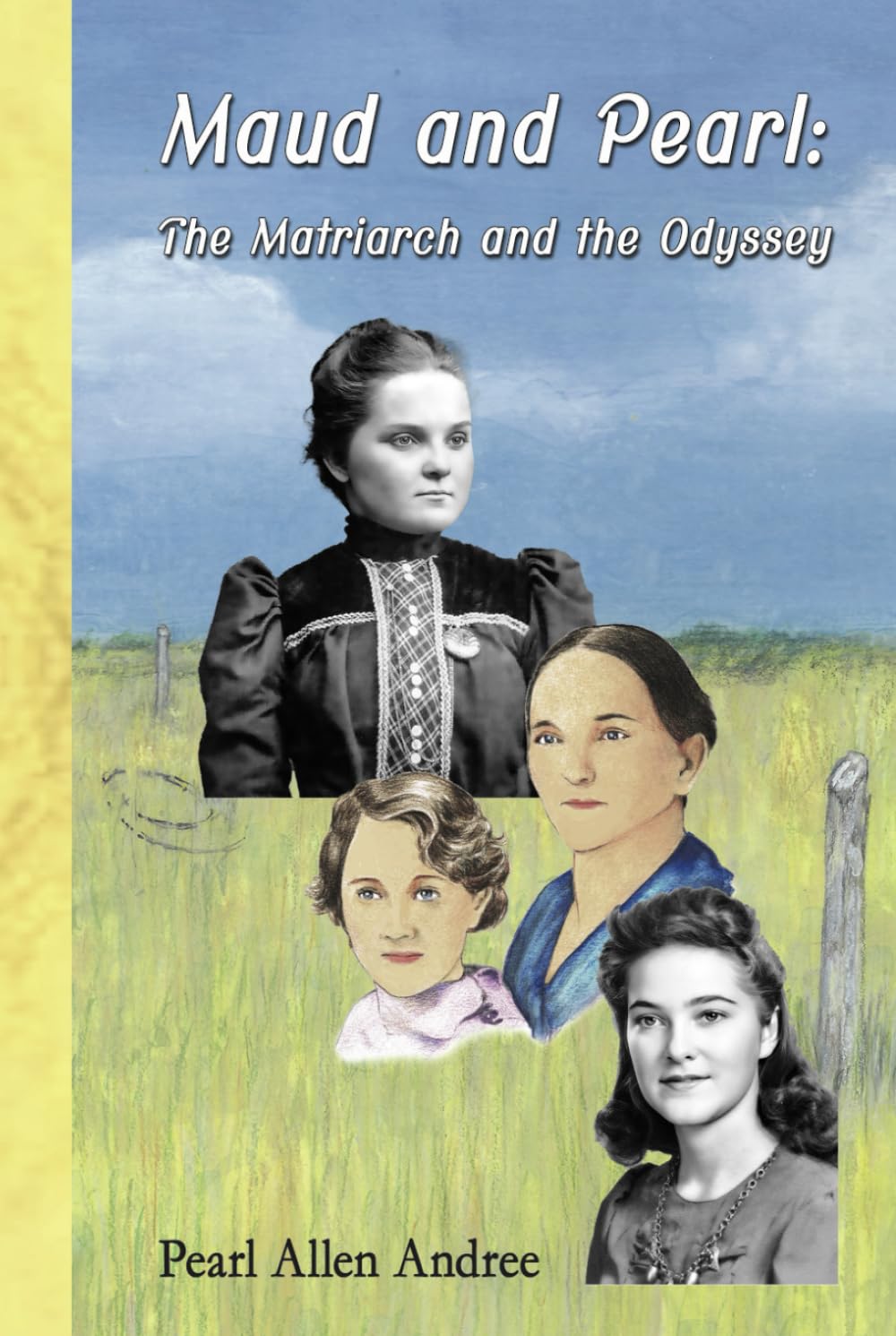

Maud and Pearl: The Matriarch and the Odyssey is a sweeping family memoir that follows several generations of the Allen and Hall families, anchored in the bond between Pearl Allen Andree and her mother, Stella Maud. It starts with great-grandparents on both sides, then moves into Maud’s marriage to Ezekiel, their harsh homestead years on the Oklahoma plains, and the way faith and hard work shaped their eight surviving children. From there, the story shifts into Pearl’s own coming of age during the Depression, her college years in Arizona, her first marriage to fighter pilot Jimmy Goggin, widowhood, a second marriage to Bill Andree, and an unexpected later-life adventure in Australia. Woven through are stories of poverty and small windfalls, tragedies and reunions, church life, and Maud’s steady spiritual presence. Quilts, hymns, and family dinners become recurring motifs that tie the generations together and turn this long narrative into a single, textured portrait of a family trying to live out its faith in everyday ways.
I found the book surprisingly lively for such a detailed family chronicle. The voice is plainspoken, and that fits the material. I liked the way Pearl moves between anecdote, family lore, and short bursts of reflection. The structure is loose, almost rambling in spots, and sometimes I lost track of who was whose cousin or uncle. Still, the repetition of certain stories, like the homestead years or Maud’s quiet strength, builds a strong rhythm that pulled me along. I especially enjoyed the scenes that lean into dialogue and humor, because they show the family as a group of full, complicated people, not just “ancestors.”
Pearl centers Maud’s faith without turning her into a saint on a pedestal. Maud works, worries, laughs, gets tired, and keeps going, and that makes her spiritual life feel grounded instead of sugary. The long thread about quilts and how they hold generations together really stayed with me. Those passages made me picture Maud at the frame, piecing scraps into something warm and strong, and it felt like a quiet metaphor for the whole book. The sections on grief and loss, especially the early deaths in the family and Pearl’s widowhood, are handled with a matter-of-fact sadness that I respected. The story never cheapens those moments with easy answers. It just shows people carrying on, leaning on each other and on God as best they can.
I would recommend Maud and Pearl to readers who enjoy family memoirs, Christian life stories, or American pioneer and Depression-era history told from the inside out. It will speak to anyone curious about how ordinary people faced poverty, migration, war, and heartache while trying to keep their faith and their sense of humor. It is not a fast read, but if you like to sit with a long, layered story that feels like listening to an older relative at the kitchen table, this book will be a fantastic read for you.
Pages: 446 | ISBN : 1950481476

Hostage: A Memoir of Terrorism, Trauma, and Resilience

Hostage tells the true story of a young American woman who survives the 1970 Dawson’s Field hijackings and the brutal weeks that follow. The book moves through the terror inside the plane, the suffocating days in the desert, the chaos of the civil war around Amman, and the long stretch of waiting that wears people down. Nichter looks back on the ordeal with the sharper eyes of the person she became later. She uses her journals and memories to pull the reader into each moment of fear, confusion, and small hope that kept her going. The narrative follows her from boarding the plane in Tel Aviv to her release many days later, and the story feels both intimate and historical at the same time. I felt the heat inside the grounded plane, the sting of sand in the air, and the strange mix of stillness and danger that marked every hour.
This was a very emotional book for me. I found myself leaning in, almost holding my breath, because the writing feels so honest. The way she describes the hijackers pacing the aisles or the passengers tearing up passports hit me hard. Her voice is calm at times, almost steady, and then it wobbles in a way that made me feel the shock and disbelief with her. I could sense how young she was, how much she wanted to keep a grip on normal life, and how that life slipped further away each day. The details she notices, like the smell of sweat in the cabin or the way a baby’s crying cut through everything, felt strangely tender to me. The story is frightening, yes, but I also felt a deep sadness that sits underneath her words. She had to grow up fast. The world forced it on her.
What I found most interesting was how she carries her identity through the ordeal. She writes about being one of the Jewish passengers who were kept behind while others were freed, and I felt the weight of that moment. Her fear rises and falls in waves, but she never stops thinking, never stops trying to understand the people holding her. She lets us see her anger, her doubts, her guilt, and even her dark humor. That honesty shaped my reaction more than any single event. The writing feels grounded and human. There were moments when I wanted to reach into the book and tell her she wasn’t alone.
By the end, I felt tired in the best way, like I had walked alongside her. The story is gripping and painful and strangely hopeful. I would strongly recommend this book to anyone who wants a survivor’s view of political violence and its emotional aftershocks. It is not a dry historical account. It is a personal journey written with clarity and courage. Readers who like memoirs that face trauma directly will find a lot here. Students of history, psychology, or Middle Eastern politics will gain insight, too. And anyone who wants to understand what it means to hold on to yourself when the world becomes unpredictable will find something worth remembering.
Pages: 232 | ASIN : B0FWPGVP4M


