Blog Archives
Whispers From the Underworld: The Hollow Crown


The Hollow Crown by J. E. London and London K. Little is a young adult fantasy adventure built around an underground civilization where memory, bloodlines, language, fire, and stone all carry their own forms of magic. The story follows eight teenagers drawn from different regions toward the mysterious Hollow Crown, an ancient force tied to forgotten kings and a history their society has been taught to forget. Eliro hears memories through stone, Seren communicates with fire, Kaelith receives prophetic echoes, Jacun can interpret seemingly any language, and each travels with a companion whose loyalty becomes just as important as supernatural ability. That ensemble structure gives this dark fantasy novel the feel of a quest story, with separate paths gradually converging into one larger mystery. The book establishes early that the Hollow is more than a location. It reshapes itself around memory, emotion, fear, and truth, which gives the setting a strong identity of its own.
What gives the book its personality is the amount of imagination packed into the world. Virehall, Emberreach, Dusreach, Crownspire, Deepgate, the Whispering Vaults, the Memory Pools, and the Chamber of Blood all have their own histories, dangers, customs, and magical rules. This is very much epic fantasy world-building, but the story keeps returning to friendship and family so the mythology doesn’t completely take over. Po’s humor balances Eliro’s seriousness, Greer’s warmth gives Kaelith an emotional anchor, Casu keeps Jacun grounded, and Seren and Talon’s complicated sibling relationship provides some of the book’s strongest emotional material. Once all eight characters enter the Hollow, the fantasy adventure becomes more focused, with each trial asking them to do more than survive. They have to trust one another, confront what they’ve hidden, and reconsider stories about themselves and their ancestors that they’ve accepted as truth. The Memory Pools are especially effective because they turn backstory into an actual danger rather than simply explaining it.
The novel’s most interesting idea is its treatment of memory. The Hollow Crown isn’t really a conventional object of power. It’s tied to remembrance, identity, inherited guilt, and the question of who gets to preserve history. That theme deepens considerably in the later chapters, when the characters discover that the history of their underground kingdom reaches back to a catastrophe that drove humanity beneath the earth. What begins as a YA dark fantasy gradually opens into post-apocalyptic fantasy, and the shift gives earlier details about forgotten languages, vanished knowledge, ancestral oaths, and myths of the surface a larger meaning. The book does spend a lot of time explaining its mythology directly, and certain ideas and phrases recur often, so some sections move more deliberately than the action-heavy chapters. Still, there’s a clear sense that the authors want readers to understand how this world works and why its history matters, and that attention to lore will likely appeal to readers who enjoy immersive fantasy settings and puzzle-like mythology.
By the ending, The Hollow Crown has become something larger than the underground quest it first appears to be. The eight emerge into sunlight and discover a surface world where nature has reclaimed the remains of civilization, complete with rivers, waterfalls, ruined structures, birds, vegetation, and the startling open sky none of them has ever known. It’s an effective destination for a story so preoccupied with buried truth because the characters don’t simply learn about the past. They physically step out of the world created by that past and into whatever comes next. That makes Whispers from the Underworld a compelling blend of young adult fantasy, dark fantasy, and post-apocalyptic fantasy with its strongest appeal coming from the imaginative underground mythology, the ensemble friendships, and the idea that remembering can be every bit as dangerous and transformative as magic. The final image of eight young people facing a recovered world also gives this first book a satisfying endpoint while naturally opening the door for the larger story promised in Rise of the Deepborn.
Anna, the Princess and the Pendant
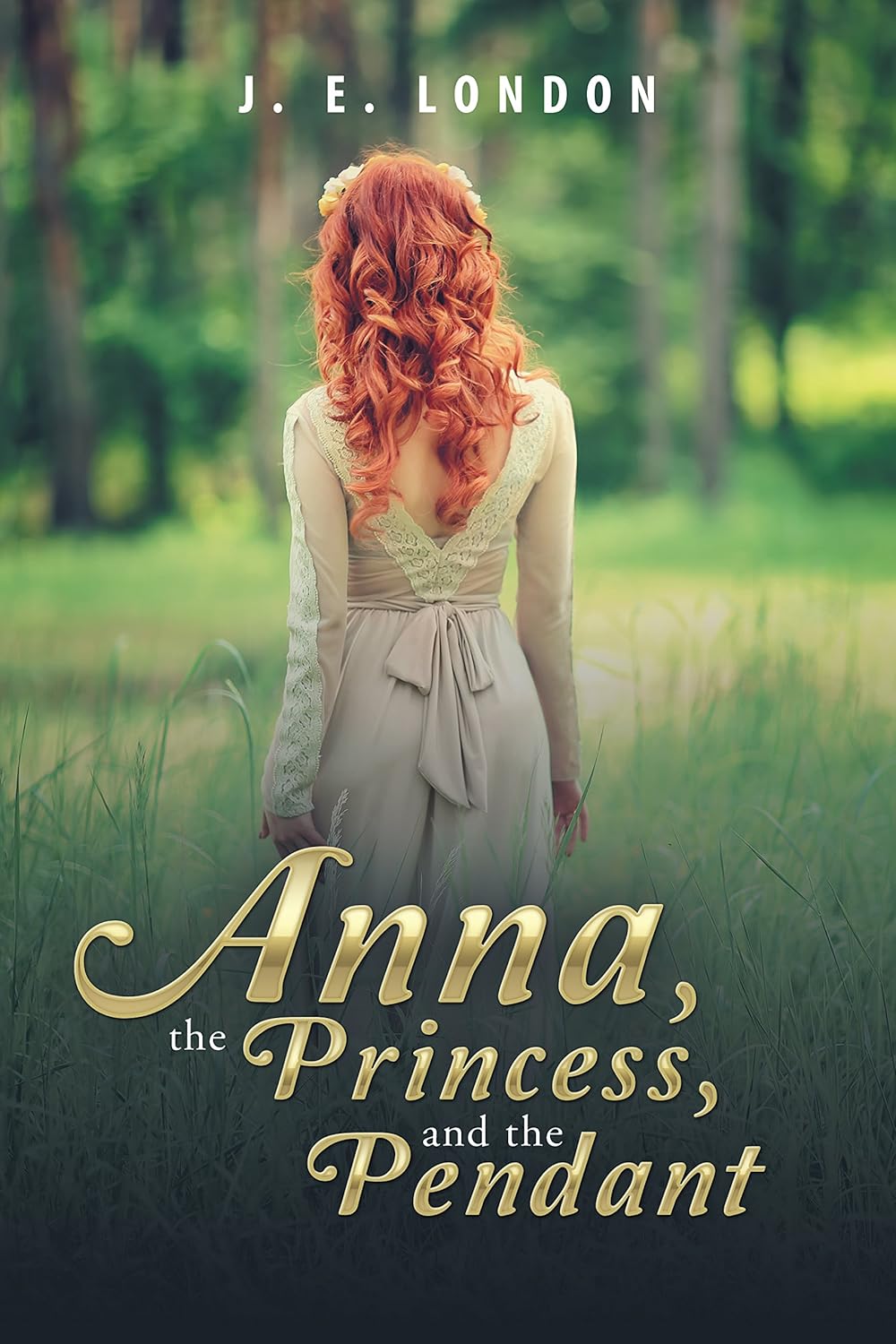

Anna Owens is a bright, imaginative seventeen-year-old living in the quiet town of Morrisville, North Carolina. Yet beneath her composed surface brews a yearning for something more, something strange, something thrilling. That desire becomes reality when Anna is summoned to her dying grandmother’s side and receives a curious parting gift: a green gemstone said to possess unusual powers. As it turns out, the stories are true. The gem is a portal, a key to a dreamscape filled with romance, peril, and discovery.
Anna, the Princess, and the Pendant, the debut novel by J.E. London, offers a spellbinding coming-of-age fantasy that blends elements of classic portal fiction with a touch of gothic mystery. Echoes of Neil Gaiman’s The Sandman and Susanna Clarke’s Jonathan Strange & Mr. Norrell surface throughout, though London’s voice remains distinct.
The premise may sound familiar: an adolescent longing for adventure, drawn into an alternate realm, but it endures for a reason. Such narratives tap into our collective craving for escape and transformation. Here, that escapism is filtered through Anna’s emotional lens, adding depth to what might otherwise feel conventional.
Anna is painted with nuance. She is impulsive, deeply emotional, and teetering on the edge of adulthood. Romantic entanglements tempt her, pulling her between logic and longing, between the budding maturity of a young woman and the whimsy of the girl she still partly is. This tension feels authentic and is one of the novel’s quiet strengths.
London’s real distinction lies in the richness of historical context and vivid sensory detail. The dream world Anna explores never loses its grounding. A delicate balance is maintained, ethereal settings balanced with tactile realism. Even as Anna faces life-altering decisions, the prose remains buoyant, never descending into overwrought drama. The stakes are real, though largely emotional, centering on the tumult and vulnerability of first love.
Anna, the Princess, and the Pendant marks a compelling entry into young adult fantasy. It’s a heartfelt, imaginative journey, and J.E. London proves to be as captivating a storyteller as Anna is a heroine.
Pages: 200 | ASIN: B079KHD1PC

Pieces of Ourselves

Abigail Henley, A Southern Tragedy, follows a corporate attorney who receives an old journal drawing her into the investigation of the murder of a seventeen-year-old girl. What was the inspiration for the setup of your story?
The prologue was the inspiration for the setup. It was originally a short story that I wrote in 1998 in my English Literature class. Our final writing assignment was to write a short story without the usual prompt that our instructor provided for every writing assignment in the class. He selected mine to read aloud to the class. We all used pseudonyms instead of our names on all of our assignments, and when he started reading, I remember clearly that I was looking down in my notebook. I slowly looked up, my heart racing and he glanced in my direction. At the end, he asked if he could share the name of the author with the class whose comments were this person should write a book. Of course, at the time, I simply wanted to graduate from college. So, as I was looking back through my writings, I came upon the prologue entitled A Desperate Decision. At first, I struggled with how to proceed with the story, but after I began to type my thoughts onto the screen, it took on a life of its own. As with all of my books, there was no outline, or reflection on how to proceed once I started writing. Now, the inspiration for the prologue was from one of my sociology classes at the time when we were discussing the death penalty.
What are some things that you find interesting about the human condition that you think make for great fiction?
Well, I presume this is in reference to emotions, experiences, and challenges we all face as human beings regardless of our culture, race, ethnicity, etc. I think great fiction often connects us in a way that elicits common shared feelings about a particular subject. In other words, our challenges and experiences shape and influence our identity, self-esteem, and emotional well-being. When we relate to a story, it’s often because we see pieces of ourselves reflected in the characters’ struggles, triumphs, or emotions. Visualizing ourselves in their shoes allows us to connect deeply with the plot and even gain insights into our own lives. It’s one of the reasons storytelling is such a powerful tool for empathy and self-discovery. A book is not just a story, it’s life.
What was the hardest part about writing a mystery story, where you constantly have to give just enough to keep the mystery alive until the big reveal?
This particular novel was a bit difficult because Abigail’s death was presented in the prologue. When I started writing the story, I had no idea who killed Abigail, where, or why she was murdered. But I knew that whoever murdered her would need to present it in their own words so that the emotional aspect of her death wasn’t lost in translation. Also, I didn’t want it to be the same generic idea of a murder. When the plot was presented with the journal, I knew the missing pages would tell the story. I wanted readers to be able to empathize with the murder, although we knew that, ultimately, they deserved to be vilified.
What is the next book that you’re working on, and when can your fans expect it out?
My next book was actually released on the 16th of February. The Tydareus Kingdom, Alliance of Nations is set in an ancient world where rivalries and political intrigue collide, an unlikely alliance of nations must unite to thwart a dark prophecy threatening The Tydareus Kingdom’s very existence. Alliance of Nations explores the lives of six Kings as they set course on a journey to unite their kingdoms and prepare for war while maneuvering through the trials and tribulations of negotiation. Eventually, each King must confront his own demons to clear the trail of conflicts and chaos, which threaten to derail their strategies for a successful union.
Author Links: GoodReads | Facebook | Website | Amazon
Set in the rural town of Reidsville, North Carolina, the suspense-driven story is a mystery laden with intrigue, romance and thirty years of secrets and lies. It’s a tragic tale of forbidden love affairs gone wrong, and how one family’s attempt to hide the truth ultimately destroys two families in the process. This story highlights the message that silence kills and delivers a deadly lesson that a lie strives to survive.
Faith’s journey for the truth takes her down several paths, which lead to danger, romance and self-awareness. She must find the courage to confront the antagonists determined to destroy and bury her with their secrets as well as the strength and humility to face the ghosts of her pasts. She has spent her entire life in Harold Johnson’s shadow hiding her own identity in plain sight while attempting to be someone else¬—someone besides a Johnson. A scarlet name synonymous with the most horrendous death in the county; the murder of Abigail Henley.
Her journey also reveals issues, lies and deceptions in her own family’s history that allows her to finally understand who she is and why love and relationships were so difficult for her to maneuver. She is forced to confront the anger and resentment of those who she believed had abandoned her and forced her to live without the love, support and attention she craved for most of her life. She learns to accept a new truth that not everything is as black and white as it may seem.
Through all the twists and turns of the past’s secrets and lies, danger and romance, what Faith ultimately discovers is that Abigail Henley’s death gave her the courage to live. Her hardest lesson learned is that sometimes we become victims of life’s circumstances, and we are forced to make desperate decisions. No one is immune to life’s tragedies.
Abigail Henley, A Southern Tragedy


J.E. London’s novel is a haunting and deeply layered story about family, betrayal, and long-buried secrets. At its heart, the book follows Faith Johnson as she returns home and unearths painful truths about her lineage. When she receives a journal filled with dark confessions, she is forced to confront the past in a way she never expected. The story weaves through multiple generations, exposing cycles of trauma, the weight of silence, and the devastating consequences of hidden sins. With a gripping mystery at its core, the novel unspools at a deliberate pace, pulling the reader deeper into Faith’s journey as she pieces together the puzzle of her family’s history.
The writing in this book is strikingly raw, almost poetic at times, but also unflinchingly brutal. London doesn’t shy away from uncomfortable truths, and that’s what makes this book so compelling. The moment when Faith reads Elizabeth Henley’s journal for the first time is unforgettable. The shift from mundane daily entries to horrifying revelations about a known stalker watching a young girl is gut-wrenching. The suspense in that scene is masterfully crafted, making you feel the same dread Faith does as she turns the pages. It’s not just a story; it’s an experience, forcing you to sit with the weight of what’s being uncovered.
One of the most thought-provoking aspects of this novel is how it explores silence as a form of complicity. Faith’s internal struggle about whether to judge or understand the choices made by the women before her adds so much depth to her character. The scene where she debates whether Grandmother Judy had simply watched and waited while evil lurked nearby is particularly powerful. It’s frustrating, heartbreaking, and deeply human. The book forces you to ask tough questions, what would you do in the same situation? How much of our actions (or inaction) are dictated by fear, survival, or societal expectations? London doesn’t offer easy answers, which makes the book all the more impactful.
Another standout element is how vividly the setting is painted. The stormy weather, the ominous barn, the tension-filled conversations all of it adds to the book’s gothic, almost cinematic quality. There’s a scene where Faith looks out and sees what she thinks is Abigail’s ghost standing near the barn in a bloodstained dress. It’s chilling, and for a moment, it blurs the line between reality and the supernatural. This moment, whether a hallucination or a manifestation of Faith’s growing paranoia, highlights how the past refuses to stay buried. It clings to the land, the buildings, the people who live there, and most of all, to Faith herself.
This book is not a light read. It’s intense, often unsettling, and emotionally heavy. But it’s also beautifully written and deeply meaningful. If you love stories that explore generational trauma, moral ambiguity, and the dark corners of human nature, this book is for you. Readers who appreciate slow-burning mysteries with deep psychological layers will find themselves captivated.
Pages: 184 | ASIN : B07NS3VHXV



