Blog Archives
Kalani’s Kalo: The Garden in the Forest


Jason Izumi’s Kalani’s Kalo is a children’s book about growing food, learning from elders, and discovering how much care goes into feeding a community. Set in Hawaiʻi, it follows a boy whose desire for a dependable supply of kalo sends him into the highland forest with his boar companion, Pua. That practical starting point gives the story an appealing sense of purpose. Kalani’s curiosity and occasional impatience make him easy to connect with, while the animals bring humor and companionship. There’s also a thread of mystery that makes the forest feel like a place worth exploring.
What I enjoyed most was the attention Izumi gives to doing things by hand. Preparing food, tending plants, and shaping tools all take time, and the story lets readers feel that effort. Its descriptions make everyday tasks interesting, especially when sounds and repeated rhythms invite children to join in during a read aloud. Hawaiian words appear throughout the dialogue and narration, tying the language closely to the people, plants, and objects on the page. The relationship between Kalani and his elder teacher gives these details warmth. Their exchanges show how knowledge passes between generations through questions, observation, and working together, with room for a child’s doubts and enthusiasm.
The textured drawings, delicate lines, and soft washes of color give the landscapes a dreamy quality while keeping individual leaves, stones, woven surfaces, and tools visible. Forest scenes are especially inviting: slender trunks and tangled branches surround the figures, and small touches of red and green reward a closer look. Elsewhere, warm browns make indoor scenes feel intimate, while pinks and purples soften the shoreline and distant mountains. I liked how the artwork moves between broad views of the landscape and close studies of hands at work. Those changes in scale help children notice both the setting and the skill involved in everyday activities.
The book asks for a leisurely reading pace, with enough text and practical detail to suit several shared sittings. Some passages explaining a process slow the momentum, though they also give curious readers plenty to ask about. The glossary and informational pages offer useful places to return when a word or object catches a child’s attention. For families and classrooms interested in Hawaiian language, food traditions, gardening, and relationships with the land, there’s plenty here to discuss. Its strongest quality is the way it connects care with action: listening, practicing, sharing, and paying attention all matter. It’s an affectionate, visually distinctive book that makes the work behind a meal feel worthy of a child’s curiosity.
Pages: 80 | ASIN : B0HJLHQG7B

Accidental Tribes

C. S. Pascoal’s Accidental Tribes begins with eight students stuck in a classroom that smells of dirty socks and poor decisions. At New York City’s Mariah Wilson Public School, Room 359 is where trouble goes to sit, and this group has supplied plenty of it: addictive games, fake academic records, humiliating social media posts, and unauthorized schemes. Their advisor, Dr. Miryam, has arranged an experiment intended to keep them in school and help them imagine who they could become. The Director has her own agenda. What follows is an illustrated young adult novel that combines school satire, friendship, family struggles, and a mystery about the adults running the place. It’s an energetic setup, with enough friction between the students to make their eventual cooperation feel worth watching.
The book’s strongest moments come when someone’s irritating behavior starts to make emotional sense. David’s devotion to assignments becomes especially affecting once we understand that school gives him the predictability his home life can’t. Dev’s confidence hides years of loneliness, while Antoni’s imitation of his father leaves him struggling to picture a future of his own. Jamie stands out because her longing for friendship exists alongside anger that doesn’t disappear just because someone apologizes. Her history with Patty gives the story some of its hardest emotional questions. I also liked Nia’s gradual discovery that leadership involves listening and making room for people. These relationships give substance to the students’ projects, including an app inspired by Leo’s overwhelmed mother. Their inventions grow out of recognizable needs, and their teamwork develops through arguments, mistakes, and small gestures of care.
Louis Sachar’s Holes makes a useful comparison. Both books place young people inside a punitive environment, surround them with adults whose motives deserve scrutiny, and show friendships forming under pressure. They also share a taste for exaggerated authority figures and humor that sits close to cruelty. Pascoal brings that dynamic into a world of smart glasses, AI tools, group chats, and audiences that can turn a schoolyard insult into something enormous. Her characters are navigating identities that exist both in the hallway and on a screen. The book is particularly sharp about how a joke can keep hurting someone long after its creator has moved on. That gives its central question, who you’d want to meet as your future self, a practical urgency.
Pascoal’s writing has a chatty and mischievous rhythm, helped by short chapters and expressive illustrations. Dr. Miryam’s commentary supplies plenty of wit, though her explanations sometimes spell out lessons the scenes have already made clear. Longer speeches about belonging, technology, and courage can slow the story, especially when the dialogue starts sounding like advice prepared for an audience. Her own willingness to manipulate events also creates an interesting tension with her confidence in the experiment. The closing chapters move quickly through grief, adult futures, and a lingering mystery, leaving some developments needing more breathing room. Still, the students’ uneasy loyalty stayed with me. The discussion prompts at the back extend the book’s invitation to think about friendship, ambition, and responsibility. Accidental Tribes is an earnest, sometimes unruly story whose appeal comes from watching young people discover what they can build together and what they owe each other along the way.
Pages: 180 | ASIN: B0HFXFBMWH
Innocence and Sarcasm

How a Sneeze Destroyed a Multi-Billion-Dollar Company follows a man who, after a devastating accident, receives an experimental computer interface and accidentally downloads his Linux computer directly into his consciousness. What was the inspiration for the setup of your story?
It’s the thing I would do. I have the photic sneeze effect that David has, and I thought, “Ok, what is the worst possible thing that could happen?” and then I made it happen. And before you ask me, yes, I would plug myself into my computer.
How do David’s extraordinary abilities change him as a person rather than simply making him more powerful?
At first, all he wanted was to rule the gaming world where he lives via his gaming console; then the upgrade/interfacing with Betsy allowed him to react with the outside world as they would with his games. Without worry of being made fun of due to his Asperger’s, giving him confidence through his newfound abilities.
Beneath its humor, the novel raises an enormous question: what would someone actually do if almost nothing were impossible for them? What interested you about exploring that idea?
Some would attempt to use the abilities for themselves and not for others, which is why I chose to explore the innocence and sarcasm of David’s life and help him create things to benefit others, which is his core persona.
The ending clearly leaves room for David, Betsy, Edith, and Harry to have more adventures. What possibilities excite you most about continuing their story?
Oh, the things they could do as a team. The Further Adventures of the Impossible 4 await, so get ready for more action and Impossible things. Albeit from the perspective of Edith and Harry.
Author Links: Barnes & Noble

What would you do if you could do anything? Talk to the animals maybe? Well I can become them. What about learning a new language or two? I download them into my brain. Or how about printing your own money? Me? I only borrowed $5,000 and went on a shopping spree and look where it landed me hey! Working for the president on above top secret missions that’s where! Now how is all this possible? Well, a single sneeze not only turned my world upside down, it turned me into a super hero. Able to gain WIFI access with a single thought, download operating manuals for any vehicle from land through sea to aircraft. all in a single thought. The possibilities are endless to me and Betsy. Who is Betsy, my other half (Literally the other half of me) my home supercomputer I ended up downloading into my skull. My name is David Vincent Gillespie, and this is a story of how I managed to bring down a multi billion dollar company with a single sneeze.
How a Sneeze Destroyed a Multi-Billion-Dollar Company

How a Sneeze Destroyed a Multi-Billion-Dollar Company by Nightdancer Slater is a fast-moving science fiction action comedy built around one wonderfully strange chain reaction. David Vincent Gillespie has a violent photic sneeze while driving, crashes into a freight train, suffers catastrophic spinal injuries, and eventually receives an experimental computer interface that helps restore his mobility. Things get considerably stranger when David plugs himself into his beloved Linux gaming computer, Betsy, and her operating system merges with his consciousness. From that point on, the novel treats the human body like editable computer hardware, giving David and Betsy an expanding collection of abilities that turn a medical experiment into a wild sci-fi adventure.
The biggest personality in the book is David himself. He narrates everything with sarcasm, wordplay, deliberate mispronunciations, inappropriate jokes, and a habit of talking directly to the reader as though he’s telling the whole story across a table. That makes this as much comic science fiction as it is an action story. Betsy is a great match for him because she gradually develops from David’s favorite computer into a genuine character and partner, capable of repairing his body, downloading skills, manipulating biological “data,” and eventually transforming living tissue into different species. The possibilities keep escalating, from night vision and instant martial arts knowledge to sonar, animal transformations, regeneration, and some extremely inventive uses of shapeshifting. The fun comes from watching David encounter each ridiculous new possibility and almost immediately find an even more ridiculous way to use it.
Once David’s abilities attract government attention, the book becomes an episodic science fiction action novel full of secret missions, criminals, terrorists, kidnappings, hidden compounds, shootouts, helicopters, underground bunkers, and increasingly bizarre escapes. His battles with Mr Bleach are especially entertaining because David approaches potentially deadly situations with the attitude of someone who’s more interested in annoying the villain than delivering a heroic speech. Later developments broaden the story considerably. Betsy gains an independent human body, David and Betsy marry, and their extraordinary twins Edith and Harry inherit abilities that make their parents look almost ordinary. By the closing chapters, the story has turned its central technological idea into an entire super-powered family dynamic, with the children downloading languages, solving seemingly impossible problems, transforming themselves, and joining their parents’ adventures.
What gives How a Sneeze Destroyed a Multi-Billion-Dollar Company its particular flavor is its refusal to keep its imagination on a leash. It’s a humorous science fiction novel, a superhero-style adventure, a technology fantasy, a crime caper, and eventually a family comedy, all filtered through David’s relentlessly mischievous narration. Ideas arrive quickly and tend to grow into bigger ones, so the story has the feel of someone enthusiastically asking, “What could happen next?” and then choosing the most chaotic answer available. Beneath all the transformations and jokes, there’s also a warm thread running through David’s relationships with Betsy, his mother, his children, and even people he meets through his missions. The ending deliberately leaves their strange family adventure open for more, closing with a promise that there’s more trouble, technology, transformation, and comic science fiction madness still to come.
Pages: 106 | ISBN : 9798260307014

Brought Me to Incredible Places

Rapid City Summer follows a resentful fifteen-year-old runner whose move from Chicago to South Dakota leads her toward new friendships, family healing, outdoor adventure, and a stronger sense of identity. What was the inspiration for the setup of your story?
There were a few sources of inspiration; the most prominent being my work as a middle school ELA teacher. Students in that age group (ages 12-14) are starting to get too old for most middle grade books, and some young adult titles have more mature themes and content. I wanted to write a novel that fit this young teen age group, with characters and topics they could relate to and learn from. I was also inspired by how the outdoors has shaped who I am today, and I wanted to share that with readers, too.
Why did you choose running and fly fishing as the activities that shape Natalie’s growth?
Running and fly fishing are both passions of mine that have greatly shaped who I am today. Both sports have taught me lots of important lessons, such as patience and delayed gratification. They have brought me to incredible places and connected me with great people. I also enjoy reading stories that include more “niche” topics, and you don’t see a lot of fiction that includes fly fishing!
How did you develop the warm but complicated relationship between Natalie and her grandmother?
Natalie’s grandmother was inspired by my relationship with my own grandma (except she was around my entire childhood, unlike Natalie and her grandmother). Growing up, my grandma was like a second parent to me, and I value all the time I got to spend with her. As a reader, I gravitate toward stories with complicated family dynamics, so I wanted to infuse some of that into this story, too. Ultimately, I wanted to showcase how meaningful and valuable grandparent/grandchild relationships are, and the scenes with Natalie and her grandma were some of my favorite scenes to write.
What research or personal experience helped you portray the landscapes, wildlife, and outdoor culture of South Dakota?
My husband’s family is from South Dakota, and we’ve been traveling there together for the past decade. We’re both teachers, so we spend part of our summer break fly fishing in different states, including South Dakota. I brought a lot of my personal experiences into this story, with some fictional fishing stories mixed in, too. While writing Rapid City Summer, I wanted to share the beauty of South Dakota and Montana with readers, without giving away all my favorite spots, so I did change the names of certain locations! I hope readers feel like they are transported to the mountains and rivers when they read Rapid City Summer.
Author Links: GoodReads | Website
When her mother takes a new job in Rapid City, South Dakota, Natalie is forced to trade her friends, her track team, and the life she loved for something completely unfamiliar. Now she’s stuck navigating a new town, a complicated relationship with her estranged grandmother, and unexpected feelings for the boy next door.
Nothing feels like home. But the Black Hills have a way of changing people.
As Natalie learns to fly fish, she begins to find confidence, independence, and a new sense of purpose. What starts as a reluctant summer becomes something more—a chance to discover who she really is. Then everything changes.
After a trip to Montana, Natalie is faced with news that will test everything she’s learned. Now she must decide: retreat to the comfort of who she was, or step forward into who she’s becoming.
Rapid City Summer is a heartfelt coming-of-age story about resilience, identity, and finding your place when life takes an unexpected turn. Perfect for readers who enjoy emotional YA fiction, strong female protagonists, and stories set against the backdrop of the American West.
Humans Tend to Label People

Trouble at OverTrails Farm follows a group of friends as their day of therapeutic horse riding turns into a murder investigation. What was the inspiration for the setup of your story?
As a psychologist for decades, I worked with many disabled adults who had amazing strengths, sometimes hidden, despite having physical and/or intellectual difficulties. Therapeutic riding addresses physical, attentional, and emotional difficulties, and the program fits nicely into the horse country of central Virginia. The young friends are physically active and emotionally engaged, and I wanted to showcase Alex’s special strength of attunement with animals, especially the horses at OverTrails Farm.
What made this setting the right backdrop for a story about justice and friendship?
Humans tend to label people, problems, and things, including those who differ from the norm. Labels are broad, “convenient” categories that miss the fine details of individual differences and often portray the negative aspects of a group. Using common labels provides an opportunity to blame scapegoats for wrongdoing. While this tendency is common, there is incredible power in friendship and loyalty, along with the strength of a supportive community.
How did you construct the mystery without losing sight of the emotional stakes?
I began with the outline of showcasing Alex’s strength of loyalty to his friend and neighbor, Nina. (This was first described in my first novel of this “journey” series, in which they each protected one another from a local bully.) The initial outline included Alex’s development from a recipient of riding instruction to a volunteer support person for other students. My belief is that Alex is going to become a valued member of his community. With that idea as the premise, I inserted the stories of other troubled individuals who fall prey to their own mistakes, ultimately casting blame on Alex, a presumed easy target
What conversations did you hope Alex’s storyline would inspire among readers?
How do we miss attending to the whole person in our relationships?
How do we provide genuine loyalty and support to those around us?
What assumptions have we made about others in the past that were faulty and premature?
What do we assume about our own weaknesses, and what do we need to do to focus on and develop our strengths?
How do we become the hero of our own story?
Author Links: Website | Amazon
OverTrails Farm is meant to be a place of healing. The therapeutic riding stable in rural central Virginia offers confidence, connection, and calm—until the sudden death of a young employee shatters its sense of safety.
When suspicion falls on a disabled volunteer and former student of the program, a close-knit group of teens who ride and volunteer at the farm are unwilling to accept this theory.
Determined to uncover the truth, they begin their own quiet investigation. As they piece together overlooked details, they confront family tensions, unspoken fears, and the subtle ways bias shapes how others see—and misjudge—those who are different.
Their search tests their courage, their loyalty, and their willingness to examine their own assumptions. In challenging the easy story everyone is ready to believe, they help their community move toward a new understanding of responsibility, fairness, and the dignity of every person.
Set against the charm of small-town Virginia, the healing world of therapeutic riding, and the bond between humans and horses, Trouble at OverTrails Farm is a clean cozy mystery filled with heart, hope, and the enduring power of friendship. It is a story about seeing beyond labels, fighting for those who can’t fight alone, and discovering the strength of community when it matters most. This is a story for readers who believe kindness and truth still matter.
A New Way To Know
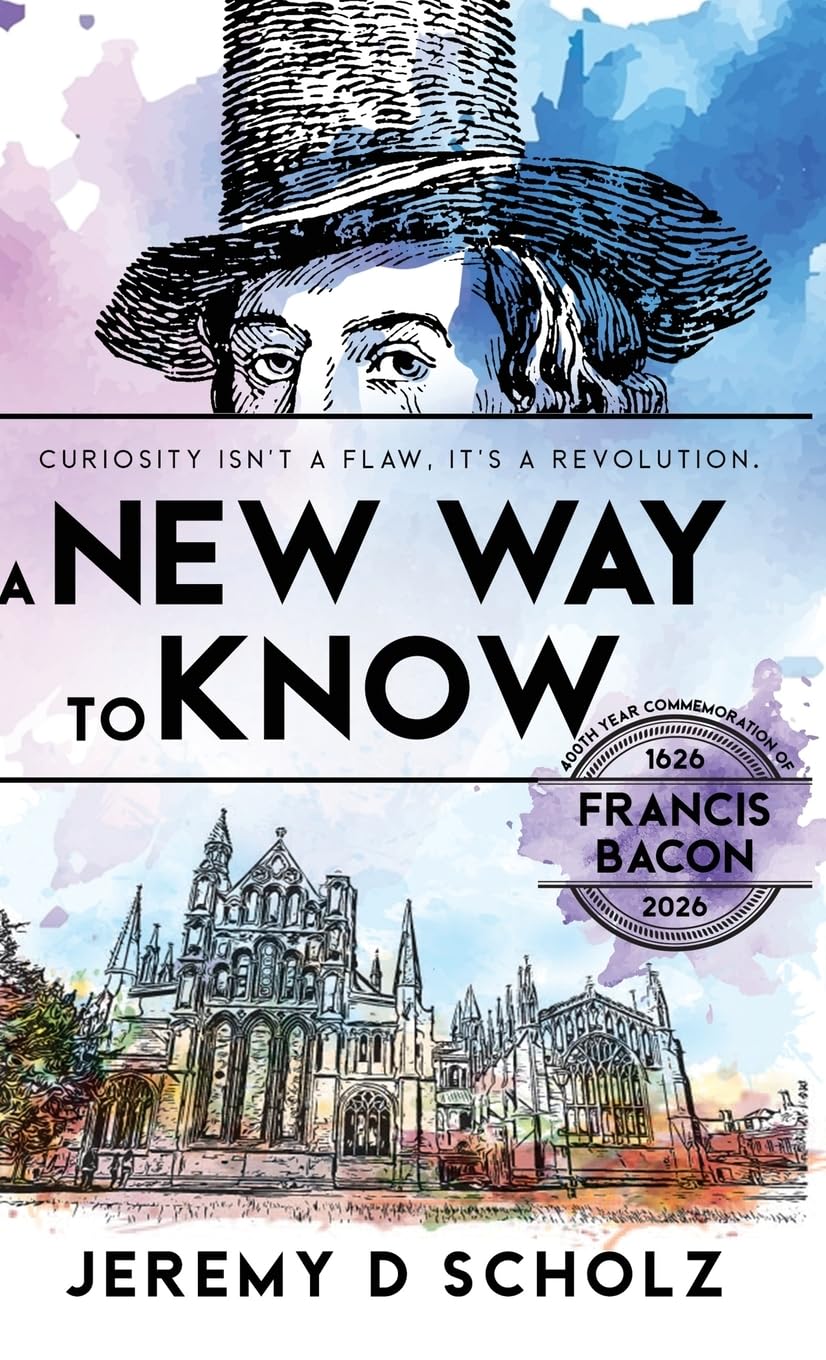
A New Way to Know is middle-grade historical fiction that follows Francis Bacon from a sharp-eyed boy in Queen Elizabeth’s noisy court to a grown man who helps invent a new way of doing science and then pays a steep price in politics. We watch him question his teachers, tinker with secret experiments, navigate his risky friendship with the fiery Earl of Essex, rise to become Lord Chancellor, and finally fall under charges of corruption, before the story jumps to a modern classroom where kids are using his method without even realizing it.
The scenes at court are vivid and concrete – the rustle of gowns, the sharp look from Elizabeth, the way everyone seems to be acting on a stage. I liked how often the book slows down for small details, like a feather falling or a pear dropping from a tree, and uses them to show how his mind works. The writing is clean and very readable, with short, punchy lines sitting next to longer, thoughtful ones. The recurring image of his little notebook and planting questions like seeds gives the story a gentle rhythm that feels just right for younger readers without talking down to them. Sometimes a line of dialogue spells the lesson out a bit plainly, but overall it still feels like a story first and a message book second, which I appreciated.
What really hooked me was the way the author builds Francis’s inner life. The author does not pretend that loving truth is simple. We see Francis grieving his father, scrambling after lost inheritance, testing seeds in chilly sheds, and then standing in rooms where his words might condemn a friend or save a kingdom. The chapters around Essex’s failed rebellion and trial are especially rough; Francis chooses evidence and duty over loyalty, and the book lets that ache sit there instead of smoothing it over. Later, when Bacon himself is accused of corruption and decides to accept blame to protect the stability of the realm, you can feel how much he has learned about pride, power, and bending so the world does not crack. For a work of historical fiction aimed at kids, that is a pretty honest look at how messy integrity can be. I also loved the author’s note that says this “new way to know” grows out of grief and doubt and the refusal to stop asking questions. It made the whole story click for me.
The last section, where a modern science teacher walks her students through a simple rot experiment, might have been cheesy in another book, but here it felt earned. The kids joke about grapes having “five-star freezing” and complain about gross samples, yet they keep coming back to Bacon’s basic rules: observe, test, compare, let evidence lead. As someone who likes both history and science, I enjoyed seeing the genre stretch a little. This is historical fiction that almost turns into a quiet science class at the end, and it works. It ties his life to their world in a way that feels practical rather than heroic and distant.
I’d say A New Way to Know is historical fiction for middle-grade readers that also works as a very human introduction to how the scientific method grew out of one person’s stubborn curiosity. If you like character-driven stories set in real history, if you teach upper elementary or middle school science, or if you have a kid who asks “why” ten times in a row, this book is a great fit. Adults who want a warm, accessible look at Francis Bacon will get a lot from it too, as long as they are happy to read in a younger voice. For that curious crowd, I’d recommend it without hesitation.
Pages: 132 | ASIN: B0GFVWBNQV


