Blog Archives
Black Is My Ethnicity: American Is My Nationality
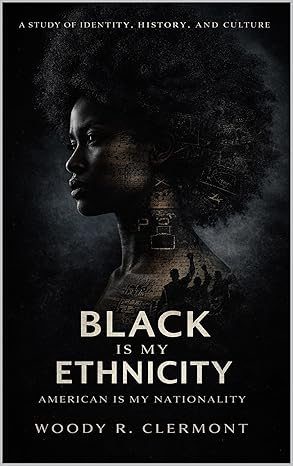

Black Is My Ethnicity, American Is My Nationality argues that Blackness in the United States is better understood not merely as a racial label but as an ethnicity formed through forced displacement, shared historical trauma, cultural reconstruction, and consistent systemic treatment. The book moves from a broad discussion of ethnicity and ethnocentrism into precolonial African civilizations, the wreckage of the transatlantic slave trade, and the making of a new collective identity through language, religion, music, kinship, and foodways. From there, it widens into Reconstruction, suppression, Black economic life, and the modern machinery of exclusion, insisting that redlining, school segregation, employment discrimination, and criminal justice disparities are not scattered facts but parts of one long pattern. Its central claim is clear from the outset and never wavers: Black identity in America is a historically produced peoplehood, and the language of ethnicity names that reality more precisely than the language of race does.
The author writes like someone trying not just to make an argument, but to rescue a framework from distortion, and there are moments when that urgency gives the book real heat. I found the sections on cultural reconstruction especially compelling, because they shift the book from taxonomy into lived human texture: hush harbors, spirituals carrying double meanings, fictive kinship, jumping the broom, AAVE as structure rather than “broken” speech, foodways shaped out of memory and deprivation. Those passages have life in them. They show the book at its strongest when it starts revealing. I also admired how often the author refuses the deadening abstraction that can flatten books like this. The emphasis on survival, adaptation, and continuity gives the work a heartbeat.
I think the book is more persuasive in conviction. There’s a lawyerly quality to the writing, especially in the prefatory and structural passages, that gives the book rigor. The prose favors repetition. Some case studies and examples are vivid, like the Zong, Mansa Musa, Eatonville, or the discussion of how school funding and redlining reproduce inequality. The ideas are powerful. It’s not coy, not detached, and certainly not interested in false neutrality. It wants accuracy, naming, and historical continuity, and it pursues all three with unusual steadiness.
I found Black Is My Ethnicity, American Is My Nationality intellectually earnest, emotionally charged, and most moving when its historical argument becomes cultural witness. It’s not a subtle book, but it’s a deeply intentional one, and its strongest pages carry the weight of someone trying to name a people in full rather than leave them trapped inside an old and inadequate vocabulary. I finished it feeling that, whatever one makes of every turn in the argument, the book has genuine stakes and a real pulse. I’d recommend it most to readers interested in Black identity, American history, ethnicity, and the language we use to describe collective experience, especially those willing to engage a book that is less interested in polish for its own sake than in saying something it believes urgently needs to be said.
Pages: 353 | ASIN : B0FHSH4X4S

Sages of the Motherland: The Great African Philosophers
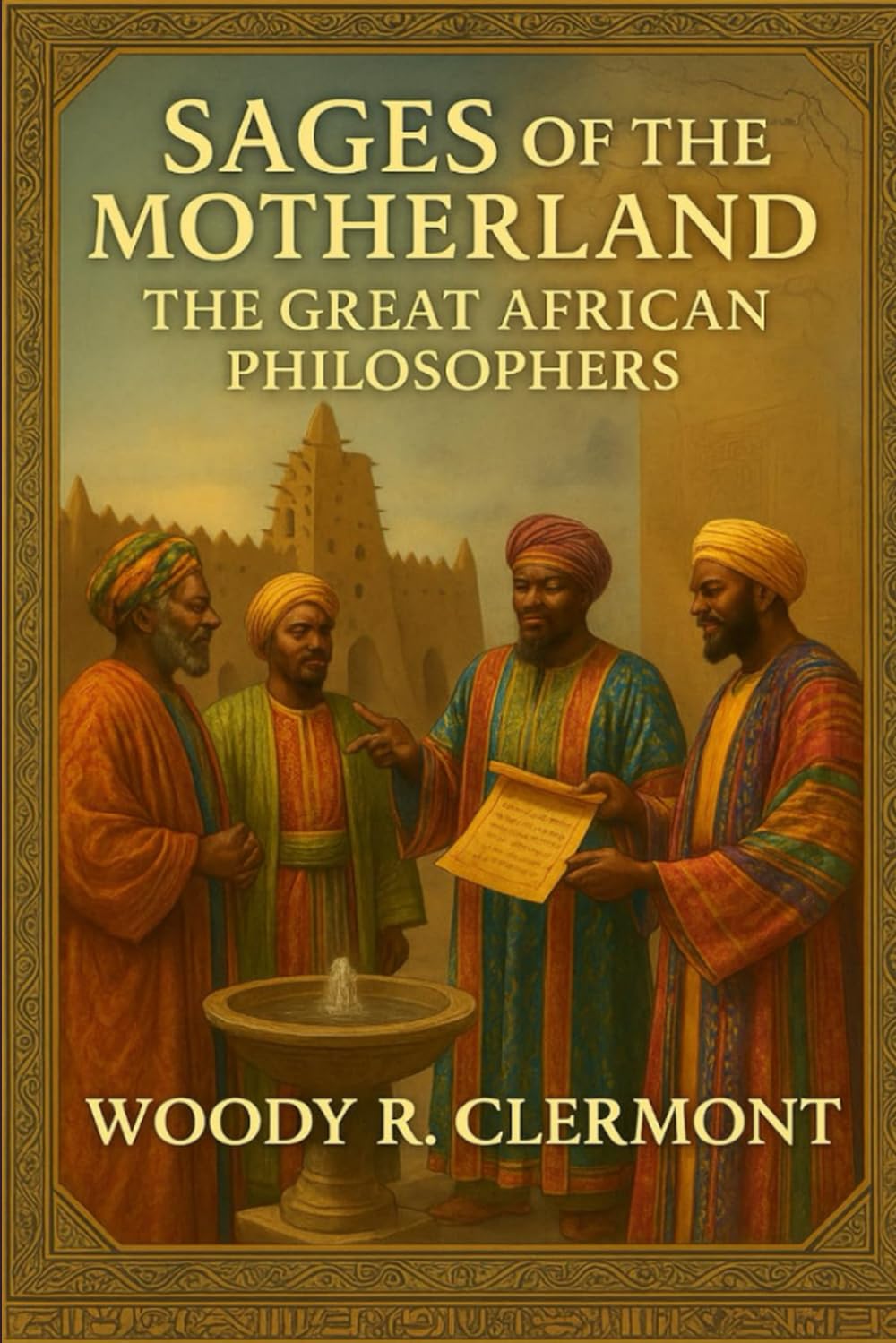
Reading Sages of the Motherland felt like walking through a living museum of African thought. Woody Clermont takes readers on a sweeping tour from Ahmed Baba’s defense of African dignity in Timbuktu to Achille Mbembe’s probing of postcolonial power. Each chapter gives a clear and respectful portrait of philosophers who shaped Africa’s intellectual legacy, people like Zera Yacob, Kwame Nkrumah, Cheikh Anta Diop, and Kwasi Wiredu. The structure is clean and rhythmic, almost like a guidebook, but it never loses sight of the human stories behind the ideas. What struck me most was how the book connects spiritual, political, and philosophical threads across centuries, making it easy to see African philosophy as a continuous, evolving tradition rather than isolated fragments.
As I read, I found myself pulled between admiration and introspection. The writing is straightforward but deeply informed, and there’s a quiet passion running through every page. Clermont doesn’t just list facts, he listens to the voices of these thinkers and lets their ideas breathe. I felt especially moved by how he handles figures like Zera Yacob and Walda Heywat, whose rationalism feels timeless, and Okot p’Bitek, whose poetic rebellion against colonial thought feels urgent even now. The prose is patient and deliberate, though at times a little dense when tracing historical connections. Still, the sincerity and clarity kept me turning pages. It’s rare to read a scholarly book that feels this personal and respectful.
I didn’t expect to feel this emotionally involved in a philosophy text. There’s something powerful in seeing Africa’s wisdom traditions presented without apology or defensiveness. The way Clermont ties the ancient Kushite sense of justice to modern debates about humanism hit me hard. His tone is calm, but his purpose burns bright: to restore balance to how we think about global philosophy. The ideas challenged me to slow down, to think about what counts as “philosophy” and who gets to decide.
Sages of the Motherland is more than a history, it’s an act of restoration. I’d recommend it to anyone who wants to see philosophy as a global conversation, not a European invention. It’s perfect for readers curious about African thought, decolonization, or simply how ideas travel across time and space.
Pages: 141 | ASIN : B0FS1WRKXY

The Golden Mansaic Age: The Legendary Malian Empire

Woody R. Clermont’s The Golden Mansaic Age tells the sweeping story of Mali’s rise from a patchwork of small kingdoms to a vast empire that commanded the world’s attention through trade, faith, and intellect. The book opens with the quiet strength of Naré Maghann Konaté, passes through the legendary journey of Sundiata Keita, the Lion King of Mali, and culminates in the golden reign of Mansa Musa, whose pilgrimage to Mecca shook the medieval world. Clermont doesn’t just trace kings and battles; he gives life to the land itself, the Sahel’s dry winds, the Niger’s silver bend, the hum of markets, and the griots’ songs that carried memory across generations. It’s both a historical chronicle and a deeply personal exploration of heritage, born from the author’s discovery of Malian roots in his own DNA.
I found Clermont’s writing vivid and heartfelt. He writes history like a storyteller sitting by a fire, his tone warm and patient. The details of Mali’s geography and trade, salt, gold, the lifeblood of empires, feel tactile, almost cinematic. Sometimes the descriptions linger too long, but that lingering adds to the sense of awe. The way he frames Sundiata’s journey from frailty to kingship hit me hardest. There’s something powerful about watching a child mocked for weakness grow into the man who unites nations. Clermont’s reverence for Mali’s intellectual legacy, especially Timbuktu’s libraries, made me pause more than once. He captures the quiet grandeur of a civilization often reduced to footnotes. Reading it, I felt the weight of history and also the sorrow of how much the world forgot.
Emotionally, this book moved me. Clermont’s mix of fact and faith feels intimate, almost confessional. His admiration for Mansa Musa is clear, but he also warns against seeing gold as the only measure of greatness. I liked that balance. His tone is proud yet thoughtful, his sentences simple but rhythmic. You can sense the author’s own rediscovery of self through the story of Mali. At times I caught myself smiling, other times I felt a pang of grief for what was lost when empires fade and stories fracture. It’s the kind of book that makes you want to look at a map, trace the old trade routes, and imagine the caravans shimmering under the desert sun.
I’d recommend The Golden Mansaic Age to anyone who loves history that feels alive, especially readers drawn to Africa’s forgotten empires or to stories that connect ancestry with identity. It’s not a dry academic study. It’s a heartfelt retelling, full of rhythm and respect. If you like books that teach you something while also stirring something inside you, this one will do that. It’s for those who want to remember that the world’s golden ages were not all born in Europe, and that sometimes the brightest light comes from the heart of the desert.
Pages: 225 | ASIN : B0FSXFPYT9
The Black Wall Streets of America: Towards a Black Stock Exchange

This book takes the reader on a journey through the history of thriving Black business districts across the United States, from the Greenwood District in Tulsa to Sweet Auburn in Atlanta and Bronzeville in Chicago. Author Woody Clermont recounts their origins, their rise, and the deliberate forces that brought them down, whether through racial violence, redlining, or highway construction. Beyond its historical context, the book pivots toward the future. It lays out a detailed framework for rebuilding economic power, including the call for a Black stock exchange, the use of AI for empowerment, and policies to ensure wealth creation that can last. It is both a historical record and a forward-looking manual, blending storytelling with strategy.
I found myself deeply moved while reading. The writing has a clear rhythm, direct and unpretentious, almost like a conversation with someone who refuses to give up hope. The stories of Tulsa, Rosewood, Overtown, and Hayti broke my heart. These communities built so much from so little, only to see it wiped away. I could feel the injustice in my chest, but I also felt admiration for the resilience. Clermont’s framing of each city through metrics like business density, land ownership, and cultural vitality made the past feel real and measurable. It wasn’t just nostalgia; it was proof that prosperity was built, and proof that it can be built again.
The vision of a Black stock exchange is bold and inspiring. I caught myself wondering how much of this could really be implemented, given the political and financial climate of today. Still, the conviction in Clermont’s words carried me through those doubts. The chapters on AI as a leveling tool stood out. They challenged me to stop seeing technology as something distant or threatening, and to instead think of it as a weapon for independence. That shift in tone, from history to possibility, was what kept me turning the pages with real excitement.
I would recommend this book to anyone who cares about history, justice, and the power of ownership. It’s not just for economists or scholars. It’s for community leaders, young entrepreneurs, and even everyday readers who want to understand the depth of what was lost and the potential for what could be regained. If you’ve ever wondered how to make lasting change, this book offers both the reasons and the roadmap.
Pages: 204 | ASIN : B0FPB4HKHR
A Mirror of My Own Power

Embracing Your Inner Villain is a manifesto for unapologetic authenticity, reclaiming “villain” as a symbol of power, independence, and resilience in a world that punishes those who dare to shine. Why was this an important book for you to write?
I wrote it because I was tired of seeing people — myself included — punished for being too much, too bold, too outspoken. Society often labels strength as threatening, and the word “villain” becomes shorthand for anyone who won’t shrink to fit the mold. To me, writing this book was about tearing off that label and showing that what gets called “villainy” is often just self-possession, courage, and authenticity.
You reclaim the word “villain” as a badge of honor. What was the turning point in your life that made you see it as empowerment rather than condemnation?
There was a moment when I realized no matter how hard I tried to please, the criticism never stopped. That’s when it clicked: if I’m going to be called a villain anyway, I might as well own it on my terms. That shift turned “villain” from an insult into armor. It stopped being something I ran from and became something I leaned into — a way of saying, “Yes, I’m different, and I’m not apologizing for it.” I have gotten over it – that not everyone is going to like us, and we just have to wave and be that villain, because we deserve to be our true selves.
In your exploration of envy and projection, what insight surprised you the most while writing this book?
The most surprising realization was that envy is often admiration in disguise. People project negativity not because you’re wrong, but because you’re embodying something they secretly wish they could claim. That flipped the script for me — what felt like an attack was actually a mirror of my own power. It’s both unsettling and liberating to see envy that way, because suddenly it’s not about rejection, it’s about reflection.
What do you hope a reader who has been shrinking their light will feel when they finish your book?
I want them to feel unafraid. I want them to see that the parts of themselves they’ve been hiding — the sharp edges, the audacity, the brilliance — are not flaws but sources of strength. My hope is that when they turn the last page, they’ll feel permission to step into their full presence, even if the world calls them a villain for it. Especially if the world calls them a villain for it. It is okay to shine.
Author Links: GoodReads | Amazon
Embracing Your Inner Villain: Becoming Unstoppable is the unapologetic self-help guide that shows you how to claim your personal power, break free from fear, and stop living by other people’s rules. Packed with actionable strategies for building fearless confidence, developing an unstoppable mindset, and cultivating mental toughness, this book challenges you to own your ambition without apology.
Inside, you’ll discover:
How to tap into your inner strength and use it to achieve your goals.
The psychology of self empowerment and bold decision-making.
Ways to overcome self-doubt and stop being a people pleaser.
The habits of people who refuse to quit — and why they win.
How to transform your mindset for fearless living and long-term success.
If you’re ready to rewrite your story, set your own rules, and become unstoppable, Embracing Your Inner Villain is your blueprint for taking control of your life and winning on your own terms.
Embracing Your Inner Villain: Becoming Unstoppable is not about turning into the bad guy—it’s about rewriting the rules that have kept you playing small.
For too long, you’ve been told to be agreeable, humble, and harmless. But the truth is, playing nice has cost you opportunities, drained your energy, and dimmed your fire. This is the heart of stoicism.
This is your permission slip to reclaim your power.
In these pages, Woody R. Clermont—author of Strategic Microeconomics and The Black Wall Streets of America—delivers a bold blueprint for breaking free from the limits others place on you. With unapologetic honesty and razor-sharp insight, he shows you how to:
Build unshakable confidence without crossing into arrogance
Set boundaries that protect your time, energy, and purpose
Turn envy, doubt, and criticism into unstoppable momentum
Move strategically in silence while making power moves
Live a daring life rooted in purpose, not permission
This is not self-help fluff. This is a call to arms for the driven, the underestimated, and the underestimated—the ones ready to step into the spotlight without apology and without asking for approval.
If you’re ready to stop shrinking, start leading, and build a life so bold it can’t be ignored, it’s time to embrace your inner villain.
Because the world doesn’t need another hero—it needs you, unfiltered and unstoppable.


