Blog Archives
Rapid City Summer


Connie Richardson’s Rapid City Summer is a young adult coming-of-age novel about Natalie, a fifteen-year-old runner whose family moves from the Chicago suburbs to Rapid City, South Dakota. She arrives resentful, lonely, and doubtful that her new home has much to offer, asking, “What’s so great about South Dakota besides a mountain with some old guys’ heads on it?” Her outlook begins to change when she meets Adam, the boy next door, who introduces her to fly fishing and the landscapes of the Black Hills. As Natalie joins a new cross-country team, forms friendships, and reconnects with her spirited grandmother, the move becomes an opportunity to reconsider who she is and what she values.
Richardson gives the novel a strong sense of place through its creeks, trails, wildlife, fishing trips, and wide western skies. Fly fishing is more than a recreational detail. It provides Natalie with patience, confidence, and a way to become attentive to the world around her. Running serves a similar purpose, linking the person she was in Illinois with the person she’s becoming in South Dakota. These activities keep the story active while supporting its larger themes of independence, resilience, and belonging. The outdoor scenes are especially effective because they’re grounded in physical details and in Natalie’s believable mixture of curiosity, fear, and excitement.
The novel’s emotional center lies in Natalie’s changing relationships. Her growing bond with her grandmother is warm, lively, and complicated by longstanding tension within the family. When her grandmother suffers a stroke, Natalie’s grief and determination add greater weight to their planned 5K. Her friendship with Adam also develops thoughtfully through mistakes, apologies, shared risks, and honest conversations about his family. At the same time, Natalie’s fading friendship with Syd and her connection with new teammates show that growing up can involve recognizing which relationships encourage personal growth. Richardson handles these developments in a direct, accessible style that suits Natalie’s age and perspective.
Rapid City Summer presents adolescence as a period of active discovery shaped by new places, meaningful relationships, and the courage to try unfamiliar things. Natalie’s transformation feels convincing because it unfolds through repeated choices. By the end, she has found a community, a creative purpose through her outdoor social media channel, and a clearer sense of herself. Her conclusion, “South Dakota was the place where I finally felt like me,” captures the novel’s central achievement. Richardson has written an engaging, hopeful story about finding identity through movement, family, friendship, and the natural world.
Pages: 243 | ASIN: 1685135927

The Best of Young Athletes

The Sweet Season centers around a group of overlooked girls who are shaped into a softball team led by an aging coach with a stubborn belief in effort. Where did the idea for this novel come from?
As a high school football player who had the great fortune to play on a very successful team, the book began as an ode to all the coaches who spend countless hours coaxing the best out of young athletes. However, early on I realized that while Coach’s character was a critical component, the story needed to be told from the point of view of the players and I elected to go with teenage girls since they often must confront life’s many challenges, both on and off the field, much earlier than teenage boys. Similarly, I decided to build the story around a softball team, not only because girls are more commonly engaged in this sport but also because it’s a very strategic game that requires its players to make many critical decisions on an inning-by-inning, game-by-game, basis. So, I crafted a disparate group of overlooked girls who, with the aid of their aged coach, find not only themselves and each other but also something none of them ever expected—they become a team, an entity separate and apart from their individual selves, an entity that accomplishes more than any of them ever dreamed possible.
How does sports fiction allow you to explore character in ways that other genres might not?
When you show up for a team sport, you’re immediately confronted with issues and problems that can often be ignored in everyday life. Suddenly, your effort and dedication matter. If you don’t give it your best, then it’s not just you that suffers—all of your teammates will suffer as well. Each member of any team needs to put in considerable time and effort, not only to improve their own skills but also to find the best way to help their teammates improve their skills. In the Sweet Season, I explore this dynamic through characters like Jessee, an exceptional athlete who learns that helping her teammates is far more productive than criticizing them; and Fee, an exceptional student who learns that despite her lack of athleticism, there are ways she can help the team succeed; and Bebe, a dedicated member of a very conservative church who learns that leading by example is far more productive than imploring others to see the world through the same religious lens that she does.
Cat becomes the emotional center of the story. When did you realize how important she would be to the novel?
I live in a town with a large immigrant community from Somalia and I once attended a lecture from a member of that community who described his incredible overland march from his burned-out village to a refugee camp and ultimately to America. Although I had initially conceived the Cat character as an outsider, casting her as an immigrant who practices a religion utterly foreign to most girls who have grown up in a small midwestern town allowed me to delve even deeper into prejudices built around race, religion and culture, all of which evaporate when the evil you don’t know becomes the person you do know. Cat’s courageous ability to overcome the crippling adversities that her family endured, as well as her own fears, becomes the lodestar that ultimately unites her teammates.
What is the next book you are working on, and when will it be available?
My first book, Morocco, A Remembrance of Childhood, Colonialism and the Cold War, is a memoir covering my early childhood years growing up as the son of a U.S. Navy officer and airplane pilot in a very foreign country, while The Sweet Season is centered on adolescence. Logically, my next book should focus on my adult years working as a corporate lawyer. However, I’m not John Grisham and I apparently lack the creativity to extract an interesting story from that time of my life. Instead, I’m currently crafting a novel centered on a widowed writer living alone in a small town in Northern Michigan who bumps into a middle-aged woman who shows far more interest in him than would appear warranted. Following this chance encounter, their budding relationship is disrupted by a murder that jeopardizes both of their futures. On the way to its surprising conclusion, the book will delve deeply into the small town’s historical past and the many ways in which this past has colored the lives of the man and woman at the narrative’s center. Just your average historical novel, mystery story, and court room drama, focused on an unlikely relationship that may or may not blossom. My target date for publishing is sometime during the summer of 2027.
Author Links: Amazon | Website
A chance meeting between a crabby old man, rehabbing a dilapidated Victorian mansion in an impoverished midwestern town, and five disparate teen girls pessimistically seeking contributions to support the summer softball team they have, for various reasons, been “sentenced” to join, ultimately alters the course of all their lives.
More than a sports story, more than a coming-of-age story, The Sweet Season is an inspirational exploration of the journey we all take from childhood to adulthood; as well as a thought-provoking exploration of the critical pathways we either choose or reject along the way.
The Sweet Season


The Sweet Season, by James B. Farmer, follows a group of overlooked girls in a struggling Midwestern town who become the Sweets, a softball team built from “leftovers” and shaped by an aging coach with grief, regrets, and a stubborn belief in effort. At the center are Jessee, a gifted but emotionally bruised athlete, and Cat, a Somali refugee whose quiet courage changes not only the team but the town around them. What begins as a sports story gradually becomes a novel about friendship, discipline, community repair, and the long echo of one incandescent life.
I was most drawn to the way Farmer treats softball not as decoration but as a moral language. Practice matters here. Repetition matters. Failure isn’t glamorous, but it’s useful. The games have tension, yet the deeper victories happen in the smaller moments: a girl learning to trust a teammate, an old coach learning he still has something to give, a neglected town beginning to remember its young people. The novel has an old-fashioned largeness of heart, but it’s not soft. It keeps returning to hard subjects, poverty, prejudice, violence, grief, civic neglect, and asks what people owe one another when the scoreboard is not enough.
Cat is the book’s emotional lodestar, and Jessee’s arc gives the story much of its ache. Their friendship feels unlikely at first, then necessary, then almost mythic in its power to reorder lives. I appreciated that the novel lets love show itself through action rather than sentiment alone: tutoring, training, showing up, refusing to quit. At times, the book’s earnestness is big enough to fill a stadium, but I found that part of its charm. It wants readers to believe that character can be coached, that broken towns can be mended, and that a team can become a kind of chosen family.
This book will appeal to readers who enjoy coming-of-age fiction, sports fiction, inspirational fiction, and character-driven literary fiction with strong themes of resilience and community. Fans of A League of Their Own may recognize the fierce joy of women proving themselves on the field, while readers who admire Fredrik Backman’s blend of humor, heartbreak, and communal healing may feel at home in Farmer’s Centerville. The Sweet Season is a warm, bruising, deeply earnest novel about the people who teach us how to win without letting winning become the point.
Pages: 401 | ASIN : B0GWRXSHF4
Rope Burn

Kirk Sheppard’s Rope Burn is a funny and surprisingly tender novel about independent professional wrestling and the people who keep showing up long after common sense says they should quit. The story follows Luke Anderson, the operations manager for Stan Weizenschmidt Promotions, as he juggles a shaky IT career, a lonely personal life, and the nonstop chaos of a small wrestling company where every crisis becomes part of the show. Early on, the book gives you one of its cleanest mission statements: “Some passions leave marks that never fade.” That idea runs through every chapter, from busted bodies and bad paydays to the strange thrill of hearing a crowd buy into the moment.
What makes the book work so well is how authentic the wrestling world feels. The armories, folding chairs, bad lighting, cheap payouts, post-show wings, and backstage arguments all have the texture of real experience. Sheppard doesn’t treat indie wrestling like a punchline or a fantasyland. He shows it as a messy ecosystem filled with dreamers, veterans, manipulators, lifers, and fans who want to believe. Luke’s narration is sharp and dry, but there’s affection underneath it. Even when he’s annoyed, exhausted, or fully aware that Stan is using him, he understands why the whole thing matters.
The cast gives the novel its heart. Joey’s rise from eager trainee to unexpected champion is genuinely easy to root for, especially because he listens, works hard, and cares about the craft. Stew brings warmth and humor without ever becoming a caricature. Amber’s scenes add needed weight, especially when the book looks at how women have to navigate the same broken system with added danger and dismissal. Trent, meanwhile, is the kind of toxic talent everyone recognizes too late, and his storyline gives the book some of its sharpest commentary on who gets protected when money and charisma are involved.
Luke’s personal arc sneaks up on you. At first, he seems like the guy behind the curtain who knows how everything works, but the deeper the novel goes, the clearer it becomes that he’s as trapped by the business as any wrestler taking bumps for gas money. His job at Silvertech, his strained relationship with his mother, his hesitant connection with Rachel, and his loyalty to Stan all circle the same question: what do you owe to something that keeps taking from you? That tension gives the book more emotional depth than a simple backstage wrestling story would have.
Rope Burn knows the business can be exploitative, ridiculous, moving, addictive, and magical, sometimes all in the same night. One late line captures the title’s meaning beautifully: “It hurts until it doesn’t.” I feel like that’s the novel in miniature. Sheppard has written a book about calluses, loyalty, performance, and the strange communities people build around shared pain. It’s conversational, funny, and full of bruised sincerity, with a final stretch that understands exactly why someone might walk away and why they might turn right back around.
Pages: 288 | ASIN : B0GMLMSNVV
Take the Hard Path

Anchorage Box Racer is the story of a gifted young Alaska racer who must rebuild his life after devastating violence, learning that the hardest thing is not getting back on the track but finding a way to live with himself. What was the inspiration for the setup of your story?
I work in Anchorage, Alaska, and see the homeless wasting away on the streets. Mired in alcoholism, drugs, prostitution, and crime. I see them wandering the street like true zombies, with no purpose in life. One day, I saw a black Ford Mustang on blocks parked at a homeless camp. A run-down travel trailer was parked next to it. That’s all it took. I immediately thought of a title. Anchorage Street Racer, at first, picturing him street racing, which is why the first race is a drag race with street racers. The title naturally changed to Anchorage Box Racer, with the box as a reminder of where he came from. My goal was always to show disenfranchised youth that they could attain anything they wanted, no matter what burdens they were burdened with in life or the cards the almighty dealt them.
Tay feels messy, proud, and deeply wounded in a way that makes him very human. How did you approach building him so honestly without softening his flaws?
I wish I could say that it was all me. I have some very good, honest, and sometimes brutal developmental editors who give it to you between the eyes. They made it clear to me that I had written a performance story genre manuscript, like Rocky, Rudy, Vision Quest, or The Natural. I had to tear Tayen down to have him build himself back up. Success comes from facing your flaws. It can’t be handed to you. You must face your fears, climb that wall, and take the prize.
The novel is candid about violence and pain but still reaches toward grace and redemption. How did you balance darkness with hope as you wrote?
I typically write young adult stories because I want to engage young people in believing that they are strong, can solve problems, and can take the next step into adulthood. In the first scene, Tayen is on his way to becoming a racecar driver. The following scene shows his problems with alcohol, his violent, drunk father, and his being accustomed to violence at home. I wanted the reader to follow Tayen into the pit of darkness he descended into, and instead of wasting away in homeless camp after homeless camp, he yearned to be the best race car driver in Alaska.
What do you hope readers take away from Tay’s uneven path toward healing, trust, and second chances?
There’s a reason I had Tayen repeatedly stare at Pioneer Peak in the Chugach Mountains. At first, he thinks he is above the mountain, but then he is afraid to even look toward them. The mountain peak represents two things. The struggle to be the best was an impossible mountain to climb, and even when we took the hardest path, we all ended up in the same place: death. We are here to struggle with a purpose. We are not meant to wander around aimlessly, drunk or chasing the first drug high. I wanted Tayen to take the hard path and overcome all the obstacles in his way. I wanted Tay to learn that he must face his flaws and try to reach the mountain peak no one can climb. Success or not, you must try to face each obstacle and start climbing; don’t walk around or turn back.
Author Links: GoodReads | Instagram | Facebook | Website | YouTube
Anchorage Box Racer
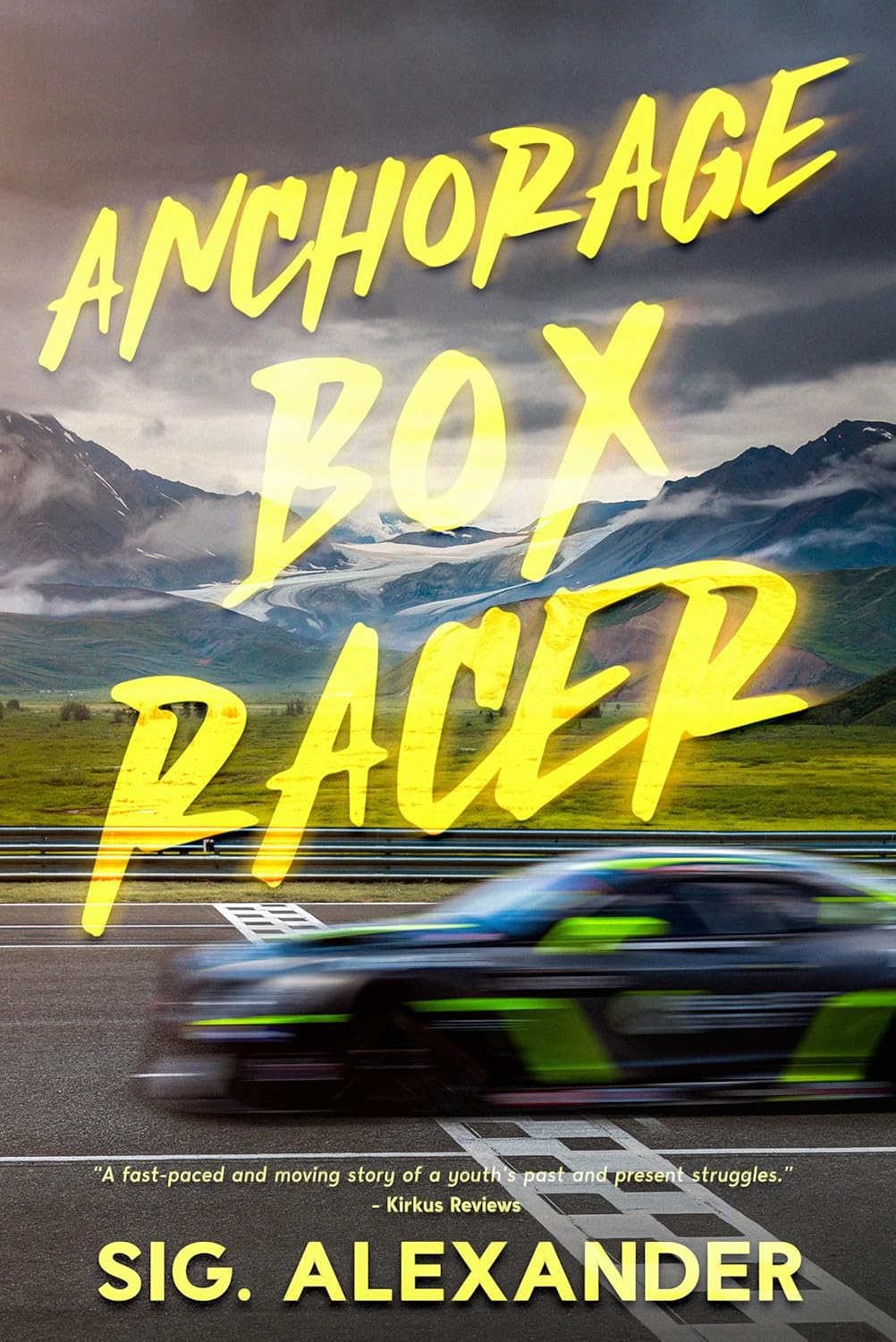
Anchorage Box Racer is a contemporary literary drama with strong coming-of-age and sports novel elements. It follows Tayen Stormrider, a gifted young Alaska racer whose life is shattered by brutal family violence, the loss of an eye, foster care, homelessness, and the collapse of the future he thought was waiting for him. What keeps the book moving is not just the question of whether Tay can race again, but whether he can learn how to live inside his own life instead of always trying to outrun it. That mix of racing, trauma, pride, faith, and slow personal rebuilding gives the novel its engine.
I really enjoyed how direct the writing is. Author Sig Alexander doesn’t cushion Tay’s pain, and that bluntness gives the book real force. At times, it reads almost like someone sitting across from you and telling you the hardest parts without polishing them first. I found that effective more often than not. The racing scenes have urgency, but the quieter emotional beats are what landed harder for me, especially when Tay’s confidence, shame, and hunger for validation all start colliding. He can be difficult, proud, self-centered, and wounded all at once, which makes him feel more human than heroic. I appreciated that the novel let him be messy.
I also found myself thinking about the author’s choices around identity, mental health, and redemption. The book clearly wants to argue that damage does not have to be destiny, and I think it earns that argument by making Tay’s climb feel uneven rather than neat. There is a lot here about what violence does to a young person’s inner life, how pride can become armor, and how love and trust can feel almost impossible until they slowly become necessary. The novel is candid about Tay’s suffering, but it also keeps reaching toward grace, community, and meaning. That gives the story a sincere pulse. Even when the dialogue or emotional intensity runs hot, I could feel the conviction underneath it. The book believes people can still rise after being broken.
I think Anchorage Box Racer will speak most strongly to readers who like character-driven fiction with heart, especially stories about survival, second chances, and fighting your way back to yourself. Readers who enjoy contemporary drama, inspirational fiction, sports fiction, and gritty coming-of-age novels will connect with it most. It’s not a light read, but for readers willing to sit with pain, persistence, and a main character who has to earn every inch of his growth, I think this book has something real to offer.
Pages: 279 | ASIN: B0G6W73RF6
The Real Ones

The Real Ones follows Maddox McBride, a former Marine turned college quarterback, and Briella “Ella” Reddington, an All-American shortstop, as they circle each other through heartbreak, a crooked coaching scandal, and one very loaded Valentine’s Day charity game. Their history goes back to a greenhouse kiss right after Ella discovers her star quarterback boyfriend has been cheating on her. Months later, Maddox is trying to keep his head above water after an injury and brutal pressure from his coach, while Ella is trying to protect her heart and her game-day focus. The story flips between past and present, moving from that first stolen moment to the slow, painful process of learning to trust each other when everything around them feels shaky. The book asks who really shows up when it counts, which is where the title lands with a nice emotional punch.
I really liked the way the writing balances grit and sweetness. The football and softball details feel specific enough that I could picture the drills, the busted locker rooms, the mud, the aches, without getting lost in playbook talk. The dialogue is sharp and a little salty, and it carries most of the emotional weight, especially in the greenhouse scenes and the late-game confrontations. I felt Maddox’s subtle intensity right away, and the narrative voice around him has this steady, grounded rhythm that fits a guy who has seen combat and does not have patience for drama. Ella’s chapters feel quicker and more jagged, which worked for me, because she is angry, hurt, and still trying to be the good teammate while her personal life is on fire. There are a few spots where flashbacks stack up and the pacing slows, but overall I stayed hooked and found myself doing the classic “one more chapter” thing.
The book was surprisingly more emotional than I thought. It is not just a sports romance, it is also a story about pressure on student athletes, toxic coaching, and the way trauma sticks to your decisions long after the actual event. I appreciated how openly the story treats therapy, boundaries, and burnout, especially for Ella, who is trying to unlearn the habit of swallowing her own needs so everyone else stays comfortable. Maddox’s sense of duty, and the way he keeps putting the team first even when it hurts him, honestly made me mad at times, but in a good way, because the book is clearly critiquing that “sacrifice yourself or you don’t care enough” mindset. The “real ones” theme ties all of that together: friends who back you, teammates who tell the truth, and partners who stay in the hard moments instead of running. Side characters like Seager, Sato, and Misha add humor and heart, and the bonus scene from Seager’s point of view rounds things out with a fun, slightly chaotic look at what comes next.
I walked away feeling satisfied, like I had spent time with characters who earned their happy ending instead of just stumbling into it. I would recommend The Real Ones to readers who like college sports romances with emotionally aware leads, a strong heroine who is just as serious about her sport as the hero is about his, and a hero who carries real scars and has to grow instead of coasting on charm. If you enjoy stories about team culture, found family, and two stubborn people figuring out how to let themselves be chosen, this one will be right up your alley.
Pages: 167 | ASIN : B0GGZCJSYB



