Blog Archives
The Business Artist: A Human Approach to Sales, Storytelling, and Creativity in a Data-Driven World
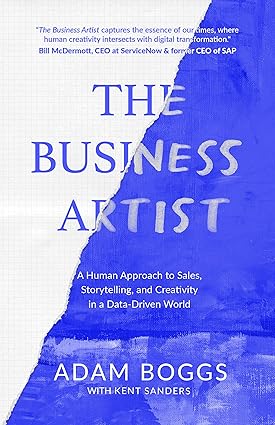

The Business Artist challenges readers to critically examine the modern business landscape, particularly the growing role of technology and data. Adam Boggs offers a timely analysis of how business has shifted from a human-centered approach to one dominated by algorithms and efficiency metrics. By weaving together historical context, personal experiences, and contemporary trends, he paints a compelling picture of how we’ve arrived at this era of impersonal business models. This book dares readers to question long-held beliefs and consider a broader historical perspective.
Boggs blends personal anecdotes with broad business analysis, reflecting on the corporate world’s transformation into a data-driven, impersonal space. His writing is both accessible and insightful, presented with a conversational tone that makes even complex concepts relatable. Through personal stories, like his experience with the Chally test, Boggs brings authenticity and a human touch to his narrative. These anecdotes help readers empathize with his broader critiques, particularly on the increasing detachment of modern business decision-making from personal connection. The depth of research and effort Boggs invested in this book is evident. He frames ideas in a unique way, such as describing technology as the “story of business,” which enriches the reader’s understanding of modern commerce. His in-depth discussions of various aspects of business and technology are engaging and thought-provoking, prompting important questions about creativity, human interaction, and the future of work. Particularly striking is his argument that while technology and data are crucial tools, they should never replace the human element in business. This book makes a powerful case for why companies must retain a sense of artistry—creativity, adaptability, and personal engagement—if they are to succeed in today’s corporate world.
The Business Artist is a bold and slightly controversial take on contemporary business, especially in a society so focused on “technologizing” everything. Boggs skillfully blends personal experience, historical insight, and modern analysis, creating a compelling read for anyone interested in understanding the current state of business and reflecting on its future.
Pages: 242 | ASIN : B0CW1BPJ9M

Embrace Uncertainty

The Business Artist challenges the conventional data-driven business model, advocating for creativity, intuition, and human connection as the true drivers of innovation and success. What inspired you to write this book?
It was Spring of 2019. I had just completed a series of workshops and sales enablement sessions as part of my client’s annual sales kickoff events. I was discussing with my colleague, Kyle Dean at BTS how fortunate we were to be invited back year after year by some of these clients. This led to what I started calling the “arrows in the quiver” problem.
“Kyle, imagine all these skills we’ve trained you on represent arrows in your quiver. I load you up with all the acumen you need – customer acumen, industry acumen, product acumen, financial and business acumen. You’ve got all these arrows, but when you go out to the customer battlefield, do you know which one to fire and when, how, and why to adjust each time?”
This realization brought guilt. Had we just loaded sellers with new arrows each year, or had we truly prepared them for battle? More importantly, is all skills training about following a repeatable, data-driven process from some consulting or training framework, when what we really needed was to learn adaptability, creativity, and improvisation with those skills.
I needed to learn for myself – is there a way to teach the “artistry” of sales, and if so, how? Speaking with several sales leaders, I started to understand that you need both: process and creativity. Knowledge of the process, and the “permission” and ability to be creative. Thus, the term “The Business Artist” was born.
Once I started using that term and unpacking its meaning, I became obsessed with understanding if it was just salespeople or a broader group of us that had over-rotated away from the creative processes that make us human. Observing sellers and business leaders across my career in some amazing Fortune 500 companies, I realized that those who consciously and intentionally saw the world through an artistic lens followed a pattern. Their creative approach wasn’t about ensuring the repeatability of the process but ensuring the repeatability of success.
I have to give credit to Neil G. McGowan, who was VP, Global Sales at NetApp at the time and is now the CRO at Hitachi Vantara. An unorthodox, creative mind and leader, his team loved him. When discussing my book, he and I went off on a tangent about music, and he was the first to say to me, “Adam, selling is like jazz.”
“You have to learn all the scales, but when you stand up in front of an audience, they don’t want you to play from the sheets. You need to read the room, listen to the vibe, and feel where to take the melody next” Of course, there are still rules and processes, just like in business, but there is improvisation, experimentation, and creativity, just like in art.
How did your background in business and the arts shape your concept of the “business artist,” and what was the turning point that led you to develop this philosophy?
Growing up – I always enjoyed musical theater, comedy shows, and jazz music. There was something organic and live about their performances. That one would never be quite like the other. In studying music theory, I realized there is a very scientific method or in a sense constraints for creativity – but then you can at times break those rules and achieve something new and different. In business, as a consultant, I felt I was part of the problem of trying to optimize human performance through a scientific method, but in reality the most successful business people I encountered were constantly improvising and flexing their style to the situation. As I looked around my personal network outside of business, all my friends I realized are creative and artistic in some way – seeing the fullfilment they all enjoyed from their creative and artistic styles, it occurred to me the same sense of creative fullfillment can be realized in business where we often see business and art as separate passions.
Are there any current companies or industries you believe embody this “business artist” approach today?
Outside of traditional business are several examples of Business Artists including attorneys, athletes, medical doctors, and software engineers. On the company side, my former employer BTS has some tremendous business artists. This company required you to be a “triple threat” someone who could sell, develop, and deliver. Most of the successful consultants were able to master live delivery, co-create with clients, and develop innovative content. Some of the tech companies I’ve worked with, like Google and Salesforce, are known for fostering creative environments where employees are encouraged to innovate and challenge the status quo. Rather than companies themselves, I see the Business Artist approach varies at company growth stages, you can call this the “passion to process” path. For example:
- Startup Stage (Early Growth)
At the startup phase, companies are typically driven by innovation, passion, and creativity. This is the most natural environment for the business artist approach, as founders and small teams are often improvising, solving problems on the fly, and developing creative solutions to stand out in the market. - Scale-Up Stage (Growth and Expansion)
As companies begin to scale, they face growing complexity—expanding teams, operations, and markets. While there is a need for more structure, the business artist approach remains essential to maintain the innovation and agility that brought early success. - Mature Stage (Established Companies)
In the mature stage, companies tend to focus on optimizing operations, maintaining market share, and extracting value from established products and services. This is where the business artist approach is most critical yet often neglected, as large organizations may become rigid and overly reliant on data-driven processes.
In Summary
Startup: Focus on improvisation, creativity, and rapid problem-solving.
Scale-up: Balance structure with innovation; avoid becoming a process-driven company that stifles creativity.
Mature: Continue fostering artistic thinking to prevent stagnation and reinvent products or processes.
Renewal: Embrace bold, disruptive creativity to reimagine the company’s future and find new growth paths.
At Mature companies, there is a great need for Business Artists and I see them in various roles all the time. Particularly within those who lead large global account teams. For example, this role at SAP is called a GAD (Global Account Director). Rather than following a rigid sales script, GADs improvise and adapt their strategies based on real-time interactions with their clients. This role is about fostering collaboration, thinking outside the box, and aligning SAP’s solutions with the customer’s evolving needs, which perfectly exemplifies the concept of a business artist.
What advice would you give to leaders or entrepreneurs struggling to break free from conventional, rigid business models in favor of more intuitive, creative approaches?
My advice would be to embrace uncertainty and give yourself permission to experiment. The key to being a business artist is to stop imitating what others are doing and start creating something original. Don’t be afraid to improvise, take risks, and try new approaches. Most importantly, focus on building deeper human connections in your business dealings, whether with clients, colleagues, or customers. Relationships, storytelling, and empathy are what drive meaningful interactions and innovation. Leaders should cultivate an environment where creativity is valued and processes are flexible enough to allow for spontaneous, intuitive problem-solving. It’s about balancing structure with fluidity, much like the improvisation in jazz.
Author Links: GoodReads | TikTok | X (Twitter) | Instagram | Facebook | Website | Amazon
Have we lost our way as business leaders?
Algorithms. Artificial intelligence. Big data. No matter what your industry, you can’t escape the influence of technology in every facet of your business. But in spite of their incredible potential, these and similar technologies are forcing us to face a vital question: are we in danger of gaining the world but losing our souls?
Using stories and case studies from business, entertainment, psychology, and history, seasoned sales leader Adam Boggs uses the metaphor of jazz to remind us that storytelling, innovation, and human connection are crucial for good business. If you’re in business, you’re also an artist with the potential to craft meaningful work.
In The Business Artist, you’ll come face-to-face with a simple truth: as we head into a data-driven future, the only way forward is by becoming more human.
The Business Artist: A Human Approach to Sales, Storytelling, and Creativity in a Data-Driven World
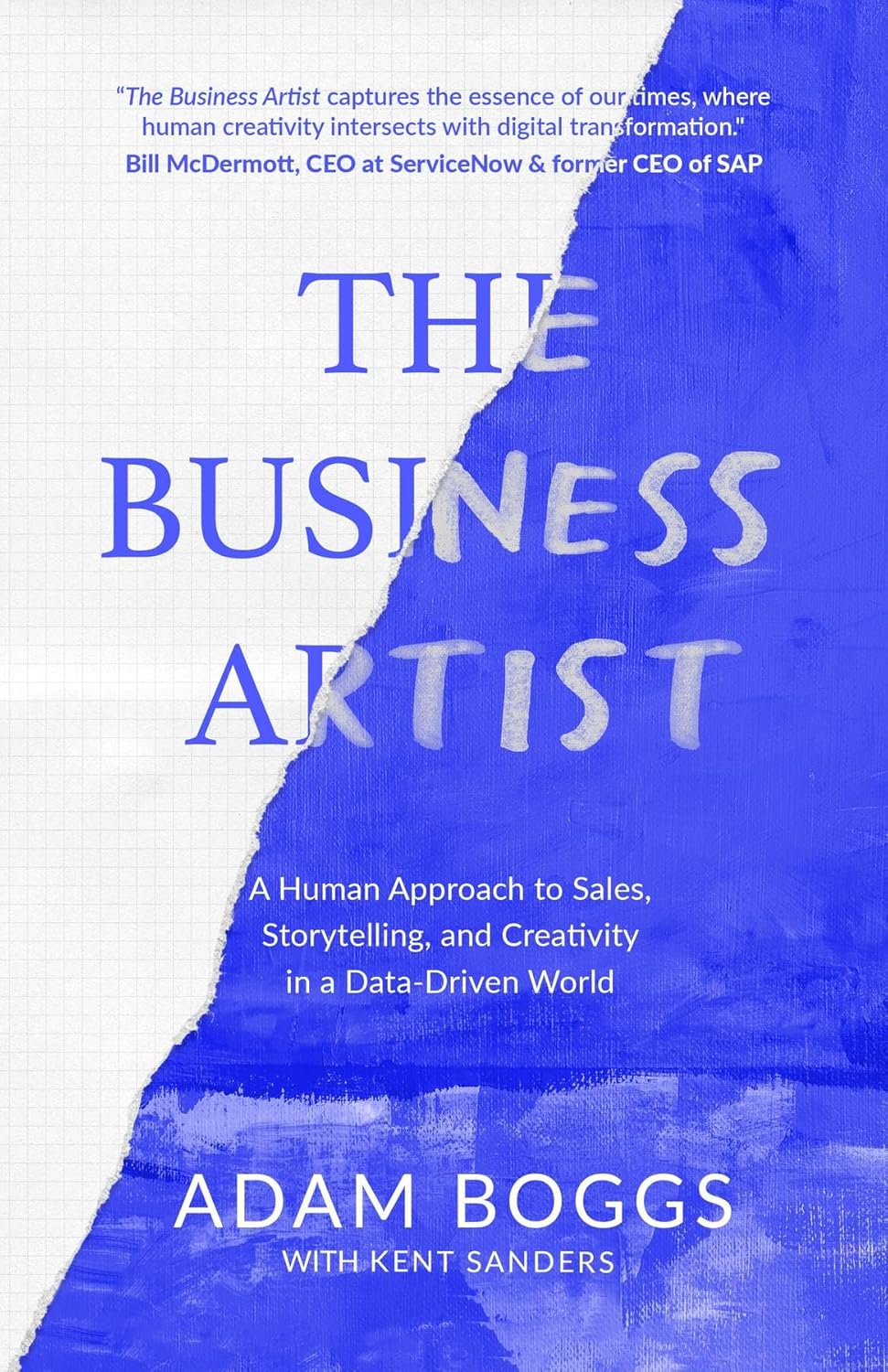
Adam Boggs’ latest book confidently asserts his place as not just a business thinker but an artist in his own right. From the opening pages, Boggs establishes that true success in business transcends rigid structures and data-driven decision-making. Instead, it flourishes through creativity, intuition, and human connection—qualities he passionately champions as the foundation of what he calls the “business artist.”
In a compelling critique of modern corporate culture, Boggs argues that an over-reliance on metrics and efficiency stifles originality, reducing businesses to mere imitators—“cover bands,” as he puts it—rather than innovators. His observations are particularly poignant when discussing significant players like Apple at a time when many companies fall into the trap of endlessly replicating past triumphs instead of nurturing fresh ideas.
Drawing heavily from the realms of music, jazz, and technology, Boggs shows how the most successful businesses, like the finest artists, create something both distinctive and emotionally resonant. The core message is simple but profound; just as jazz musicians improvise while maintaining a central theme, businesses must innovate and adapt while staying rooted in their foundational values. His reference to Miles Davis and the groundbreaking Kind of Blue album perfectly illustrates this point—true innovation doesn’t follow a formula. Boggs’ arguments are both intellectually rigorous and deeply reflective. For instance, his critique of methods like The Challenger Sale prompts the reader to rethink traditional sales strategies at a fundamental level.
The Business Artist excels in its philosophical depth, challenging readers to move beyond superficial analysis and engage with the underlying principles that drive success. Boggs’ boldness stands out. He’s unafraid to say what many might think but hesitate to voice, such as the limitations of platforms like Amazon and Spotify, which, while efficient, can create echo chambers that hinder curiosity and innovation. Despite his critiques, Boggs remains objective, offering balanced perspectives. He doesn’t merely argue against established norms. Instead, he dissects them thoroughly, providing insights into the benefits and drawbacks alike. This thoughtful exploration sets The Business Artist apart from other business books as it delves into the delicate balance between creativity and practicality in today’s data-obsessed world.
Boggs set out to write a book about business, but what he delivers is much more. The Business Artist is an insightful and thought-provoking manifesto on infusing passion, creativity, and humanity into the professional sphere. The book combines vivid metaphors with real-world examples and a sharp critique of contemporary business practices. By the end, readers are encouraged to step outside conventional lines and reconnect with the human spirit that fuels every meaningful endeavor.
Pages: 224 | ASIN: B0CW1G5D5Z



 LITERARY TITAN