Blog Archives
Alchemy of Adversity – How Emotional Intelligence Transforms Trauma Into Leadership Strength


Sarah Staley’s Alchemy of Adversity is a hybrid of memoir, trauma-informed leadership study, and practical guide to emotional intelligence. Drawing on the accident that killed her husband, Sean, and left her with severe injuries, Staley examines how traumatic experience can influence judgment, relationships, workplace behavior, and leadership. The book’s argument is carefully qualified: “Adversity does not automatically create strength”. Growth, she contends, emerges through the deliberate integration of experience. Its five-part structure reflects that process, progressing from personal devastation through neuroscience and emotional development to organizational practice and renewed purpose.
The memoir sections give the book its emotional authority. Staley describes the accident, hospitalization, grief, physical recovery, and responsibility of raising her young son, Eli, with directness and considerable sensory detail. Her image of the “gray world,” a period when color remained visible but had lost emotional meaning, conveys the numbing effects of trauma with unusual precision. These chapters also trace the uneven nature of recovery through therapy, gratitude, family support, work, and the gradual restoration of agency. The epilogue, which follows her relationship with Cody and the family life they build, provides a fitting conclusion to this personal narrative by showing a life broad enough to contain grief, gratitude, memory, and new love at once.
The book’s analytical center connects Staley’s experience to research on the amygdala, prefrontal cortex, memory, nervous-system regulation, post-traumatic growth, and the window of tolerance. Staley then converts those concepts into the ALCHEMY framework and the four emotional-intelligence domains of self-awareness, self-regulation, social awareness, and relationship management. Case studies involving a grieving leader named Chris, organizational crises, and Satya Nadella’s leadership at Microsoft widen the book’s scope beyond individual recovery. Reflection questions, regulation exercises, narrative-reframing practices, and the four organizational pillars of safety, trustworthiness, choice, and empowerment make the later chapters particularly useful for managers and teams. The material’s recurring formulations give it the cadence of a leadership seminar, reinforcing its main principles while occasionally slowing the narrative momentum.
Staley’s strongest contribution is her treatment of emotional intelligence as an embodied discipline shaped by both pain and practice. “Self-awareness didn’t make me perfect. It made me present,” she writes, a statement that captures the book’s practical ethic. Leadership here means remaining regulated under pressure, recognizing distress beneath performance, preserving accountability without humiliation, and creating conditions in which people retain agency. Alchemy of Adversity offers leaders, trauma survivors, coaches, and organizational-development professionals an accessible framework for understanding how personal healing can affect entire systems. Its blend of intimate testimony, research, and workplace application presents leadership as a human responsibility grounded in awareness, ethical power, and sustained relational care.
Pages: 311 | ASIN : B0GQQ32QXL

Bombs, Bacon, and Bankruptcy: The Art of Crisis Leadership

Henry J. Evans’s Bombs, Bacon, and Bankruptcy is a practical guide to leading when events are moving quickly, reliable information is scarce, and people’s emotions are running high. Evans draws on more than two decades of national security work, executive coaching, and business consulting to explain how crisis leadership differs from everyday management. His central idea is straightforward: effective leaders prepare before trouble arrives, steady themselves when it does, and help their teams make the best possible decisions with the information available. The result is a book that feels less like a leadership lecture and more like a candid conversation with someone who’s spent years working through complicated, high-pressure situations.
The book gets much of its energy from three extended case studies. “Bombs” follows the long effort to combat improvised explosive devices in Iraq and Afghanistan. “Bacon” examines how a grocery chain kept employees working, shelves stocked, and long-term improvements moving during the COVID-19 pandemic. “Bankruptcy” tells the painful story of a manufacturing company that collapsed after its founder’s sudden death and his grieving widow’s decision to take control. Together, these stories give the book an unusually broad range. Evans can move from counterterrorism technology to supermarket logistics to a family business in financial distress without losing sight of the same basic questions: Who should make the decision? What needs attention first? How do you keep fear, ego, and old habits from taking over?
Evans is adept at turning complicated leadership problems into memorable tools. He explains how to ground yourself before calming a team, distinguish between incubating and acute threats, combine analytical intelligence with human intuition, narrow priorities, and decide when to keep following a plan or change course. His advice on accountability and emotional safety is one of the book’s strongest sections because he treats them as complementary rather than competing values. People need to feel safe enough to deliver bad news, but they also need to own their commitments and results. The line “Your job as a crisis leader isn’t to make the right decision; it’s to guide the team to the best possible decision based on the information you have at that time” neatly captures the book’s practical and humane approach.
The conversational style makes the material approachable, although Evans occasionally revisits an idea after it has already landed, and some of the branded frameworks can make the later chapters feel more like a leadership workshop than a continuous narrative. Still, the repetition usually serves a purpose: these are concepts meant to be recalled when clear thinking is difficult. Evans’s strongest message is that crisis leadership is a learned practice, not a rare talent reserved for generals, CEOs, or superheroes. His counterterrorism team’s mantra, “Give the bad guys a bad day, every day,” is memorable because it turns an enormous mission into a focused daily task. That same emphasis on taking the next useful action makes Bombs, Bacon, and Bankruptcy a grounded, engaging book for anyone responsible for helping people move through uncertainty.
Pages: 256 | ISBN : 978-1637749906
Teachers, Teams & Tugboats

Teachers, Teams & Tugboats is a reflective career memoir about leadership, mentorship, and the complicated machinery of global logistics, told through Rich Higgins’s more than forty years in the field. Using tugboats as his central metaphor, Higgins looks back at the people who steadied him, pushed him, protected him, and taught him how to lead. The book moves from noisy trucking docks and deregulation to retail bankruptcies, mergers, Asian port visits, union conflicts, public speaking, health struggles, and late-career reinvention. What holds it together isn’t just supply chain expertise, though there’s plenty of that. It’s gratitude. Again and again, Higgins returns to the idea that a career is rarely built alone, and that the best leaders are the ones powerful enough to guide without needing the spotlight.
I appreciated the book’s emotional honesty. Higgins doesn’t polish himself into some flawless executive hero, and that gives the memoir its warmth. The scene where Tom drives him to work every day after his DUI is one of the book’s most affecting moments because it’s both painful and generous. Higgins lets us feel the shame of that mistake, but he also lets us feel the astonishing grace of a friend who simply shows up. I found that more memorable than many of the larger corporate victories because it captures the book’s real subject: character under pressure. The same is true when he writes about relocating his family and watching his daughters struggle, or turning down the dream job in St. Louis so he could be near his dying father. Those passages carry a quiet ache. They remind us that every career decision has a private cost, and Higgins is at his best when he lets that human truth sit beside the business lesson.
The writing is plainspoken and sincere. Higgins writes like a man talking across a table, and that directness suits the material. The book uses a lot of quotations, acronyms, and operational detail, especially when it gets deep into detention, demurrage, ocean rates, UPS contracts, and best-practice checklists. I did occasionally want a little less instruction and a little more scene. But even the technical passages have an authentic authority. When Higgins describes eliminating rail detention by teaching the distribution center team how the clock worked, creating a Container Priority Report, and getting everyone aligned around FIFO, the lesson lands because it’s concrete. The ideas are strongest when they’re embodied in action: Charlie trying to turn C players into B players, Dave bringing in positive reinforcement training, Greg keeping a position open until Higgins found his way back, Jimmy valuing expertise over age. The book’s moral universe is clear, maybe even stubbornly so, but I liked that about it. Tugboats, captains, crew members, pirates. It’s simple language for complicated workplaces, and it sticks.
Teachers, Teams & Tugboats feels less like a conventional business book and more like a thank-you letter written after a long and meaningful voyage. Its best moments are tender, funny, and grounded in hard-earned perspective, especially when Higgins admits what he didn’t know, who helped him survive, and which values still matter after the titles and relocations fade. I closed the book feeling that its deepest argument isn’t about logistics at all, but about remembering who carried us when we couldn’t quite steer ourselves. I’d recommend it to readers in supply chain, retail, transportation, or operations, but also to managers, mentors, and late-career professionals who want a candid reminder that leadership is built through patience, integrity, gratitude, and the grace to help someone else reach safe harbor.
Pages: 78 | ISBN : 978-1970751505
PS. Some Things Really Are Easy

The Passive Income Power Plan isn’t about getting rich quickly; it is a guide to help readers build income streams that give them more breathing room. What is the biggest barrier to wealth, practical or emotional?
To me, our mindset is our biggest barrier, as any belief starts in our minds. As Henry Ford said, “Whether you believe you can or you believe you can’t, you’re right.” That belief system will lie to you and tell you that you’re too old or you don’t have the right education or your partner won’t support you or it’s too expensive to get started (I could go on… and on).
Even the shift from active to passive income begins in your mind. Do you believe you can only exchange hours for dollars? Might it be possible for you to earn income that was tied to something physical, like a house rental or someone purchasing a product that you had created? Once you set up these systems, they exist without much or any involvement from you. For many, it’s a matter of exchanging a belief of what financial freedom really looks like.
You frame passive income as “sovereignty” rather than hustle. What does financial freedom actually look like in lived, everyday terms?
I get asked this question when I speak. And the question is, what does it look like for you? For someone it might be the ability to build a tiny home and live off the land. For someone else it might mean $100 million. we’re almost everyone I’ve spoken with, it means time freedom: I can do with my day what I desire. And money freedom — I don’t have to worry about my bills. Where are you fall on that spectrum is up to you. Consciously focusing on what this would look like — creating images of it in your head and then going and living inside of those images — can help create a safe space for you where this is actually possible in real life.
The book ends with a simple directive: pick one idea and act. Why is that so difficult for people to do?
I love this question so much! We tend to overcomplicate things. Many people have a belief that simple and easy are the same thing. But they’re not. We will tell ourselves “That’s too easy! It won’t work.” What we are really saying here is that it’s too simple and therefore, I don’t believe that it will work. Quite a difference. Coaching can help shift your mindset here – even the bumper sticker coaching, I included in the book can be quite transformational. Yet many people won’t even try, because they want a 15 step system. PS. Some things really are easy.
What are the biggest financial mistakes beginners make when chasing passive income?
The first one is going where they think the money is as opposed to creating the stream they really care about. I believe that alignment is everything. You have to choose the thing that you’re going to want to stick with when there are bumps in the road.
I also see people making basic business mistakes because they haven’t bothered with business basics. If you started making income, put a portion aside for taxes. Simple, right? So much of this can be learned online right now.
Not doing basic market research before starting their passive stream. Are you in an industry where the kind of product that you want to create is already done trending? Do you want to open a laundromat but there are already four in your local area? Using AI tools, market research that used to take days or weeks can now be done in minutes.
The biggest financial mistake I see is people not getting started because they’re afraid they don’t have the money. I think something like half of the passive income streams mentioned in the Passive Income Power Plan can be started with less than $500! Some can be started for free, using just your brain and your computer. This bring us back to your mindset. Are you willing to believe in yourself and to know that the desire you seek is also seeking you?
Author Website
If you’ve ever thought, There’s got to be more than this — you’re right. The Passive Income Power Plan is your starting line.
In this powerful guide, transformational wealth coach and business strategist Halle Eavelyn delivers 108 proven ways to earn income while you sleep—no hype, no fluff, just practical ideas that work. Whether you’re stuck in a 9-to-5, running a business that owns you, or finally ready to make your money work harder than you do, this is your roadmap to financial freedom.
Inside, you’ll discover:
108 income ideas—from simple side hustles to scalable digital assets
How to turn what you already know (or own) into recurring cash flow
Mindset shifts to stop stalling and start building
Practical tools to grow wealth without grinding 24/7
You don’t need an MBA. You don’t need a six-figure budget.
You just need to take the first step.
Because freedom isn’t luck. It’s leverage. And this book shows you exactly how to build it.
The Passive Income Power Plan: 108 Ways to Make Money While You Sleep

What I found in The Passive Income Power Plan is less a strict investing manual than a wide-ranging, motivational field guide to financial diversification. Author Halle Eavelyn opens with a personal argument against trading your life for a paycheck, frames passive income as a form of sovereignty rather than a hustle fantasy, and then moves through 108 possibilities that range from dividend stocks, REITs, and lease-to-own agreements to tiny home rentals, niche job boards, online courses, blogging, podcasting, membership sites, and domain flipping. Along the way, she threads in short mindset refrains she calls “Bumper Sticker Coaching,” and the book ends not by complicating the plan, but by stripping it down to a blunt imperative: pick one idea, act on it, and build from there.
Eavelyn writes like a coach who has sat across from too many exhausted people and decided she’s no longer interested in speaking softly about their resignation. When she recalls the client who cried every day for twenty years on the way to a job he hated, or her own experience of watching one industry collapse and then another until she was down to minus ten dollars, the book acquires real pulse. That urgency gives the project its moral center. I also liked the odd, revealing mix of practicality and personal belief. A line like “Yes, please, more and thank you” could have felt airy in another book, but here it sits beside discussions of management fees, separate bank accounts, and the need to vet borrowers, which creates an interesting texture. It’s earnest, sometimes almost disarmingly so. I found that warmth appealing, even when the language veers into the glossy, high-vibration register of contemporary coaching.
The book’s great virtue is range. Many of the 108 entries are more like invitations than analyses, and the line between truly passive income and simply different kinds of work can get blurry. A reader moving from dividend stocks to ATMs, from vacation homes in Augusta to smart lockers for laundry pickup, and then into online courses, audiobooks, YouTube, and SaaS will absolutely come away with options, but not always with enough detail. That said, I admired the book’s candor in places. She admits some markets are saturated, notes that some ideas require real upfront capital, and repeatedly insists on doing your own research. I also appreciated the way her examples reveal her sensibility: she doesn’t just like scalable things, she likes overlooked things, slightly eccentric things, things with texture. Mailbox rentals, equipment libraries, and vending machines stocked for “mind, body, and soul” are not the usual boilerplate examples, and that gives the book personality.
I read this book as a persuasive nudge out of passivity. Its writing is vivid, repetitive by design, and its central idea is compassionate: freedom is built by creating assets, systems, and choices before desperation makes your decisions for you. I would recommend it to readers who feel financially stuck, intimidated, or overidentified with the paycheck-to-paycheck script and need a warm, forceful, idea-rich push into possibility. It’s best for the person who doesn’t need another theory of money so much as a reason to believe they can begin.
Pages: 148 | ASIN : B0FP6TGSY1

Starving for Clarity

The MACH-10 PM shows product managers how to use AI to move at hypersonic speed without sacrificing judgment, ethics, or humanity—turning chaos into clarity across the entire product lifecycle. What problem were you seeing that made you feel this book needed to exist now?
I kept seeing a strange paradox where smart product teams were moving faster than ever but feeling less in control. Roadmaps were constantly slipping, and decisions were being endlessly revisited. Product Managers were essentially drowning in inputs while starving for clarity.
AI tools were popping up everywhere, but most teams were either just dabbling or blindly automating. Neither of those approaches actually worked. The missing piece wasn’t intelligence. It was judgment at speed. This book exists because AI changed the pace of product work overnight, yet nobody had rewritten the playbook for how Product Managers should actually lead in the new reality.
Why MACH-10? What does hypersonic speed really mean in day-to-day product work?
The name isn’t about going fast just for the sake of speed. It’s about operating at a velocity where hesitation becomes your biggest risk. In day-to-day work, hypersonic speed means compressing cycles that used to take weeks into days or even hours.
You have to do that without losing the thread of why you are doing the work in the first place. It shows up in how quickly you can frame a problem, test an assumption, and make a call with total confidence. That speed comes from decision density rather than just more activity. AI is the engine, but the PM has to stay in the pilot seat.
Which part of the product lifecycle do PMs most underestimate AI’s usefulness in?
Discovery. By far. Most PMs think of AI as a delivery accelerator for writing specs faster or summarizing feedback. That is useful, but these days it is just table stakes.
The real leverage is upstream in sensemaking and pattern recognition. AI is exceptional at helping PMs see what they would otherwise miss. It helps you surface “weak signals” before they become loud problems by connecting dots across research, support data, and market signals. That is where true clarity is born, yet most teams are still flying blind in that phase.
How does AI change the PM’s role as a leader, not just a contributor?
It raises the bar significantly. When execution and output get cheaper, leadership actually matters more. AI takes the busy work off your plate, but it puts the responsibility squarely on your shoulders.
Decisions happen faster, and the “blast radius” of a mistake gets much larger. Teams don’t look to the PM just for answers anymore. They look to them for direction and restraint. Great leaders use AI to create space to think, space to coach, and space to make fewer, better decisions. The role is shifting from being the smartest person in the room to being the clearest one.
Author Links: GoodReads | Facebook | Website | X (Twitter) | LinkedIn | Instagram | YouTube | Amazon
At its core, The MACH-10 PM is built on a simple ethos: Speed with Soul — the balance between intelligent acceleration and grounded, human-centered leadership.
Methodical roadmaps and incremental gains don’t win anymore. Speed without clarity is chaos. Clarity without speed is irrelevant. AI isn’t just another tool; it’s a tectonic shift redefining how we work, lead, and compete.
In The MACH-10 PM, a #1 New Release and former Top 25 Amazon Bestseller, founder and product strategist Jason M. Riggs delivers the operating system for modern product leadership. This isn’t about working harder — it’s about transforming from a manager of features into an orchestrator of intelligence.
At the center is the AI-Driven Product Strategy Loop™: a proven system for turning ideas into outcomes faster than ever. It unifies vision, validation, and velocity into one repeatable loop that bridges AI theory with real-world execution.
You’ll learn how to:
Out-leverage, not out-work: offload cognitive noise to AI and multiply strategic impact
Master prompting as a product skill: turn AI into your research, design, and decision-making partner
Orchestrate a cohesive AI stack: move beyond app dabbling with a toolkit built for discovery, forecasting, and acceleration.
Slash insight-to-action latency: turn signals into shipped improvements faster — with evidence, not opinion
Packed with frameworks, field-tested workflows, and ready-to-use prompts, The MACH-10 PM is more than a book — it’s a career accelerator and an operating system for leading product teams in the AI era.
Stop reacting to the future. Start building it with AI-powered product management at MACH-10.
This paperback edition features a durable glossy cover and crisp interior layout, optimized for everyday reference by product managers, leaders, and high-velocity teams.
WINNING MATCH: Leadership for Game Changers—Together Toward the Extraordinary

When I finished Winning Match, I felt like I had just sat through a long conversation with someone who truly understands how top performance works. The book blends stories from elite sports and high-pressure business life and anchors everything in one idea. Extraordinary results happen when remarkable talent meets the right kind of leadership. Dr. Christian Marcolli builds this idea through vivid stories from his own career and the world of champions, and he shows how leaders and high performers create what he calls a Winning Match. It is a simple structure, clear and grounded in real examples, and it sets the tone for the whole book.
I was pulled in by the honesty of Marcolli’s personal story. His rise in Swiss football, his setbacks, his injuries, and the tough moments with careless coaches hit harder than I expected. I felt angry on his behalf at times. I felt protective even. The scenes where he describes being humiliated by his coach or pushed beyond his limits stuck with me. They also made his later insights feel earned. Nothing about his perspective is theoretical. It comes from bruises, joy, heartbreak, and the long road back to meaning. I appreciated that. And I liked how he connected his own struggle to the experience of leaders today. It made the ideas feel more relatable and less like advice from a distant expert.
The leadership ideas themselves were thought-provoking and energizing. Especially the sections on identifying Game Changers and giving them real, thoughtful support. I nodded along and thought of times when I was either the overlooked high performer or the leader stretched thin by weaker contributors. Other moments challenged me. The tone throughout is warm and convincing. Not preachy. Just clear and confident. And it made me rethink how I look at my own teams and how I spend my energy.
By the time I reached the end, I felt both inspired. Winning Match is not a flashy leadership book. It is steady and thoughtful, built on real stories and practical observations. I would recommend it to leaders who want to bring out the best in top performers, coaches who care deeply about development, and anyone who has ever felt the weight of high expectations. If you enjoy books that mix storytelling with clear takeaways, this one will stay with you long after you close it. Winning Match shows that extraordinary performance is never an accident. It is the result of bold talent paired with leadership that knows how to lift it higher.
Pages: 155 | ASIN : B0FVB9XRYW
The Energetic Investor: Nurturing Mind, Body & Investment Mastery for Lasting Prosperity
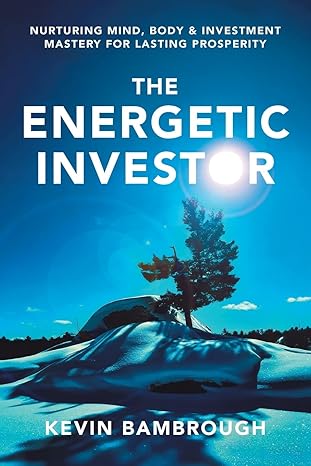
The Energetic Investor is Kevin Bambrough’s deeply personal and unconventional guide to mastering wealth, health, and mindset. Blending memoir with self-help and investment strategy, the book is structured into three sections: Discover, Diagnose, and Deploy. It begins with a gripping and emotional account of a traumatic event that catalyzed Bambrough’s transformation. From there, he explores how burnout, biology, trauma, and ingrained behaviors sabotage our ability to thrive, not just financially, but mentally and physically. By treating the body like a complex investment portfolio and focusing on energy management at the cellular level, Bambrough challenges readers to align mind, body, and money for lasting prosperity.
What struck me immediately was how raw and real this book felt. It’s not some cookie-cutter investment guide sprinkled with generic life advice. Bambrough doesn’t hold back—he dives headfirst into his personal struggles with addiction, loss, and burnout. That honesty gives his ideas serious weight. His writing veers from high-intensity financial breakdowns to soul-searching reflections, which makes for an unexpected and powerful rhythm. I appreciated that he didn’t talk down to the reader or sugarcoat the truth. Whether he’s discussing dopamine hijacks by modern marketing or the role of trauma in our financial decisions, he keeps things direct, urgent, and human.
The book jumps across biology, psychology, economics, and life philosophy without much handholding. At times, it feels like drinking from a firehose of insight, anecdotes, and science-backed strategies. But oddly enough, I liked that. It kept me on my toes. The passion behind his words is undeniable. He’s not just giving advice, he’s living the transformation he preaches. His investment insights, especially his contrarian thinking and analysis of herd behavior, are gold for any investor who’s tired of shallow market noise. But it’s the blend of personal healing and financial intelligence that makes this book stand out.
The Energetic Investor isn’t for the faint of heart or someone looking for a tidy ten-step plan to get rich. It’s for those who are ready to do some soul-digging and gut-checking. If you’re a driven professional, a burned-out entrepreneur, or someone chasing success but feeling stuck, this book might just knock the wind out of you—and then teach you how to breathe again.
Pages: 236 | ASIN : B0F6D3T26Z


