Blog Archives
The Fraud of Eternity
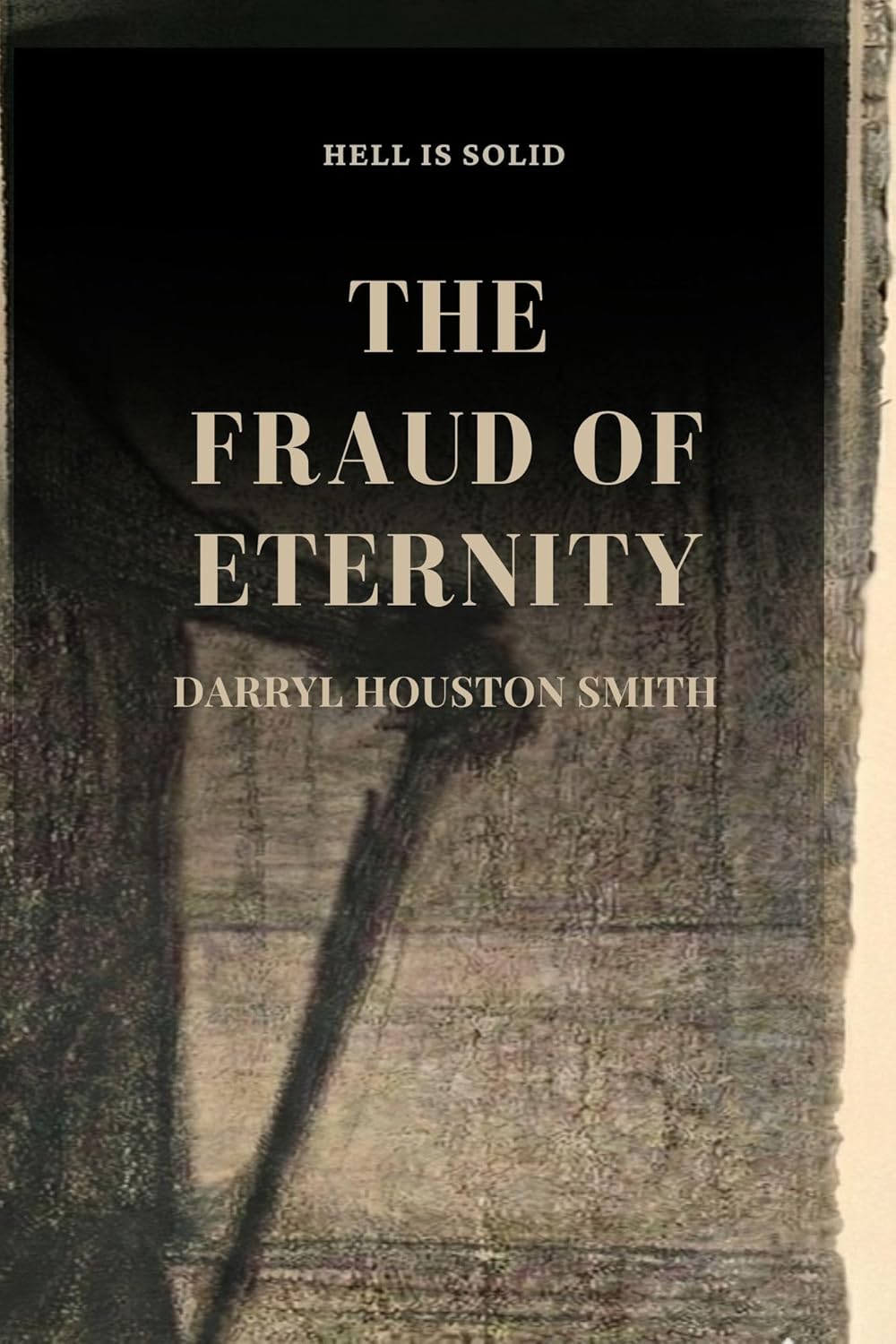

The Fraud of Eternity is a compact, bleakly beautiful collection of poems that circles around death, suffering, and spiritual exhaustion in the industrial landscape of Lowell, Massachusetts. The book moves through four sections, from the cosmic brutality of “The Slaughterhouse” to the brick mills by the Merrimack, then into personal hauntings and finally toward a kind of hard, earthbound acceptance. The voice keeps reaching for images of slaughter, mud, ice, and machinery, and it does that through very strict rhyme and meter, what the author calls “The Dyad,” mostly ABAB patterns that hold the emotion inside tight little cages. References to Baudelaire, Rimbaud, and the French Symbolists appear both directly and through the tone, and the notes at the end make that lineage explicit.
As a reader, I was first grabbed by the sheer force of the language. The images have teeth. “The Monolith,” “The Wheel And The Knife,” and “The Venom Of Thought” all hit with a kind of controlled violence. The clock shaving off skin, the river turned into steel, the falls chewing the water like granite jaws, scenes like that stay with me. The strict rhyme and meter work well here. They act like restraints, and the emotion pushes against them until it starts to vibrate. I appreciate that discipline. In a time when so much poetry goes loose and drifty, the choice to stay formal feels bold and very deliberate. At times, I caught myself reading lines aloud just to feel the rhythm click into place, and that is usually a sign that the craft is doing its job.
The book insists again and again that heaven is empty and that the real, honest place is the “slaughterhouse” of the earth, the warm mud, the mills, the graveyard on a cold Sunday. Poems like “The Morning Star Rejected” and “The Warmth Of Hell” lean hard into that stance, and I felt both fascinated and unsettled. It is a defiantly anti-transcendent vision. No soft afterlife, no comforting light, only heat, soil, and repetition. For me, the most moving pieces are where that philosophy meets human tenderness. “Edson Cemetery (Sunday)” has a quiet envy of the dead that cut deeper than the louder cosmic lines. “The Dyad” turns a metaphysical idea into an intimate portrait of love as two pillars holding up one roof, never merging, still sharing the strain. The pairing of “Fear Not Death (Original)” and “Fear No Death (Eulogy)” adds another twist, one dark and nihilistic, the other gentler and consoling. That contrast made me feel like I was watching the poet argue with himself, and I liked that tension.
I would recommend The Fraud of Eternity to readers who enjoy dark, formally structured poetry, and to people who already feel at home with Baudelaire, Poe, or Jim Morrison’s more apocalyptic writing. It suits anyone who wants a serious, unflinching look at despair, religion, industry, and the body, and who does not mind walking through a very shadowy landscape to get there. If you want poems that stare straight into the night and refuse to look away, this collection will feel like exactly the right kind of trouble.
Pages: 38 | ASIN : B0GF9T4RCZ

A Revolution of One

A Revolution of One gathers the poems, prose, fragments, and messages of James Munro Leaf into a raw and startling portrait of a mind fighting to stay open to beauty while battling its own darkness. The book moves through friendships, love affairs, political fire, theatre, travel, and long stays in psychiatric institutions. It circles again and again around one central idea. That art and courage might hold back despair for a moment, even if they cannot defeat it for good. The pieces feel found rather than polished, scattered like notes left on a desk after a long night. They come together into a kind of memoir told sideways. A life seen in shards.
The writing has this mix of clarity and frenzy that left me wide awake. Some lines felt soft and tender. I kept feeling pulled between admiration and sadness, almost like watching someone run full speed into a storm because they refuse to bow their head. Leaf’s honesty is so bare that I sometimes had to pause just to take a breath. He writes about love like it is a lighthouse. He writes about mental illness like it is a hunt he must survive. And he writes about ordinary people with such respect that even a stranger on the subway feels illuminated. His voice has a kind of youthful fire that doesn’t feel young at all. It feels ancient and worn at the edges.
I also found myself moved by his beliefs about art. He refuses to treat it as decoration. He wants it to matter. He wants it to change something inside a person. And I felt a kind of ache too. His desire for meaning often bumps up against a world that shrugs back. His political anger hits the page with a force that made me nod one moment and wince the next. His love poems feel fragile and wild at the same time. His pieces from psychiatric wards hit with an honesty that left me quiet for a while. Nothing here feels moderated or smoothed. It is all edge and pulse and longing.
A Revolution of One is messy in the way real lives are messy. It left me grateful. I think this collection will speak to readers who have struggled with mental illness, to artists who feel trapped between idealism and daily life, to anyone who has ever tried to hold onto hope while the world shakes under their feet. If you want something that feels alive, frightened, brave, and stubbornly human, then this book will be perfect for you.
Pages: 167 | ASIN : B0G8KJ7Q9F
ENTWINE

ENTWINE sweeps through forests, brooks, moonlit branches, and wingbeats, all woven with a steady pulse of wonder. The book moves through poems and meditations that circle hummingbirds, birches, hawks, seeds, storms, memory, and grief, and it builds a picture of the Hudson Highlands as a living, breathing companion. It feels like a record of attention, a long look at the more-than-human world, and a quiet insistence that our lives thread through soil and water, whether we notice or not. The poems shift between close observation and big feeling, and the book holds everything from scientific detail to spiritual yearning in one continuous braid.
Author Mary Newell writes with this mix of tenderness and excitement that made me lean in and then lean back as if I needed more room to breathe. Some poems rush with energy like the hummingbirds she studies, while others settle into slow, grounded rhythms. I loved that variation. It kept me off balance in a good way. I was wrapped up in her affection for trees and birds and rocks, and then suddenly swept into her grief for lost species or her worry that the land is shifting faster than we can keep up. That emotional jumpiness felt real to me. Life is like that. Beauty and ache and humor all at once. The writing invites that kind of response.
I also found myself reacting strongly to the way she folds her own life into the landscape. Her stories of drought, gardening, watching hawks, losing her mother, or waiting for a familiar hummingbird all cracked open something soft in me. None of it felt forced. I could sense how hard she listens to the world around her and how much she wants to meet it with honesty. Sometimes the imagery felt wild and tangled. Sometimes it hit with a clarity that made me stop reading for a moment so I could feel the point land. I appreciated the intimacy of that.
ENTWINE is perfect for readers who love nature writing that feels alive, for people who enjoy poetry that is tender. If you like work that blends science with feeling or work that welcomes you into the woods and asks you to stay awhile, ENTWINE will be a good companion.
Pages: 94 | ISBN : 1609644921

Life’s Transience

Exits is a collection of poems that moves in and out of nature, memory, and mortality with a sharp eye and an unflinching voice. What inspired you to write this particular collection of poems?
Nearly all of the poems in Exits were written between 2003 and 2021, before the idea of authoring a book ever came to mind. Three years ago, I decided to incorporate what I considered to be my best work into a book entitled Line Drawings. However, during the process of selecting poems, I noticed that a substantial number were related to various aspects of mortality. This led me to curate a more concise, themed collection, and Exits was born.
How did you decide on the themes that run throughout your poetry book?
I think my focus on life’s transience — the finite nature of our biological selves — derives from three sources. First, I was raised without any religious training, so from a very young age, I was left on my own to ponder the enormity of the universe, time and eternity, and the meaning of existence. I remember being cognizant of death as early as age five. Second, as a physician and neuro-ophthalmologist, I’ve cared for numerous patients with serious and/or life-threatening diseases. And third, since 1999, I’ve had to deal with the spinal cord variant of multiple sclerosis and the ramifications of that disease.
Did you write these poems with a specific audience in mind, or was it a more personal endeavor?
During the writing process, the intended audience was always me, or, to be more precise, the facsimile of me that constantly looks over my shoulder and critiques every word I draft. The word ecstasy comes to mind. It captures the elation I feel when a line finally comes together, but it derives from the Greek ek stasis ― to stand outside of oneself.
There’s certainly nothing wrong with writing for a defined audience, or respecting the conventions of a particular genre, or exploring themes and issues that are currently in the public eye. My approach happens to be different. What matters most to me are the words on the page, how they sound in air, and meeting the standards I set for myself.
What did you learn about yourself through writing this book?
The lessons I learned while writing the poems and designing the book (which are outlined below) may be of benefit to other debut authors and/or emerging writers:
- Write poems that reflect your unique aesthetic sensibilities. Try not to be overly influenced by prevailing trends or by contemporary poetic styles.
- Edit mercilessly over an extended period. Satisfying first drafts often begin to show their flaws only after sufficient time has elapsed to afford an objective assessment.
- Begin your foray into publication by submitting poems to literary journals. This will help you determine which of your poems resonates with experienced reviewers. Before each submission, make sure that your poem is a good fit for the journal.
- Be patient. Practically every aspect of the publication process moves more slowly than expected.
- Be persistent. Exits went through twenty-two revisions over the course of a year before I felt it was ready for publication.
Author Links: GoodReads | Website | Amazon
We live our lives counting moments, those we hope will last forever, and those we fear. In Exits, award-winning poet Stephen C. Pollock transforms these moments into sublime and magical music. With language both intimate and powerful, he explores the fragility of life, the cyclical truths of nature, and the mysteries of renewal that arise from even the darkest places.
Each poem is paired with evocative artwork, creating an immersive reading experience that lingers long after the final page. From myth to mourning, from dreams to decline, and from flora and fauna to the warming of our world, Exits reminds us that beauty is never far from loss, and that every departure leaves a door ajar.
Winner of the 2024 North Street Book Prize for Poetry, the 2023 Readers’ Favorite Gold Medal, and seventeen other literary honors, Exits is a masterful collection for those who believe that poems should move you, stay with you, and change the way you look at life.
Step into these pages. Lose yourself in poetry that’s both technically exquisite and emotionally arresting. And discover why every exit is, in its own way, an entrance.
Exits
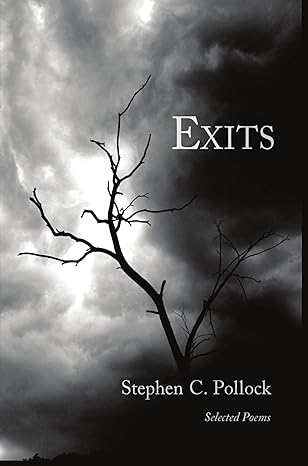
Exits is a collection of poems that moves in and out of nature, memory, and mortality with a sharp eye and an unflinching voice. Pollock balances images of birds, leaves, storms, and insects with meditations on illness, grief, and human cruelty. Each poem feels like an opening and a closing at once, a gesture toward beauty that never ignores the shadows pressing in around it. The artwork paired with the text deepens the mood, giving the reader both a visual and lyrical way to linger with themes of death, decay, and renewal.
I found myself pulled into the tension between delicacy and brutality. The spider spinning its web, the butterfly pinned by a child’s cruel hand, the leaves clinging through winter, these images stayed with me. Pollock’s language is careful, yet it carries an undercurrent of urgency, as if each word knows it has little time left. Some poems made me pause and reread, not because they were obscure, but because they struck me with a sudden intensity. Others, like “Steve’s Balloons,” were so unexpected that I had to smile even while feeling the melancholy underneath.
At times, the heaviness of the book pressed down hard. Illness, biopsy, syringe, tube, the clinical intrudes often, and it brought me back to my own brushes with hospitals and fear. That familiarity made the reading even more raw, and I appreciated Pollock’s honesty. He doesn’t romanticize suffering, but he does find ways to trace light through it. There is also a musicality to his lines that reminded me of older poets, the kind whose rhythm stays in your body long after the words leave your mouth. That mix of craft and emotion gave the book both polish and heart.
I would recommend Exits to readers who like poetry that doesn’t look away. If you’re drawn to reflections on life and death, or if you find comfort in nature as a mirror for human experience, this book will speak to you. It’s not an easy read, but it’s a meaningful one, and I think anyone who values honesty wrapped in artful language will find something to hold onto here.
Pages: 45 | ASIN : B0BXVJB79N
Thief of Laughter
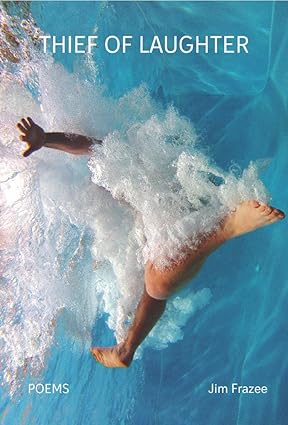
Jim Frazee’s Thief of Laughter is an intimate and evocative collection of poetry that scrapes raw nerves and lays bare the fragility of identity, memory, and family. The book weaves through a lifetime of emotional collisions. Fathers and sons, adolescent cruelty, war and its ghosts, spiritual betrayals, and fleeting moments of tenderness. Frazee captures these with a poet’s sharp eye and a survivor’s haunted voice, his language pulling no punches and never hiding behind pretense.
Frazee’s style is straightforward, sure-footed, but packed with layers. What struck me hardest was how many of the poems felt like emotional snapshots. The kind you can’t put back in the album once you’ve touched them. The violence of silence in “My Father’s Lesson,” the unspeakable grief tucked into “Elegy for E,” or the nearly unbearable self-loathing and regret that pulses through “Jell-O,” these pieces didn’t ask for sympathy. They earned it.
And yet, Frazee doesn’t let the darkness smother you. There’s a strange grace to his honesty. The title poem, “Thief of Laughter,” might be one of the most potent explorations of intergenerational pain I’ve read in a long time. It’s unflinching. Still, there’s beauty in the precision of his images and a kind of quiet rebellion in his insistence on remembering. Even when he writes about cruelty towards himself, others, or from the world at large, there’s a current of compassion, sometimes bitter, sometimes soft, running beneath it all.
If you’ve ever grappled with your past, questioned the people who raised you, or wondered what ghosts still rattle around in your own head, this book might sting, but it’ll also speak to you. I’d recommend Thief of Laughter to anyone who’s lived long enough to lose something important.
Pages: 156 | ASIN : B0F3KNLJ3P
The Human Condition

Scandals is a collection of prose poems and microfiction, where the grotesque and mundane are transformed into surreal snapshots of American despair and dark humor. Were there specific influences that shaped the rhythm and tone of this collection?
I love the lyrics of David Yow, Nick Cave, Laurie Anderson, the lyrics on Nirvana’s In Utero, anything that paints the kind of stranger-than-fiction aspects of humanity. My favorite poet is Eric Paul, who was also the vocalist for Arab on Radar, The Chinese Stars, Psychic Graveyard, etc. His lyrics especially made me want to write poetry. I’m also influenced by overheard dialogue; I keep a small notebook to document things I hear every day. Then, there are more visual influences like Diane Arbus, Todd Solondz, Werner Herzog, Harmony Korine, Mary Ellen Mark, and the countless fly-on-the-wall documentaries I obsess over like Streetwise, Strongman, and Vernon, Florida. I’ve always likened poems to photographs, where I’m sorta writing what I can’t immediately shoot a photo of or document in a visual way, whether it’s in my head or right in front of me.
Scandals feels personal and raw. How much of it was drawn from your own life versus pure invention?
It’s a little bit of both. Some are fully autobiographical, some are entirely fiction, others are a blend where I might take my own experience and mix it with someone I saw on the street, then add something a friend told me when I was in 3rd grade.
What were some themes that were important for you to explore in this collection?
I definitely wanted it to be honest about the full spectrum of the human condition. Good people doing bad things, bad people doing good things. I’m not very interested in a kind of world without gray areas, where everything is boxed into good and evil. There are a lot of references to sitcoms to show the sometimes stark contrast between the viewer’s life and the fictional lives they’re watching on TV, where many of them are examples of the American dream that most viewers likely will not achieve in their lives. I also found it interesting how, when an actor gets arrested, ends up in the middle of a scandal, or acts out as a result of childhood trauma, many still see that person as the character they play on TV and forget they’re human/are not those characters. I imagined a kind of, “What happens when the camera is turned off/an episode is over?” world with all these sitcoms that mirrors aspects of the real world.
If Scandals had a soundtrack, what five songs would absolutely be on it?
- “Wichita Lineman” by Glen Campbell
- “Everyone I Went to High School With is Dead” by Mr. Bungle
- “Goodbye to Romance” by Ozzy Osbourne
- “Skrag Theme” by Aerial M
- “Runaway” by Del Shannon
Author Links: GoodReads | Instagram | Amazon
“Darkly comical, surreal, and at times, deeply touching.”- Sara B. (Artist)
“The tears of a clown clang against the floor like silver bullet casings. Speeding forward locked in battle with apparitions emerging from the afterburner, Alex Osman is in a league of his own.”- Gwen Hilton (author of Sent to the Silkworm House &Where the Breastplate Meets the Blade)
I’ll be honest – I jumped at the chance to blurb this book because it meant I didn’t have to wait as long to read it. Alex Osman’s work will do that to you. I needed another hit. No one else can find the absurdist wonder of dancing primates or toddlers graffitiing the KISS logo around their kindergarten.
Scandals – Alex Osman’s strongest collection of writing so far – is full of cultural references – because the morning kids show entertainers, sitcom stars, the brand names of the day are the true landscape of the Americana that Osman chooses to mine and dissect with and within his work.
Osman is a genuine surrealist and understands the comedy, the horror, the pain, the immortal and yet constantly fleeting nature within everyday pop-culture. Something that adds a strength and depth to his multi-faceted body of work is that he also sees the beauty, the brief moments of truth and bliss amid the confusing blur of the whole mess of everything that makes up life. And we should be thankful that he does. Work this brilliant and evocative should be treated like the rare jewel that it is.- Thomas Moore (author, Forever, Alone, & Your Dreams)
Invisible Strings: 113 Poets Respond to the Songs of Taylor Swift
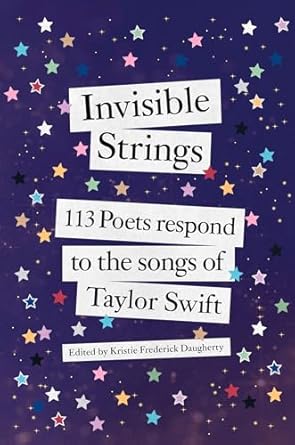
Taylor Swift’s music has always been full of poetry sharp, confessional, sometimes wistful, sometimes vengeful, always deeply felt. Invisible Strings, edited by Kristie Frederick Daugherty, takes that connection and runs with it, bringing together 113 poets who respond to Swift’s lyrics not with direct references but with their own poetic interpretations. The result is a deeply layered, often moving collection of poetry that feels like an artistic conversation. It’s a book that blends fandom with literary appreciation, proving just how much Swift’s songwriting has shaped modern culture.
What really struck me about this anthology was how it captures the emotional landscape of Swift’s music without ever quoting it outright. Some poems are straightforward responses to a song’s themes, like Bianca Stone’s Love’s Cure, which plays with the idea of love’s fleeting and sometimes dangerous nature much like Swift’s The Archer or You’re Losing Me. Others, like Maggie Smith’s Pull, echo the isolation and longing found in exile and tolerate it, using stark natural imagery to convey deep personal truths. I loved the puzzle-like aspect of this book, trying to match poems to the Swift songs that inspired them, but also appreciating how each poet makes the subject their own.
Some pieces stood out immediately. Andrea Cohen’s Duet has that quiet ache of unspoken heartbreak, much like Swift’s most devastating ballads. Then there’s Jessica Laser’s Concessions, which nails the feeling of post-breakup ghost sightings, the way someone lingers in the background of your life long after they’re gone. These poems aren’t just responses to Taylor Swift; they’re extensions of the emotions she puts into her music, proving that heartbreak, nostalgia, and reinvention are universal themes that cross from pop songs into poetry.
The book is also incredibly well-curated. Daugherty’s introduction captures the spirit of a true Swiftie and literary enthusiast, explaining how the anthology came together and why Swift’s work matters in a poetic sense. The order of the poems feels intentional, creating an emotional arc much like a Swift album does. There are moments of joy and lightness (Glitter Gel Pen energy), then deeper reflections (Fountain Pen introspection), then gut-punch endings that stay with you. This is a genuinely moving collection that any poetry lover could appreciate, whether they’re a Swift fan or not.
Invisible Strings? is perfect for Swifties who love poetry, writers who appreciate the lyrical quality of songwriting, and anyone who enjoys exploring emotions through multiple artistic lenses. If you’ve ever cried to All Too Well or screamed along to The Lakes, you’ll find something here that resonates. It’s proof that great lyrics don’t just live in songs; they spark ideas, stories, and emotions that keep echoing long after the music fades.
Pages: 282 | ASIN : B0D8CDBJP1


