Blog Archives
The Dark Side of Our Past

Property of the Revolution is the story of your family’s move to the United States from a politically-charged Cuba and the economic and personal challenges you faced on your way to becoming a mother. Why was this an important book for you to write?
I wanted to honor the sacrifices of the generation that gave everything up so we could live in Freedom, the capital is very intentional. We tend to forget what a gift it is to live in a country that strives—doesn’t always make it, but it tries—for worthy ideals, like freedom, rule of law, respect for diversity, etc. I also wanted to understand better, for myself, how our family members navigated the decisions and choices they faced. Only writing gives me the time and space to understand such things. I also wanted to remind Americans of the best in us and in our country, because we were the recipients of that gift.
I appreciated the candid nature with which you told your story. What was the hardest thing for you to write about?
Revisiting the pain my grandmother went through and how she must have suffered. Also, the loneliness my father experienced all those years of working double shifts and missing his family. In general, it was difficult to go through that door again, into the dark side of our past, the side we tried to downplay so we could move forward.
Given the opportunity, what would you like your younger self to know?
That it was all right to be different, that it would be my super power. That everything would be ok.
What is one thing you hope readers take away from your experiences?
The magnificent power of a loving family. That you can lose everything—or almost everything—and claw your way back. That you can actually ponte guapa/o (make yourself brave, and that you actually need to and must to survive in this world, especially when you think you’re done for!
Author Links: GoodReads | X (Twitter) | Facebook | Website | Simon & Schuster | Amazon
Ana Hebra Flaster was six years old when her working-class family was kicked out of their Havana barrio for opposing communism. Once devoted revolutionaries themselves but disillusioned by the Castro government’s repressive tactics, they fled to the US. The permanent losses they suffered—of home, country, and loved ones, all within forty-eight hours—haunted her multigenerational family as they reclaimed their lives and freedom in 1967 New Hampshire. There, they fed each other stories of their scrappy barrio—some of which Hebra Flaster has shared on All Things Considered—to resurrect their lost world and fortify themselves for a daunting task: building a new life in a foreign land.
Weaving pivotal events in Cuba–US history with her viejos’—elders’—stories of surviving political upheaval, impossible choices, and “refugeedom,” Property of the Revolution celebrates the indomitable spirit and wisdom of the women warriors who led the family out of Cuba, shaped its rebirth as Cuban Americans, and helped Ana grow up hopeful, future-facing—American. But what happens when deeply buried childhood memories resurface, demanding an adult’s reckoning?
Here’s how the fiercest love, the most stubborn will, and the power of family put nine new Americans back on their feet.
Property of the Revolution: From a Cuban Barrio to a New Hampshire Mill Town—A Memoir
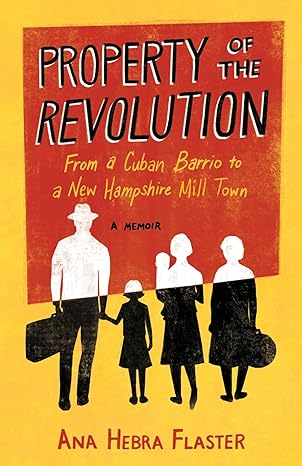

Property of the Revolution, by Ana Hebra Flaster, is a poignant memoir that explores themes of political upheaval, migration, family, and the relentless passage of time. Set against the backdrop of Cuba’s chaotic regime, the book chronicles Ana and her family’s arduous journey to the United States and their struggle to adapt to a new life. At its core, it is a story of resilience. We see a father, burdened with responsibility, sacrificing his dreams and taking on tedious factory work to secure his family’s future. Flaster vividly recalls Cuba’s political turmoil—a PhD holder forced to abandon teaching, a man condemned to harsh labor camps in Camagüey for resisting military registration—grounding the narrative in sobering realities. Alongside this, the book traces Ana’s personal journey—her adjustment to life in America, her pursuit of education, her deep familial bonds, and her own experiences of motherhood.
Flaster’s memoir is rich with layers, blending personal anecdotes and political history into a seamless, engrossing narrative. It remains busy and dynamic, brimming with moments that compel the reader forward. From suspenseful accounts of political oppression to heartfelt recollections of her father’s sacrifices, the book pulses with life. I found myself deeply connected to Ana’s struggles, particularly when she speaks of longing to take an art class but feeling unable to justify such an expense. Growing up in a household shaped by financial instability, she leaned toward practical paths, forsaking artistic dreams in pursuit of security—a sentiment that resonates deeply with many readers.
The memoir flows like a symphony of interconnected stories, each piece harmonizing with the next. Flaster introduces a cast of intriguing characters who traverse contrasting cultural worlds. Some stories reveal the challenges of being a minority in the United States—navigating language barriers, facing bullies who judge differences, and grappling with a sense of displacement. Other sections transport readers to the stark and unforgiving realities of life in Cuba under a cruel regime. The narrative immerses us in the emotional weight of leaving one’s homeland, enduring separation from loved ones, and searching for missing family members. Through these tales, Flaster captures the raw experience of destabilization and the relentless quest for belonging.
Property of the Revolution is a testament to survival, offering readers an intimate look at lives shaped by political unrest and migration. Flaster’s ability to merge historical context with personal reflection creates a story that is both informative and deeply human. Her writing is engaging, her characters vividly drawn, and her themes universally relatable. This book is perfect for readers drawn to stories of resilience, political strife, and cultural transition. Fans of historical memoirs and narratives about overcoming adversity will find themselves captivated from start to finish. Flaster’s account is an immersive, character-rich journey that lingers long after the final page. I highly recommend this thought-provoking and beautifully written memoir.
Pages: 312 | ISBN : 978-1647428266



 LITERARY TITAN