Blog Archives
The Turning Point

Too Strong For Your Own Good is an intimate blend of memoir and guidance that invites readers to explore the hidden cost of chronic strength and to show exhausted high achievers how to reclaim health, joy, and self-leadership by listening to their bodies. Why was this an important book for you to write?
This book wasn’t something I decided to write—it was something that asked to be written through me.
For decades, I lived the life of the “strong one.” The high achiever. The helper. The woman who could handle anything—until my body finally said no. After surviving multiple cancer diagnoses, chronic illness, and profound burnout, I realized that the very strength I had been praised for was slowly costing me my health, my joy, and my sense of self.
As I healed, I began to recognize this same pattern everywhere. In my years of coaching leaders and high performers, I watched capable, compassionate people quietly disconnect from themselves in the name of responsibility, success, and survival. The strongest people were often the most exhausted and the least supported.
I wrote Too Strong For Your Own Good so others don’t have to spend decades learning what nearly cost me my life—that real strength includes the wisdom to rest, the courage to feel, and the trust to finally come home to yourself. This book is both a truth-telling and an invitation to evolve from survival-based strength into a more soul-aligned way of living and leading. It’s the book I wish someone had handed me years earlier.
When did you first realize that being “strong” had become harmful rather than helpful?
I realized it when my body stopped responding to willpower. I could no longer push through symptoms, override exhaustion, or “mindset” my way forward. What once felt empowering began to feel like self-erasure.
As I slowed down enough to listen, I saw something more clearly: the strength I had relied on wasn’t a conscious choice-it was a survival strategy I had developed very early in life. Proving my worth through constant doing had once helped me feel safe, capable, and in control. But over time, it came at a cost.
Being strong became harmful the moment it required me to abandon myself. When saying yes to everyone else meant saying no to my own body, my own needs, and my own truth, I knew something had to change.
That realization was humbling and clarifying. I understood that my body wasn’t betraying me-it was protecting me. It was asking me to stop living from adrenaline and proving, and to begin listening. That moment became the turning point not only in my healing but in how I now guide others.
How does burnout in leaders quietly ripple into families, teams, and organizations?
Burnout doesn’t stay contained. Even when leaders are highly competent, their nervous systems set the tone. Chronic stress shows up as urgency, control, emotional distance, and reactivity- often without anyone naming it.
Families feel it as an absence. Teams feel it as pressure. Organizations feel it as disengagement and quiet erosion of trust. When leaders are operating from survival, they unintentionally teach others to do the same, moving faster, bracing tighter, and normalizing constant pressure.
Sustainable leadership isn’t just about resilience or performance. It requires regulation, presence, and self-trust. When leaders feel safe in their own bodies, they create environments where others can do their best work without burning out.
What does sustainable healing actually look like day to day?
Sustainable healing is quiet and relational. It looks like pausing instead of pushing. Listening instead of overriding. Setting boundaries that honor the body. Making decisions that feel congruent rather than impressive.
Day to day, it’s less about adding more practices and more about removing what no longer fits. It’s learning to notice when we’re slipping back into survival and choosing to respond with honesty and care instead.
Healing becomes lasting when strength is redefined – not by how much we can carry, but by how well we stay connected to ourselves.
Author Links: GoodReads | X (Twitter) | Anette Demattio | Facebook | Instagram | LinkedIn | Website | Amazon
Too Strong For Your Own Good reveals the hidden cost of pushing through, pleasing, and holding it all together—while your body quietly pays the price.
After surviving six cancer diagnoses, Anette DeMattio realized her body wasn’t broken—it was speaking. Now, with over 25 years of experience in transformational coaching, she helps high achievers and caregivers turn survival patterns into embodied self-leadership.
In this book, you’ll learn how to:
• Understand your symptoms as signals—not setbacks
• Break patterns that silently drain your energy
• Rest in a way that feels safe—not scary
• Lead and live from calm, clarity, and soul
This isn’t just a book about healing. It’s a powerful invitation to return to your truest self—strong, soft, and fully alive.
If your body is whispering for relief…
If you’re tired of pretending you’re fine…
If you want peace without burnout and strength without suffering…
Let this book show you how to stop surviving—and start living, vibrantly and freely as the real you.
Too Strong For Your Own Good: Success With Soul
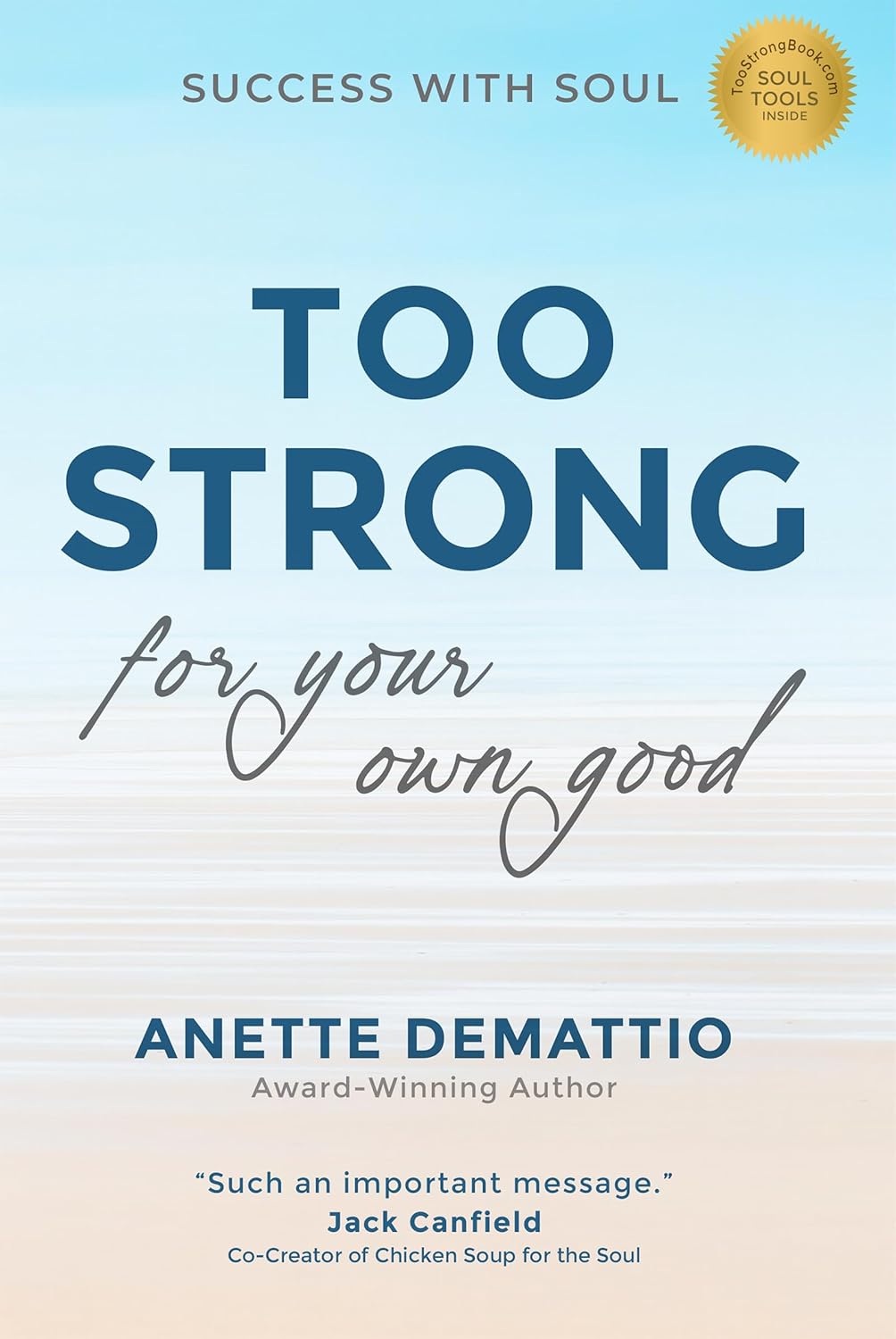

I read Too Strong For Your Own Good by Anette DeMattio straight through with very few pauses. The book is about what happens when strength turns into self-erasure. DeMattio shares her personal story of illness, burnout, trauma, and recovery while guiding the reader toward a softer and more embodied way of living and leading. The core idea is straightforward. Being strong for too long can disconnect you from your body, your needs, and your joy. The book blends memoir, reflection, and gentle exercises meant to help readers come back to themselves.
What struck me most was the voice. It feels intimate and unfiltered, like someone sitting across from you telling the truth without cleaning it up first. I felt seen more than once, and that surprised me. Some moments made my chest tighten. Others made me laugh in that tired recognition kind of way. The writing is emotional and direct. It repeats ideas on purpose, which at times felt comforting and at other times felt heavy. Still, I never doubted the author’s sincerity. Her lived experience gives the book weight, and I trusted her because she never pretended to have an easy fix.
The focus on listening to the body felt grounded and human, not preachy. I appreciated how often she reminded the reader that exhaustion is not failure. The spiritual language is rich and expressive, and the extended metaphors show how deeply the author wants the reader to fully feel and absorb the message. The heart of the message kept pulling me back. I felt encouraged, challenged, and oddly calmer by the end. It felt less like being taught and more like being invited.
I would recommend this book to people who are tired in a way sleep does not fix. It is especially good for caregivers, leaders, high achievers, and anyone who has built a life around holding it all together. If you are open to reflection, emotion, and slowing down, this book can feel like a deep exhale and a quiet companion when you need one most. Too Strong For Your Own Good: Success With Soul reminds you that real strength isn’t pushing harder. It’s finally listening to yourself.
Pages: 181 | ASIN : B0FZRWRTY7



