Blog Archives
The Turning Point

Too Strong For Your Own Good is an intimate blend of memoir and guidance that invites readers to explore the hidden cost of chronic strength and to show exhausted high achievers how to reclaim health, joy, and self-leadership by listening to their bodies. Why was this an important book for you to write?
This book wasn’t something I decided to write—it was something that asked to be written through me.
For decades, I lived the life of the “strong one.” The high achiever. The helper. The woman who could handle anything—until my body finally said no. After surviving multiple cancer diagnoses, chronic illness, and profound burnout, I realized that the very strength I had been praised for was slowly costing me my health, my joy, and my sense of self.
As I healed, I began to recognize this same pattern everywhere. In my years of coaching leaders and high performers, I watched capable, compassionate people quietly disconnect from themselves in the name of responsibility, success, and survival. The strongest people were often the most exhausted and the least supported.
I wrote Too Strong For Your Own Good so others don’t have to spend decades learning what nearly cost me my life—that real strength includes the wisdom to rest, the courage to feel, and the trust to finally come home to yourself. This book is both a truth-telling and an invitation to evolve from survival-based strength into a more soul-aligned way of living and leading. It’s the book I wish someone had handed me years earlier.
When did you first realize that being “strong” had become harmful rather than helpful?
I realized it when my body stopped responding to willpower. I could no longer push through symptoms, override exhaustion, or “mindset” my way forward. What once felt empowering began to feel like self-erasure.
As I slowed down enough to listen, I saw something more clearly: the strength I had relied on wasn’t a conscious choice-it was a survival strategy I had developed very early in life. Proving my worth through constant doing had once helped me feel safe, capable, and in control. But over time, it came at a cost.
Being strong became harmful the moment it required me to abandon myself. When saying yes to everyone else meant saying no to my own body, my own needs, and my own truth, I knew something had to change.
That realization was humbling and clarifying. I understood that my body wasn’t betraying me-it was protecting me. It was asking me to stop living from adrenaline and proving, and to begin listening. That moment became the turning point not only in my healing but in how I now guide others.
How does burnout in leaders quietly ripple into families, teams, and organizations?
Burnout doesn’t stay contained. Even when leaders are highly competent, their nervous systems set the tone. Chronic stress shows up as urgency, control, emotional distance, and reactivity- often without anyone naming it.
Families feel it as an absence. Teams feel it as pressure. Organizations feel it as disengagement and quiet erosion of trust. When leaders are operating from survival, they unintentionally teach others to do the same, moving faster, bracing tighter, and normalizing constant pressure.
Sustainable leadership isn’t just about resilience or performance. It requires regulation, presence, and self-trust. When leaders feel safe in their own bodies, they create environments where others can do their best work without burning out.
What does sustainable healing actually look like day to day?
Sustainable healing is quiet and relational. It looks like pausing instead of pushing. Listening instead of overriding. Setting boundaries that honor the body. Making decisions that feel congruent rather than impressive.
Day to day, it’s less about adding more practices and more about removing what no longer fits. It’s learning to notice when we’re slipping back into survival and choosing to respond with honesty and care instead.
Healing becomes lasting when strength is redefined – not by how much we can carry, but by how well we stay connected to ourselves.
Author Links: GoodReads | X (Twitter) | Anette Demattio | Facebook | Instagram | LinkedIn | Website | Amazon
Too Strong For Your Own Good reveals the hidden cost of pushing through, pleasing, and holding it all together—while your body quietly pays the price.
After surviving six cancer diagnoses, Anette DeMattio realized her body wasn’t broken—it was speaking. Now, with over 25 years of experience in transformational coaching, she helps high achievers and caregivers turn survival patterns into embodied self-leadership.
In this book, you’ll learn how to:
• Understand your symptoms as signals—not setbacks
• Break patterns that silently drain your energy
• Rest in a way that feels safe—not scary
• Lead and live from calm, clarity, and soul
This isn’t just a book about healing. It’s a powerful invitation to return to your truest self—strong, soft, and fully alive.
If your body is whispering for relief…
If you’re tired of pretending you’re fine…
If you want peace without burnout and strength without suffering…
Let this book show you how to stop surviving—and start living, vibrantly and freely as the real you.
Life after Narcissists
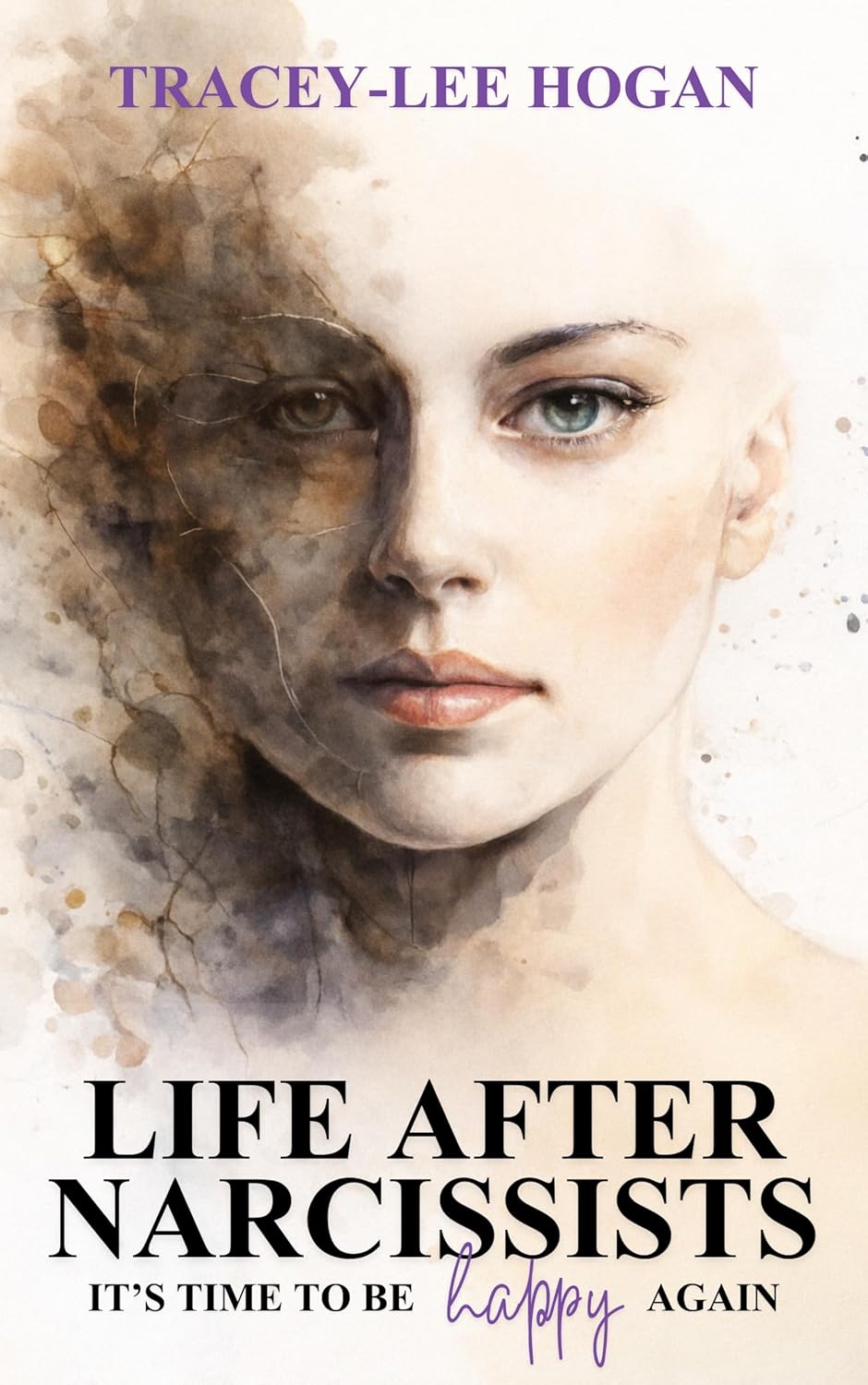

Life After Narcissists is a three-part blend of memoir, psychoeducation, and practical recovery guidance. Author Tracey-Lee Hogan begins with her own story of growing up in a house filled with violence, fear, and silence, then moves into composite portraits of women entangled in narcissistic dynamics at home and at work. From there, she explains how narcissistic behaviour operates as a pattern, how it affects the nervous system and decision-making, and why clarity only really arrives with distance. The final section lays out what she calls the Hogan Method, a staged approach to healing that mixes trauma-informed education, nervous system and gut support, nutrients and herbal medicine, lifestyle shifts, and a slow reconnection with self.
This is an emotional book. The early chapters that describe her childhood, the domestic violence, the constant scanning for danger, and the way school became both a refuge and another risk landed very hard for me. The writing is direct and clear, no fluff, and that made the cruelty and confusion even more stark. I appreciated how often she pauses the story to explain what was happening in her body at the time, then ties that into trauma research in the “Reflections” sections. It felt like sitting with someone who can say, “This is what happened to me, and here is what the science says about kids in that situation.” That mix of heart and head gave the book a lot of credibility in my eyes and kept me engaged, even when the material was confronting.
On one hand, I liked how systematically she breaks down narcissistic behaviours, the bonding and destabilising patterns, and the way abrupt disengagement hits the nervous system. Her language stays very grounded, and she avoids sloppy labels, which I respect. On the other hand, the detail in the naturopathic and herbal sections sometimes felt a bit dense to read straight through. As a reference, it is strong, and you can tell she has years of clinical practice behind it, but at times, I wanted more stories or practical moments. I still valued the clear warnings about self-prescribing and the repeated reminder to work with qualified practitioners, which kept that section from feeling like a quick-fix wellness pitch.
I came away feeling that Life After Narcissists is best suited to women who have already recognised that something was very wrong in a relationship and are now trying to make sense of the emotional and physical fallout. It will especially help readers who appreciate both personal stories and evidence-based explanations, and who are open to complementary medicine as part of their recovery. If you are looking for a breezy pop-psych book, this will feel too serious and too detailed. If you are tired of vague advice and want a compassionate, clinically informed guide that validates your nervous system as much as your feelings, this book will probably feel like someone turning the lights on in a dark room.
Pages: 336 | ASIN : B0GCC62Z3D

Too Strong For Your Own Good: Success With Soul
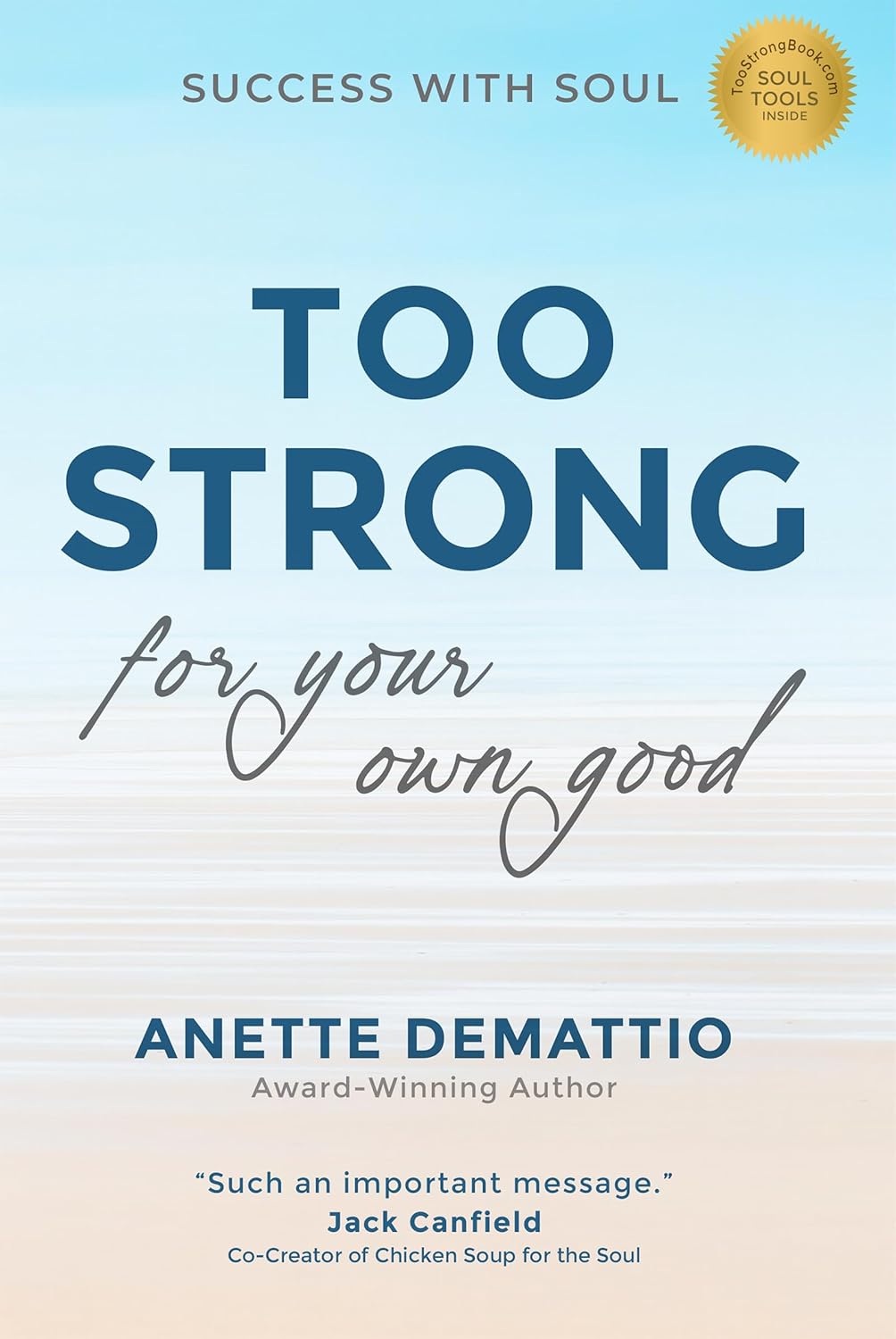

I read Too Strong For Your Own Good by Anette DeMattio straight through with very few pauses. The book is about what happens when strength turns into self-erasure. DeMattio shares her personal story of illness, burnout, trauma, and recovery while guiding the reader toward a softer and more embodied way of living and leading. The core idea is straightforward. Being strong for too long can disconnect you from your body, your needs, and your joy. The book blends memoir, reflection, and gentle exercises meant to help readers come back to themselves.
What struck me most was the voice. It feels intimate and unfiltered, like someone sitting across from you telling the truth without cleaning it up first. I felt seen more than once, and that surprised me. Some moments made my chest tighten. Others made me laugh in that tired recognition kind of way. The writing is emotional and direct. It repeats ideas on purpose, which at times felt comforting and at other times felt heavy. Still, I never doubted the author’s sincerity. Her lived experience gives the book weight, and I trusted her because she never pretended to have an easy fix.
The focus on listening to the body felt grounded and human, not preachy. I appreciated how often she reminded the reader that exhaustion is not failure. The spiritual language is rich and expressive, and the extended metaphors show how deeply the author wants the reader to fully feel and absorb the message. The heart of the message kept pulling me back. I felt encouraged, challenged, and oddly calmer by the end. It felt less like being taught and more like being invited.
I would recommend this book to people who are tired in a way sleep does not fix. It is especially good for caregivers, leaders, high achievers, and anyone who has built a life around holding it all together. If you are open to reflection, emotion, and slowing down, this book can feel like a deep exhale and a quiet companion when you need one most. Too Strong For Your Own Good: Success With Soul reminds you that real strength isn’t pushing harder. It’s finally listening to yourself.
Pages: 181 | ASIN : B0FZRWRTY7

Always Swing
In Open Water, you share the details of your difficult upbringing, your struggles with mental health, and the mysterious medical condition that ultimately changed your life. What inspired you to share your story with readers?
The goal in writing this book was and is still to help others in any way possible. That could mean just being able to spread awareness of this condition in hopes of eventually finding a cure for people, or also hopefully preventing others from having to go down the dark road that I did in order to find an answer. I am also hopeful that this could reach people or their families with this specific disorder or any other similar diagnosis and make them feel less alone and let them know that there is always hope.
I appreciated the candid nature with which you told your story. What was the hardest thing for you to write about?
I think that while it was honestly quite difficult and emotional to revisit some of those darker places and times, like my stay in Haliston Hospital, the hardest thing about writing all of this was honestly emotionally reconciling all of the difficult family aspects of this and coming to terms with the best way to tell the story 100% truthfully while telling of some of the more difficult moments with family and people that I will always love dearly!
How important was it for you to convey a sense of hope to your readers?
That sense of hope is absolutely critical. Getting through my own struggle or any even remotely similar, requires understanding that there is always hope and you can always persevere no matter what. I can’t think of a more important message to get across and I very much aim for that sense of hope to be something that readers definitely take with them.
What is one thing you hope readers take away from your experiences?
As all of these answers hopefully suggest, raising awareness for this disorder, as well as being able to help others in anyway possible are certainly the main goals. As far as a take away that I would love to be able to relay? Always persevere, always try to press on no matter what, and using the metaphor in the book, always swing, knowing that there is always hope.
Author Links: GoodReads | Facebook | Amazon
Open Water details that journey and communicates many of the lessons that he learned from it and hopes others can benefit from as well. The goal is to ensure that those who might be dealing with similar conditions never have to feel as darkly alone as he did at times, going through his own many-years-long search for a diagnosis and learning to live with a disability. Alex stresses that if reading this can help just one person going through anything even remotely similar to what he went through to feel less alone or desperate or afraid, it will all be worth it to him. He hopes that any such individual’s family or close friends are able to process and understand better what is happening as they move forward as well.
The title, Open Water, is a visual comparison carried throughout the story. Like open water, life can be absolutely beautiful and sometimes terrifyingly stormy as well, with moments when the only choice is just trying to swim and stay above the surface. Times of relative serenity still bring with them the fear of the unknown, not knowing what lies below the murkiness around us. The only thing to do is keep pressing on in hopes of eventually finding clarity.
Open Water

Open Water is a heartfelt, raw, and deeply personal memoir by Alex Dean that chronicles his upbringing in a fractured family, his early love for academics, and the onset of a mysterious medical condition that would alter the course of his life. The story begins in a psychiatric hospital and then rewinds to Alex’s childhood in Kansas, toggling between two very different homes, one calm and loving, the other chaotic and emotionally volatile. With a voice that’s at once humorous, honest, and emotionally naked, Dean invites readers to walk through his struggles with mental health, physical illness, family conflict, identity, and perseverance.
Dean’s writing is beautifully conversational. It flows like a journal. The honesty is almost jarring at times, but that’s what makes it so powerful. He doesn’t over-polish his memories or wrap everything up in neat little lessons. His childhood was messy, his thoughts often contradictory, and his pain palpable, but he tells his story with such clarity that you trust every word. And somehow, despite the darkness he describes, he never lets the book become bleak. There’s this through-line of hope, humor, and love, especially for his family, that never goes away, even when things get really hard.
What struck me most was how relatable this story is. I wasn’t reading about someone extraordinary doing superhero things. I was reading about a smart, anxious, lovable kid doing his best to navigate a really confusing life. The family dynamics alone are enough to break your heart. The way Dean talks about his parents, especially his deep bond with his dad, and his complicated, painful relationship with his mom, felt so familiar and real. And then there’s the body that keeps failing him and the mind that won’t stop fighting him. He never pretends to have all the answers. He just keeps swinging, his favorite metaphor, and you end up rooting for him with everything you’ve got.
Open Water is a lifeline for anyone who’s ever felt overwhelmed by their own mind, their body, or their family. I would absolutely recommend it to young adults, therapists, teachers, parents, and anyone trying to understand the messiness of growing up with both invisible and visible struggles. If you want real and moving and strangely funny in the most painful places, you’ll find something here that sticks with you.
Pages: 200 | ASIN : B0CS4SYP23



