Blog Archives
Millionaire Janitor: Unlocking the Hidden Wealth in Everyday Choices
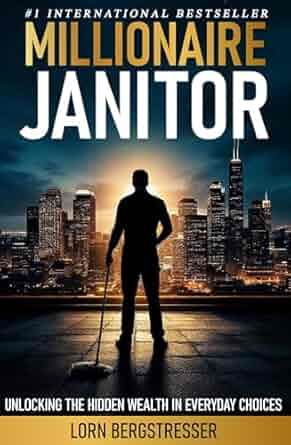

The Millionaire Janitor is a modern-day rags-to-riches story centered on Horatio Alger Jefferson, a humble and hardworking janitor, and his journey from poverty to financial stability. Set against the backdrop of gritty South Chicago, the novel follows Horatio and his partner Melody as they navigate the harsh realities of life with grit, old-fashioned values, and a relentless focus on wise financial decisions. It blends a narrative style with life lessons and financial principles, using Horatio’s fictional rise as a metaphor for the real-world potential of the average American to build wealth through discipline, sacrifice, and perseverance.
What struck me first was how charmingly simple the prose is. Bergstresser avoids flashy language and highbrow metaphors, opting instead for straightforward storytelling laced with warmth and earnestness. This isn’t literary fiction; it’s closer to an extended parable with heart. The writing may come across as a bit heavy-handed at times—some might say even moralistic—but it works within the context. There’s a homespun, almost old-school feel to it, reminiscent of stories your grandpa might tell at the kitchen table. The characters are endearing. Horatio, in particular, is drawn with such gentle sincerity that I found myself rooting for him early on.
Where the book really earns its keep is in its ideas. Bergstresser uses fiction to deliver practical, no-nonsense financial wisdom. There are detailed lessons here—how to budget, why modest living matters, and the magic of compound interest. It feels like The Millionaire Next Door had a baby with The Pursuit of Happyness. I appreciated how the story elevates the ordinary and dignifies blue-collar work, especially in a time when that’s not always the message young readers hear. There were moments where the tone crossed from encouraging to sermonizing. Still, I admire the author’s guts in taking a stand for values that aren’t always in vogue.
I’d wholeheartedly recommend it to teens and young adults starting out in life, especially those facing tough odds. It’s also great for parents and teachers looking for a clean, values-rich story that teaches life lessons without being dry. If you’re someone who likes your inspiration with a dose of practicality, you’ll enjoy this. It’s full of heart, full of hope, and packed with the kind of wisdom that never really goes out of style.
Pages: 162 | ASIN : B0DZW5HVYB

Insights Into Retirement

Retirement Is a Contact Sport is an insightful and practical guide for anyone approaching or already in retirement, addressing key issues not only with stopping work, but also covering topics surrounding getting older and end of life planning as well. What inspired you to write this book?
During my career as a financial advisor, I found many people really did not understand retirement is an ongoing process that requires realistic thought, planning and acceptance of challenges they have not seen before. For many, in my opinion, retirement was viewed, both from a financial and emotional viewpoint, as frightening and something they believed they would never attain. Many could not understand retirement obstacles could be overcome, and retirement should represent the very best phase of their life.
What were some ideas that were important for you to share in this book?
The first concern is, of course, reasonable financial planning and determining funds available for retirement living. After an assessment of funds available, it is critical to choose a lifestyle the funds available can support…no one can do everything on their “bucket list”. A major concern, after determining funds available, is dealing with the emotional issues of retirement. Far too many people believe they can “retire and do nothing”, which is a roadmap to disaster!
What advice do you have for readers overwhelmed by all the changes being made to things like Social Security and Medicare, how should they navigate and plan for this ever-evolving system?
As indicated in the chapters on Social Security and Medicare, help is available in these areas from trusted Financial Advisors, Insurance Agents, Social Security Administration and Medicare web sites. Far too many people are intimidated and simply will not contact the people and government agencies that are available to assist in solving even the most basic retirement concerns.
What is one thing that you hope readers take away from Retirement Is a Contact Sport?
From my back cover, “Retirement, if treated in the right manner, is fun, rewarding and very much a very positive contact sport”.
Retirement, if treated in the right manner, is fun, rewarding and very much a very positive contact sport!
Retirement is a Contact Sport

Retirement Is a Contact Sport by James J. Kinzer is an insightful and practical guide for anyone approaching or already in retirement. Written by a seasoned financial advisor turned retiree, the book walks readers through the key decisions and challenges of retirement, from financial planning to emotional adjustments. Kinzer’s central theme is that retirement is not a passive phase of life but an active, ongoing process that requires planning, adaptation, and engagement.
Kinzer’s writing style is refreshingly down-to-earth, making complex financial topics accessible to the average reader. He balances practical advice with personal anecdotes, making the book both informative and relatable. For instance, in Chapter 1, “To Quit… Or Not to Quit,” he challenges readers to assess whether they are truly ready to retire—emotionally and financially. His emphasis on creating a spreadsheet to map out income and expenses is a simple yet powerful tool that I often recommend to my clients. His message is clear: if you don’t have a handle on your finances before retirement, you’re setting yourself up for stress and uncertainty.
Another strength of the book is its realistic perspective on money management post-retirement. Chapter 3, “Using Your Savings,” stood out to me because it addresses a common fear—running out of money. Kinzer provides practical solutions, such as understanding cash flow, living within your means, and adjusting lifestyle expectations. His example of choosing affordable leisure activities, rather than going all-in on expensive travel or luxury purchases, resonates with the reality that many retirees face.
Beyond finances, Kinzer delves into the psychological and social aspects of retirement, which is where this book truly shines. Chapter 2, “Everyday Concerns for Retirees,” highlights how many retirees struggle with a loss of identity or purpose after leaving the workforce. I appreciate that Kinzer acknowledges this and offers proactive ways to stay engaged, whether through hobbies, part-time work, or social activities. His section on maintaining a positive attitude and avoiding the pitfalls of dwelling in the past is advice that extends far beyond financial planning, it’s a blueprint for a fulfilling retirement.
Retirement Is a Contact Sport is a must-read for those looking to enter retirement with confidence. Kinzer’s experience, combined with his practical and encouraging tone, makes this book a valuable resource. I would highly recommend it to individuals nearing retirement age, those already retired who feel unprepared, and even financial planners looking for a fresh, relatable resource to share with clients.
Pages: 83 | ASIN : B0DCR468S1

Strategies for a Better Life: A Journey to Financial Empowerment


In Strategies for a Better Life, Rose Parker Johnson offers readers a comprehensive roadmap toward achieving personal financial success. Focusing on cultivating the right mindset and implementing strategic approaches, Johnson delves into various facets of wealth accumulation, from identifying and overcoming limiting beliefs to exploring income enhancement strategies and real estate investments.
This book serves as a valuable resource for individuals seeking to improve their financial standing, whether through personal finance management, professional networking, or gaining a deeper understanding of economic principles. Johnson adeptly navigates through diverse topics, providing concise yet thorough insights that empower readers to make informed decisions in their pursuit of financial growth. Through relatable examples featuring hypothetical characters like John and Jane, Johnson contextualizes key concepts, offering practical applications for readers to integrate into their own lives. These characters serve as guides, illustrating the transformative power of mindset shifts and strategic planning in achieving financial abundance.
Its structured format, punctuated with well-arranged chapters and insightful anecdotes, facilitates a seamless learning experience for readers at every stage of their financial journey. Even seasoned experts in personal finance stand to benefit from Johnson’s meticulous approach and thoughtful guidance. The book’s wealth of information and actionable advice make it a timeless resource worth revisiting regularly to reinforce positive financial habits and sustain long-term growth.
Strategies for a Better Life offers more than just financial advice; it’s a blueprint for holistic wealth creation. By embracing Johnson’s principles and leveraging the wisdom within these pages, readers can chart a course toward a more prosperous and fulfilling future.
Pages: 149 | ASIN : B0CW1N3KY4
Guide to Financial Freedom: Discover Money Skills for Teens to Retire Early, Tax Strategies, Budgeting, and Rich Habits

In Guide to Financial Freedom, author Christian Pérez offers a comprehensive resource for those aspiring to achieve financial independence. The book expertly navigates topics such as retirement planning and the cultivation of a financially free life through prudent fiscal strategies. Readers can expect to gain insight into a variety of important areas, including self-paced retirement preparation, goal-oriented financial planning, and effective tax optimization in both Spain and the USA. Additionally, Pérez covers asset protection, investment strategies, side hustles, and the power of networking.
Pérez’s work stands out not only for its breadth of information but also for its practical approach. The book includes detailed calculations and saving plans, positioning itself as a cost-effective alternative to professional financial planners. It engages readers with thought-provoking questions and clear, actionable instructions, further enriched by statistical data and compelling narratives. One notable story is that of Artjola Puja, who leveraged networking to make significant strides in Albania’s medical system.
Pérez’s guide also provides lesser-known insights, such as details about Andorra’s residence permits for entrepreneurs and investors, highlighting its tax benefits. The author’s conversational tone and strategic guidance through each chapter make the material accessible and engaging. He intersperses summaries at key points, ensuring readers can easily track their progress and understanding.
Guide to Financial Freedom is recommended for anyone seeking a well-rounded, action-oriented guide to financial self-help, complete with valuable tools and strategies. This book is a valuable addition to educational curricula, equipping a wider audience with essential financial skills.
Pages: 146 | ASIN : B0CQGZFY46
Wealthy is Not a Destination

Many people hear about accumulating wealth but have no idea where to start. What was the idea, or spark, that first set off the need to write Wealth Your Way?
The idea for this book came about as a happy accident rather than by design. It simply grew out of my efforts to teach financial matters to my two children. Neither of them had much interest in spending time delving into financial topics or “boring business stuff” as they would often say. I didn’t blame them–few people get as jazzed up about personal financial planning as I do.
As the years went by, the conversations kept broadening out, first to several nieces and nephews, and then to business associates, friends, and neighbors. I started summarizing my thoughts in a monthly email, each covering a different aspect of personal finance. The distribution and forwarding of those emails, which started with just a few family members, struck a chord and quickly expanded. Shortly thereafter, several readers suggested I put my thoughts all in one place and the idea for this book was born.
How much research did you undertake for this book, and how much time did it take to put it all together?
I often say the book is 34 years of research – my entire working and investing career followed by eighteen months of focused writing and editing. It is my lifetime of knowledge and learned experiences (good and bad) that shaped my views on wealth management, allowed me to achieve financial independence, and created a modicum of wisdom for me to pass along. Writing forces clarity of thought and I hope readers can learn from mine as they plan their own path to reach financial security. The book is my humble attempt to pay it forward.
What is one thing that you hope readers take away from Wealth Your Way?
Everyone has their own interests and passions to follow. My simple wish for readers (including my children) is that they learn how planning for money matters can enhance their personal life’s journey and maybe the lessons in the book can also help them avoid a few missteps along the way. Everyone’s journey is personal and unique. To hell with ‘keeping up with the Joneses’ or ‘beating the market.’ Take a deep breath and realize the only person you need to beat tomorrow is the person you are today.
Wealthy is not a destination; it’s a habit. Learning good money habits, including the importance of planning with purpose, will get you on the path to financial freedom. And know this, taking steps in the right direction rarely ends up in the wrong place.
What is the next book you are working on, and when is that book due out?
I don’t currently have plans for another book, but since the first one was an unplanned team effort, I will never say never. The feedback on Wealth Your Way has been tremendously positive and led me to start a free money newsletter, Wealth Your Way Insights. Lots of good ideas and questions are coming from the book’s readership so maybe a follow-up book would be a good idea.
Author Links: GoodReads | Twitter | Website | Amazon
Financial independence buys you the most valuable asset on the planet—freedom. The freedom to spend your money, and more importantly, your time, however you see fit.
Still, reaching financial independence requires more than mere investing. Unlike other books that try to tell you what to think, Wealth Your Way teaches you how to think about growing your wealth, with real-life examples of the pitfalls you might encounter and strategies to avoid them.
As with most things in life, the more carefully you plan for financial independence, making course corrections along the way, the less you’ll need to worry about the outcome. Live your best life today with the satisfaction and comfort of knowing your financial future is in good hands—your own.



 LITERARY TITAN