Blog Archives
A Shared Gift

Death and His Brother follows a group of musicians, an inspector, and his reporter wife who discover that no one is manning their train, and it is a race to stop the runaway train. What was the inspiration for the setup of your story?
When I was a boy, we lived in a house on the edge of a small town. We were surrounded by meadows and beyond those, fields of corn and barley. Beyond that, there was a railway line. On it, three times a day on round trips, ran a Buddliner coach – a single-carriage commuter train – with no locomotive. Self-propelled. It travelled about eighty miles on each round trip, with a small two-person crew. It ran between Stratford, Ontario – the home of the Stratford Shakespeare Festival – and a town on the shores of Lake Huron.
Theatre, music, train travel, water.
I think the train, the theatre, and the lake have been rolling around together in my head for a long time. That little Buddliner didn’t have the look or romance of a big passenger train, but it must have taken interesting people to places that some of them really wanted to visit.
A year ago, I happened upon a poem, “The Clattering Train,” in which a sleeping two-man railway crew could not prevent a fatal accident. Not a great poem, but it was based on a real accident in England in the 1890s. The image of a sleeping crew brought to mind the two-person Buddliner. And so, a mystery began to take shape.
Why were they asleep?
I found the interaction between the characters that meet on the train to be one of the highlights of your book. What was your approach to writing the interactions between characters?
I was an actor for years and a director and playwright. Handling dialogue becomes second nature after a while, but it’s a learned skill. It’s all about exploring.
Each character enters a scene – whether on stage or in a book – from somewhere. They are in a state of mind; they already are someone, whether we know them or not. The important thing in developing sound interactions between and amongst characters is staying true to who they are.
That’s not to say my characters can’t surprise me. They do all the time.
As a director, I used to advise actors who were having a hard time incorporating a particular line into their performance that they needed to go back and rethink their characterization.
The line that has been so difficult is almost always important – it usually represents something in the character that you’ve overlooked.
The same thing happens when I write conversations in my novels. Characters often say things I do not expect them to say. When it happens, I have to rethink the character. Who are they really? What is it that they really want out of the conversation? The characters are sometimes more articulate than I am.
I go back and revise what I’ve written to reflect these new dimensions of a character. When people are talking, they are exploring each other. Learning, telling, hiding, showing off.
But here’s the really important thing: it’s not who says what that makes dialogue work. It’s how the next person reacts. And that’s always down to the same thing. Who’s listening?
What were some themes that were important for you to explore in this book?
Kindness and generosity, especially in the face of difficulty.
Listening – and there’s no better example of that than a jazz player.
The pain of the outsider and how it’s so often hidden and hard to reach.
Humour in the bleak moments. Humour is a shared gift; it’s how we all get through things together.
Will there be another Urquhart & MacDonald mystery in the future? If so, what can your fans expect in the next installment?
Absolutely.
I plan on at least one new Urquhart & MacDonald mystery each year, maybe two – along with a new historical adventure novel in my General Torrance Series.
The next book, The Price of Peril, will be the seventh in the Urquhart and MacDonald series. This book will concentrate more on the women in the community, four in particular: Sandy Urquhart, Connie Del Barba, Florrie MacDonald, and an old friend of Sandy’s we haven’t met before – an aviator raising money to fund a dangerous flight that has never before been accomplished, neither by man nor woman.
It will be set in Cape Breton, as always. It’s an island of determined folk with a lively appreciation of life’s absurdities. That’s how they get through a life that’s not always easy. But here’s the thing — they also have a long history of invention and daring, including up in the skies.
Author Links: GoodReads | Facebook | Website | Amazon
Death and His Brother
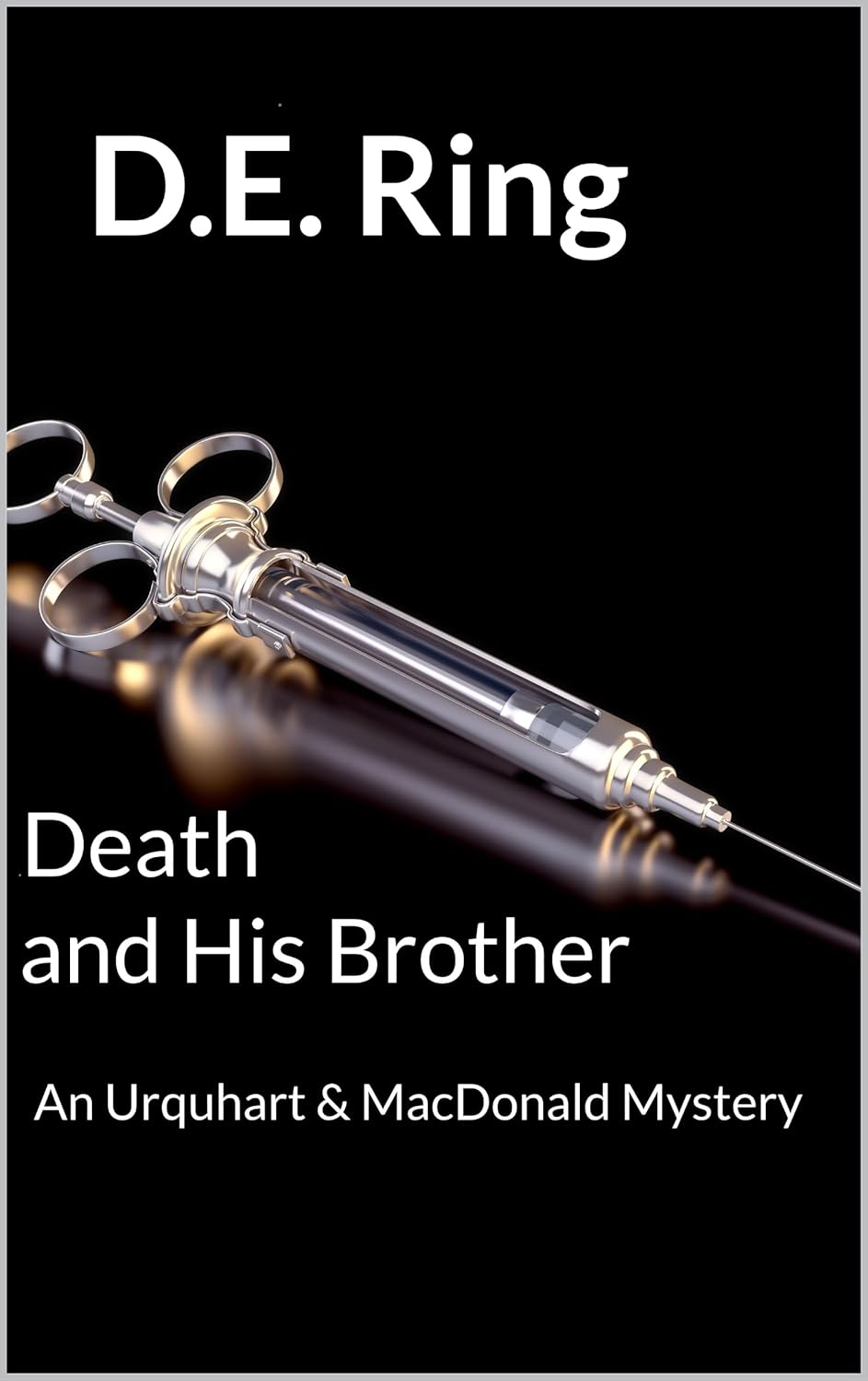

Death and His Brother opens with a striking mix of glamour, grit, and unease. A group of musicians, headed to Cape Breton for a new hotel opening, meet fellow travelers on a sleek new train. The stage is set with vivid detail, from the bustling station in Truro to the eccentricities of Connie Del Barba, the formidable hotelier behind The Gramercy’s revival. The plot quickly tightens when the train barrels out of control, its crew incapacitated, and a runaway crisis collides with the lives of the passengers. Parallel storylines weave between Musetta Burrell, a young singer returning home, and Inspector Jimmy Urquhart and Sandy, his sharp-witted reporter wife, who are drawn into the chaos. The novel fuses historical setting, mystery, and human drama into a fast-moving and layered tale.
I really enjoyed how alive the writing feels. The dialogue is quick, sharp, and often funny. The banter between musicians felt natural, like eavesdropping on old friends, while Connie Del Barba’s wit nearly jumps off the page. At the same time, the looming dread of the runaway train gave me goosebumps. Author D.E. Ring has a knack for balancing humor and terror in the same breath, and I found myself alternately grinning and gripping the edges of the book. I’ll admit, a few stretches of description slowed me down, but even then, the sense of place and period kept me invested. The atmosphere, postwar Nova Scotia buzzing with ambition, music, and social change, stayed with me.
I also felt a deep affection for the way the book handles community and identity. The portrayal of Black musicians navigating a predominantly white world, and Connie’s insistence on giving them dignity and top billing, resonated with me on an emotional level. The book doesn’t whitewash prejudice, yet it shows resilience and solidarity. Musetta’s mix of ambition and insecurity felt painfully real, and Jimmy and Sandy’s domestic moments gave the story a grounding warmth. At times, I felt overwhelmed by the sheer number of characters and moving parts, but once I relaxed into the rhythm, it became part of the book’s charm, like stepping into a crowded room where everyone has a story.
Death and His Brother is a ride worth taking. It’s a mystery, yes, but also a lively portrait of people chasing music, purpose, and survival. I’d recommend it to readers who love classic detective fiction with a heartbeat, to those who enjoy historical settings rich with detail, and to anyone who wants a story that makes you laugh even while it makes your pulse race. It’s a book for late nights when you don’t mind losing sleep, because the train is moving and you don’t want to get off.
Pages: 242 | ASIN : B0FDX58QMG




 LITERARY TITAN