Blog Archives
Moral Imperatives
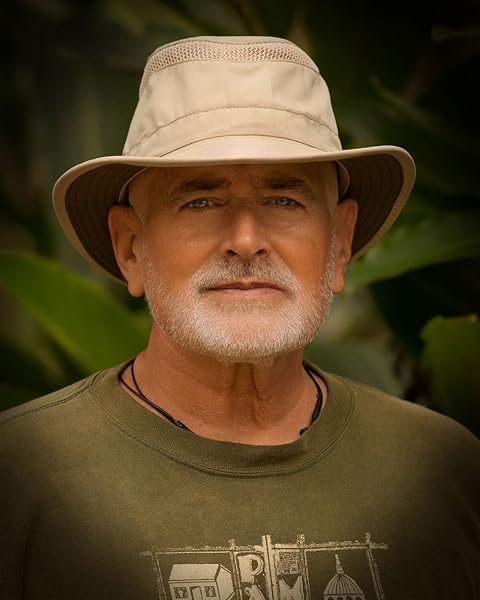
I, Robot Soldier follows a war-damaged robot soldier who wakes in the ruins of a world shattered by conflict and encounters a traumatized young girl, becoming her protector and companion. I find the world you created in this novel brimming with possibilities. Where did the inspiration for the setting come from, and how did it change as you were writing?
This novel was based on a short story I wrote many decades ago. The premise of a robot soldier awakening to the aftermath of war never left me. When I rewrote the story as a submission to my writing platform—Medium—it received such positive reader responses and encouragement to turn it into a novel, I decided to do just that. Other than that introductory premise, which became the novel’s prologue, the book was not pre-plotted but evolved as it unfolded.
What were some of the emotional and moral guidelines you followed when developing your characters?
The only “guidelines,” emotional or moral, for the characters were that they be credible and consistent. Specifically for the robot narrator, One Shot, the open question was whether he experienced feelings and had moral imperatives beyond those programmed into him. It was never my intention to answer that question definitively.
Where does the story go in the next book, and where do you see it going in the future?
The story is a standalone novel. The Robot Series is not a set of sequels, but rather a series of separate novels told from the viewpoints of unique robots. The second book (also reviewed by Literary Titan) is about a robot alien who comes to prevent humanity from a second devolution. The third book is about a female robot of the future.
Author Links: GoodReads | Facebook | X (Twitter) | Website | Amazon
In a world shattered by war, a lone robot soldier awakens with one mission: to protect the last surviving human – a little girl named Amy.
Together, they form an unbreakable bond in a world where hope is scarce.
But danger lurks in the form of robotic mutations known as wolfhounds.
One Shot’s prime directive is clear: protect Amy at all costs.
On a perilous journey through a devastated world, the bond between a girl and a robot might be the key to humanity’s future. If they can survive.
What Might Be Possible

Dark Place centers around three students who stumble on an unsettling truth that society is being manipulated, and those labelled as “dispossessed” are being erased from existence. Where did the idea for this novelette come from?
I wanted to develop a near-future story in which a worldwide authority invokes extreme emergency powers to control a burgeoning population, resulting in the loss of freedom and rights.
The idea of a hidden penal colony came to mind, and a social scoring system would be the mechanism to segregate and banish the dispossessed.
My writing of the story started as a typical dystopian trope, but as it grew, I didn’t want it to be stark black and white: ‘good’ idealistic rebels versus ‘evil’ authority. So it becomes more nuanced when the three protagonists are stranded in the Dark Place and learn that it has a greater purpose with profound consequences. The protagonists must navigate not only external dangers but also their own internal struggles, confronting differences between themselves and moral dilemmas.
Dark Place has been described as subverting dystopian tropes and I hope readers find that rewarding.
What are some things that you find interesting about the human condition that you think make for great fiction?
There is a degree of anxiety in the world today about the future. Perhaps every generation in the past has had similar misgivings.
My intention is to write about what might be possible a few steps down the road. I don’t want to write far-future settings with fantastical technologies far removed from what we have now. Grounding the story in a familiar world, echoing some of today’s challenges, has more resonance.
The science inserted in the fiction, I felt, was well-balanced. How did you manage to keep it grounded while still providing the fantastic edge science fiction stories usually provide?
A lifelong interest in the societal implications of technology began in the 1980s when I taught the new technologies of microelectronics and microcomputers in colleges and universities. This early professional life directly influenced my creative pursuits, leading to my first story Larrs’ Ghost (published in a computing magazine) which explored a “computer-generated world” long before virtual reality was a common term. More recently Close To You is a cautionary tale about the imminent dominance of big corporations developing ever more powerful artificial intelligence and virtual reality.
Dark Place is set in a time just down the road from now, so the technology is a plausible extension of today: drones are becoming more advanced; flexible microelectronic circuits (I call them membranes) already exist in rudimentary form; AI is advancing at speed.
Can we look forward to more work from you soon? What are you currently working on?
I feel there’s a lot more to develop with the premise of Dark Place. Although the ending finished with a profound reveal, I deliberately left some aspects of the story open-ended that mirrors the uncertain future facing the characters and the broader society. The lack of a neat, conclusive resolution hopefully encourages readers to reflect on the story’s themes beyond the final page.
So now I’m working on parts two and three. Part two is how the people in the camps progress in the knowledge that the outside world is in total collapse and how they rise to the challenges they face. Part three is how they defend themselves from an external existential threat. How much will they fall back on technology to protect their new world? The three protagonists will have increasingly conflicting ideas on how they see their future world.
Author Links: Facebook | Website
In a near-future world ravaged by resource depletion, society is controlled by the Authority, which enforces a strict social credit system. Failure to maintain a high enough score means banishment to the mysterious “Dark Place.”
When three inquisitive students, Ros, Femke, and Domhnal, discover that parts of a hidden Earth have been concealed from the privileged population of the “Light Place,” they are determined to expose the Authority’s brutal culling system. To do so, they must intentionally lower their scores and enter the Dark Place, only to discover it holds secrets far more profound than they ever imagined.
Dark Place is a gripping novelette that transcends typical dystopian narratives. Praised for its compelling dialogue and nuanced characters, a testament to author Christopher Kell’s experience as an award-winning playwright, the story is a masterful exploration of moral ambiguity, technology’s ethical implications, and the enduring resilience of the human spirit. It is a thought-provoking journey that invites readers to reflect on the nature of freedom, the quest for truth, and what it truly means to survive. This powerful and multi-layered examination of contemporary issues through a dystopian lens is a key element of the novelette’s intellectual value and demonstrates the author’s ability to imbue a short work with significant philosophical weight.
Dark Place: A dystopian novelette


Dark Place tells the story of a near-future world where survival is tied to a Citizen Score. Anyone who slips below the threshold is “dispossessed” and sent to a bleak exile known as the Dark Place. We follow Ros, Domhnal, and Femke, three students who stumble onto a terrible truth: society is being manipulated, and the dispossessed are hidden away in camps designed to erase their existence. They enter this world themselves, struggling with survival, trust, and the weight of their discovery. It is a tale of control, rebellion, and the raw question of whether knowledge can really bring change.
The writing is tense and gripping from the very first chapter. The author doesn’t waste time painting a rosy picture. Instead, we are pulled straight into the fear of surveillance, the quiet scratching of chalk on a board, and the dread of the Authority’s power. The pacing is sharp and restless. Sometimes I wished for more quiet moments to breathe, yet the urgency also matched the desperation of the world. I liked how the story didn’t just rely on technology to shock me. It leaned on doubt, on whispered conversations, on the guilt and courage of young people who want more than lies.
The whole system of citizen scores felt uncomfortably believable. It stirred up anger, but also sadness, because the dispossessed aren’t faceless. They are old people, sick people, stubborn thinkers. The book made me wonder how easily we might trade fairness for comfort if pushed. I admired the way the characters held on to friendship as their anchor, even while arguing and stumbling. Their flaws made them feel real, and that rawness carried the story more than any twist did.
I’d recommend Dark Place to anyone who enjoys dystopian fiction that pushes beyond gadgets and sci-fi trappings into questions of survival and morality. It isn’t just about rebels and villains. It’s about choices, fear, and the stubborn hope that truth matters. If you like dystopian science fiction that leaves you unsettled but also a little fired up, this one will be worth your time.
Pages: 78 | ASIN : B0DYK6YC2B

The World Persists

Ghost of Nostalgia follows a woman living in an impoverished village who is taught to suppress all emotions or risk death at the hands of mysterious, ethereal beings drawn to human emotions. What was the inspiration for the setup of your story?
As cliché as it sounds, I had a dream. In this dream, there was a magnificent city floating in the sky surrounded by a spherical energy barrier. The land around the city was a complete wasteland, and underneath the city was a pile of battered cylindrical tubes. Suddenly, a hatch along the bottom of the city opened, and a silver tube dropped and landed on the pile. Something happened next, but for the sake of spoilers, I’ll have to keep the rest to myself.
The dream stayed with me for a long time, until I finally decided to take it to the page. The feeling of it was so bleak. The isolation is absolute. I realized the reason I remembered the dream so perfectly was because of how it made me feel. I sought to capture those emotions by making emotions the center of my world. I wanted them to be something that could set you free or lead you to death. But as I find with all my writing, it doesn’t come out quite the same as the inspiration. The dream was definitely more hardcore science fiction, but as I’m quite a romantic at heart, the result ended up softer with a heavy dose of romance. Even with those changes, I sought to have Gavril’s world be one that stirred the heart in many ways.
I find the world you created in this novel brimming with possibilities. Where did the inspiration for the setting come from, and how did it change as you were writing?
I’m glad you think so! Steampunk played a heavy role in inspiring the setting, but as much as I love it, I wanted to branch out into something that had a similar feeling but with its own flavor. This is one reason I decided to go with an electric-based power system rather than a steam-based one. As for the cultural inspiration, Victorian England was out, so I did a bit of research and landed on pre-revolutionary France. It had everything I was looking for: elaborate fashion, notable architecture, and a stark class divide. Gavril’s home, Nostalgie, is a village literally made of scraps. They have nothing but hope. I wanted to show the progression of “moving up” as Gavril travels to different towns, and how, instead of sympathy, the rich feel nothing but contempt for the “lesser.” Since each town is isolated in its own barrier, they feel like different worlds of their own. There is no camaraderie, just hope for the government’s favor. As Gavril learns along her travels, even the most beautiful place can be a cover for ugly behavior.
What were some themes that were important for you to explore in this book?
One of the biggest themes of Ghost of Nostalgia is control. Controlling emotions, controlling citizens, and controlling towns. All of these are accomplished in different ways and play different roles. As the story progresses, it becomes less clear who actually benefits from this behavior, and despite the suffering of some citizens, the world persists as is. Part of this is the class divide, and yet, no one rises to challenge the authority of the land.
Other themes are more personal to Gavril. She’s seen as a burden, and then the town’s fate rests on her shoulders. Self-worth, sacrifice, and being true to yourself are challenges she faces, especially in this patriarchal world, which sees her as only worth what she can birth. Her view of the world is full of despair, but sometimes hope can be found in the unlikeliest of places. Finding one’s truth is central to the story.
What is the next book that you are working on, and when will it be available?
The sequel! The sequel, which is tentatively called Sphere of Ardent, is currently in the editing process at Indigo River Publishing. We do not have a release date yet, but I’m hopeful I’ll be able to make an official announcement by the first half of next year. I’m very excited about it. The world-building really takes off, and the themes blow up in such unexpected ways.
Since I’m a glutton, I’ve already started writing the third book, which will finish out the intended trilogy.
Author Links: GoodReads | X (Twitter) | Facebook | Website | Amazon
Gavril follows the rules. Don’t dream. Don’t imagine a better future. Don’t cross the barrier, and whatever you do, don’t open your heart to emotions-especially the most powerful one: love.
Breaking the rules is deadly. Phases surround Gavril’s rural, impoverished village of Nostalgie. These mysterious ethereal beings, attracted to human emotion, suck passion and soul from anyone they touch-if the victim survives the encounter. Despite the danger, demanding questions linger in Gavril’s heart. What might life be like beyond the electrical barrier keeping the Phases at bay? What happened to her father, a legendary Résonateur gifted with the ability to combat Phases, who vanished several years ago? What does freedom feel like?
When the Solenoid powering the village’s barrier begins to die, Nostalgie’s mayor offers Gavril’s hand in marriage to the son of a nobleman in the distant village of Envie-a woman of a Résonateur bloodline to raise the family’s prominence in exchange for a new Solenoid. Gavril has no choice but to comply. If she refuses, the barrier will fall.
Gavril will do anything to save her mother and fellow villagers-even if it means breaking a few rules.
Led by a heart that suppressed curiosity and compassion for far too long, Gavril befriends a Phase named Morrow. When her actions are discovered, she is deemed a traitor by her future in-laws and sent to the Capital, Éthéré Coeur, for judgement. Commandant Serein, a Résonateur like her father, escorts her to her destiny.
In the whirlwind of French-influenced, retro-futuristic adventure that follows, Gavril’s spirit is freed. She meets wonders of human achievement-from motorized automatrams and flying soulevers to massive electronic libraries holding the world’s secrets.She encounters the rich, vibrant, and sometimes horrifying world beyond Nostalgie . . . and she falls in love.
Once you break the rules, where do you draw the line?
Ghost of Nostalgia will resonate with readers drawn to rich worldbuilding, emotional rebellion, and character-driven dystopian fantasy. For fans of lyrical prose, slow-burn tension, and stories that challenge what it means to feel—this journey lingers long after the final page.
The Presence of Magic

The Heart Scarab examines the fates of warriors, mystics, and serpents who are navigating a landscape that has been altered by mining, politics, and tribal magic. What was the inspiration for the setup of your story?
THE HEART SCARAB is Book 2 of the second series, so there are many strands of plotlines. The writer assumes that a reader who made it this far into the story is invested in the characters and ready to see them triumph.
Mostly, my stories are about the women, but this setup offers two men to carry the plot. Rufus el Arrivi has been present in all the previous books. Now, as a grown man with children, he decides to run for the office of khalif in open elections in a duchy where refugees called Rundi are allowed citizenship.
Meanwhile, Stuben works with Rufus as police in Urbyd and witnesses some difficult moments for the refugees. He breaks with Rufus and goes on an adventure with Obye, who is laboring to recover some Rundi who are abused at a stone quarry.
My inspiration comes from a love of the characters and my own questions about how their lives shape – sometimes as much of a surprise to me as to you.
Were there any characters that you especially enjoyed writing for?
Kore is 14 now and has inherited the treasure of Rularim. She attends a wedding in Utica, traveling with Rufus and her half-brother Karisma. Always willful, she gets into plenty of trouble.
Bybiis, the beastmaster, has worked through some of her problems with finding a place among the tribes, following her own destiny for working with sea serpents. She has met Aresur, who has some skills with magic and takes the banner for countering Ulaya, who wants Bybiis dead. I had fun with Aresur and her sideways attitudes about how to handle a difficult boss. She manages to
undercut Ulaya at every turn.
How did you balance magic and its use throughout the story to keep it believable?
Ah, magic…Hedge magic belongs to Aresur – charms and hexes – and Bybiis has many tattooed skin wards. The serpent pouches are based on a real occurrence in our world where sharks make pouches out of seaweed fronds as an incubator for living newborns. Bybiis has harvested a clutch of serpent pouches made the same way. When a holder stares into the hole drilled through the brain of the dead serpent fetus, she may connect with the holder of a similar pouch. I like it! Mostly, though, I wanted the presence of magic in their everyday lives, and several characters don’t believe in its power over them.
Can you give us a peek into the next book in this series? Where will it take readers?
THE IRON SNAKE is about resistance to a larger country tangent to the duchies and sending assassins to take or kill the children in order to weaken leaders. We follow Rufus again and Stuben, who grows into his leadership roles. Kore becomes a young woman – vulnerable to abduction, in fact – who becomes an opponent to Ulaya (and more) and her scheming ways. I keep setting obstacles in the paths of primary characters and fashioning a plot where they must work together to get ahead.
Author Links: GoodReads | X (Twitter) | Website | Amazon
Meanwhile, Stuben el Cylahi has taken a position as police in the duchy capital of Urbyd where he butts heads with his boss Rufus el Arrivi. Stuben realizes that he also must strike out on his own and joins a group of Rundi who are on mission to recover some quarry slaves. His witness of coming events makes him wish that he had remained nearby Rufus. Can Stuben regain his tribal status?
The Heart Scarab: A Dystopian Science Fiction Novel


The Heart Scarab is a sprawling and layered fantasy tale set in the richly imagined world of the Duchy Wars. The story weaves together the fates of warriors, mystics, and serpents in a landscape scarred by mining, politics, and old tribal magic. Atrium introduces us to Bybiis, Raykiim, Ulaya, and a cast of many others who grapple with serpents both literal and symbolic. At the center are the mysterious serpent pouches, objects of power and danger that drive much of the conflict. The novel is both an adventure and a meditation on power, sacrifice, and what it means to serve something larger than yourself.
The prose is often strange and textured, with voices that shift from tribal chants to raw dialogue. At first, it made me stumble, but then I leaned into it and realized that Atrium wanted me to feel disoriented, just as her characters are when they confront forces beyond their control. I admired the guts it takes to write like that. Some sections flowed like a river, pulling me along without effort. Others were jagged, forcing me to slow down, reread, and sit with the unease. I liked that tension.
I kept coming back to the characters. Bybiis is wounded and stubborn, scarred inside and out, but she burns with an energy that made me root for her even when she drove me crazy. Raykiim had this mix of charm and darkness that made me wonder how much of him was his own and how much came from those serpent pouches he guarded. And Ulaya, chasing her twisted experiments, was chilling in her certainty. What hooked me most was the sense that everyone here carried scars, literal or otherwise, and the story kept asking whether scars make us stronger or just remind us of what we’ve lost. The emotional weight of that question stayed with me.
The Heart Scarab isn’t an easy read, and I don’t think it’s supposed to be. It’s for readers who enjoy being challenged, who like complex worlds with no hand-holding, and who don’t mind wandering through passages that feel more like songs or riddles than straightforward narrative. If you want to be immersed in a world that feels alive, harsh, and unpredictable, with writing that pushes you out of your comfort zone, then The Heart Scarab is worth your time.
Pages: 539 | ASIN : B0FLF6ZHN1
Trace of Arcane
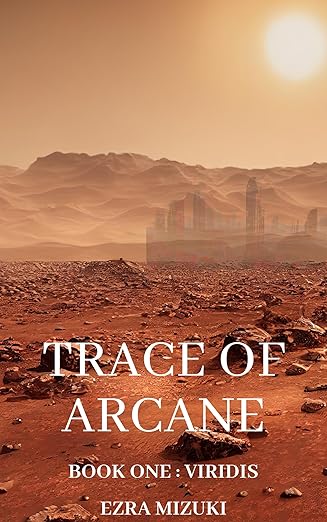
Trace of Arcane, by Ezra Mizuki, is a coming-of-age dystopian novel that follows Eden, a spirited and sharp-tongued teenage girl navigating a fractured society where spirituality, tradition, and power intersect in disturbing ways. Set in the colorful yet controlled city of Viridis, the story explores Eden’s struggle for autonomy, the pressures of an impending ceremonial passage called the Ruki, and the unsettling influence of a foreign missionary named Thales. Through poetic prose, social commentary, and unsettling tension, the book weaves a tale of rebellion, identity, and the often invisible violence that shapes young women’s lives.
What struck me first was how beautifully the book is written. Mizuki’s language is lyrical and haunting. The worldbuilding is rich, and the sensory details, like the spices in the market, the moonlight on old clay walls, made the setting feel close and alive. Eden’s voice is electric. She’s messy, sarcastic, defiant, and vulnerable all at once, and her internal monologue was sharp enough to make me laugh out loud one moment and feel sick to my stomach the next. But what really pulled me in was the unflinching way Mizuki handles trauma, not as a spectacle, but as something that hides in plain sight, in the spaces between duty and silence. The dynamic between Eden and Thales was especially chilling, and watching how Eden rationalized her pain left me uneasy in the best kind of way.
At times, I found myself frustrated, more with Eden than the book itself. Her contradictions felt so real, so raw, that it became hard to root for her without also wanting to shake her by the shoulders. But that discomfort is part of what made the book so powerful. It doesn’t try to teach a lesson. It invites you to sit with all the complications: a mother trying to protect her daughter from a life she herself was forced into, a society that wraps obedience in tradition, and a girl trying to claim herself in a place where every choice comes with a cost. Some of the dialogue felt a bit uneven at times, and a few characters, like Zig, came across as slightly exaggerated. Still, those moments were small and didn’t take away from a story that kept me engaged.
Trace of Arcane deals with spiritual abuse, coercion, classism, and betrayal in ways that feel too familiar. But if you’re someone who likes character-driven fiction that doesn’t sugarcoat the truth, something dark, poetic, and intimate, then this book will speak to you. I’d recommend it for fans of The Handmaid’s Tale, Daughter of Smoke and Bone, or The Power. If you’re a teen or adult who’s ever felt caught between two worlds, between tradition and choice, or if you’ve ever wanted to burn the whole system down just to breathe for a second, this is a must-read.
Pages: 425 | ASIN : B0F7SLJ9QZ
The Family Story

Terra Nova follows a father and daughter surviving the unknown as they navigate life across planets and face impossible decisions when he becomes gravely ill. Where did the idea for this book come from?
I wanted to explore the emotions and trials inherent with someone you love facing serious illness. I also wanted to allow Sev to grow into herself as a young woman, her father’s illness being a catalyst for making some tough decisions to keep her family together. I also wanted to showcase everyone’s role in the family story…everyone’s importance. Even Phoenix, despite being ill, undertakes significant emotional work to maintain the family unit. I was a caretaker for my grandmother during her illness, and a lot of Sev’s plight stems from my experiences.
What is the most challenging part of writing a series?
I’ve found that keeping the details straight over the series, as well as crafting the larger story outside of each installment, where everything is cohesive and engaging, is the most challenging aspect of writing a series. It’s also rewarding, though. I enjoy planning these adventures as much as I enjoy writing them.
What was your inspiration for the characters and their relationship?
The Terra series is an exploration of the purest form of love in all its designs…parental, familial, and romantic. I also wanted to explore the strength and flaws in people and their resilience through adversity.
Can we look forward to seeing Book 3 soon? Where will it take readers?
Yes! Terra Lux, the third installment in the Terra series, will come out in the Spring of 2026. You can expect new worlds, new adventures, as well as a few twists along the way.
Author Links: GoodReads | X (Twitter) | Facebook | Website | Amazon
Three years after the events of Terra Firma, Phoenix, Sev, and Pearla are thrust into a new battle—
one that will test them in ways they never imagined.
But time is running out.
With enemies closing in and impossible choices ahead, the family must once again fight for their
future—this time, against a fate far worse than those on Terra Firma.
Will they find their way home, or will they be lost to the stars forever?
For fans of The Divergent Series and The Hunger Games… when the future crumbles, it’s who you hold on to that matters most.
Are you ready to uncover buried secrets, face impossible choices, and defy a broken galaxy? Get your copy of Terra Nova today and be part of a journey where loyalty is tested and destiny rewritten.



 LITERARY TITAN