Join T-Rex and Tuck on a journey through the cosmos. While Tuck’s heart is captivated by the twinkling stars, T-Rex’s curiosity propels them toward a thrilling voyage into the great expanse of outer space. In the delightful tale of T-Rex and Tuck Explore Outer Space, our dynamic duo embarks on an extraordinary adventure, venturing to Mars, the moon, and the wondrous planets of our solar system, all before drifting off into a dreamy slumber.
Author Katie Marie has crafted a truly enchanting and enlightening children’s picture book destined to capture the hearts and minds of young readers. This literary gem serves as the perfect tool to introduce budding astronomers to the marvels of our solar system. Its vibrant illustrations transport readers into the amazing world of T-Rex and Tuck, igniting their imaginations for a mesmerizing expedition through the cosmos.
T-Rex, with his endearing charm, inspires Tuck to embark on a quest for knowledge about our celestial neighbors. Remarkably, within the pages of this short yet compelling read, Katie Marie weaves a tapestry of fascinating facts about outer space, making learning an exhilarating adventure. This adorable children’s story is destined to set young readers’ imaginations soaring into uncharted realms, leaving them with a lasting sense of wonder and awe.
I highly recommend T-Rex and Tuck Explore Outer Space, by Katie Marie, as it contains a delightful blend of entertainment and education, featuring charming characters and stunning visuals. This is the perfect children’s story for parents and educators who wish to instill a passion for learning about space and inspire young minds to reach for the stars.
Step into the classroom of Nurse Florence, where she fearlessly tackles the daunting topic of illegal drug use in Michael Dow’s riveting book, Nurse Florence: Why Should We Avoid Illegal Drugs? Addressing this weighty issue with young students can be a formidable task, but Nurse Florence is the beacon of guidance that makes it all possible. With an unwavering hand, she leads her class through an enlightening journey, explaining the dire consequences of these harmful substances.
In a world filled with vivid, informative slides and a treasure trove of knowledge, Nurse Florence transforms a potentially unsettling subject into an empowering life lesson. She encourages her students to seek out safe, healthy alternatives for dealing with anxiety and life’s challenges, rather than resorting to the dark path of illegal drugs. Lindsay Roberts’ breathtaking artwork comes to life, offering a striking visual representation of these substances to be avoided at all costs. The book’s illustrations guide students through recognizing and identifying drugs, further safeguarding them from the long-term devastation they can bring.
While approaching the topic of drugs is never a simple endeavor, the author deserves commendation for daring to educate young minds about the perils of illegal drugs. It’s essential for parents and teachers to gauge their readiness for this information, but with Nurse Florence as their compassionate guide, classrooms and families can embark on a safe journey of enlightenment. The author touches upon safe alternative coping methods like hiking and coloring to help young readers navigate life’s challenges.
Nurse Florence emerges as the hero of the day, armed with informative illustrations, an engaging narrative, and an unwavering commitment to educational storytelling excellence. Nurse Florence: Why Should We Avoid Illegal Drugs? serves as an invaluable resource, ensuring that children and their families are well-informed about the dangers lurking behind illegal substances. Dive into this educational adventure, and let Nurse Florence illuminate the path toward a safer, drug-free future!
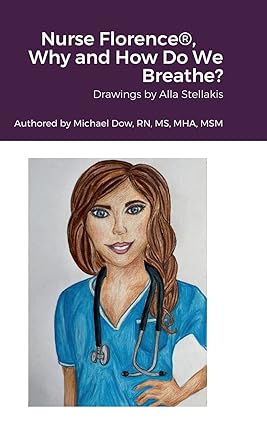
As children learn about breathing, they can better understand health concepts and the importance of taking care of their bodies. This, in turn, helps create a healthy environment where the need for physical activity is understood. Michael Dow provides an engaging approach to this information in Nurse Florence®, Why and How Do We Breathe? In the story, three girls, Jean, Condi, and Sonia, head to the cafeteria for lunch after their physical exercise class and final stretches. There, they meet Nurse Florence, greet her, and inquire about how breathing works. She explains concepts like the significance of oxygen for cell energy production and provides insights about the respiratory system while displaying relevant images and diagrams.
I was impressed by the level of information presented. Michael Dow goes beyond superficial discussions of breathing and delves into processes, describing how different parts of the body function. For instance, he explains the role of red blood cells and lungs. He also considers other factors, such as illustrating the impact of atmospheric pressure and providing examples. The images are clear and realistic, and Nurse Florence uses them to show the girls how the system functions in reality while explaining the purpose of each part. The characters maintain a friendly and collaborative attitude throughout the story, creating an ideal learning environment and setting a positive example for children.
I think that some terms may appear advanced for children. However, teaching the correct terminology enhances their comprehension and communication skills. Therefore, using precise language is both valuable and necessary in this context. Nurse Florence®, Why and How Do We Breathe? is an excellent resource for children to begin learning about their bodies and functions, offering an engaging introduction to biology. The information is well-explained, easy to understand, and ensures young readers enjoy learning.
Skills for Living in a Complex Society: Financial Basics by Michael Dow offers an exploration into the realm of personal finances, emphasizing the significance of mastering them. This book delineates four core principles vital for gaining a firm grip on one’s finances, tailored to resonate universally across varied cultures and societies.
Firstly, Dow underlines the imperative of comprehending daily expenses, emphasizing how quintessential it is to grasp the cost of daily living for individuals or families. By illustrating this, he nudges the readers to reflect on their unique consumption patterns, which might evolve due to lifestyle transitions or family expansions.
Building upon this, Dow ventures into the realm of future financial strategizing, advocating for a vision-oriented approach to foresee and plan for prospective financial exigencies. This is complemented by his third principle, a captivating insight into perceiving both money and time as invaluable assets. He elucidates how money, when judiciously managed, can augment over time, and how every moment bears intrinsic value. Consequently, he champions astute financial decisions to harness the potential of these resources.
Lastly, Dow presents a compelling nexus between skills and earnings, positing that one’s remuneration is often a testament to their competencies. He beckons the readers to introspect their skillset and seize avenues for its enhancement, paving the way for improved career prospects and financial growth.
With a writing style that’s both lucid and engaging, Dow ensures a seamless experience for readers. His diction is crisp, and devoid of convoluted jargon, making this exploration into financial tenets accessible to a broad readership. He structures his argument logically, commencing with the introduction of the principles and delving into each with depth. This stepwise progression ensures readers can gradually grasp and internalize the essence of his discourse. To cement understanding, Dow enriches his narrative with pragmatic examples, offering a tangible context for readers.
While his hands-on technique of evaluating daily expenses might demand a noteworthy initial time commitment, it promises tangible outcomes for those seeking pragmatic financial management solutions. However, the book’s encouragement to juxtapose one’s expenses with others may occasionally lead to skewed perceptions, as individual contexts can vary significantly.
Skills for Living in a Complex Society: Financial Basics emerges as an indispensable guide in today’s era, where the digital landscape is replete with both invaluable insights and misleading data. Dow’s educational book serves as a beacon, illuminating the path to financial mastery and future planning. Highly recommended for anyone aspiring to navigate the intricate avenues of personal finance with confidence and clarity.
In Nurse Florence®, What is Heat Exhaustion?, by Michael Dow, Nurse Florence finds herself in the company of three curious schoolgirls, Jean, Condi, and Sonia, who are eager to learn about heat exhaustion. The book provides an enlightening exploration of this condition, shedding light on how climate change contributes to its prevalence. Nurse Florence effectively conveys the signs, symptoms, and potential causes of heat exhaustion to her young audience, using images and clear instructions to illustrate her points. She also imparts valuable knowledge about which groups are most vulnerable to this condition.
One of the standout aspects of this book is how comprehensively the author addresses the topic. It not only educates children about the dangers of heat exhaustion but also raises awareness about the tragic incidents involving babies and young children left unattended in vehicles. This book instills in young readers a sense of responsibility, encouraging them to watch out for themselves and others. What makes this book truly remarkable is its overarching purpose—to educate and inspire young minds while kindling their interest in the medical profession. It is heartening to see a book with such a noble objective, equipping children with essential knowledge and nurturing their curiosity about the world of healthcare. I firmly believe that books like Nurse Florence®, What is Heat Exhaustion? can be highly beneficial for children. Developing an early interest in the human body not only lays the foundation for future advanced studies but also imparts valuable life skills, teaching youngsters how to take care of themselves and those around them. Moreover, it empowers them to address pressing health issues effectively.
Nurse Florence®, What is Heat Exhaustion is an informative and invaluable addition to children’s literature. It tackles an important subject with clarity and compassion, ensuring that children gain a basic, if not a robust, understanding of how to prevent health issues and respond when they arise. Every child should have access to such insightful and educational materials.
What Is the Shape of My Egg? invites children on an enchanting voyage with Silkie the chicken, unraveling the mysteries of geometry through farmyard adventures, empowering lessons, and endearing camaraderie. What was the inspiration for the setup of your story?
The inspiration was actually quite simple. For some time, I have wanted to write children’s stories, but the question was about what? With a little help, I narrowed down my ideas to 1) my love for animals, namely my pets (though many), and 2) what I have learned as an educational researcher, particularly in the areas of mathematical learning and spatial abilities. I will say that integrating the two was no easy task. To date, my publications have involved a completely different style of writing—academic writing. So this book, and the others to follow, was nothing short of a challenge!
The focus on geometric shapes is tied to a recent study with my University of California colleagues. In brief, we explored differences in geometric shape knowledge between a sample of U.S. and Japanese children. Though there are a number of learning points to share, the one implication from the study is that communication about the properties of shapes matters as far as learning outcomes (i.e., above and beyond visual recognition of shapes alone). In other words, though children from an early age can readily identify a circle, do they actually know or can they verbalize the properties of circles (e.g., curved, round, no straight sides, no edges, no points, no beginning or end)?
Can you share any insights into the development process of the interactive exercises in the book, and how they are designed to help children embrace their developing geometric understanding?
The goal is to apply what children have learned in the aftermath of reading the book, ideally with an adult to help promote accurate learning and opportunity to talk about shapes. The shape hunt is merely one approach.
From a developmental perspective, tapping into multiple modalities to learn facilitates learning. With the shape hunt, children should be encouraged to look for, listen (as an adult provides direction as needed), and touch (e.g., trace) various objects that are the shape of a sphere or an ovoid. In addition, “spatial talk” (i.e., use of words such as left, right, above, below, far, and near) should also be encouraged. Spatial talk relates to the way we think about numbers (e.g., smallest to largest) as well as our ability to visualize mathematical information (e.g., properties of 2D and 3D geometric shapes). Taken together, I consider early exploration of shapes and space as a foundation for more advanced geometric concepts that will be introduced in later years.
You included insightful facts about the Silkie chicken breed in the book; was this a personal interest of yours, or was it chosen to add another layer of engagement with the story?
A very personal interest! As shared in the book, Silkie the chicken is a real-life character. For those who are familiar with the breed, it is so true that these chickens are delightful little critters. They make for wonderful pets—both inside and outside the home! I added Silkie chicken facts for those who are not familiar with the breed. So yes, it can be considered another layer of engagement, an added educational component to the book.
What is the next book that you are working on and when will it be available?
What Is the Shape of My Ears? is the second title in the Shape Stories with Farm FriendsSeries. It will be available via pre-order November-December 2023. The main character is Pearl (a mini donkey), also a real-life character! In this storyline, Pearl teaches her sidekick Duke (a mini horse) about the properties of triangles. What Is the Shape of My House?, the third and final title, should be available spring 2024 along with a supplemental shape activity book for children roughly 3-5 years of age.
Purple Dragonfly 2023 Book Awards Honorable Mention in Two Categories: EDUCATION and STEM
Discover the world of geometry with Silkie and the Sisters in What Is the Shape of My Egg? – the first delightful installment in the Shape Stories with Farm Friends Series.
This beautifully illustrated and engaging tale introduces young readers to the world of circles and ovals while incorporating essential spatial language (e.g., left, right, up, down) to boost their spatial thinking skills. Designed for interactive read-aloud sessions, children will be encouraged to explore and trace similar shapes at home or in the classroom, reinforcing their understanding of these fundamental geometric concepts.
As the adventure unfolds, What Is the Shape of My Egg? seamlessly transitions to a deeper exploration of two and three-dimensional circular shapes, providing interactive activities for kids to apply their newfound knowledge. The book also includes fascinating facts about the endearing Silkie chicken breed, adding an extra layer of fun and curiosity to the reading experience.
Based on real-life farm animals residing in Western Montana, the vivid illustrations and lively text capture the unique personalities of Silkie and the Sisters in this entertaining and educational read – perfect for young minds eager to explore the world of shapes!
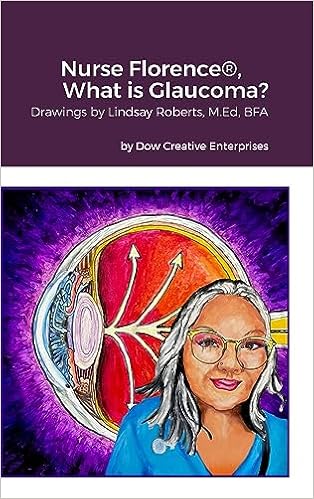
Nurse Florence®: What is Glaucoma? shines as a literary gem for young readers. Through its heartwarming narrative, students—Jean, Condi, and Sonia—engage in an enlightening conversation with the knowledgeable school nurse, Nurse Florence, as she unravels the details of glaucoma. This interaction unveils a wealth of insights, providing the children with a comprehensive grasp of this eye condition, including its various types and symptoms. With Nurse Florence’s skillful guidance, the narrative navigates the complexities of diagnosis, treatment, and even the potential for emergency surgery, providing a remarkably thorough exploration of the condition.
The book’s illustrations are a testament to dedicated craftsmanship. The medical depictions are meticulously detailed, playing a crucial role in enhancing comprehension and elevating the overall reading experience. Nurse Florence®: What is Glaucoma? achieves the dual feat of educating readers and stimulating curiosity, all while providing valuable medical insights that will captivate young readers. Books of this nature, exemplified by Nurse Florence®: What is Glaucoma?, help strengthen and build young minds. The exploration of the human body empowers them to embrace their health and well-being. While this engaging read is ideally suited for accomplished young readers, it can also serve as a beneficial tool for emerging ones, expanding their vocabulary and fostering linguistic growth.
Undoubtedly, Nurse Florence®: What is Glaucoma? stands out within its genre, inspiring young readers and building their knowledge base. Rooted in its purpose of education, enlightenment, and fostering curiosity, it stands poised on the edge of perfection, making it a truly exceptional addition to any reader’s collection.
How to Stand Up to Bullying explores the multifaceted nature of bullying, offering practical tools and empathetic insights to confront and redirect these behaviors for readers of all ages. Why was this an important book for you to write?
I wrote, How to Stand Up to Bullying, during a raw moment in my life in which I allowed everything to pour out without holding back, from experiences in my youth to what I’ve learned along the way as an adult. The project, at first, was my personal way of just getting out what I held inside as something therapeutic. When I went back and reread what I wrote, I felt the need to publish it as soon as possible as it was something bigger than me and everyone could benefit from reading.
What is a common misconception you feel people have about bullying?
A misconception is that bullying is a phase in youth believed they will eventually grow out of and parents tend to shrug it off since they may have gone through bullying themselves as children. Some children may require more assistance in standing up for themselves, but if they don’t have the support they won’t always be successful.
What is one piece of advice that someone else gave you about bullying that has stayed with you today?
My mom would tell me when I was young to walk away and that “sticks and stones may break my bones, but names can never hurt me.” The common phrase is not entirely true since name-calling does hurt emotionally and leaves deep scars.
What do you hope is one thing readers take away from your book?
I hope readers take the subject matter series in what leads to bullying in the first place in order for everyone to have a part in standing up to it.
Bullying. Something that is done every second, daily. Don’t need a statistic to be told otherwise. Many don’t even realize they are a constant victim of bullying, as it tends to get buried as an underlying emotion. Many don’t realize they are actually a bully themselves. There are several references for parents to go to in order to help their children stand up against it, but there’s not much for adults or resources depicting why a bully is a bully in the first place. That’s the first step. Before we all can stand up to bullying, we must first understand why a bully bullies to begin with.










 LITERARY TITAN