Blog Archives
The Fox and the Election Fraud
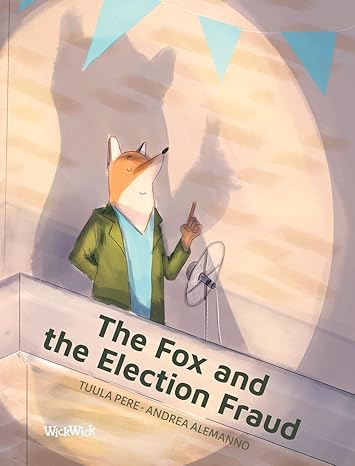

The Fox and the Election Fraud by Tuula Pere delivers a clever, engaging story that weaves humor and important lessons into a memorable tale. It follows Francis the Fox, a character who can’t seem to grasp the concept of honesty, despite Major William the Wolf’s best efforts. When an election campaign sparks his interest, Francis becomes determined to win at any cost. He pulls out all the stops, leveraging every connection, working tirelessly, and strategizing to sway the voters. Yet, as the reality of defeat looms over him, Francis resorts to a desperate, underhanded plan: tampering with the vote count. But the city’s robust judicial system has no tolerance for dishonesty, and Francis learns the hard way that cheating never pays.
Though it deals with themes that seem geared toward adults, The Fox and the Election Fraud keeps things light, witty, and refreshingly creative. The writing shines with clarity and vivid storytelling, drawing readers into Francis’ antics. It’s a story bursting with well-structured ideas and fast-paced action. Pere gives us a protagonist who, despite his flaws, remains oddly charming and relatable. Francis may be a trickster, but his humorous escapades serve as a vehicle for teaching critical life lessons about integrity, honesty, and the inevitable triumph of good over deceit. The various schemes he devises to bolster his campaign are as entertaining as they are instructive, making the plot thoroughly enjoyable. Tuula Pere impresses me with her ability to craft narratives that are both dynamic and meaningful. The book, though part of a series, stands strong on its own, offering just enough background to make Francis’ story accessible to any reader. Pere’s attention to detail is evident in every aspect, from the engaging text to the vibrant illustrations that bring the world to life. The format is designed to captivate young readers while keeping adults invested, making it an ideal pick for family reading sessions.
The Fox and the Election Fraud is a standout story that I highly recommend. It’s a perfect blend of humor, moral lessons, and entertaining characters. Children will learn about honesty and responsibility while laughing along with Francis’ misadventures, and adults will appreciate the book’s wit and charm.
Pages: 46 | ISBN : 9528201628

The Fox and the Election Fraud
The Fox and the Election Fraud by Tuula Pere, with illustrations by Andrea Alemanno, tells the story of Francis the Fox, a cunning and ambitious character who decides to run for mayor against William the Wolf. Francis is not exactly popular, nor is he honest, but that doesn’t stop him from hatching a scheme to manipulate the election. Throughout the book, he tries various underhanded tactics, including bribery and eventually tampering with the votes, but things don’t go according to his plans. In the end, justice prevails, and Francis, caught red-handed, faces the consequences of his actions.
I found the narrative to be an engaging and witty portrayal of political manipulation and greed. Francis’s character is amusingly over-the-top, and his audacity makes him both laughable and frustrating. The way he convinces himself that he’s the hero of his own story—despite clearly being a villain—felt so true to life, particularly when he dismisses the consequences of his past failures and tries to shift the blame onto others. The dialogue, especially Francis’s inner thoughts, added a lot of humor to the story, making me chuckle at how delusional he was, like when he complained that the city didn’t value his “remarkable skills.” The book’s pacing is snappy, and the plot kept things entertaining, and the escalating absurdity of Francis’s schemes really pulled me along. One of the standout parts of the book was the moral it carries about integrity, leadership, and the consequences of dishonesty. The climax, where Francis’s plan unravels in front of the entire city, was satisfying and drove home the point that shortcuts and deceit don’t lead to real success. The book manages to convey these lessons without feeling preachy, which I appreciated.
The Fox and the Election Fraud is an enjoyable, light read, perfect for kids but also entertaining for adults who enjoy clever allegories about power and ethics. It’s an especially great pick for young readers who are beginning to learn about fairness, honesty, and the importance of good leadership. The playful tone and vibrant illustrations make it even more appealing, and while it’s a fun read, it’s also a thought-provoking one. If you’re looking for a children’s book that blends humor, important life lessons, and a bit of political satire, this is definitely worth checking out.
Pages: 46 | ISBN : 9528201628
The Fox’s New Channel
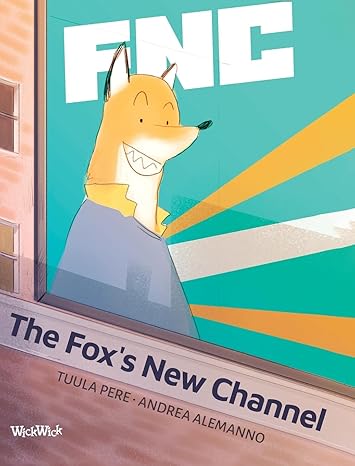
The Fox’s New Channel by Tuula Pere tells the story of Francis the Fox, a once-successful entrepreneur who, after experiencing personal and financial collapse, reinvents himself by launching a media empire. He thrives on tabloid-style journalism, creating scandal and spreading gossip, much to the dismay of his community. His path to success is filled with deception, as he manipulates stories and uses lies to climb back to prominence. The book paints a vivid picture of a fox whose relentless ambition leads him down a dark path, threatening to ruin the lives of those around him, including his old mentor, William the Wolf.
One thing that struck me about the writing is how quickly Pere immerses the reader in Francis’s world. From the start, Francis is painted as an arrogant yet oddly charming character. His fall from grace is almost pitiful, but it’s hard to feel fully sorry for him given his constant self-centeredness. The dialogue feels real, capturing the casual yet sharp exchanges between characters, like his conversations with his mother, which effortlessly reveal the tension between familial love and disappointment. What really impressed me was how the story unfolded like a satirical reflection of modern media culture. Francis embodies the worst of media moguls, using his platform not to inform but to manipulate. The section where he shamelessly plots with his assistants to fabricate stories, such as creating a fake scandal about Pauline the Bulldog, felt like a biting commentary on the ethics of today’s media landscape. It’s clear that Francis’s “success” comes at the cost of integrity, and this part of the story made me reflect on how easily public figures can shape narratives for personal gain.
The Fox’s New Channel is a smart and entertaining read, packed with moral lessons about truth, ambition, and the consequences of greed. I’d recommend it to readers who enjoy stories with a touch of satire and those interested in modern takes on how media influences society. While the book might be aimed at younger readers, its themes will resonate with adults too, making it a great read for parents and kids to discuss together.
Pages: 44 | ISBN : 9528200699
Honest Actions Always Win

The Fox’s Tower follows a cunning and sneaky fox who wants to build the tallest building in the city at any cost. What was the inspiration for your story?
The Fox’s Tower is the third book in my Fox Series, and the next three are already well underway. The whole series is inspired by people throughout society who promote their individual interests and power. The main character, Francis the Fox, is an archetype who sees the community as his playing field and is ready to use any means to reach for power, position, and wealth.
This third part of the Fox Series emphasizes the theme of competition. When the desire to beat everyone else and stand out from the crowd grows to extreme proportions, the result can even be a disaster. At worst, the dishonest pursuit of financial gains can lead to severe social phenomena, such as bribery and circumventing the rules—even at the expense of safety, as in my Fox story.
Construction can sometimes become a means of exercising power and showing off. We witness exaggerated constructions around us, where maximum attention value is often sought in addition to financial profits. Sometimes, massive structures—bridges, monuments, palaces—also proclaim the strength and importance of their builders. Even today, some want to leave behind their pyramids.
What were some educational aspects that were important for you to include in this children’s book?
Making children realize that selfish and inconsiderate behavior has consequences is essential. Although everything may seem to be going well initially, the victory may be short-lived. I want to emphasize that honest action always wins in the end. Although this does not instantly seem true in real life, justice will eventually prevail. The profit it gives can be more than money and power. The victory of justice can enhance humanity, cooperation, and a balanced, harmonious life.
The persistent planning and goal-oriented actions of Francis the Fox with his projects could be seen as an educational element in this book. We could admire his enterprise and consistency to a certain extent as long as we simultaneously realize the skewed morals involved. As I write about Francis, I often think how much good could be achieved if the fox’s enormous potential and enthusiasm were directed toward a decent course. With the right attitude, such a person could be helpful to others. But, sadly, Francis is just looking for his rewards.
Along with the adventure elements, I also want to highlight the importance of following the rules agreed upon in society. Here, building regulations serve as such an example. At least when it comes to a well-functioning and developed society, the established procedures also have reasonable justifications and aim to improve overall functionality and citizen’s safety. Unfortunately, we often hear news about how inadequate obeying and controlling building regulations has led to loss of life. For example, many drastic consequences of natural disasters could have been avoided with responsible foresight. Human lives are a high price for the builders’ neglect and greed and the authorities’ incompetence!
What were the morals you were trying to capture while creating your characters?
When I write a story, the characters belonging to it are also found somewhere in my subconscious. I feel like they’re in my mind, and I don’t have to create them. Persons, or at least some of them, represent some counterforce to others. That’s how human relationships are in real life, after all. A certain amount of confrontation and challenging each other is part of life. Even in a fairy tale, it is possible to present complex moral considerations through such compositions.
My characters usually have different sides, but especially in the Fox Series, the two main characters are rather black-and-white as personalities and influencers. Finding much good in Francis the Fox is difficult, as his actions are usually utterly self-centered.
On the other hand, the old and experienced mayor, William the Wolf, represents honesty and reliable management of societal issues. In addition to all the good features, he is incredibly patient. From book to book, time after time, he gives his young protégé Francis yet another chance to get his life back on track. But I can reveal to you that the fox’s dubious behavior in the future parts of the series exceeds all the acceptable limits. Mayor Wolf realizes that he can no longer control the young fox. All that remains is exposing his tricks, providing fair punishment, and minimizing the damage.
Several other characters with morally different action models exist between these two opposite extremes. Some are weak but kind. Others may be weak and succumb to temptations to gain fame and money or fulfill their dreams in the wake of a fox.
It is exciting to transfer the complex relationships and power games of real life into the world of a fairy tale. This way, it is possible for children to notice the injustices around them early on and learn to fight for good.
Will Francis the Fox have another chance at making one of his big dreams come true?
The Fox’s Tower is the third book in the series. Until now, each book describes a new attempt by a young fox rogue to get something that doesn’t belong to him. At least the means he uses are questionable time and time again. The fourth part of the series has already been illustrated, and the texts for the next two are ready, so I know what will happen to him very well.
I can assure you that Francis the Fox has enough dreams! They relate to the media world, leadership positions in society and elections, and financial interest in waste management and research. As you see, he has plenty of activities where he can dream, try, and fail again.
Even if the fox’s evil plans fail repeatedly, he doesn’t understand any wrongdoing in his actions. That is his fate, and he learns nothing from his previous mistakes this way. He imagines that he is aiming for something great and good, but in reality, it is quite different: he commits crimes for his benefit, and punishment follows his failure. This is pretty sad. — I hope that by reading about the life of a crooked fox, children will learn to set better goals for themselves in the future.
Author Links: Facebook | Website
How long will his money and building materials last? Could the tallest tower in the city collapse, along with Francis’s dreams?
Crookedness, Dishonesty, and Betrayal
The Fox’s Palace follows a fox that tricks his friends in order to get the land he wants to build his dream amusement park, he learns a hard lesson however when his tricks are discovered. What was the inspiration for your story?
Francis the Fox is the main character of one of my book series. Through his actions and adventures, I have revealed many forms of crookedness, dishonesty, and betrayal. My goal is to increase children’s understanding of society and help them see the motives of different actors. This is an essential skill as an adult!
I write social satire for children. I want to bring out the dark sides of human relationships, business life, and society that also occur in real life. But I want to do it lightly enough and use a lot of humor so it works for children and teaches an understandable lesson on the right and decent ways of doing things.
What is one thing that people point out after reading your book that surprises you?
One exciting feature regarding the Francis the Fox Series and people’s reactions is the readers’ opinions about the endings of the books. Let me explain.
Some readers are hoping for the worst possible ending for this “wretched hero.” They would like to avenge the fox’s evil deeds even more severely than I have done in the story. Some would like to make the evil hero entirely out of business and incapacitated for the rest of his life.
I have to explain to them that, unfortunately, I believe that the swindlers will continue to misbehave even in the future. Very few become completely clean and continue as perfectly decent citizens. My fox has such a mind that he does not stop pursuing his personal interests. He is very persistent and always continues to come up with new projects.
Another group of readers is those who enjoy the fox’s tricks and the fact that he always continues with new ideas in the next book. They see in the fox some human imperfections that can be hidden in all of us. We just value honesty more and control our selfish needs better.
I understand both of these opinions. I have an almost contradictory attitude towards this fox. First, I always let him try and go his own way, and then I make him fail in his actions, and some punishment follows. I don’t believe my villain, Francis, will ever become kind and honest, so there is still plenty to write about in the Fox Series.
Is there any moral or idea that you hope readers take away from the story?
“The Fox’s Palace” focuses on Francis’s dishonest actions and their consequences – as the entire Fox Series does. This time, the central conflict exists between the fox’s selfish goals and the townspeople’s common beach.
I want to draw attention to how cunning means the most power-hungry individuals are ready to use to achieve their goals. We must learn to recognize such characters in our immediate circle and at different levels of society. Otherwise, we cannot defend ourselves against dishonest activity and exploitation.
The story also has some side themes that I want to draw the reader’s attention to. I’ll pick a few here.
Building a false image of both events and himself is Francis’s specialty. He is good at recognizing the weaknesses of others and knows how to motivate his partners by feeding arguments, half-truths, and enticement accordingly. He does not hesitate to use even those closest to him – family or friends. It’s cruel how even his own mother is the target of his lies and manipulation.
Even though I feel significant irritation towards the actions of the fox I created, he also arouses pity in me. This poor thing has no one to be honest with. He has to be constantly careful that the web of lies and pretenses is not revealed.
I’m afraid Francis the Fox always tends to pursue things that will never make him happy. This is an essential message to my readers, too.
When thinking about some of your other books, Francis the Fox is drastically different than Colin the Crab in their personalities and approaches to life. Is it hard to get your mindset in the right place with so many diverse characters and personalities to write for, do you ever find characters from different series overlapping when trying to write?
What an interesting question! One of the attractions of writing children’s books is the possibility to vary different topics and approaches from one book and series to another. Also, the fact that some of the books are aimed at very young readers and some already contain more demanding subjects gives the author a lot of opportunities.
My way of writing is like diving into different realities in my fantasy.
I have different imaginary worlds ready for my different books. If I want, I can enter that world with my chosen characters at any given time. It’s all authentic to me. This also applies to the characters I created. They become real acquaintances for me, with their personalities and “existence.”
When my characters are “born,” their life cycle develops most naturally and almost self-directed forward. Some characters become so strong and close to me that they start demanding something and making suggestions as the story progresses.
They sometimes want to bring up more than I was going to say or take a more significant role, and I have to give in and trust their opinion. Each of my fairy tale characters has a unique personality and even a strong will. So, they don’t get confused in any way, at least not more than I would confuse people I know in real life.
Author Links: Facebook | Website
Finding Peace at Christmas
Christmas Switcheroo follows a family preparing for the holidays who get overwhelmed with preparations and cause a gift mix-up that could be disastrous. What was the inspiration for your story?
I have to admit right away that I am a Christmas person. So, it’s fun to write stories about the Christmas season. The inspiration for my ”Christmas Switcheroo” can naturally be found in the things related to Christmas in my home country. However, I left out many Finnish-related and religion-related issues and instead focused on the general rush associated with preparations for the festive season. Christmas provides a good background for how different people’s expectations and preparations for a big celebration differ.
People’s age is significant when we follow how they feel about the upcoming holiday season. In children’s minds, fun activities, happy excitement, and the “fairytale” elements of the holiday season are highlighted. The adults may be worried about schedules, financial issues, and various responsibilities. They think about who to buy gifts for, who to visit, who to invite… It is easy to conclude that for many adults, for example, Christmas time is not the same joyful thing as for carefree children.
What were some ideas that were important for you to share in this book?
In ”Christmas Switcheroo,” I also wanted to transform some typical roles into slightly new positions. I wrote about children who love peace and seek an authentic Christmas atmosphere. I tried to bring peaceful atmospheres and places where you can find genuine Christmas spirit into the story. It doesn’t happen in the hustle and bustle of a shopping center but can be found, for example, in a quiet library or a small cafe. Crafting paper snowflakes or drinking warm cocoa on a cold winter evening can give a much more incredible feeling than flashy neon advertisements and theme music blaring everywhere.
I also wanted to show that exhausted adults can even get help from children. Christmas comes for the whole family, even with less stress. Everything can be fun if the family’s Christmas preparations are done together and kept to a reasonable level. Of course, each family member may have particular wishes that must be considered and respected. One likes to bake, another puts up decorations and Christmas lights, and someone listens to music. There is a place for all of these when there is a good spirit of togetherness.
The most important message I wanted to convey is that families must also have a peaceful time together. The most valuable moment during the entire holiday season can be a quiet moment together, looking at Christmas stars and snow lanterns and singing a familiar Christmas carol together.
What is your favorite part of the Christmas season?
All parts of Christmas are dear to me and associated with many memories from different stages of my life. What is important is how the experiences of Christmas are made up of layers of all the years of my life.
My mind can take me back to situations from decades ago: To the Christmas atmosphere of the village church or visits and Christmas carol performances at a local nursing home for older people. They are dear memories to me, and I hope that as many children as possible today could experience the same.
The joy of having a good memory is that even the deceased relatives and all my departed loved ones are still present at my Christmases. I can light candles to burn on their graves and next to their photos. I can think of them as grateful for all the intangible gifts they have given to my life.
The most meaningful things in my Christmas are the children and their bright eyes as they admire the candles and the Christmas tree. Christmas time is the darkest time of the year in Finland. You can imagine how beautiful it is if there are lights outside in the dark and in the middle of the snow, even in the trees and bushes.
I had a somewhat tight childhood financially, but I felt nothing was missing in my Christmases. I collected Christmas pictures from the newspaper in a small box and admired them in the evenings. I also saved a small amount of Christmas money, which I used to buy tiny presents for my little sisters and my parents. The joy of giving was great, even though the package was insignificant.
Finally, I have to mention Christmas music and candles. What could be more beautiful than listening to music that you have chosen yourself by candlelight? – But remember to be careful with fire! As a child, I enthusiastically burned candles – and once accidentally almost a wooden table.
What story are you currently in the middle of writing?
I always have many books in various stages of the publishing process. And in our small family business, I am involved in all those stages. I’m about to send many stories to my editor in the USA just now. They include yet another sequel in The Fox Series, as well as stories for the new ”Lyrics of Life Series” and two beautiful stories set in India.
I would also like to mention the ongoing illustration projects where my new “Active Kids Series” will have the first two books illustrated by Dane D’Angeli from Brazil. They feature new kinds of adventures – even an exciting detective story about a museum robbery.
Another interesting illustration is the fourth book in my “I Did It!” series. This time, the story illustrated by Catty Flores takes place in icy winter landscapes.
For next Christmas, we will have another Christmas book, which takes place in Northern Finland. As a child, I experienced similar moods at the mercy of nature and in the middle of snowstorms in the landscapes of my mother’s childhood home. In that story, I could also include many memories of my late Grandpa, his old house and horse, and the big clock that now ticks on my living room wall.
Author Links: Facebook | Website
For Dad, the most important thing is to have the garden decorated with tons of Christmas lights to delight himself and the neighbors. But the fuses blow nearly every time he comes up with a new lights arrangement!
This year the Perksons get the last presents ready in the nick of time. But things don’t play out quite as they planned. Will Christmas still come despite this year’s less-than-perfect preparatio
Kickstarting Heart-to-Heart Conversations

Tease? No, Please: A Book That Teaches Kids to Just Say NO to Teasing and Bullying is beautifully written and addresses a subject that is not discussed enough at a young age. What was the inspiration for writing this children’s book?
The inspiration for writing this book stems from my passion to reduce teasing/bullying and the emotional impact it has on our children. Schools and schoolyards are meant to be a safe place for children to make friends, learn new things, and have fun. However, for some children, it can become a place of dread and anxiety due to teasing and bullying. The effects of bullying can have lasting psychological and emotional impacts on children, leading to school avoidance, depression, anxiety, and even suicide. All of us have been hurt by words and they may still hurt and haunt us even as adults because they have been conceived in our heart, establishing limitations in our lives. Teasing occurs more often in elementary school, intensifies in middle school, and slowly declines in high school. If we can tackle teasing at the outset during the impressionable ages of 5 or more, we can reduce the occurrences of teasing before it becomes a bigger problem.
What is one thing that you hope young readers take away from your book?
I hope young readers understand the harmful effects of teasing to guide their decision making, particularly the decision to not tease or make fun of others. My objective is for children to grow in empathy, kindness, and compassion.
How do you envision teachers and parents using your book to help children learn about and prevent bullying?
I envision teachers and parents using the book, Tease? No, Please!, to kickstart heart-to-heart conversations around the issue of teasing and bullying. There are many things that we try to explain to children but oftentimes don’t know how to convey in a way that will resonate with young minds. The book will help children to easily understand teasing and bullying from all perspectives – the target (victim), the teaser or bully, and the bystander. The book includes interactive activities that support the topic. Lesson plans are also available for teachers.
Is this the first book in the series for children on learning healthy mindsets? If so, when is the next book coming out, and what can your fans expect in the next story?
This is the first book of the series. The next book will be released in Spring 2024 and is centered around self-confidence. The protagonist (Molly) is faced with a new challenge at school. Stay tuned.
Author Links: GoodReads | Twitter | Facebook | Website
Throughout this engaging story, children will learn three important ways to handle teasing and bullying before it grows into a bigger and repetitive problem. Through rhymes and relatable examples, children will understand that it’s okay to have fun, but it’s never okay to make fun of others. They will also learn how teasing is like a sneeze, a tornado breeze, and stinky cheese! By the end of this book, children will have a greater understanding of what teasing and bullying are and how to handle these issues effectively.
This book includes fun concepts, simple similes, interactive activities and examples of positive self-talk to help readers learn how to prevent bullying and spread empathy, kindness, and compassion. Parents and educators are encouraged to teach children about teasing early to stop teasing and bullying at the outset and foster a healthy mindset of “Tease? No, Please!”.
This essential book encourages heart-to-heart discussions about:
Teasing
Bullying
Confiding in adults
Mixed emotions
Bystander behaviors
Assertiveness
Kindness
Compassion
Forgiveness
Self-love
Self-awareness
Tease? No, Please!

Bullying is such an important topic in schools. Unfortunately, parents and teachers are having to find new and more effective ways to cope with this ever-growing problem that impacts students both in and out of school. Teaching ways to both identify and combat bullying early in elementary school is a necessity, and Chrystal Epps-Bean’s book, Tease? No, Please: A Book That Teaches Kids to Just Say NO to Teasing and Bullying offers advice to children in a way they can easily understand.
Any time parents and teachers can utilize literature to help children deal with problems and provide relatable situations, our jobs are made easier. As both a mother and elementary teacher, I can see Epps-Bean’s book as a true asset in elementary classrooms. I love both the use of rhyme to make the book easy to follow and the incorporation of memory tools to help readers remember the provided advice. Readers will quickly pick up on the repetitive language throughout the book.
Differentiating between teasing and bullying is an incredibly difficult concept to teach young children. Even many adults tend to lump teasing and bullying into one category, but this author realizes the importance of making a distinction between the two. Epps-Bean creates a wonderful opportunity for parents and teachers to have some heart-to-heart discussions with children.
Tease? No, Please: A Book That Teaches Kids to Just Say NO to Teasing and Bullying, by Chrystal Epps-Bean is a book that school counselors, teachers, and parents alike will find useful in both instruction and intervention. The memory tools and activities included in the book are priceless tools for helping students distinguish between teasing and bullying and how to effectively deal with both.
Pages: 32 | ISBN : 978-1-7347310-5-7


