Blog Archives
The Land Connection


Christine R. Marlow’s The Land Connection explores how a landscape becomes home, and how the people who live there shape it in return. Centered on Ramah, New Mexico, and the surrounding Zuni Mountains, this environmental nonfiction book brings together nature writing, cultural history, and personal memoir. Marlow considers the relationships that Zuni, Ramah Navajo, Mormon, and newer homesteading communities have with the same stretch of high desert. Each brings its own beliefs, traditions, and expectations to a place where water, weather, and elevation influence everyday decisions. It’s an inviting premise, and the book’s strongest quality is the attention it gives to those connections, from the soil beneath a walking trail to the meaning a mountain holds for generations of people.
The nature writing is especially engaging when Marlow draws on what she’s seen, smelled, grown, and encountered herself. Piñon and juniper woods, bright cactus flowers, birds on Ramah Lake, and the scent of sagebrush after rain give the landscape texture. Her enthusiasm for small discoveries makes these passages feel companionable, as though you’re walking with someone who keeps finding reasons to stop and look closer. She also follows the relationships between plants, animals, and people through food, dyes, building materials, and farming practices. That gives the natural history a practical dimension: a tree can provide shelter, sustenance, artistic material, and cultural meaning. The detailed species lists and scientific explanations occasionally slow the reading, but they show how much life exists in terrain that can seem spare at first glance.
The community chapters give this New Mexico regional history its broader human significance. Marlow connects agriculture, architecture, religious practices, and artistic traditions to the land, while tracing the effects of displacement, settlement, commercial logging, and livestock grazing. She’s particularly interested in how communities preserve knowledge and identity as their circumstances change. Discussions of weaving, food preparation, irrigation, and housing make that interest concrete and accessible. Her conservation concerns are clear throughout, and her opinions give the writing energy. At times, though, the move from a specific observation to a broad judgment about a community feels quick. Some cultural comparisons would benefit from more room for individual differences. The book is most persuasive when it stays close to particular practices and experiences, where readers can see the complexity of these relationships for themselves.
Marlow’s personal perspective holds the book together. Her connections to both New Mexico and Cornwall give her reflections on belonging an emotional foundation, and her memories of gardens, water, woodland walks, and rural living bring warmth to the research. There’s also a welcome frankness in the way she acknowledges her own preferences and her part in the environmental pressures she describes. That openness makes her an interesting companion through material that ranges widely across ecology, history, and questions of ownership. Readers who enjoy environmental nonfiction, nature memoir, and American Southwest history will find plenty to think about here. The Land Connection rewards patient reading with a fuller sense of how people inhabit a place, and it encourages the kind of curiosity that can make your next familiar walk feel more observant.
Pages: 284 | ASIN : B0HL1YCXJ9

Conscientious Objector – A Journey of Peace, Justice, Culture, and Environment
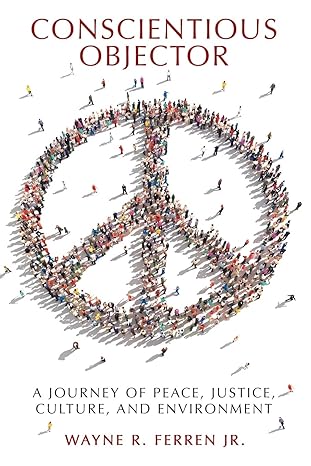
Wayne R. Ferren Jr.’s memoir, Conscientious Objector, is a deeply personal and multifaceted exploration of one man’s stand against war, interwoven with his journey through a rapidly changing world in the 1960s and 70s. The book chronicles Ferren’s life from his formative years in Camden, New Jersey, to his eventual recognition as a conscientious objector during the Vietnam War. Alongside this personal journey, Ferren reflects on cultural shifts, his passion for environmental conservation, and the broader implications of his ethical beliefs. It’s a memoir that feels both intimately human and profoundly universal.
What struck me most about Ferren’s writing was his ability to make history deeply personal. His account of discovering the story of Jerry Wayne Ferren, a young soldier who shared his name and tragically died in Vietnam, was haunting. This discovery becomes a poignant touchstone throughout the book, reminding readers of the fragility and randomness of fate. Ferren’s descriptions of his upbringing, complete with vivid details about family dynamics and summers spent exploring the Pine Barrens, transported me to a bygone era. Yet, amid these nostalgic reflections, he doesn’t shy away from grappling with heavier themes like racism, generational trauma, and the personal cost of standing by one’s convictions.
The book’s heart lies in Ferren’s struggle to be recognized as a conscientious objector. His arguments before Local Board No. 8 are compelling, blending philosophical reasoning, historical context, and deeply personal convictions. What amazed me was his meticulous preparation and unwavering resolve despite societal pressures. These moments made me reflect on the courage it takes to stand against the grain, especially during such a divisive era. That said, the memoir isn’t just about resistance; it’s a celebration of passion and discovery.
Ferren’s love for paleontology and environmentalism is infectious. Chapters detailing his fossil hunts and his work at the Academy of Natural Sciences are filled with a childlike wonder that contrasts beautifully with the book’s heavier moments. I loved how he connected these scientific endeavors with his broader ethical stance, arguing that understanding nature deepens our obligation to protect it. This connection between science and morality felt both logical and inspiring.
Conscientious Objector, by Wayne R. Ferren Jr., is more than just a memoir—it’s a testament to the power of personal conviction, intellectual curiosity, and compassion in shaping a meaningful life. Ferren’s prose is honest and reflective, with a warmth that draws you in even when he tackles difficult subjects. I’d recommend this book to anyone interested in the Vietnam era, environmental ethics, or the philosophical challenges of living a principled life. Whether you’re a history buff, a pacifist, or just someone who appreciates a well-told life story, this book has something valuable to offer.
Pages: 538 | ISBN : 978-1480897052
The Vanishing Glaciers of Patagonia

In The Vanishing Glaciers of Patagonia, Martin Sessions takes us on an expedition where the reader gets to appreciate nature and learn about geography in the most intriguing way. The book is about Glacier San Quintin, the largest glacier of the north Patagonian icefield on the west coast of Chilean Patagonia. With maps and illustrations, Martin Sessions takes the reader on a tour of South America and other parts of the world. When writing about technical, geographical terms, Martin Sessions knew how to make the complex terms and phrases understood by the average reader. The amazing information in this educational book will make you appreciate what the universe offers, be conscious about issues like climate change and different topographies, and be aware of the environment you live in.
When discussing a particular adventure, the author makes the reader feel like they are part of the journey. Each tale the author shares is outstandingly written and makes one wish they are part of the adventure. I like that the author makes the stories attention-grabbing even when writing about tragedies. One can feel the somber mood and still be interested in whatever the author is writing about. The author’s intention in The Vanishing Glaciers of Patagonia is to virtually transport you to different parts of the world as he shares his and other explorers’ experiences while also giving lessons on climate change.
Reading about the explorers, their stories, and their adventures gives one a different perspective. There are also tons of lessons for the reader, one of the primary beings how to plan for a trip and deal with unexpected obstacles. I enjoyed the stories in every chapter and especially loved reading about the San Tadeo Glacier. The narration is flawless, and the explorations, though sometimes a tad risky, were something any daring soul would want to try. I also learned that you cannot fight with nature, and despite man thinking that he is always in control, nature can humble you. I could picture the locations and scenes even when there were no photos.
The Vanishing Glaciers of Patagonia is an excellent read for those that enjoy books about nature and explorations. The wording, phrases used by the author, and overall mood in the book are inspiring. In addition, the stories shared, the tips found between the pages, and the excellent narration make me rate the book 5 out of 5 stars.
Pages: 288 | ISBN : 1922792314


