Blog Archives
Military History

The 20th PID Book combines original photographs, reports, maps, and memories with modern context to illuminate the vital work of WWII photo interpreters. What did the original 1945 volume mean to your father, Lt. William J. Snodden, and to your family?
I can’t remember my dad ever talking about his experiences during the war when I was growing up. It was only when he was in his late 80s, and I asked him specifically about those years, that he pulled out his military papers and this commemorative album. That day was the first time I heard about his work as a photo interpreter. Dad was never one to show his feelings, but as I watched him reverently page through the book, I could tell how meaningful that time was for him. My mom was a master declutterer, and as they moved from their family home to increasingly smaller senior apartments, she was ruthless. The fact that the album and his military records survived those repeated purges testifies to how important they were to him.
In 2019, a few months before he died, we donated the album to the Arizona Commemorative Air Force Museum in Mesa, Arizona. It was hard for him to give it up, but he was clearly glad to see it in a place where it would be preserved for future generations. I know he’d be pleased that I’m now making its contents available to people outside the museum.
What was the role of the 20th Photo Intelligence Detachment during World War II, and why do you think the work of photo interpreters remained relatively unfamiliar compared with other forms of wartime intelligence?
When I’d mention the book to friends as I was working on it, their first question was always, “Oh, was your dad a pilot?” The pilots who took the aerial photos have received a lot of well-deserved attention in history, but without the men developing and interpreting those photos, all of that information would have been for naught.
With each sortie, the reconnaissance pilots came back with hundreds of images. The PIs often worked throughout the night, first developing the photos and then, hunched over tables and peering through stereoscopes at minute images, identifying potential bombing targets, assessing whether attacks had successfully destroyed those targets, and annotating photographs before summarizing their findings in typed reports. As many as a hundred copies of a report could then be produced for distribution to commanders. During the height of the war, all of this was accomplished in less than twelve hours!
On the surface, the work of the PIs might appear dull and isn’t likely to attract the attention of a major motion picture studio. Their success wasn’t dramatic or especially visible—their product was intelligence. Pilots flew dangerous missions in recognizable aircraft; PIs worked behind tables with stereoscopes, pencils, photographs, and typewriters. One photographs beautifully. The other doesn’t. Yet both were part of the same intelligence chain. Accurate and timely tactical intelligence allowed commanders to make the best use of their resources, disrupt German activity, and ultimately save resources and lives.
The original book contains humor, cartoons, personal memories, and photographs alongside technical intelligence. Why was preserving their personalities and everyday experiences as important as documenting their military work?
This album was created just before the men were released from duty. It was created by the men of the unit, for the men of the unit. It shows us how they chose to remember that time in their lives and could also serve as a way to share their wartime experiences with family and friends. By adding humor and cartoons, they turned their work into stories.
The route map, in particular, contains more than 30 vignettes of locations and events throughout Europe. Some pertain to large-scale wartime events, like the liberation of Paris, while others show experiences specific to the 20th PID, like their crossing of the English Channel in a small boat stuffed to the gills with soldiers, a jeep precariously balanced on the bow, and a nearby periscope watching from the deep.
An ex-soldier could use that tiny drawing as a prompt: “Oh, let me tell you about THAT day!”
Eighty years after the original book was created, what do you hope publishing this restored edition preserves for the next eighty years?
Most, if not all, of the men in the 20th PID are now gone. This book is a uniquely creative artifact documenting firsthand their work and experiences during the war. I would like future generations to know of their contributions through the men of the unit themselves.
The book also has a place in military history. Although aerial photo interpretation had been used before WWII, during the war it became increasingly sophisticated and systematic and was integrated into fast-moving tactical operations.
What makes this book unusual is that we don’t have to reconstruct that process eighty years later. The men themselves left us the photographs they examined, the reports they produced, the maps they used, the cartoons they drew, and their own explanation of what they did.
My hope is that eighty years from now, another reader can open this book and still hear their voices.
Author Links: Website | Facebook

Echoes of Memory: War, Testimony, and Survival on Sanzao Island


Echoes of Memory is a deeply personal work of public history by Robert Cupchoy and Lani Cupchoy, rooted in survivor testimony, family archive, poetry, and scholarly reflection. It traces the Japanese occupation of Sanzao Island during World War II, beginning with the shattering recollections of Fook Im Chen as planes descend over rice fields, moving through starvation, forced labor, cultural suppression, and the devastating history of the comfort women system, then widening into questions of inheritance, healing, and remembrance. What makes the book distinctive is its refusal to separate history from kinship. The authors present Sanzao not as an obscure footnote to larger wartime narratives, but as a wounded, living place whose people carried memory in stories, rituals, photographs, silence, and even in the later transformation of the family home into the Cupchoy Café.
Fook Im’s memories of bombs falling, villagers hiding food, and families clinging to one another have an aching immediacy that formal history often struggles to hold. The chapter on the comfort women is especially harrowing, not because it reaches for shock, but because it understands the intimacy of violation. Jin Yuan Lin’s presence in the comfort house, his memory of the women staring out windows, and his fear that forgetting them would mean losing them again, left me with a quiet grief that lingered after the page ended. The writing is sometimes at its strongest in these moments of restraint, when the authors trust a remembered image to carry the weight. The prose can become academically dense, with theoretical frameworks crowding the emotional field, but even then, I sensed the urgency behind it. The book wants to protect these stories from being dismissed as anecdote, and that protective instinct gives the scholarship its moral heat.
What I admired most is the book’s central idea that memory itself can be a form of evidence. That argument feels both intellectually persuasive and emotionally earned. The poems that open chapters don’t always have the precision of the testimonies, but I appreciated their function: they create a ritual threshold before the reader enters material that is painful, fractured, and sacred. I was also moved by the book’s attention to cultural survival, especially its insistence that festivals, language, family meals, and oral storytelling matter as much as destroyed homes and ruined fields. The Cupchoy Café section could easily have felt sentimental, yet it becomes one of the book’s most affecting gestures, a cup of Hawaiian coffee in Sanzao carrying the long route from violence to diaspora to renewal. That image feels humble and profound, proof that remembrance doesn’t only live in monuments. Sometimes it lives in a room where people gather again.
Echoes of Memory is a work of witness rather than a conventional history, and that is its strength. Its emotional truth is unmistakable. I closed it with a fuller sense of how war survives inside families, landscapes, and inherited silences, and with real respect for the labor required to turn private grief into communal memory. This is a thoughtful, affecting book for readers interested in World War II history, Asian and Pacific studies, oral history, trauma studies, family archives, and anyone drawn to histories told from within the circle of those who still carry them. Its lasting gift is its conviction that to remember the dead with care is also to restore dignity to the living.
Pages: 232 | ISBN : 9798279679836
Avoiding Muddy Foxholes: A Story of an American Bombardier


Avoiding Muddy Foxholes follows the life of Richard “Dick” Loveless as he grows from a young man in Washington, DC into an Air Corps bombardier during World War II. It traces his courtship with Mary Lu, his grueling training, his early missions over Europe, and the unbelievable trials he survived as a prisoner of war. The author also highlights the quiet strength of the families back home. The story blends historical moments with personal memories, and it moves through fear, love, hope, and heartbreak in a way that feels close and honest.
When I first got into the book, I found myself surprised by how quickly I cared about Dick. His honesty and occasional stubborn streak made him feel real to me, and I caught myself rooting for him even when he stumbled. The writing leans into emotion. I liked that it did not try to polish everything. Some moments felt raw, and that rawness gave the book its heart. I could almost hear the noise of the barracks or imagine the cold nights in the POW camp. Sometimes the pacing slowed, yet even those stretches helped me sit with the weight of what these people lived through.
As the story went on, I felt more connected to the relationships than to the battles. The love between Dick and Mary Lu pulled me in every time it appeared. I kept thinking about how young they were and how quickly life forced them to grow up. The author’s voice added another layer because I could sense the pride he felt for his parents. That made the book feel warmer and more intimate. At the same time, the writing often slipped into straightforward talk that matched the everyday nature of the characters. I liked that mix. It made the heavy moments hit harder. There were places where the dialogue felt slightly too polished, but the emotional truth still came through.
Avoiding Muddy Foxholes made me think about the courage it takes to stay hopeful in the worst circumstances and about how love can hold people together when everything else is falling apart. I would recommend this book to readers who enjoy personal wartime stories, especially those who want something heartfelt and grounded in family ties. It is a good fit for anyone who likes history told through the eyes of ordinary people who found themselves doing extraordinary things.
Pages: 339 | ASIN : B0CF3C4LM8

Eagle Scout to Killer: A Novel Based on True Events
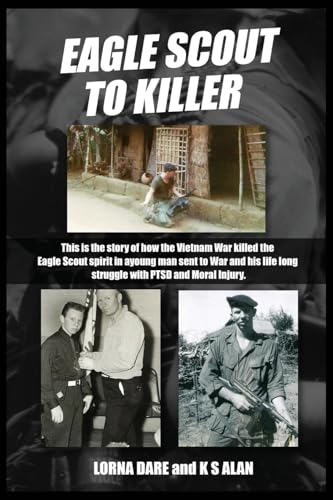
Eagle Scout to Killer by K.S. Alan and Lorna Dare is a harrowing and unflinching account of one man’s transformation from idealistic youth to haunted veteran. Told through the voice of Kurt S. Alan, a soldier whose service in Vietnam blurs the line between heroism and survival, the book chronicles the moral and psychological toll of war. From its opening pages, where Alan recounts his covert involvement in the events surrounding the Gulf of Tonkin, the narrative establishes itself as both historical confession and personal reckoning. This is not a traditional war story; it is an exploration of how combat reshapes identity, erodes morality, and leaves wounds that no medal can redeem.
The authors write with a restrained intensity that makes the book deeply affecting. Alan’s first-person account of meeting CIA operative Coleman and orchestrating a staged naval attack feels chilling in its calm precision. When he admits, “I grew up being taught to never lie, but here I was perpetrating a lie on the U.S. Congress,” the line reverberates beyond his personal guilt; it becomes an indictment of the political machinery that demanded such deception. The prose is unsentimental yet charged with quiet anguish, capturing the conflict between duty and conscience with unsettling clarity.
What gives the book its emotional weight is not only its exposure of covert operations but its portrait of trauma. In the preface and the reflections from Alan’s VA therapist, the story is framed as part of a long process of healing. The therapist describes it as “Kurt’s effort to reclaim his soul,” and the book indeed feels like an act of reclamation. When Alan later visits the Vietnam Memorial and leaves his Special Operations coin at the wall, the gesture becomes a moment of fragile grace amid decades of inner torment. That scene encapsulates the cost of survival and the longing for absolution that haunts so many who return from war.
The combat scenes themselves are vivid, brutal, and often difficult to read. Chapters such as “The Punji Pit” and “Operation Cherry” depict the chaos of Vietnam with visceral precision. Yet the violence never feels gratuitous; it underscores the moral corrosion that the preface warns against. The narrative’s strength lies in its refusal to glorify combat or simplify the psychology of those who endured it. Alan’s voice remains grounded, disciplined, and painfully self-aware. The result is a story that feels at once deeply personal and universally human, a meditation on guilt, loyalty, and the enduring search for meaning after unimaginable loss.
Eagle Scout to Killer is not an easy book to read, but it is an essential one. It speaks to veterans who have carried their battles home with them, and to civilians who have never confronted what war truly demands of those who fight it. For readers interested in military history, moral philosophy, or psychological resilience, this book offers a rare and unsettling clarity. It is both a confession and a cautionary tale, a powerful reminder that while war may end, its echoes never do.
Pages: 264 | ISBN : 9781965390139

Conscientious Objector – A Journey of Peace, Justice, Culture, and Environment
Wayne R. Ferren Jr.’s memoir, Conscientious Objector, is a deeply personal and multifaceted exploration of one man’s stand against war, interwoven with his journey through a rapidly changing world in the 1960s and 70s. The book chronicles Ferren’s life from his formative years in Camden, New Jersey, to his eventual recognition as a conscientious objector during the Vietnam War. Alongside this personal journey, Ferren reflects on cultural shifts, his passion for environmental conservation, and the broader implications of his ethical beliefs. It’s a memoir that feels both intimately human and profoundly universal.
What struck me most about Ferren’s writing was his ability to make history deeply personal. His account of discovering the story of Jerry Wayne Ferren, a young soldier who shared his name and tragically died in Vietnam, was haunting. This discovery becomes a poignant touchstone throughout the book, reminding readers of the fragility and randomness of fate. Ferren’s descriptions of his upbringing, complete with vivid details about family dynamics and summers spent exploring the Pine Barrens, transported me to a bygone era. Yet, amid these nostalgic reflections, he doesn’t shy away from grappling with heavier themes like racism, generational trauma, and the personal cost of standing by one’s convictions.
The book’s heart lies in Ferren’s struggle to be recognized as a conscientious objector. His arguments before Local Board No. 8 are compelling, blending philosophical reasoning, historical context, and deeply personal convictions. What amazed me was his meticulous preparation and unwavering resolve despite societal pressures. These moments made me reflect on the courage it takes to stand against the grain, especially during such a divisive era. That said, the memoir isn’t just about resistance; it’s a celebration of passion and discovery.
Ferren’s love for paleontology and environmentalism is infectious. Chapters detailing his fossil hunts and his work at the Academy of Natural Sciences are filled with a childlike wonder that contrasts beautifully with the book’s heavier moments. I loved how he connected these scientific endeavors with his broader ethical stance, arguing that understanding nature deepens our obligation to protect it. This connection between science and morality felt both logical and inspiring.
Conscientious Objector, by Wayne R. Ferren Jr., is more than just a memoir—it’s a testament to the power of personal conviction, intellectual curiosity, and compassion in shaping a meaningful life. Ferren’s prose is honest and reflective, with a warmth that draws you in even when he tackles difficult subjects. I’d recommend this book to anyone interested in the Vietnam era, environmental ethics, or the philosophical challenges of living a principled life. Whether you’re a history buff, a pacifist, or just someone who appreciates a well-told life story, this book has something valuable to offer.
Pages: 538 | ISBN : 978-1480897052

THE WAY IT WAS


In his remarkably poignant memoir, The Way It Was, Alvin Fuhrman intricately threads the lines of personal history, technological evolution, corporate progression, communal bonds, and cultural inheritance. The book stands as an intimate examination of Fuhrman’s life, charting his path as a telecom pioneer and community stalwart while also exploring his experiences in the army and his personal ebbs and flows.
One of the most captivating aspects of the book emerges when Fuhrman recounts the vibrant narratives of the Muenster community. This includes the inception of the Germanfest and the lasting influence of the Muenster Men’s Choir. The very essence of the memoir serves as a tribute to the industrious and committed individuals who shaped Muenster into the community it is today. It’s not all joyous recollection, however, as Fuhrman confronts the heartbreaking loss of his son, Gene. These poignant moments contribute a profound emotional depth to the memoir, reminding the reader that life is an intricate dance of happiness, victory, loss, and resilience.
The narrative occasionally delves into the more technical aspects of Fuhrman’s life, specifically when discussing the evolution of telephone technology and the trials of cablecasting. Yet, the unadulterated sincerity of Fuhrman’s voice within The Way It Was renders it an enthralling read. His memoir skillfully encapsulates the spirit of the times it navigates—the simplicity of the pre-digital era, the rigors of war, and the leaps of technology that have reshaped society. The backdrop of Muenster, with its deep-rooted German lineage and tight-knit community, becomes a lively participant in the narrative, enhancing the overall allure of the memoir.
Alvin Fuhrman’s The Way It Was is an eloquent and engaging memoir. It transcends the boundaries of a single life, narrating the broader tale of a community and a bygone era that bore witness to significant transformation. Despite the occasional foray into technical discourse, the memoir resonates on a human level, offering a deeply meaningful exploration of life, loss, community, and the unstoppable advance of technology.
Pages: 388 | ASIN: B09ZQ1K354
The Spirit of Ruchel Leah

The Spirit of Ruchel Leah by Lester Blum is an exceptional memoir that provides a realistic and poignant account of the Holocaust from a Jewish perspective. This emotional book captures the struggles and experiences of Ruchel Leah, a courageous woman who finds herself in unfortunate circumstances during World War II. While her family attempts to escape from Poland before the Nazis invade, Ruchel Leah cannot immigrate to the United States like the rest of her family. Yet, despite the inhumanity of American immigration policies, she does not give up hope and continues to fight for her daughter’s citizenship. Lester Blum’s book is not just a tribute to Ruchel Leah, but it also sheds light on the experiences of the Jewish people during the Holocaust and the challenges they faced during the immigration process. The story spans across different regions, including Soviet Russia, New York, Cuba, Israel, and others, over several years.
This gripping book is a poignant reflection of Ruchel Leah’s bravery during the Holocaust, and her letters to her extended family reveal the depth of her pain and desperation. Most of the information in the book is taken from her original letters, providing a unique perspective on the events of the Holocaust. Blum uses Ruchel Leah as a primary exemplar to discuss several Jewish obstacles that the community faced during that time. Blum’s storytelling conveys the message that this story should never be forgotten. Blum has written an incredibly sentimental and breathtaking book that accurately reflects the realities of American immigration policy during that period. The attention to detail and meticulous writing style adds to the book’s value and make it an excellent source of historical lessons.
I would highly recommend The Spirit of Ruchel Leah as this memoir is an impressive piece of literature that provides an insightful and emotional glimpse into the experiences of Jews during the Holocaust.
Pages: 361 | ASIN : B0BC1DRD6Q
The Self-Liberation of Parson Sykes
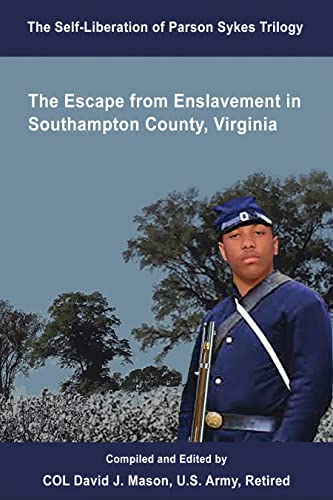
Self-Liberation of Parson Sykes is a historical military memoir that delves into enslavement in Southampton County, Virginia, during the American Civil War. The author references published sources, family history, and anecdotes that narrate the true story of his great grandfather, Parson Sykes, and his quest for liberation. The book details the harrowing escape from enslavement in Southampton County during the American Civil War in 1864.
The author does an excellent job of exploring the socio-cultural environment of the time through the recorded experiences of Parson Sykes, his friends, and his family. At the age of 17, Parson is a charismatic leader in his community with great promise. The book has a compelling narrative that details his journey of escaping enslavement. Each chapter discusses the era’s events, including military movements and tactics, Mason’s military background, expertise, and how he addresses the oppressive and systematic ways that were used to dehumanize black people.
This enlightening story provides a glimpse into the brutality of this oppression, and the inhumane hardships enslaved people had to endure. Despite the vulnerability and helplessness experienced by many, the author highlights the strength and resilience of black women and women’s rights through the character of Frances Hill.
I highly recommend this informative and thought-provoking novel for its candid and realistic narration from the perspective of enslaved people and their families. Self-Liberation of Parson Sykes is a must-read for its importance and relevance in society and how many aspects of this history remain in the present day. I recommend Self-Liberation of Parson Sykes for its brilliant writing style and educational value. It’s an important topic that needs more attention and is a great educational read for anyone who wants to learn about the realities of slavery and the American Civil War.
Pages: 236 | ASIN: B0BG6954LL


