Blog Archives
A Blueprint

The Bequest of John T. Ward uncovers the forgotten legacy of a formerly enslaved man who became an Underground Railroad conductor and abolitionist. The word “bequest” carries weight. What did John T. Ward leave behind that felt most urgent to preserve?
What felt most urgent to preserve was not just what John T. Ward did, but what he proved. He left behind evidence that a formerly enslaved man could navigate legal systems, acquire land, fund institutions, advocate publicly, and move people toward freedom with intention and precision. His bequest is proof of lineage, continuity, and ownership, including the legacy of what is recognized as the oldest Black-owned business still in operation today. Preserving that truth matters because it challenges the false narrative that Black progress was rare, accidental, or undocumented. It was intentional, and it endured.
What aspects of his character stood out most to you while writing his bravery, his strategy, his compassion, or his vision?
What stood out most was his strategy. Bravery is often highlighted in abolitionist narratives, but strategy is what sustained survival. John T. Ward understood timing, geography, alliances, and the power of paperwork. He knew when to move quietly and when to speak publicly. His compassion fueled his work, but his vision ensured its longevity. He wasn’t reacting to oppression; he was planning beyond it.
How did uncovering your family’s history change the way you understand inheritance, beyond land or property?
It changed inheritance from something purely material into something instructional. I inherited methods for documenting, challenging power, and protecting legacy when systems are hostile. I inherited the understanding that survival itself can be a skill passed down. This history taught me that inheritance can be knowledge, foresight, and responsibility. What was passed to me was not just what was owned, but how to hold it with tools. This book is deeply rooted in the past, yet it feels urgent today.
What connections do you see between Ward’s fight and current struggles for justice?
The connection is documentation. John T. Ward lived in a time when Black existence had to be repeatedly proven through documents, witnesses, and records. Today, we see similar struggles around voting rights, land claims, citizenship, and whose stories are believed. The fight hasn’t changed as much as the language has. His work reminds us that justice is rarely handed down; it is built, recorded, defended, and revisited. That is why The Bequest of John T. Ward is not just history. It is a blueprint.
Author Website
In this deeply researched account, author Shanna Ward breathes life into her ancestor’s journey—an unsung legend whose story is brimming with courage, resilience, and unwavering dedication to justice. Each page reveals the clandestine routes, perilous escapes, and quiet triumphs that defined John T. Ward’s fight against oppression. More than a historical recount, this book invites readers to reflect on human endurance, the transformative power of hope, and the enduring impact one determined individual can have on the pursuit of freedom.
Filled with vivid storytelling, The Bequest of John T. Ward is a must-read for history enthusiasts, social justice advocates, and anyone looking for an inspirational tale of defiance in the face of overwhelming odds. Uncover the hidden legacy of this forgotten hero and discover why his life’s work remains a beacon of empowerment, community, and the belief that true liberation comes from standing up for what is right—no matter the cost.
The Bequest of John T Ward: Uncovering A Hidden Legacy in Black American History, Exploring Stories of Antebellum Resistance


The Bequest of John T. Ward traces the long arc of a family’s history from the violent beginnings of colonial Virginia to the fierce resistance of one man who chose courage over silence. The book follows John T. Ward’s journey from enslavement to manumission, then into his work as a conductor on the Underground Railroad. Alongside his story, the author weaves the deeper roots of the Ward lineage, exposing land grabs, plantation brutality, survival strategies, and the generational spirit that shaped a family determined to rise despite every force working against them. The narrative blends historical records with vivid storytelling that brings the past into sharp focus.
As I moved through the chapters, I felt pulled in by the immediacy of the writing. The author has a way of shifting from personal reflection to historical detail with a rhythm that feels alive. Sometimes the prose hit me hard, especially in sections that explored the emotional landscape of enslaved families. I found myself pausing, letting the weight of those moments settle before reading on. The writing shows how memory, trauma, love, and resistance lived in the same breath for people who had so little room to exist freely.
The voice jumps between past and present, and it carries a raw, personal tone that makes the history feel close and human. I liked that. It felt like someone talking directly to me about their family, not a distant academic piece. The intensity of the language sometimes crowded the quieter insights, and I wished for more calm pauses to let the facts open up on their own. Even then, the author’s passion gave the book a heartbeat. The ideas about inheritance, responsibility, and the duty to remember left me thinking long after I closed the file.
The book gave me a clearer picture of how individual lives fit into the larger struggle for freedom and how resistance did not start or end with famous names in textbooks. I would recommend this book to readers who want a deeply personal look at Black American history and to anyone who appreciates stories that mix truth-telling with emotional depth. It is especially fitting for people who enjoy family histories, hidden legacies, and accounts of courage that echo into the present.
Pages: 582 | ASIN : B0FBT3HTL8

Conscientious Objector – A Journey of Peace, Justice, Culture, and Environment
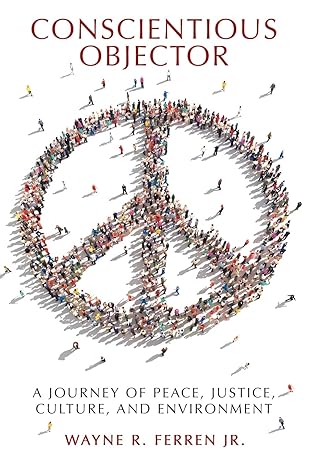
Wayne R. Ferren Jr.’s memoir, Conscientious Objector, is a deeply personal and multifaceted exploration of one man’s stand against war, interwoven with his journey through a rapidly changing world in the 1960s and 70s. The book chronicles Ferren’s life from his formative years in Camden, New Jersey, to his eventual recognition as a conscientious objector during the Vietnam War. Alongside this personal journey, Ferren reflects on cultural shifts, his passion for environmental conservation, and the broader implications of his ethical beliefs. It’s a memoir that feels both intimately human and profoundly universal.
What struck me most about Ferren’s writing was his ability to make history deeply personal. His account of discovering the story of Jerry Wayne Ferren, a young soldier who shared his name and tragically died in Vietnam, was haunting. This discovery becomes a poignant touchstone throughout the book, reminding readers of the fragility and randomness of fate. Ferren’s descriptions of his upbringing, complete with vivid details about family dynamics and summers spent exploring the Pine Barrens, transported me to a bygone era. Yet, amid these nostalgic reflections, he doesn’t shy away from grappling with heavier themes like racism, generational trauma, and the personal cost of standing by one’s convictions.
The book’s heart lies in Ferren’s struggle to be recognized as a conscientious objector. His arguments before Local Board No. 8 are compelling, blending philosophical reasoning, historical context, and deeply personal convictions. What amazed me was his meticulous preparation and unwavering resolve despite societal pressures. These moments made me reflect on the courage it takes to stand against the grain, especially during such a divisive era. That said, the memoir isn’t just about resistance; it’s a celebration of passion and discovery.
Ferren’s love for paleontology and environmentalism is infectious. Chapters detailing his fossil hunts and his work at the Academy of Natural Sciences are filled with a childlike wonder that contrasts beautifully with the book’s heavier moments. I loved how he connected these scientific endeavors with his broader ethical stance, arguing that understanding nature deepens our obligation to protect it. This connection between science and morality felt both logical and inspiring.
Conscientious Objector, by Wayne R. Ferren Jr., is more than just a memoir—it’s a testament to the power of personal conviction, intellectual curiosity, and compassion in shaping a meaningful life. Ferren’s prose is honest and reflective, with a warmth that draws you in even when he tackles difficult subjects. I’d recommend this book to anyone interested in the Vietnam era, environmental ethics, or the philosophical challenges of living a principled life. Whether you’re a history buff, a pacifist, or just someone who appreciates a well-told life story, this book has something valuable to offer.
Pages: 538 | ISBN : 978-1480897052
The Predatory Development of Humanity

Natural Insurrection takes readers on a journey through the evolutionary history of humanity and its impact on our modern existence, exploring the predatory nature and cognitive growth of human evolution. Why was this an important book for you to write?
I started putting my ideas on human evolution together some 30 years ago. I had no doubt that I was onto something, and just had to put it in writing.
How much research did you undertake for this book and how much time did it take to put it all together?
Research took up most of the work. I started out in 2002, writing/researching full time for a year, until other obligations had me re-enter the business world. It was not until 2018 that I again found the time to continue. In all, I would estimate that the book took 5 years to complete.
What were some ideas that were important for you to share in this book?
In the book I challenge conventional thinking on human evolution. This is an entirely new approach to the debate, focusing on the predatory development of humanity.
What is one thing that people point out after reading your book that surprises you?
What surprises me is that the average reader, unaccustomed to nonfiction, enjoys the read.
The manuscript Natural Insurrection: The Predatory Legacy of Man lay untouched in a dusty cabinet for more than a decade. Written on location, overlooking the hills and valleys of the Cradle of Mankind, this investigation into Man’s predatory evolution was eventually reworked and made available for publication.
Predatory delinquency, the phenomenon of preying on one’s ‘own kind’ laid the foundation for Man’s predatory transition.
Cannibalism was not merely an occurrence in human evolution; it was once a practice that extended over hundreds of thousands of years.
Man’s bipedal stance, manual dexterity and mental prowess reflect the adaptations of a carnivorous anthropoid.
This is a well-researched and revolutionary approach to the development of humankind. Like many other creatures, Mankind has undergone the transformation from herbivore to fully fledged predator. Hunting tree-dwelling primates most likely initiated the process, but it is against fellow bipeds that Man sharpened his wits. The butchered remains of Homo, spanning a million years, bear testimony to this.
Natural Insurrection: the Predatory Legacy of Man


Natural Insurrection by Wilfred Nieman takes readers on a journey through the evolutionary history of humanity and its impact on our modern existence. The book examines our development from early hominids to the dominant species we are today, focusing on the consequences of our predatory nature and cognitive growth. Nieman prompts readers to reflect on the less savory aspects of human evolution, highlighting how our instincts and intelligence have often driven us to disrupt the natural world in significant ways. His work combines historical, anthropological, and philosophical perspectives to offer a thorough and critical look at what defines humanity.
Nieman’s writing style strikes a balance between scholarly detail and an approachable tone. He effectively presents complex ideas in a way that is both understandable and thought-provoking. A notable example is his exploration of bipedalism and brain development, which he presents in a way that is engaging without oversimplifying the subject matter. Nieman is not afraid to question conventional thinking, particularly when discussing the possibility that humans may have deviated from the natural course of evolution, becoming a species that challenges the very order of nature itself. This bold perspective is likely to inspire thoughtful discussion among readers.
While the book’s expansive coverage is commendable, it sometimes results in sections that feel dense, potentially overwhelming readers who are not familiar with evolutionary biology or anthropology. The author’s thorough approach is evident as he tackles topics ranging from the origins of life to the complexities of human social dynamics, which can occasionally slow the pace for those less versed in these subjects.
Nonetheless, Natural Insurrection remains a thought-provoking read that invites readers to reconsider humanity’s role in the world. Nieman’s skill in blending scientific analysis with philosophical insight makes the book both intellectually stimulating and a source of deeper existential reflection. His assertion that human advancements in cognition and technology have not only separated us from other species but also placed us in conflict with the natural world serves as a poignant reminder of the weighty responsibilities that come with our unique position on this planet.
This book is highly recommended for anyone with an interest in anthropology, evolutionary biology, or the philosophical aspects of human evolution. It’s especially suited for those who enjoy challenging their own beliefs and delving into complex discussions about the past, present, and future of our species.
Pages: 249 | ASIN : B0D3CJNMC9
Enemies of Africa

Enemies of Africa is a factual and historical description of how widespread the slave trade was and how there is still widespread racism and discrimination even today. Author Jaiden Baynes has done an excellent job and provides readers with an essential read. Baynes’ writing will open your eyes to how the slave trade started and the factors that led to it being so widespread.
Enemies of Africa is a well-researched and planned work of pure fact. I thought I knew a lot about the slave trade, but there is so much that the history classes left out. This eye-opening book filled in all the blanks, and I am more educated on the slave trade now than I ever was by a textbook.
It is very apparent that so much research went into this novel to ensure factual and precise information. This book explains how the slave trade started and why. It also showcases just how horribly slave traders treated their slaves. Enslaved people weren’t treated like humans. They were beaten and starved, and their children were sold into slavery as well. I think it is essential for information like this to be shared. While this is a heavy topic to read about, Jaiden Baynes lays out the facts in a way that makes absorbing this appalling piece of history possible.
Enemies of Africa is an educational resource on the dark history of slavery. This factual book teaches readers the things that average history courses skip over. Unfortunately, there is a cultural bias toward Africans, and I think everyone needs to read what this book says about it. Enemies of Africa is worth the read. Well done, Jaiden Baynes, for laying out the information and touching on a challenging subject in a digestible way.
Pages: 176 | ASIN : B0BCGF2ZK3


