Blog Archives
Terra Nova
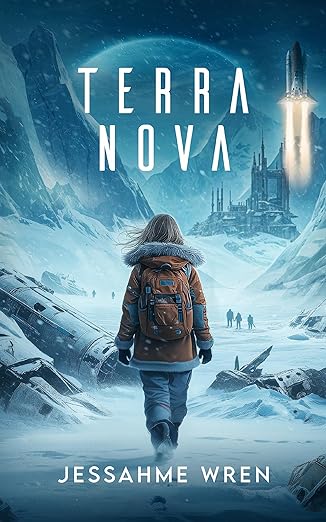

Jessahme Wren’s TERRA NOVA is a beautifully imagined and emotionally charged story about a father and daughter navigating life across planets, love, grief, and the sheer grit it takes to survive the unknown. At its core, it’s a tale of devotion. Sev, a whip-smart teen growing into herself, and her father, Phoenix, a loving and resilient man with a painful past, live on a world called Dobani. Their peaceful life is upended when Phoenix becomes gravely ill, and Sev must make an impossible decision to try and save him. What follows is a journey across stars to the snowy, distant planet of Ocarro, where medicine is cutting-edge but answers are scarce. Alongside them is Pearla, Phoenix’s partner, and Sev’s steadying force, as they face medical mysteries, bureaucratic red tape, and the shadows of old trauma.
Wren writes with an intensity that sneaks up on you. Her pacing is smooth and measured, letting the emotion build naturally. The world-building is sharp without being showy. Every planet feels lived in, not just imagined. What stood out most to me was the tenderness between Sev and Phoenix. Their relationship isn’t perfect, but it’s thick with love and care. Wren doesn’t rush the drama or the science fiction, she lets her characters breathe. And in those breaths, the humanity shines. I found myself rooting for Sev not because she was heroic in the usual way, but because she felt real. Smart, a little stubborn, and so brave.
The emotional punches land hard. Watching Phoenix deteriorate is gutting, especially because he’s portrayed so vividly in the beginning. I did wish, at moments, that the story pulled back a little to explore more of the broader universe. The political backdrop and the mystery of Terra Firma are ripe for digging into, but they take a backseat to the personal arc. That isn’t a flaw exactly, just a choice that trades scale for intimacy. And maybe that’s what this book is really about: not saving the galaxy, but saving the person you love most. That trade-off feels worth it.
TERRA NOVA is a warm but gut-wrenching story. It’s a sci-fi story for anyone who’s loved someone through illness, who’s had to grow up too fast, or who just needs a reminder that love is its own kind of gravity. I’d recommend it to fans of Becky Chambers, Martha Wells, or even folks who normally steer clear of sci-fi but love a strong emotional hook.
Pages: 234 | ASIN : B0FD48SQJS

Family and the Bonds of Friendship

The Forsaken Planet follows an ordinary young man from suburban New England whose world is shattered when alien ships invade Earth, leading him to enlist in a different alien army to learn how to protect those he loves. What was the inspiration for the setup of your story?
I had many inspirations. It really evolved from my love of epic fantasy and anything space-related, and wanting more books that blend the two. I started this story over twenty years ago while in my teens. I had read Ender’s Game only a couple of years before, and that was a major inspiration, especially towards the combat simulations in this book. Wheel of Time was another one. Its themes of the ordinary, innocent farm boys and girls becoming heroes, as well as its lore and the connection to the ancient past that the struggle during that series is linked to, that all rubbed off onto my own work. Lastly, the mini-series Band of Brothers is a big one. That is my favorite show of all time and it directly influenced many of my war-training scenes.
A lot of time was spent crafting the character traits in this novel. What was the most important factor for you to get right in your characters?
The most important thing was to make them all diverse and different enough from one another. It is a grand story I have in store, one that only grows as the series expands. I needed to ensure that I laid a solid foundation for each character, as many of them have their own POVs and larger parts to play in this conflict as the series progresses. I think the roots I laid here will help them better stand on their own down the road, when it’s their time to shine.
What were some themes that were important for you to explore in this book?
It was critical for me to express the importance of family and the bonds of friendship. My story centers around these ideas and eventually asks some hard-hitting questions regarding them. We all want to protect those we love. But what if by doing that, we are putting others in harm’s way? That is a central theme as the series progresses, and it was the main focus of this installment to fully mold that bond, loyalty, and love between not just the core group of characters but those they meet along the way.
Is this the first book in the series? If so, when is the next book coming out, and what can your fans expect in the next story?
This is the first book in the series, and book two (The Son of the Prophets) is already out. There is also a novella linked to the series (A Princess of Oldir), which can be read for free by anyone who signs up for my Readers List (newsletter) on my website. And book three (The Dark Element) actually comes out this month on May 20th, 2025.
Readers can expect a lot of the same. A story centered around Colt and Company and their loyalty towards one another, one with the intense combat sequences you grew to know in TFP, along with the mysteries of the past and prophets ever-growing. However, it all expands tenfold more than it did in book one, with the addition of many new POVs in books two and three, as well as events taking these characters away from one another, across the stars to multiple other planets, and to war.
Author Links: GoodReads | X | Facebook | Website
-The Power of the Stars-
“With it, we are capable of greatness or are a weapon that will only bring suffering to the universe.”
When mysterious aircraft wreak havoc across Earth’s skies, it is revealed that there are clusters of other planets where humankind resides, distant worlds where the people wield the power of the stars themselves. It is an energy force that can bring about miracles or, as the alien fleet’s ruthless leader displays, unleash horrors beyond imagination.
After experiencing a loss during the onslaught, Colton Samson, an ordinary college student, vows to protect his loved ones at any cost. But to learn the power to do so, he must enlist into the Army of the Universal Throne—a second alien force with its own agenda.
With the revelation of a secret prophecy foretelling humanity’s demise and Colton’s improbable role in preventing it, he embarks alongside a diverse group of friends to the Throne’s capital, the planet of Vintara. There he faces prejudice from supposed allies, lifelike combat simulations that test him to his core, and the looming threat of a universal war. Only by embracing his true potential can Colton hope to secure the safety he seeks, in a universe that views him as nothing more than Forsaken.
The Forsaken Planet

The Forsaken Planet is a sprawling science fiction epic that kicks off the Power of the Stars series. It tells the story of Colton Samson, an ordinary young man from suburban New England whose world is shattered when alien ships invade Earth. After the sudden destruction of his home and the death of his best friend during the attack, Colton discovers that he is connected to a larger cosmic struggle. The book unfolds across multiple planets and explores themes of vengeance, power, friendship, and identity. As Colton grapples with loss and truth, he finds himself drawn into a war that threatens not just Earth but the entire known universe.
I was hooked from the first page. Bryan Wilson knows how to build tension. The slow burn of normal life being ripped apart by cosmic forces gave me real chills. His characters, especially Colton, feel like people you could know: awkward, impulsive, loyal to a fault. The dialogue is natural and sharp, and Wilson has a real knack for blending big sci-fi concepts with relatable emotions. Spoiler alert: When TJ dies, it hurt. Not just because of the loss, but because of how raw and real that moment felt. I also loved how Wilson keeps the pacing tight, even with a lot of world-building. He doesn’t get bogged down in exposition dumps. He lets the mystery unfold at just the right pace.
One of my favorite parts was the mythology. It’s this rich, layered history of prophets, lost power, and a cosmic kingdom that once united all human-inhabited worlds—including Earth. I loved how Earth is portrayed not just as a distant, disconnected planet but as something sacred that was cut off, “forsaken,” like a fallen temple in the stars. It reminded me a lot of Star Wars with its ancient orders and mysterious forces, but also had touches of Dune and even The Silmarillion—that same sense of deep, mythic pasts shaping the present.
The writing is energetic and full of heart. Bryan Wilson has a clear love for the story he’s telling, and it shows in the vivid scenes and emotional moments. His style is easy to follow, with natural dialogue and strong pacing, though sometimes it leans a little dramatic. Still, the emotion behind the words pulls you in, and when it hits, it hits hard.
The Forsaken Planet is a heartfelt and wild ride through space and emotion. It’s for anyone who likes their science fiction with a bit of old-school flair, big stakes, and bigger feelings. If you’re into stories about underdogs becoming heroes, hidden powers, and interstellar drama, then this one’s for you.
Pages: 599 | ASIN : B0C3RVGK9R
Human Tendency to Wage Wars

Galloper’s Quests follows a military scientist whose groundbreaking propulsion system allows him to journey the cosmos in defiance of his superiors. What was the inspiration for the setup of your story?
I had written a short story about an astronaut who had become alienated from the rigid ways of life on Earth and also the human tendency to wage wars. He decided to escape by blasting off into the unknown. I decided to expand the story, have him invent the wormhole propulsion system, and encounter civilizations that mirrored in exaggeration what he saw on Earth.
The science inserted in the fiction, I felt, was well-balanced. How did you manage to keep it grounded while still providing the fantastic edge science fiction stories usually provide?
I guess I tried to show individuals, even if they were alien, grappling with the human problems that we struggle with in everyday life.
Did you plan the tone and direction of the novel before writing, or did it come out organically as you were writing?
I composed numerous notes about the themes and the plot to deliver those themes beforehand. The details about what characters were feeling, the funny android, and the romantic interest emerged as I began writing.
What is the next book that you are working on, and when will it be available?
I spend a lot of time writing analyses of films in my blog, My Meaningful Movies, which is quite successful. I think my next project will be a play.
Author Links: GoodReads | Facebook | Website | Amazon
Galloper’s Quests
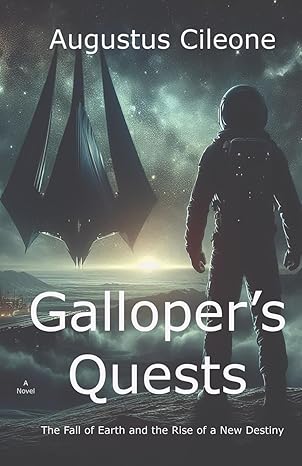
Galloper’s Quests is an ambitious sci-fi adventure that follows Captain Samuel Galloper, a military scientist who dares to defy his superiors in the pursuit of knowledge and freedom. Using his groundbreaking propulsion system, he escapes Earth’s grasp and journeys across the cosmos, encountering strange worlds, authoritarian societies, and existential dilemmas. His story, smuggled to the reader under mysterious circumstances, reads like a personal journal, a mix of raw emotion, philosophical musings, and gripping narrative. From the military’s relentless pursuit of power to the mind-numbing routines of an alien civilization, the novel explores what it means to think freely in a world determined to control you.
Galloper’s inner conflict is as compelling as the dangers he faces. He’s a man torn between duty and conscience, trapped between the structured obedience of military life and the terrifying unknown of free thought. His encounters with Admiral Rutlaw, a hardened military leader obsessed with weaponizing his discoveries, highlight this tension brilliantly. Rutlaw’s interrogation is chilling because it reveals the military’s single-minded goal: control and dominance. Galloper, however, isn’t willing to be a cog in that machine. His escape isn’t just physical; it’s a moral stand, and that’s what makes his journey so captivating.
Then there’s the planet Burc, a place that at first seems promising but quickly reveals itself as another kind of prison. The Burcs live in a rigid, cyclical society where work is endless, thinking is discouraged, and individuality is stifled. Their robotic sentries enforce order, while their Procs, like the conflicted Lask, bear the mental burden of decision-making so others don’t have to. It’s a fascinating concept, one that feels eerily familiar. When Galloper’s carefully constructed picnic table is destroyed by a robot, it’s a perfect metaphor for the futility of creativity in a society that fears change. Burc’s motto, “More work, less thought,” echoes throughout the book, a warning about the dangers of blind obedience.
But Galloper’s Quests isn’t all grim. There’s an undeniable thrill in its interstellar exploration, and Cileone has a knack for making space travel feel both wondrous and dangerous. The HOPS propulsion system, with its ability to fold space and create wormholes, is fascinating, yet terrifying in its unpredictability. The descriptions of travel bodies stretching, consciousness flickering, reality bending are some of the novel’s most immersive moments. When Galloper arrives on a new world, the awe is palpable, reminding us why we dream of the stars in the first place.
Galloper’s Quests is perfect for fans of thought-provoking sci-fi, especially those who enjoy books that question authority, challenge societal norms, and explore the weight of human choices. If you like stories that mix The Forever War’s military critique with 1984’s oppressive regimes and Star Trek’s exploratory wonder, you’ll find a lot to love here. It’s not a light read, it makes you think, it makes you uncomfortable, and at times, it makes you angry. But that’s the point. It’s a journey worth taking, even if the destination isn’t what you expect.
Pages: 235 | ASIN : B0DRTBVDM6
Born in Space: Unlocking Destiny
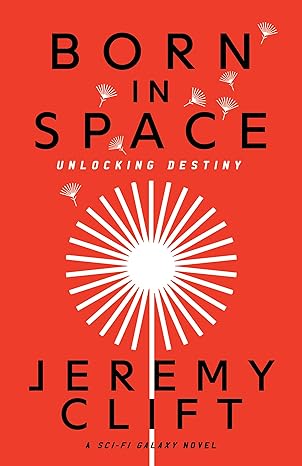
Born in Space: Unlocking Destiny, by Jeremy Clift, transports readers to Tucson, Arizona, in 2063, introducing the Ward family amid a society where artificial intelligence seamlessly integrates into daily life. This relatable yet futuristic setting immediately captivates, highlighting the pervasive role of AI in human existence. We learn that the children’s mother, Clara, is stationed on the Moon as a botanist, working to establish a sustainable food supply. As Earth’s conditions deteriorate, humanity seeks refuge on other planets, though these colonies also face growing unrest.
The narrative intensifies as the Ward family relocates to an orbiting space habitat, delving into profound ethical and moral dilemmas that resonate deeply. Despite its futuristic backdrop, the story remains relatable, reflecting issues not far removed from our current reality. Clift skillfully evokes emotions of remorse, pity, and sadness early in the tale, crafting a narrative that explores the essence of humanity and the potential alienation brought by technological and societal advancements. As a mother, I found myself moved to tears on multiple occasions.
The plot follows both Teagan and Hunter Ward, though Teagan’s journey particularly stands out. While Hunter’s storyline contributes to the overarching message, Teagan emerges as the central figure, her experiences deeply engaging. The antagonists in the novel are portrayed with striking malevolence, and certain scenes are intense, featuring violence and gore that may be challenging for some readers.
Born in Space: Unlocking Destiny serves as a poignant reminder of the consequences of overstepping natural boundaries, especially concerning the future of AI and technology. It’s a compelling read that I highly recommend, and I look forward to adding a physical copy to my collection.
Pages: 443 | ASIN : B0D1PWPRBJ
Starlight Empires: Death is Collapsing

Hans Trevor Wilms, PhD’s Starlight Empires: Death is Collapsing, kicks off a thrilling space opera saga that explores humanity’s future among the stars. The story centers around Alex Fjord, the charismatic and wealthy CEO of CEC, who drops the bombshell news of humanity’s first contact with an alien race. But just as the excitement starts to build, we’re hit with a sinister twist: Fjord is haunted by a godlike entity called Death, a presence that makes him question everything, including the survival of the human race. Meanwhile, Simon Martinez, an engineer on a far-flung space station, finds his routine life thrown into chaos. He’s caught between personal heartbreak, a crumbling relationship, and the discovery of something much bigger than he ever imagined.
Right from the opening scene, I felt pulled in. Fjord’s announcement about alien contact had all the suspense and showmanship you’d expect from a space-age business mogul. But then Death shows up, and the dread sets in. Wilms knows how to build tension. The way Death speaks—cold and unwavering—makes you uneasy, and Fjord’s powerlessness is chilling. Sometimes, I wanted the conversations to cut deeper or the prose to trim some of the fat. But even with that, the eerie vibe sticks with you.
Simon’s story, on the other hand, is way more relatable and down-to-earth, which I loved. He’s this hardworking guy, crawling through ducts on a lonely space station, trying to patch up broken tech while his girlfriend, Cara, sends him an avalanche of frustrated texts from Earth. We’ve all felt that kind of helplessness in relationships, and it’s captured perfectly here. One of my favorite parts was when Simon, despite everything, finds joy in his engineering work, even customizing his prosthetic arm with a 3D printer. The descriptions of his fixes are vivid and detailed.
What really struck me were the bigger ideas floating around this book. Humanity’s future, the ethics of corporate domination—Wilms goes there, and it’s uncomfortable in the best way. The CEC’s chokehold on society is unsettling and feels all too real. At one point, Simon reflects on how CEC quietly buys up entire countries, and it’s a gut punch. Wilms does an incredible job weaving these themes into a character-driven story. Simon’s quiet moments, like playing his banjo to clear his mind, bring a touch of humanity that balances the cosmic dread.
In the end, Starlight Empires: Death is Collapsing is a complex, ambitious adventure. If you’re a fan of science fiction that digs into the human condition and explores our place in the universe, this book will get you thinking. It’s not a quick, action-packed ride but a slow burn that’s rich with atmosphere and philosophical musings. If you’ve got the patience for a story that’s equal parts existential and personal, you’ll be rewarded. Just buckle up—it’s a wild ride worth taking.
Pages: 334 | ASIN : B0DJGBMGHG
Does the End Justify the Means?

The Conflagration follows a man faced with the task of saving the universe from an adversary who realizes things are more complex than anticipated. What was the inspiration for the setup of your story?
The Book of Job from the Bible – The MC, Milo Sapphire, knows he’s the principal in a contest between Deity and Deity’s Adversary. I thought it would be really cool for Milo to take the ultimate risk and see how far he can push supposedly “all powerful” forces. After all, he’s got nothing to lose, right?
Discovering the actual limitations of omnipotence opens up many interesting areas to explore in subsequent books.
How has character development for Milo Saphire changed for you through the series?
Milo struggles with the exercise of power throughout the series. Just because he can, does that mean he should? Just because his friends and allies want him to exercise that power, is it still the right thing to do? What are his absolutes? Can they be changed? If the situation is desperate enough; does the end then justify the means? Can absolutes be prioritized? Is there a rank order? What is the extent of his “noblesse oblige” to the people who will be affected by his actions, both good and bad? And how does that fit into the life he lives as the leader of the Tribes with their “kill or be killed” societal structures?
He’s already walked away from everything once because he didn’t like who he became to survive and thrive. What would it take for him to do it again?
How did you balance the action scenes with the story elements and still keep a fast pace in the story?
In creating the milieu and the zeitgeist of the series, I ask myself, “what does everyone ‘know’ about a topic? What’s ‘common knowledge’?” It’s a big, complicated universe out there; lots of people doing lots of things. What’s the minimum amount of information needed to advance the plot? Will the inclusion of the story element advance the action? Is it an interesting enough thread to include and maybe just let dangle in the breeze of the plot rushing by? I love the reaction of “Hey wait, what was that? Oh never mind, the next bit’s already happening.”
I want my readers to have enough structure to recognize they’re on the roller coaster climbing to the top right before that first big drop. But not so much description of the blurry landscape flashing by that they get pulled out of the experience of the 90 degree corkscrew turn.
And who knows, something peripheral to today’s story, that dangling thread getting whipped in the breeze, may come into greater focus down the road. There’s definitely more than one roller coaster rattling around in my brain.
What is the next book that you are working on and when will it be available?
The next book is “The Promise of the Inang”. It should see the light of day in the latter half of 2025.
Author Links: Amazon | Book Review
Milo Sapphire was once an itinerant starship captain.
Now he’s the CEO of Interstellar Products.
And the First of the Tribes.
And the Chosen of the Most High. (he really loves this one)
He’s supposed to be working on saving the Universe against the Adversary, just not sure how.
And there’re a few complications (because, why not?).
The Emperor of the Mercantile Empire is missing.
The Privy Council is installing an Interim Emperor, because that always works.
The STM network, the most advanced communication system ever devised, is broken.
Something is extinguishing stars where STM nodes are located. (That’s why it’s broken.)
The Imperial Senate is clamoring for someone to do something about the stars going dark. Or, at least, have someone to blame.
The leader of the Senate is just a hardworking elected representative of his planet, trying to take advantage of the crisis.
Oh, and a Princess of Tyrol has been abducted.
Hang on, it’s gonna be a bumpy ride!


