Blog Archives
Political and Religious Questions

Vanguardian: Book I follows an exiled mother and her son, who develops supernatural powers that draw the attention of those in power, sparking political upheaval. What was the inspiration for the setup of your story?
Admittedly, the setup, particularly with there being two parts in the 326-page book, might come off as a bit unorthodox for some sci-fi romance readers. That divide comes from what first inspired the story, colliding with my desire to add more to it. The initial spark was the opening scene of a soldier capturing a refugee. At the time, I was big on romance books, especially historical romance, and the scenario was somewhat dark fantasy. I was in my 20s (~2013)—my mind was in the gutter half of the day. I understand that these days, a fantasy like this has to be executed delicately, so over the years before publishing the book, I reworked it and toned it down. And although the opening scene was a dark fantasy scenario, it is also something you’d never want to actually have happen to you, because reality is always different than fantasy. Still, I included reality—such as certain consequences Nasrin, the refugee, could face—in the fantasy to create depth and give me more to play with for the rest of the book.
As for the political elements, I hate romance stories with fake conflicts, so after completing my first chapter, I grew bored of the idea of a narrative focused on just two people. I also knew I wasn’t going to write a play-by-play of a spicy scene, which is a payoff romance readers expect. So, I threw in political and religious questions that I’m interested in. The social elements, like the racism levied on Nasrin, came from things I’ve experienced, observed, or read about. Overall, the politics and religion in the story aid in touching on the bigger picture of the series. Once we step outside of Book One, there will be different systems to compare it to. And the questions readers can ask are: Which system is actually good? Which system is bad? Can there be something in between? Can we escape the bad? Is the bad necessary? Ultimately, why are things the way they are?
While writing Vanguardian, I decided to pull the story, which was supposed to be purely a love story, into my astral warrior series—a series I started taking a hack at around 2010. Lucian is key to tying Book One to the rest of the series. Also, throwing a kid into the mix of a historical romance story is uncommon, particularly a kid who can steal the show/narrative on his own. I found that adding a young child to the plot was a good way to add a different dynamic to the romantic element and branch off into something else; hence, the two parts of the book. The romance served as the setup to legacy.
Finally, music inspired parts of the story:
Vermilion Pt 2 by Slipknot
Inspiration for Nasrin/Fabien – I used the lyrics in this song to get a male perspective of how Fabien might feel about Nasrin during kidnapping and wooing/trapping Nasrin – a man obsessed/possessed kind of scenario. After reading the book, readers find out why his feelings are so strong.
Key Lyrics:
“She is [ . . . ]
The unrequited dream
A song that no one sings
The unattainable
She’s a myth that I have to believe in
All I need to make it real is one more reason
I don’t know what to do
I don’t know what to do
When she makes me sad [ . . . ]
She isn’t real
I can’t make her real.”
Down with the Sickness by Disturbed
Inspiration for Lucian and his urges.
Key Lyrics:
“The world is a scary place now that you’ve woken up the demon in me.”
10,000 Days (Wings Pt. 2) by Tool
Inspiration for my overall astral warrior series, particularly End of One, which has been sitting on my hard drives since 2010. That story requires me to be a more experienced author to sufficiently complete. But elements of the song also directly inspired how I have others view Lucian within Book One.
Key Lyrics:
“You’re the only one who can hold your head up high
Shake your fist at the gates saying
‘I have come home now
Fetch me the Spirit, the Son, and the Father
Tell them their pillar of faith has ascended
It’s time now [ . . . ]
You were the light and the way they’ll only read about [ . . . ]
You’re going home”
Monde feels structured around hierarchy and perception. How do reputation and social control function as forces in the story?
Like any other society. Like America now. Optics and narratives matter. From my self-education on the great houses of the titled class in Europe, I learned a lot about how servants spread gossip about the goings-on in private estates. Hence, practices such as staff turning to face the wall or standing in corners when the masters of an estate and their guests came nearby. They were to be invisible, never to interact unless called on. But, I also learned about countless inappropriate relationships between masters of homes and staff, such as in stories like Pamela, or Virtue Rewarded by Samuel Richardson, even recently in the series Downton Abbey. So, I could not help but play with those old realities. My focus in my stories is on gritty realities. Those things that truly happen behind doors, not just how things appear. I did not choose to start my series with historical fiction to focus on the revered, pretty customs, gestures, and dress. The historical dramas and history that always hold my attention are those stories that go behind the veil, exposing human flaws and struggles. Although a lot of historical romance glamorizes the past, particularly the Victorian, Regency, and Edwardian eras, those periods were as corrupt, if not more corrupt, than now, despite the elaborate outward displays of civility. One only needs to read The Rag Nymph to get one slice of the corrupt pie of the past.
The book gradually reveals its speculative scope. Why choose a slow unveiling instead of immediate explanation, and what themes are you exploring through Lucian’s abilities and origins?
For pacing, I took a lot of inspiration from the TV series The Outer Limits, and how that show lulls people into ignoring odd clues as to something not being quite right, and I also wanted to make the oddity that was Lucian and the lights seem believable for the 18th-century French-adjacent period and location through long-term exposure to those elements. Making the lights a cyclical, almost common occurrence made the sci-fi element feel like it could happen in any time period. In modeling after the staging and pacing in Outer Limits, in which every episode ends with a moral about humanity or something in the universe, I slowed down the story and trickled in sci-fi elements. Also, similar to The Outer Limits, I blew what is odd wide open into what became obvious for the audience. The goal is for the reader to say, “That makes sense,” when they close the book.
Lastly, regarding pace, I probably have read too many pre-20th-century books and have grown accustomed to slower pacing as a reader. Going forward, I plan to pick up the pacing in my writing.
Where does the story go in the next book, and where do you see it going in the future?
This series focuses on individual warriors of different ranks in a vast system of what is essentially part of the universe’s immune system. The concept of the universe having an immune system is indirectly inspired by an Outer Limits episode. So, keeping with that concept, I planned to introduce each warrior in a separate book, then move on to them working together in battle. However, plans often change once you get started on things, so based on reader feedback, the next book will focus on what happens to Lucian after Book One. Then, I plan to publish the 2010 manuscript I referenced above, which is the true Book One of the series, but it will likely be Book Three. Readers might be delighted to know why I spent so much time on Nasrin and Fabien in Book One . . .
Author Links: GoodReads | TikTok | X (Twitter) | Facebook | Website | Amazon
A war refugee and her supernaturally gifted son find shelter in the kingdom of Monde, where a marshal’s protection leads to dangerous political consequences.
The empire of Monde is the envy of its neighbors. Nasrin, a war refugee in hiding, has lived illegally in the kingdom for years with her son, Lucian. Her raven-black hair and prismatic eyes mark her as a foreigner, ensuring she will never escape scrutiny. Lucian is also different, but not in the same way as his mother: his silver-gray eyes can arrest someone with a glance, his memory is infallible, and his body recovers from wounds no one else could survive.
When Fabien de Vistré, Marshal of Monde, captures Nasrin, duty demands he punish her. Instead, he shields her and her child, threatening his standing with the king. The marshal knows his duty: serve His Majesty and enforce the law. Yet his preoccupation with Nasrin drags him into dangerous defiance.
Lucian’s gifts cannot remain hidden. As he grows, he defies his mother’s warnings, drawing the attention of rival kings. When he reaches manhood, his powers shift. Something beyond himself begins to guide his path. And after a long-buried secret surfaces, the empire that once offered refuge may become a battlefield.
Vanguardian: Book I


Vanguardian: Book I by The Clerk is a science fantasy novel with strong romantic, political, and coming-of-age elements. It begins with Nasrin, an exiled mother hiding in the harsh woods of Monde with her young son, Lucian, and gradually opens into a much larger story about power, identity, war, motherhood, and a boy whose life may not belong only to the world that raised him. The book moves from snowbound survival and courtly tension into cosmic questions, and that genre blend is one of its most distinctive features.
I liked the emotional pressure in this story. The early chapters are cold in every sense, with hunger, fear, class difference, and danger pressing in on Nasrin from all sides. I liked that the author does not rush past her vulnerability or her suspicion. She feels like someone who has learned to measure every room for exits. De Vistré is a difficult character to sit with, and I think that is intentional. The book asks the reader to watch people make choices that are not clean, not easy, and sometimes not comfortable. That gave the story weight.
The writing has a dramatic, old-world feel, especially in the way it handles estates, soldiers, rank, gossip, and public reputation. The prose lingers on appearances and formal gestures, but I came to see that as part of the book’s texture. This isn’t a minimalist story. It wants atmosphere. It wants candlelit rooms, frozen gardens, whispered judgment, and the sharp edge of social power. Then, just when I thought I understood the shape of the novel, the science fantasy side widened the frame. Lucian’s arc gives the book its spark. His anger, confusion, gifts, and longing to understand himself make the larger mythology feel personal instead of abstract.
I would recommend Vanguardian: Book I to readers who enjoy genre-blending stories, especially science fantasy with romance, political tension, family drama, and a slow build toward a bigger cosmic mythology. It will probably work best for readers who like emotionally intense character dynamics and don’t mind a story that takes its time setting the table before revealing how large the feast really is. It’s reflective, dramatic, and ambitious. Not light reading, exactly, but memorable.
Pages: 337 | ASIN : B0FHC824SN

Eerie Depths

In Assimilation, a lonely young woman’s life is forever altered after a disturbing lake encounter that forces her to confront the secrets of her parents, her own biology, and the terrifying presence haunting the waters. What inspired the eerie beauty of the Soshone Islands, and how did you balance calm with dread in the landscape?
Spending many summers fishing the sprawling waters of Canada, I have always been spellbound by the ancient allure and unspoiled beauty of that timeless land, history and mystery written into every boulder, bog, and tributary. It was inevitable that eventually a story would emerge from those clear, eerie depths, the way all those countless submerged boulders silently watched from below as my boat passed soundlessly above them. It was exhilarating to merge my memories and awe with the haunting narrative of Kercy’s plight.
The lake scene is both surreal and intensely physical. How did you approach crafting an encounter that feels simultaneously dreamlike and traumatic?
Boating on a vast body of water for me is both physical and surreal, and doubly so at night. I drew upon my personal experiences with this inscrutable medium. How it can hold up a craft weighing hundreds to thousands of pounds, while allowing a tiny pebble to penetrate its surface without hesitation. And while that same surface can appear calm, familiar, just beneath it is a boundless, unseen world teeming with life. How can one not be excited by that!
Kercy’s emotional landscape is so rich and painful. What part of her character came to you first when writing her?
Kercy’s horrid beginnings, her trials, her struggle to survive. She was born damaged, vulnerable, an outcast in a world she knew early on she was not designed for. It was her strength and determination that pushed the story forward, along with the resolve of her mother, who felt both responsible for Kercy’s ordeal and eternally grateful for her birth.
What guided your decisions about how far to lean into each element and genre, and were there versions of the story that were more (or less) “alien”?
The storyline and characters always guide my decisions. The characters, if I’m being totally faithful to them, define where the story will take me. The circumstances around Kercy’s birth, which has taken place before the story begins, have already set the course for what she must learn about her life. Then the only question becomes how; how does she unveil her past, how will her current situation be revealed? From that point, I open myself to discovering the story, allowing it to unfold naturally, with my fidelity to Kercy and the other characters always at the forefront.
Author Links: GoodReads | Facebook | Website | Books2Read | Amazon
Kercy Powell loves spending summers at their secluded island cottage in Ontario; a place where her birth defects and wheelchair are never on display. Just before her eighteenth birthday, Kercy is shocked to learn her mother sold their island paradise, offering only this grave warning, “Don’t ever go back there!”
The ensuing years bring Kercy a miraculous metamorphous, making her wheelchair unnecessary. Upon her mother’s death, she inherits the family fortune and buys back her most treasured getaway. Kercy is soon plagued by old nightmares; strange beings who visit in her sleep. One night, two men boat out to her cottage and try to assault her. She manages to escape, only to witness the unholy cries of her attackers being savagely killed.
The inexplicable murders trigger a visit from Special Agent Mallory, a cagey FBI officer who is only interested in how the two men died. But Kercy has no idea, until she comes face to face with her “protectors,” creatures who live beneath the deep, icy waters of Georgian Bay. And while they’ve rescued her before, Kercy can’t shake the notion that their intentions are nefarious.
[CONTENT ADVISORY: Intended for adult readership and contains scenes of violence, sexuality, aliens, and language that may be uncomfortable for some readers.]
[TRIGGER WARNING: Rape]
Power and Knowledge

Raq follows a loyal soldier of the Hlad race as he faces a crashed alien ship, a lone human survivor, and a truth so shattering it threatens everything he believes about his people and the universe itself. What inspired you to create the Hlad and their unique biology and culture?
Inspiration came from those stories you hear of “lost civilisations” being discovered, people who live in remote and secluded places, and their culture, customs, language, and entire lifestyle so utterly different from the “civilised” world. And vice versa. We always see the point of view from the so-called civilised, and rarely the other way around. Exploring that avenue, begged to be told. How does one communicate? Understand their ways? Those were questions I had. What would humans look like to aliens? When it came to their social structure, I decided to use animals and reptiles for behaviour and how the whole status hierarchy works. In most, the females are more dominant, and well, honestly, that was fun to exploit and expand on. Why not, right? And then developing a social structure where the females have more power and knowledge, well now, great fun to write! Creating an entirely new physiology for the Hlad required some wild imaginings. Using a replitilan base, mainly for the hardiness and adaptability to their harsh environment the story is set in, meant slapping together some wild mutations, but making sure each part of their crazy anatomy had a purpose, or not, through evolution.
Raq’s journey from certainty to doubt is so compelling. Was his arc fully mapped out from the beginning, or did it evolve as you wrote?
Yes. You get a glimpse of his uncertainty at the very beginning. I wanted him to be flexible enough so he would become more self-aware and open-minded. Accepting. And why not, right? It’s nice to have, with some effort, something hopeful happen. To know even the most extreme polar opposites of anything, can — with a little more knowledge, understanding, and acceptance — come to the middle ground to create something new and incredible. I mean, we only have to look at what’s happening in the world to draw more inspiration. I wanted Raq as if on one side of a coin he was one way, and on the other, a different way. But when you spin the coin, you get a whole picture…complete. The Raq that he becomes, so to speak. The same could also be said for the human, David.
The relationship between Raq and David develops slowly and believably. What challenges did you face in writing their communication barrier?
Tackling the language barrier was interesting, but doable. For one, I had my own experiences to draw from. My parents, being Japanese and living in an English-speaking country (in the late 1960s and onwards), encountered numerous difficulties navigating the language and customs, not to mention enduring some interesting issues by simply being different. Then, years later, as a young girl, we moved to Brazil, and the language barrier for me was overwhelming. As a 12-year-old, you pick up languages easily (maybe for me, as I was bilingual at the time, and you get an ear for it), but in the beginning, we might as well have been speaking an alien language. But in both cases, sign language was an almost universal first-choice method of communication. Using all of this, Raq took shape, with sign language as the initial way of communicating, and then the repetitive use of words until the meaning is clear, and then, the written language. The other examples I was able to draw from are actual animal behaviours. Just watching how, for example, dogs communicate with us. It’s all about observing the little things. The big and small body language and behaviours dogs make, the noises they make or don’t. Even how dogs communicate with other dogs. Of course, by the by, I also have lizards to observe — they’re regular visitors to my patio. The way they interact with their own, the fights they have, the turf wars to show their dominance, and then how they can remain so still for so long, just to catch a fly. So, yes. I simply observed all the creatures around me and went from there. I also tried to have some things that are universal, something both had in common. Even with animals and humans, emotional responses are the same: happiness, sadness, hunger, and terror. I used these core emotions so Raq and David could discover their likenesses as well as their differences.
David’s journal entries add depth to Earth’s past. What research or influences shaped the history you created?
Picturing a future Earth is exciting, with unlimited possibilities. At the rate humanity and technology are going, deep space exploration is fast approaching. For David’s history, we’re in an Earth timeline that is thousands of centuries away. Deep-space travel is the norm, and Earth, for now, has survived and endured unimaginable turmoils and mistakes, with disasters and wars, famines and diseases — the works! So in the 29th century, upon the discovery of a habitable planet, the Harbinger generation ship embarks, in search of a better place to live. Thousands of years later, Earth has become idyllic, and this is where David’s story begins, where he joins an expedition to search for the Harbinger and the lost colony on the distant planet. As for research, you only ever have to look back in history to see the great conquests and disasters, discoveries and mysteries. Then tweak it and place it in a futuristic context and let your imagination go wild!
Author Links: GoodReads | Instagram | Facebook | Threads | Linktree | Books2Read | Website | Amazon
The Hlad are one race, the only race beneath the Great Abyss. The great Fire King deemed it so when the Great Mother birthed the Fire King’s children from the dry lake beds. All know of His power and scorn, and praise Him with each rising so He may shine down gently and with kindness.
Warrior Class Lieutenant Raq of the Imperial Guard is a proud soldier, an adoring father to his sons, brave, dutiful and honour-bound, a devout servant of the Fire King. He is a true Hlad. But his faith is shattered when an alien craft crash-lands on Hlad from the Great Abyss.
One alien, the Dayyid, survives the horrible massacre that follows the crash. Imprisoned, suffering from malnutrition, and studied by the reptilian doctors and scientists, he doesn’t forget one of the creatures from the crash site. One who hesitated to kill.
Forced to live together, Raq and the Dayyid learn to understand each other despite the language barrier. But when they learn of a threat to Earth, they discover an almost unbelievable truth that unites them against the Hlad. The rest of Hlad must learn this truth, and so, too, the rest of the universe.
The Dark Without
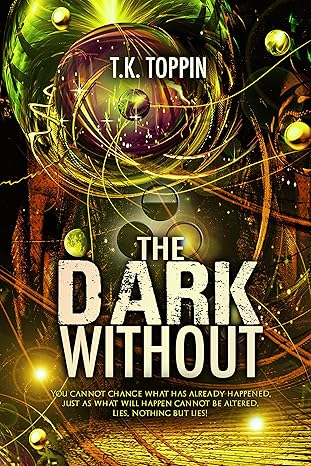
The Dark Without by T.K. Toppin plunges readers into a haunting vision of Earth’s future—a world ravaged by humanity’s excesses and the relentless effects of climate change. In this dystopia, the government holds a monopoly on technology and resources, leaving the rest of society to languish in darkness and poverty. The planet itself has become a sprawling wasteland, its landscape littered with the ruins of centuries. Amidst this grim reality, people cling to fragments of normalcy—attending school, eking out livelihoods—but an air of despair pervades. The bleakness of this setting provokes a deep existential question: what’s the point of it all?
From the start, the story grips you on an emotional level. The world Toppin paints feels disturbingly plausible, a terrifying extrapolation of today’s crises. Esme’s journal entries, recounting her family’s harrowing escape during riots, are especially compelling. These passages tug at the heart, vividly capturing the chaos and fear of displacement. The parallels to real-world struggles are impossible to ignore, adding layers of poignancy and urgency to the narrative.
The plot takes an unexpected turn into science fiction when Esme experiences what can only be described as an alien abduction—but not in the way one might anticipate. This twist is both startling and fascinating, tapping into speculative theories about extraterrestrial involvement in human affairs. While I don’t subscribe to such ideas, the book’s exploration of them is captivating. Toppin crafts a scenario that feels both imaginative and unnervingly credible, lending the story a thought-provoking edge.
Themes of government corruption and humanity’s self-destructive tendencies resonate deeply throughout the book. These elements ground the fantastical aspects of the narrative in reality, prompting readers to reflect on the parallels to our own world. Fiction like this—stories that entertain while challenging us to confront uncomfortable truths—has a unique power. In some ways, The Dark Without feels like a grown-up counterpart to The Lorax, delivering its cautionary tale with a sharp, sophisticated edge.
The ending left a strong impression on me. Dark and perhaps morbid, it feels entirely fitting for the story Toppin tells. It delivers a poetic sense of justice. This is a gripping and thought-provoking read. The emotional depth, compelling themes, and unexpected twists make The Dark Without a standout work of speculative fiction. Highly recommended for anyone ready to be both entertained and unsettled by a vision of what might come if we don’t change course.
Pages: 267 | ASIN : B0BT81K56W

A Sci-Fi Retelling
Pilgrims is a riveting near-future dystopian epic where humanity faces moral decay, societal collapse, and alien annihilation, forcing desperate characters to grapple with their darkest choices. What was the inspiration for the setup of your story?
I’ve never felt satisfied with first-contact sci-fi stories where aliens show up at Earth and we learn we’re not alone. That’s because the reasons the aliens come to Earth don’t usually stand up to scrutiny. For example, the aliens in Independence Day come to Earth because they want our “resources” despite the fact that if you can travel across interstellar space you will encounter all the resources you could ever want on lifeless rocks that don’t have pesky Earthlings defending them. The same goes for The Three Body Problem. Incredible novel, but the Trisolarans have such amazing technology that they don’t really need Earth for their species to survive. The motives are usually weak.
So I wanted to create a first-contact sci-fi story where the aliens’ reason for coming to Earth stands up to scrutiny. And, as outlandish as it sounds, aliens that are devout believers of an Earth religion (in my novel – Catholicism) have a very compelling reason to travel all the way to Earth. It’s such a good motivation in fact, that I was shocked to see no other writer had ever addressed it. And so, I took it upon myself to do so.
Austin DeSantis is an intriguing and well-developed character. What were some driving ideals behind your character’s development?
Pilgrims is a sci-fi retelling of Saint Augustine’s Confessions which was published sometime around 400AD. Now that’s an old book, and yet we still study it because it paints such a brilliant portrait of a troubled man finding his redemption. That’s something we can understand across the ages.
So I kept Saint Augustine as a vision when crafting my protagonist – Austin DeSantis. He is struggling at the beginning of the novel but, through the various trials he encounters, he grows, albeit in an enormously painful way.
What were some themes that were important for you to explore in this book?
Forgiveness – why we need it and why it is so hard. That is the core theme. But the book also explores why it can be so difficult for us to change our minds sometimes because of the things that are unknown even to ourselves that hold us back.
What is the next book that you are working on, and when will it be available?
Austin’s story is not over. The book concludes about fifty days after aliens arrive on Earth and proclaim to be Catholic. What happens to society ten years after such a momentous event? Fifty years? There is still so much story to tell. And I expect the sequels will be coming out over the next few years.
Author Links: GoodReads | X (Twitter) | Facebook | Website | Amazon
Out-of-work Latin teacher and borderline alcoholic Austin DeSantis is determined to spend his final days in the arms of a prostitute-that is if the aliens don’t exterminate humanity first.
But when the aliens land at the Vatican, begin speaking Latin, and reveal themselves to be Catholic, the world turns upside down.
Pressed into service as a translator and thrust into the center of humanity’s first contact with a cryptic alien race, Austin must uncover their true intentions before religious turmoil rips the planet apart. But with Austin caught between the Catholic Church, the US military, and an enigmatic alien AI, he’ll have to decide where his loyalties lie as the fate of humanity hangs in the balance.
PILGRIMS is a sci-fi retelling of Augustine’s Confessions, mixing a high-concept premise à la Children of Time with the ceaseless pacing and rich characterization of Red Rising.
Born in Space: Unlocking Destiny
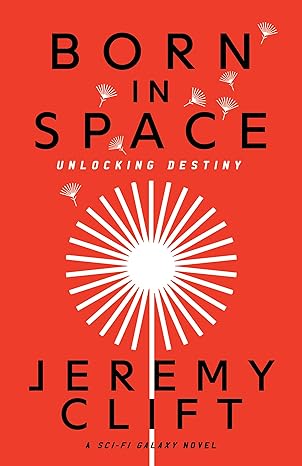
Born in Space: Unlocking Destiny, by Jeremy Clift, transports readers to Tucson, Arizona, in 2063, introducing the Ward family amid a society where artificial intelligence seamlessly integrates into daily life. This relatable yet futuristic setting immediately captivates, highlighting the pervasive role of AI in human existence. We learn that the children’s mother, Clara, is stationed on the Moon as a botanist, working to establish a sustainable food supply. As Earth’s conditions deteriorate, humanity seeks refuge on other planets, though these colonies also face growing unrest.
The narrative intensifies as the Ward family relocates to an orbiting space habitat, delving into profound ethical and moral dilemmas that resonate deeply. Despite its futuristic backdrop, the story remains relatable, reflecting issues not far removed from our current reality. Clift skillfully evokes emotions of remorse, pity, and sadness early in the tale, crafting a narrative that explores the essence of humanity and the potential alienation brought by technological and societal advancements. As a mother, I found myself moved to tears on multiple occasions.
The plot follows both Teagan and Hunter Ward, though Teagan’s journey particularly stands out. While Hunter’s storyline contributes to the overarching message, Teagan emerges as the central figure, her experiences deeply engaging. The antagonists in the novel are portrayed with striking malevolence, and certain scenes are intense, featuring violence and gore that may be challenging for some readers.
Born in Space: Unlocking Destiny serves as a poignant reminder of the consequences of overstepping natural boundaries, especially concerning the future of AI and technology. It’s a compelling read that I highly recommend, and I look forward to adding a physical copy to my collection.
Pages: 443 | ASIN : B0D1PWPRBJ
Dissolution of the Status Quo
Cargo Hold 4 follows eight scientists exploring a dwarf planet and collecting samples who accidentally bring aboard an unseen entity that is now trying to escape the cargo hold it is trapped in. What was the inspiration for the setup of your story?
The idea came to me one day while I was walking. In my mind’s eye, I saw, and heard, something pounding on this huge yellow metal door, making these enormous welts. Cargo Hold 4, those were the words in my head. I let it simmer, the concept refusing to leave. Eventually, I just gave in, needing to find out about this hell-raiser in Cargo Hold 4.
What character did you enjoy writing for? Was there one that was more challenging to write for?
Not any character in particular, really, but more the entire crew. It was challenging from the standpoint of imagining scientists committing their lives to a mission that most of them would not return from. That set up a dynamic that wouldn’t be present in most situations, especially given that they could be in space for fifty years, and only ever encounter one another for the rest of their lives. I know most writers like to go to cryogenic stasis for space travel, but there was no story in that. I wanted to imagine what the crew interaction might be like if they remained awake, and the potential for conflict, intimacy, disagreements, and so on. Then, of course, the slow dissolution of the status quo they had established over the first five years when this entity makes itself known. It really was terrific fun playing with this scenario.
You flawlessly blend Science Fiction and horror in this book. How did you go about blending the two genres without disrupting the story?
Thank you! For me, I guess, the fusion was organic, inevitable. The nexus of the genres met in the same place; with the entity in Cargo Hold 4. Through the unknown idiosyncrasies of outer space, I found the potential for this life form, which leads to quite horrific events. Yet I didn’t want the usual “monster” with the unquenchable lust to kill humans for no reason. The life form had to be something incredible, unimaginable, with a complex intelligence beyond human comprehension.
What is the next book that you’re working on, and when can your fans expect it?
I actually have several books in the works. Some are finished and in the editing stage, with others I’m still working on; a dystopian SF trilogy with a fair amount of horror, and a couple of magical realism love stories I’m also very excited about, though not sure how my SF Horror “fans” will react. That’s always a risk, I guess, changing things up when the “story” takes you in different directions.
Author Links: GoodReads | Facebook | Website | Lonnie Busch Illustrations | AirBusch1 | Crater line design | Amazon


