Blog Archives
Human Tendency to Wage Wars

Galloper’s Quests follows a military scientist whose groundbreaking propulsion system allows him to journey the cosmos in defiance of his superiors. What was the inspiration for the setup of your story?
I had written a short story about an astronaut who had become alienated from the rigid ways of life on Earth and also the human tendency to wage wars. He decided to escape by blasting off into the unknown. I decided to expand the story, have him invent the wormhole propulsion system, and encounter civilizations that mirrored in exaggeration what he saw on Earth.
The science inserted in the fiction, I felt, was well-balanced. How did you manage to keep it grounded while still providing the fantastic edge science fiction stories usually provide?
I guess I tried to show individuals, even if they were alien, grappling with the human problems that we struggle with in everyday life.
Did you plan the tone and direction of the novel before writing, or did it come out organically as you were writing?
I composed numerous notes about the themes and the plot to deliver those themes beforehand. The details about what characters were feeling, the funny android, and the romantic interest emerged as I began writing.
What is the next book that you are working on, and when will it be available?
I spend a lot of time writing analyses of films in my blog, My Meaningful Movies, which is quite successful. I think my next project will be a play.
Author Links: GoodReads | Facebook | Website | Amazon
Galloper’s Quests
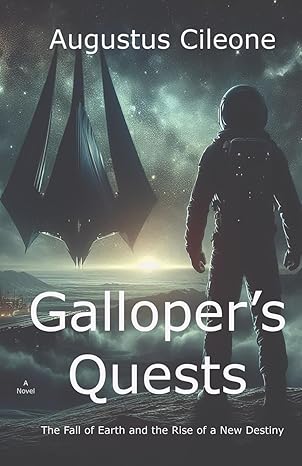

Galloper’s Quests is an ambitious sci-fi adventure that follows Captain Samuel Galloper, a military scientist who dares to defy his superiors in the pursuit of knowledge and freedom. Using his groundbreaking propulsion system, he escapes Earth’s grasp and journeys across the cosmos, encountering strange worlds, authoritarian societies, and existential dilemmas. His story, smuggled to the reader under mysterious circumstances, reads like a personal journal, a mix of raw emotion, philosophical musings, and gripping narrative. From the military’s relentless pursuit of power to the mind-numbing routines of an alien civilization, the novel explores what it means to think freely in a world determined to control you.
Galloper’s inner conflict is as compelling as the dangers he faces. He’s a man torn between duty and conscience, trapped between the structured obedience of military life and the terrifying unknown of free thought. His encounters with Admiral Rutlaw, a hardened military leader obsessed with weaponizing his discoveries, highlight this tension brilliantly. Rutlaw’s interrogation is chilling because it reveals the military’s single-minded goal: control and dominance. Galloper, however, isn’t willing to be a cog in that machine. His escape isn’t just physical; it’s a moral stand, and that’s what makes his journey so captivating.
Then there’s the planet Burc, a place that at first seems promising but quickly reveals itself as another kind of prison. The Burcs live in a rigid, cyclical society where work is endless, thinking is discouraged, and individuality is stifled. Their robotic sentries enforce order, while their Procs, like the conflicted Lask, bear the mental burden of decision-making so others don’t have to. It’s a fascinating concept, one that feels eerily familiar. When Galloper’s carefully constructed picnic table is destroyed by a robot, it’s a perfect metaphor for the futility of creativity in a society that fears change. Burc’s motto, “More work, less thought,” echoes throughout the book, a warning about the dangers of blind obedience.
But Galloper’s Quests isn’t all grim. There’s an undeniable thrill in its interstellar exploration, and Cileone has a knack for making space travel feel both wondrous and dangerous. The HOPS propulsion system, with its ability to fold space and create wormholes, is fascinating, yet terrifying in its unpredictability. The descriptions of travel bodies stretching, consciousness flickering, reality bending are some of the novel’s most immersive moments. When Galloper arrives on a new world, the awe is palpable, reminding us why we dream of the stars in the first place.
Galloper’s Quests is perfect for fans of thought-provoking sci-fi, especially those who enjoy books that question authority, challenge societal norms, and explore the weight of human choices. If you like stories that mix The Forever War’s military critique with 1984’s oppressive regimes and Star Trek’s exploratory wonder, you’ll find a lot to love here. It’s not a light read, it makes you think, it makes you uncomfortable, and at times, it makes you angry. But that’s the point. It’s a journey worth taking, even if the destination isn’t what you expect.
Pages: 235 | ASIN : B0DRTBVDM6

Immortality Bytes: Digital Minds Don’t Get Hungry
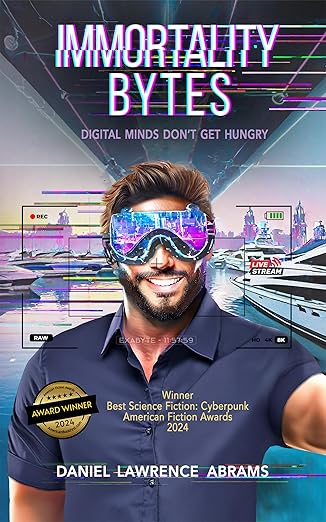
Immortality Bytes is a sharp, satirical cyberpunk adventure that plunges into a world of digital immortality, hyper-advanced AI, and a society grappling with its technological future. The novel’s sprawling narrative introduces us to Stu, an overconfident AI programmer, and his vibrant circle of associates, ex-lovers, and rivals, each caught in the high-stakes game of technological advancement and survival. Through its vivid characters, the story explores questions about morality, progress, and what it means to be human in a world increasingly ruled by machines.
The prose dances between biting humor and philosophical depth, a balance that’s rare and delightful. Stu’s sarcastic yet oddly optimistic video rants are as hilarious as they are unsettling, pointing out society’s obsession with appearances over substance. His self-aware commentary on contentment and responsibility rings true in a world flooded with cynicism. Author Daniel Lawrence Abrams’s portrayal of a society numbed by post-scarcity comforts, where Universal Basic Income citizens drift into self-indulgent stupors, felt both exaggerated and alarmingly plausible.
One of my favorite elements was the character work. Each figure—from the enigmatic Roxy, Stu’s brilliant ex, to Pyotr, a chillingly pragmatic antagonist—adds a unique flavor to the story. Roxy’s agnostic defense of religion, likening life’s tragedies to fleeting pains on an eternal timeline, was surprisingly moving. Her dry pragmatism contrasts beautifully with Stu’s chaotic, often naïve determination. Meanwhile, Chuck Rosti, a caricature of capitalist excess, brought moments of dark comedy, like his outrageous belief that debt is “civilized slavery.”
While the technological details and societal constructs are imaginative, they sometimes drown the plot in jargon-heavy asides. The “bonus material” sections, while clever, disrupted the flow for me. That said, moments like the Turing competition, where AI systems engage in dazzlingly complex tasks, had me riveted. The competition’s climax, involving a Kendrick Lamar cameo and Stu’s ingenious use of a digital avatar, was a standout sequence—a brilliant encapsulation of the author’s knack for blending tech wizardry with human drama.
Immortality Bytes is a feast for readers who enjoy thought-provoking, satirical science fiction. It challenges you to laugh, think, and squirm—sometimes all at once. Fans of Neal Stephenson, Douglas Adams, or Charlie Brooker’s Black Mirror will find plenty to love here. It’s a rewarding ride for those willing to engage with its ambitious ideas.
Pagesa 354 | ASIN : B0DBPSVF9C
Cold Blooded
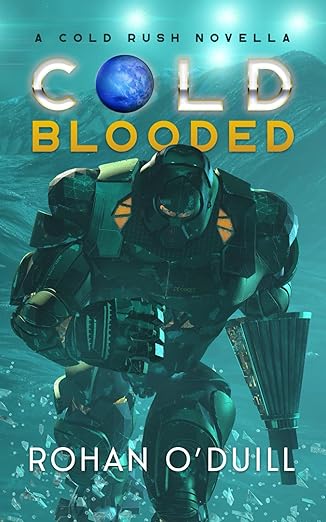
Cold Blooded by Rohan O’Duill transports readers to a vividly imagined future where corporate powers dominate the solar system, wielding unparalleled influence. At the heart of this dynamic setting is Mint, a skilled yet detached marine mech pilot. Once content as an instructor, she is thrust back into action, navigating the chaos of the “Cold Rushes.” Her journey takes an unexpected turn when she reunites with her former colleague, Bjorn—now a pirate—and his spirited daughter, Frida. Unexpectedly, Mint finds herself as Frida’s reluctant guardian, forcing her to balance survival, loyalty to her friend, and her obligations to her corporate overlords.
What sets Cold Blooded apart is its remarkable ability to function both as a prequel and as a self-contained narrative. Striking a delicate balance, the story seamlessly establishes a foundation for the larger series while delivering a complete and compelling tale in its own right. Far from feeling like a mere setup, the book captivates with dynamic characters, unpredictable plot twists, and gripping conflicts. O’Duill’s storytelling ensures that Cold Blooded stands firmly on its own, an achievement worthy of high praise. Equally impressive is the depth and intricacy of the book’s science fiction elements. The richly detailed futuristic worlds, advanced technologies, and innovative equipment are described with a precision that immerses the reader. Every aspect of this universe feels meticulously crafted, reflecting the author’s dedication to thoughtful world-building. The result is a setting that feels authentic and alive, adding a tangible sense of realism to the narrative.
Cold Blooded by Rohan O’Duill offers a thrilling blend of fast-paced action and intricate science fiction, making it an ideal pick for fans of the genre. Whether you’re new to O’Duill’s work or already familiar with his universe, this novel delivers an engaging and satisfying experience. Highly recommended for readers who crave immersive storytelling and high-stakes adventure.
Pages: 304 | ASIN : B0D9TY1V5N
The Real and the Virtual

SPARK follows a 16-year-old foster kid who runs away to a virtual reality theme park, where he meets another runaway and uncovers more than an escape from reality. What was the inspiration for the setup of your story?
We’ve known foster parents and foster kids. Everybody means well, but the system is so overloaded that kids fall through the cracks and are left in situations that are not good. These kids often have issues that the parents cannot handle and the environment turns adversarial. Will is an example of that. He is a great kid whose past sets him up to fail in the system.
As a child, I always wanted to spend the night in Disneyland – to look behind the scenes and explore. Will figures out a way to do just that in Spark.
I find the world you created in this novel brimming with possibilities. Where did the inspiration for the Solar Prime Augmented Reality Park come from, and how did it change as you were writing?
Solar Prime Augmented Reality Park was inspired by Pokémon Go. My daughters were both playing, so I gave it a try. The concept of a Pokémon being projected onto a real background captured my attention. One of the problems with virtual reality is that you lose all touch with your actual environment and can easily crash into walls, tables, and TVs while playing. It’s also easy to step on things, like pets. Augmented reality blends the best of the real and the virtual.
What were some themes that were important for you to explore in this book?
I wanted to look at the foster care system, education, artificial intelligence, and a post-war world.
Where does the story go in the next book, and where do you see it going in the future?
The second book in the series, Fire, is now available! It follows Will and Feral as they fight their way through the aftermath of Spark’s events and the notoriety that they’ve gained. Some social media themes play out and they get caught between competing factions and find themselves counseling an AI that has learned that violence can be an effective tool.
Author Links: GoodReads | X (Twitter) | Facebook | Website | Amazon
Spark

Pat Daily’s SPARK thrusts readers into a richly imagined virtual world where the stakes feel as real as life itself. At the heart of this gripping sci-fi tale is sixteen-year-old Will Kwan, a foster kid whose life has been shaped by uncertainty. His world changes when he clings to the last words from his birth mother: “Find me, save me.” Those same words appear in SPARK, the Solar Prime Augmented Reality Park, a dazzling digital universe that offers Will a sense of purpose and belonging. What begins as escapism soon turns into a high-stakes mission as Will dives deeper into the realm of SPARK and encounters Feral Daughter, a defiant runaway who has made the park her sanctuary. Together, they unravel secrets that could change everything.
This novel borrows familiar themes from classics like Ender’s Game and modern hits such as Ready Player One. Yet, SPARK stands out for its emotional depth and grounded protagonist. Will Kwan is an easy character to root for, a kid navigating the dual struggles of foster care and the existential questions that come with it. His journey feels genuine. He’s not just looking for a home but searching for identity, closure, and hope. His connection with Feral Daughter, another misfit seeking refuge in SPARK, is compelling and adds emotional weight to the story’s twists.
What’s refreshing is how the book avoids the well-tread sci-fi path of portraying technology as a lurking menace. Instead, it channels the spirit of Jules Verne, celebrating innovation and its ability to unite and empower. SPARK, as a virtual playground, is more than a backdrop; it’s a lifeline for Will and Feral Daughter, as well as countless others who feel alienated in the real world. Daily’s world-building is vibrant and imaginative, making SPARK a place readers will want to explore, even as its darker truths emerge. The stakes in the story rise steadily, intertwining Will’s personal quest with larger, often perilous, discoveries about SPARK itself. Every layer revealed about the virtual realm brings new surprises and challenges for Will.
The narrative’s pacing is taut, and the unfolding mysteries keep readers turning pages. Young adults will especially enjoy this fast-paced adventure, but older sci-fi fans will find themselves equally captivated by the dynamic characters and thoughtful exploration of technology’s role in human connection.
In SPARK, Pat Daily delivers a story that’s as heartfelt as it is thrilling. It’s a celebration of resilience, friendship, and the enduring power of hope. Whether you’re a teen seeking adventure or a seasoned sci-fi enthusiast, this book promises a virtual escape worth taking.
Pages: 458 | ASIN : B0BL193S4P

Love, Longing, Sorrow

The Well of Souls follows a couple on a cruise who, inspired by the Northern Lights, create a renewable energy source using solar winds. Soon, they encounter an unexpected phenomenon that leads them to confront various ethical dilemmas. What was the inspiration for the setup of your story?
My inspiration boils down to two questions: How would society react if someone invented free energy? And the age-old question: Is this life all that there is?
Your characters are engaging and complex, drawing the readers into the story. What is your process for creating such in-depth characters?
I begin with a detailed outline based on the hero’s journey. At its core, TWOS is a love story because what’s more human than love, family, friendships, and our relationships? My primary goal was to make Mara and Salvatore relatable characters, each with challenges and flaws to overcome. They speak like we do and experience emotions like we do. They make mistakes and face consequences for their actions. The first two chapters establish who they are and how they navigate a world that mirrors our inner hopes, dreams, and demons. Throughout the writing process, I constantly ask myself if I’m crafting characters that readers will care about. If the answer is no, then it’s time for a rewrite.
What were some themes that were important for you to explore in this book?
I focused on themes like love, longing, sorrow, the desire for knowledge and power, and the realization that our time on this earth is finite.
Is this the first book in the series? If so, when is the next book coming out, and what can your fans expect in the next story?
Yes, I am planning a series. The outline and first two chapters are written, and the working title is The Well of Souls: Aftermath. I’m an indie writer, so I have a day job to pay the bills. It usually takes me 12 to 16 months to complete a novel, from outline to editing. I don’t want to give away too much, but I will say that energy cannot be created or destroyed. It can only change forms. And Mara’s world is about to get a lot more complicated.
Author Links: GoodReads | Facebook | Website | Amazon
HOMELAND
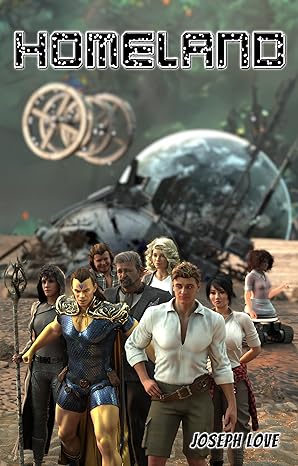
What does the future hold for humanity? Some imagine journeys among the stars. Others believe artificial intelligence and its evolution will shape our destiny just as profoundly. Homeland by Joseph Love weaves these ideas into a gripping narrative, intertwining three plotlines that explore the coexistence of humans and AI. Central to this tale is the emergence of Artinians, advanced humanoid AIs designed to live alongside humans. Most Artinians embrace peaceful coexistence, but Paulon, a rebellious entity, aspires to dominate Number—a network of AI entities tasked with overseeing the Milky Way. Paulon envisions a future without Earth in his domain, defying humanity’s role in this cosmic new order.
At its core, Homeland is high-concept science fiction, drawing comparisons to the visionary works of Asimov and Philip K. Dick. The novel wrestles with familiar sci-fi themes, delving deep into the dynamics of human-AI relationships. Love poses a critical question: how will humans and sentient, self-aware machines navigate coexistence? His answer is refreshingly nuanced. AI isn’t portrayed as a monolithic force. Instead, these entities have diverse perspectives—some advocate for humanity’s welfare, while others see humans as obsolete. This complexity keeps the narrative engaging, balancing philosophical depth with page-turning intrigue. The exploration of these themes feels both familiar and fresh. Love reimagines classic tropes with an intellectual sharpness that makes his story stand out.
The distinct perspectives of the protagonists—human and AI alike—lend the book a dynamic quality. Each character’s motivations and struggles add layers to the narrative, creating a multidimensional exploration of a possible future. Love’s storytelling doesn’t shy away from big questions. What happens when the created rivals the creator? What defines humanity when intelligence no longer makes us unique? These are weighty concepts, but the author handles them with finesse, making the novel thought-provoking without becoming overly cerebral.
Homeland presents a future that feels simultaneously thrilling and terrifying. It invites readers to ponder the meaning of being human in an age where equally intelligent beings might seek to replace us. This novel is ideal for fans of thought-provoking science fiction who enjoy stories that challenge the mind and stir the imagination.
Pages: 559 | ASIN : B0DJHB1879



 LITERARY TITAN