Blog Archives
The Little Dutch Girls
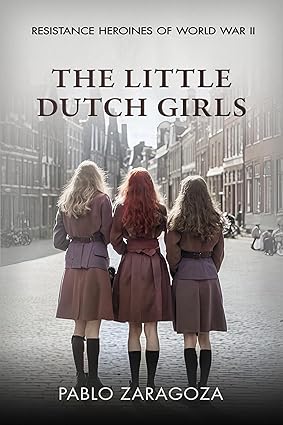

The Little Dutch Girls by Pablo Zaragoza offers a poignant and immersive exploration of the Dutch resistance during World War II, centering on the life of Freddie Oversteegen. Now 82 years old, Freddie, along with her sister Truus and their friend Hannie, has become a symbol of heroism for their courageous actions as teenagers during the war. Yet, despite the admiration that surrounds her, Freddie carries the weight of her past, often haunted by the memories of what she endured and the choices she made.
This historical fiction novel presents Freddie as a central figure, who is interviewed for a documentary about her wartime experiences. Through these interviews, readers are drawn into Freddie’s reflections, her encounters with the film crew, and her emotional journey as she revisits the traumas and triumphs of her youth. Zaragoza skillfully brings Freddie to life as a deeply human character—strong yet vulnerable, willing to share her feelings and inner struggles. This openness provides readers with a nuanced understanding of her emotional state, both during the war and in the present day. Freddie’s honesty about her wartime experiences, her lingering guilt, and the toll it has taken on her life makes her a relatable and compelling character. I found this vulnerability to be one of the most engaging aspects of her portrayal. It’s refreshing to see such raw honesty in a character, especially when discussing the personal impact of historical events. The novel also delves into her personal life, offering glimpses of her relationship with her late husband Jan and their shared journey of raising three children, which adds further depth to her character. Zaragoza’s attention to detail in depicting historical events makes this novel a standout for fans of historical fiction. Freddie’s story, while at the heart of the narrative, is enriched by the backstories of other key characters, even the minor ones, adding layers of realism and complexity to the overall plot. The blend of personal history with broader wartime events creates a well-rounded and vivid portrayal of life during the Dutch resistance.
For readers who enjoy richly detailed historical fiction, The Little Dutch Girls offers a moving, authentic portrayal of war, survival, and the long-lasting effects on those who lived through it. Freddie Oversteegen’s story is a testament to both the strength and fragility of the human spirit, making this novel a compelling and thought-provoking read.
Pages: 220 | ASIN : B0DDTS1SZF

A Poet and An Artist

Moses and Akhenaten: Ancient Egypt Fiction Series Book 1 explores with great detail and some imaginative storytelling the theory that the biblical Moses and the Egyptian Pharaoh Akhenaten were the same person. Where did the idea for this novel come from and how did it develop over time?
Akhenaten amazed me as a child. He was considered the “first monotheist” and “first individual in history”.
As an adult, I wanted to write literary fiction and chose Akhenaten as a subject. This book is a response to a man who was not only a king with a unique religious vision, but also a poet and an artist.
Fiction is an art form that uses elements of the imagination as an artist uses paint. Many paintings are layered and this was my approach. It seemed appropriate because King Akhenaten was many things.
First, there is the little boy, Akhy, and his family, all of whom are based on real people instantly recognizable to those familiar with Egyptian history.
Akhenaten crossed his own time and culture to be of interest to people in many countries living in times different from his own. It is the reason he debates with modern academics in the novel and why a time machine is included.
The real King Akhenaten was an artist so far ahead that much of his work appears to be out of his time. His art, for instance, has been described as expressionistic. It is the reason this novel shows him painting both within his own time and in ours.
Likewise, his ownership of Bessie, the dinosaur is an echo of the Biblical leviathan. This creature is mentioned in Psalm 104, which is also dubbed the Song of Moses. It is this psalm that scholars have equated with Akhenaten’s own Hymn to the Aten. They both appear at the end of this novel where readers may compare the two works at their leisure.
There have been heated responses to the Moses and Akhenaten theory. Ahmed Osman had his book, which boldly stated that Akhenaten was the prophet, burned in the streets of Cairo.
My book is not an altogether serious religious discussion, which is better served in the academic realm of non-fiction. Rather, it is a celebration of the artist and the poet whose religious ideas still intrigue us.
Children appear in the novel because they, more than any of us, express the joy of life and creativity.
As for Akhenaten, Egyptologist and Director General of the Cairo Museum (2004 to 2010), Wafaa El-Saddik once said he was of huge importance, not simply as an Egyptian pharaoh but to the history of the world.
It must be remembered there is still a lot for us to discover about the Egyptian king. In the meantime, while the academics debate and archaeologists dig, this novel invites the reader to celebrate a genius who was a significant thinker and innovator in human history.
Did you find anything in your research of this story that surprised you?
My conclusion, which is that Akhenaten is not Moses.
Once heralded as a forerunner of Christ and the first monotheist, Akhenaten was later considered to be a fanatic who ruled in a manner not unlike that of the Nazis. (This is the reason there is a reference by Akhenaten in the novel to this latter-day interpretation.)
Many people, including the famous psychoanalyst Sigmund Freud, were captivated by both the prophet Moses and the pharaoh Akhenaten without making a connection that the two could be the same individual. Other writers made the connection, including the Egyptian author Ahmed Osman, who declared Akhenaten to be none other than Moses.
I visited Egypt several times, fuelled by the desire to discover more about both Moses and Akhenaten. I am also qualified in Egyptology with a postgraduate degree in the discipline.
The whole process was a massive undertaking and the novel was shelved for many years. Now, after further thought, I have concluded that Akhenaten was not the prophet Moses. Part of the reason is that there are new academic theories and archaeological evidence that support this conclusion.
However, Akhenaten’s revolution was important and still intrigues many historians. What is interesting is that the prince of Egypt, who caused issues in Egypt has no other historical parallel except with Pharaoh Akhenaten.
Both Moses and Akhenaten were raised in Egypt. Moses’ Ten Commandments are a brilliant abbreviation of the Negative Confessions within ancient Egyptian writings. It is no accident, either that there are echoes of Akhenaten in the holy books.
Even while scholars debate Psalm 104 and the Hymn to the Aten, and whether Akhenaten was a monotheist or not, his city is still out there. Badly in need of restoration, my view is that it is a city of global importance, not simply another local heritage site (as valuable as such sites are).
Despite the deep connections between Akhenaten and Moses, for me, Akhenaten stands on his own as a great Egyptian prophet who was light years ahead of his time. There is no need for him to be Moses to hold his place in history.
Egypt should be credited with his achievement as with other great works of their civilization such as the pyramids. The ancient Egyptian civilization was the most advanced of its time, and as Wafaa El-Siddik pointed out, Akhenaten is of immense importance to the world.
What were some ideas that were important for you to share in this book?
I wanted people to think about Akhenaten. We are all aware of Moses from holy texts. Three monotheistic religions recognize him as a prophet. However, archaeological evidence shows that there once lived a king who spearheaded a religious revolution and did something so extraordinary that we are still talking about it. The site of Akhenaten’s city, Tell el-Amarna, which the ancient Greeks referred to as the City of Moses, still exists in the middle of Egypt.
When will book two be available? Can you give us an idea of where that book will take readers?
Book two is available. The Tutankhamen Friendship has a British style because it is about the English discoverers of Tutankhamen’s tomb. Both English and European readers love it, perhaps due to the style and their familiarity with the story.
Book three, The Queen Who Became King is also available. It is based on the true story of an ancient Egyptian queen, and incidentally one of Akhenaten’s ancestors. Feeling that she had to protect her young nephew Tuthmosis, this extraordinary woman stepped up to rule as king. At her death, Hatshepsut left a legacy of a strong country to her nephew. Tuthmosis III, known as Tuthmosis-the-Great, inherited her throne and went on to become Egypt’s greatest conqueror. To this day, he is thought to be Egypt’s foremost military ruler.
Author Links: GoodReads | X | Facebook | Website | Book Review
He could inherit the throne of Egypt …
… and change the world forever.
But does he?
This is the first novel to set Akhenaten in his childhood.
Making use of the theories surrounding a king, who has been thought to be Moses, the book entertains with a poetic tale of children and what might have been, if only it were true!
Famous Duo
The Tutankhamen Friendship weaves a tale of friendship, perseverance, and discovery as archaeologists navigate the challenges and triumphs of unearthing one of history’s greatest archaeological treasures. What inspired you to write this story?
Like many people, I have been fascinated by Tutankhamen since childhood. I initially wrote a book about him. No one knows how the teenage king died, although academics have a variety of theories about his demise. One day, when I was trying to choose Tutankhamen’s death scene, the idea of writing about his discoverers arose.
How did you balance historical accuracy with fictional storytelling when reimagining the personal dynamics between Carter and Carnarvon?
There is a lot of public information about Lord Carnarvon and Howard Carter. It was easy to balance the knowledge of history with fiction, in part because the discovery reads like a novel.
Indiana Jones was a fictional character synonymous with archeology. However, the immensely wealthy English aristocrat, Lord Carnarvon and the driven archaeologist, Howard Carter, were real people. Toss in a beautiful unattainable woman (Lord Carnarvon’s daughter) and you have a recipe for unrequited love. Add Egyptians, French, and Americans, with a dash of Muslim and Christian interaction, and one is headed for something interesting. When it is combined with the threat of an Egyptian revolution and world press attention, it is very easy for a writer to make one small step from historical fact to fiction!
The novel vividly captures the atmosphere of early 20th-century Egypt. What kind of research went into recreating this setting?
I have visited Egypt several times since childhood. Egyptian customs and the way of life have not changed in many parts since Carter and Carnarvon’s time. This assisted me in the depiction of the Egyptian characters, one of whom is a leading character in the story.
It is also possible to walk in the footsteps of Carter and Carnarvon. There are places where the duo frequented, such as the Winter Palace, Castle Carter, and the Tutankhamen’s tomb in the Valley of the Kings, all of which are helpful to a novelist’s creation.
How do you hope readers will connect with the themes of perseverance and friendship in the context of such a monumental historical event?
In every close friendship, there are times when people agree and others when they are at loggerheads. It is easy for readers to connect with Carter and Carnarvon because they had a real friendship.
The famous duo spent years excavating together. They often lived together during those periods of excavation. This proximity to one another created a bond, but it also led to arguments.
Carnarvon’s letter to Carter after a deep rift, possibly over Carter’s feelings for Lady Evelyn, is very touching because he asks for forgiveness. In those days it was unheard of, not simply because Carnarvon was Carter’s employer, but because he was upper class.
With their bond of friendship, these men crossed the social barriers of their time and culture and their communication probably went some way towards making the Tutankhamen discovery. They could have given up several times, but because they were friends, they persevered together to produce a result that staggers us even today.
Author Links: GoodReads | X (Twitter) | Facebook | Website | Amazon
When he learned Tutankhamen was real…
… he started to trust the archaeologist.
But was Lord Carnarvon prepared for an ancient curse?
Carnarvon has three problems, a weak heart, the angry excavator Howard Carter, and dwindling funds.
There are occult forces at work.
He and Carter must learn to fight their powers.
What they didn’t expect was the media. With the curse of an ancient pharaoh still lying in his tomb the pair must find a team to remove the gold before it’s too late.
Navajo History and Culture

Calling Tsela follows a Navajo Nation police officer nearing retirement who discovers his ex-wife and best friend have been murdered and sets out into the desert to find their killer. What was the initial idea behind this story, and how did that transform as you were writing the novel?
The initial idea behind the story was to highlight the human condition and human struggles. Struggles with fear, how we perceive ourselves and how we react to tragedy. No matter how we define ourselves, invariably, others define you differently. So, whose definition of who you are is correct? As one looks at himself and the life he/she has lived, does one’s perception align with that which others have of you and your life? Sometimes, the most accurate mirror to our souls is held by outsiders.
As I wrote this book, I became increasingly interested in Navajo history and culture, both past and present. It was always meant to be a book about supernatural intervention, and a man’s struggle to find peace within himself, but the theme became progressively important as I discovered how to weave it into traditional Navajo spiritual beliefs and practices.
I found Tsela Adakai to be an intriguing character. What was your inspiration for this character?
My inspiration for Tsela was me. While examining my life, I realized that I wasn’t as bad as I thought I was. All my transgressions were a mere blip on the radar of human experience. The scene where Tsela listens to the executioners’ deeds is an example of how Tsela’s image of his own life was put into a new perspective. He thought he was a terrible person before understanding the breadth and depth of our human experience. In the end, he realized that in the grand scheme of things, his past deeds were rather benign, and he deserved happiness.
What were some themes that were important for you to explore in this book?
I wanted to explore the topics of fear and self-loathing in addition to the idea that life goes on past our physical death. We have guides who are here to help us if we just listen to them and focus on awareness. I wanted to educate the reader on Navajo history and culture. I wanted to show how a person like Leo could start out life as a middle-class, suburban girl and transform into a homeless drug addict. She, like many others, slid so slowly into the darkness of that world, that the journey from straight and sane to drug-addled and dependent went largely unnoticed by her, yet obvious to everyone else.
I find a problem with well-written stories in that I always want there to be another book to keep the story going. Is there a second book planned?
Although my first novel The Ring Of Corlan became a trilogy (The Ulian Chronicles), Calling Tsela is a stand-alone novel. Maybe my next book Wilder’s Wish will evolve into another trilogy.
Author Links: GoodReads | Amazon

A science fiction, action, thriller with a supernatural twist
Navajo Nation police officer Tsela Adakai
hopes for a quiet retirement, but he’s not
going to get it. The Navajo spirits are calling,
and they won’t take no for an answer. When
his ex wife and his best friend are murdered,
he sets his sights on revenge. But things get
messy when drug gangs and the CIA
show up in town. When the killer he’s chasing
heads out into the desert, Tsela goes after him.
But what he doesn’t know is that the gangs
and the CIA are close behind. Now he is both
the hunter, and the hunted in a violent and
surreal desert chase. Will the Navajo spirits
help him get his man, or will the gangs and
The CIA get to him first?
Wildwood Healer

Wildwood Healer by Linda Broday is a deeply touching work of historical fiction set against the rugged backdrop of East Texas during the Great Depression. At the center of the story is Sicily, an elderly woman whose heart is as expansive as the woods she lives in. Her quiet, solitary life is upended when Gypsy, a stray dog, wanders onto her porch, followed soon after by Tate, a wounded boy seeking to escape a life of hardship. With compassion and care, Sicily takes both under her wing, and together, they embark on a mission to help a woman escape her abusive husband while striving to restore peace to their fractured town.
From the very first page, Wildwood Healer exudes a haunting beauty. The lush, enveloping woods surrounding Sicily’s cabin feel almost like a character in their own right, offering a sense of solace and history that lingers throughout the story. Broday masterfully captures the atmosphere of the Depression era, infusing the setting with a melancholic tone that makes you feel as though you’re walking alongside the characters, wrapped in the same quiet sadness and resilience. Sicily, in particular, stands out—her warmth, strength, and deep connection to both nature and the people around her make her a deeply relatable and compelling protagonist. You feel her loneliness but also the quiet power that sustains her. While the setting is rich and immersive, the dialogue occasionally falters. There are moments when the conversations between characters feel stilted, lacking the natural flow and depth you might expect. These moments sometimes broke the otherwise strong connection with the story, which was disappointing given how vividly the rest of the narrative is painted. That said, as the plot progresses, the dialogue improves, regaining some of the emotional weight that matches the stunning descriptions of the landscape and the characters’ inner lives. One of the book’s strengths is its exploration of themes like healing, kindness, and the found family bonds that emerge in the most unlikely places. Sicily’s instinctive compassion and the small, meaningful ways she helps those around her serve as a warm counterbalance to the harsh realities of the time. The novel beautifully illustrates how even in the most difficult periods, human connection and empathy can transform lives. The bond between Sicily, Tate, and Gypsy is the heart of the story, showing how moments of kindness can shine through even the darkest of times.
If you’re a fan of historical fiction with strong, vivid imagery and stories that find beauty in tragedy, Wildwood Healer offers plenty to appreciate. The novel’s themes of resilience and the quiet power of human connection make it a memorable and moving read. Its melancholic yet hopeful narrative left a lasting impression, reminding us of the strength it takes to heal, even when the world seems unkind.
Pages: 260 | ASIN : B0DCG282J5
Pompeii: Death Comes Calling

In Pompeii: Death Comes Calling, Lorraine Blundell immerses readers into the vibrant yet volatile world of Pompeii, capturing the intricacies of the resort town’s diverse social fabric. From the opulent lives of the senatorial elite to the struggles of gladiators auctioned for pleasure, the novel paints a rich, multifaceted portrait of a society teetering on the edge of disaster. Readers will walk the bustling streets alongside pimps, dine in villas adorned with stunning frescos, and marvel at exotic treasures brought from distant lands. The beauty of Blundell’s writing lies in how she makes this ancient world feel alive and tangible. Central to the story are characters like Flavia, who yearns for more than the confines of her arranged marriage, and Aelianus, a gladiator whose dreams stretch beyond the brutal arena. Aurelia, an artist whose magnificent frescos push the boundaries of female creativity in a male-dominated world, adds depth and texture to the narrative.
These figures introduce us to the intimate lives of slaves, Freedmen, and Freeborn Roman citizens, illustrating the stark divides and shared experiences that shaped their existence. Pompeii’s social spectrum, from the privileged to the marginalized, is explored with both nuance and authenticity. Blundell expertly sets the stage in the days leading up to the catastrophic eruption of Mount Vesuvius in A.D. 79. The lives of her characters, their ambitions, and desires intertwine as they prepare to face the cataclysmic events that will alter the course of history. The eruption decimates the town, scattering survivors across the empire, yet the novel follows their journey as they rebuild lives from Pompeii’s ashes. Blundell’s mastery of her craft shines throughout the novel. Her descriptions vividly evoke ancient Pompeii’s sights, sounds, and emotions, transporting readers to a world long buried. While the cast of characters is vast and, at times, overwhelming, each is carefully developed, complex, and compelling. The descriptive passages offer a wealth of detail, much like a resort brimming with sensory experiences, inviting readers to immerse themselves fully in the rich world, where there’s always something new to discover at every turn.
For history enthusiasts and historical fiction lovers, Pompeii: Death Comes Calling offers a deeply engaging, thought-provoking read. The novel captures the essence of life in Pompeii before the eruption and traces the emotional aftermath for those who survived. Blundell’s meticulous attention to historical detail, coupled with her imaginative storytelling, will likely spark further interest in the art and architecture of this iconic city. Pompeii: Death Comes Calling serves as a poignant reminder that while life is fragile, the human spirit has an extraordinary capacity to endure.
Pages: 286 | ASIN : B0DCSBH7Q2
Danethrall
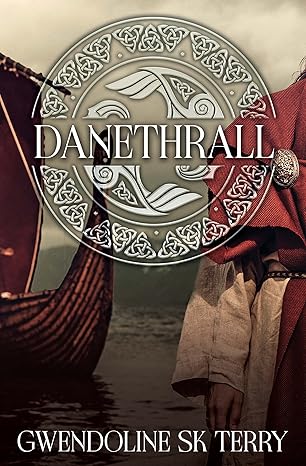
Danethrall by Gwendoline SK Terry is a captivating historical romance that follows the tumultuous life of Aveline, a woman whose fate takes unexpected twists. Set in Denmark between the winter of 870 and the spring of 880, the novel begins when Aveline’s homeland, the “Kingdom of East Angles,” falls to a Danish invasion. Among the captured, she escapes a life of slavery due to her uncanny resemblance to the deceased daughter of Birger, a Danish warrior. Instead of becoming a thrall, Aveline is adopted by Birger and raised as a Danish woman, with Birger fiercely advocating for her acceptance in their society. As Aveline grows into womanhood, she falls in love with a high-ranking Dane in Roskilde, and to her delight, the love is reciprocated. Yet, the promise of happiness is tragically short-lived. When Roskilde is attacked and her beloved is away, Aveline is married off as a peace offering to the very man responsible for the raid. This unexpected turn sets the stage for a story of survival, adaptation, and the sacrifices demanded by a life caught in the crossfire of love and war.
While Danethrall primarily falls within the romance genre, it’s much more than a love story. Terry crafts a vivid tale about survival through adaptability. The characters are defined by their ability to adjust to the harsh realities they face rather than fighting against them. Aveline exemplifies this as she navigates her new life, first accepting her adoption by Birger and later adapting to the brutality of her marriage to Jarl Erhardt. By becoming more agreeable and finding ways to survive the violence she endures, she demonstrates resilience in the face of overwhelming odds.
Similarly, the novel touches on how other characters survive through patience and strategy. For example, Vidar, the man Aveline was initially betrothed to, is devastated when she is married off to another. Though his anger and jealousy are palpable, he restrains himself from acting impulsively, knowing that rash actions would lead to his and his loved ones’ deaths. Instead, Vidar bides his time, preparing for the right moment to strike, and ultimately, his patience pays off in victory.
Terry expertly weaves unexpected plot twists and dramatic developments that keep readers hooked. The changing dynamics within Aveline’s love triangle, particularly the introduction of new players, add complexity and intrigue to the story, making each chapter a page-turner. The vivid descriptions bring the setting to life, immersing readers in the world of ninth-century Denmark.
Danethrall is a gripping tale of love, resilience, and survival in a world where adaptability is key. Gwendoline SK Terry delivers an engrossing narrative with twists that will keep readers engaged, while her vivid writing transports them back to a time of warriors, survival, and tragic love.
Pages: 356 | ASIN : B07BLLW7LK
Female Voices

Tapestry is an intricate, multi-generational tale that weaves together the stories of women who have been marginalized and oppressed but are fiercely resilient. What was the inspiration for the setup of your story?
I felt my maternal ancestors were lining up to have their story told, Tapestry just flowed for my fingers, piecing together the mysteries of their lives with only a little information was a true eye-opener.
What were some ideas that were important for you to personify in your characters?
The ideas were as close to the truth as possible, plus research on the different generations was very important to speak, if possible, in their language.
What were some themes that were important for you to explore in this book?
It was important the truth be told, especially from the early 19th century about the battles we as women endured to have our female voices recognised.
What is the next book that you are working on and when can your fans expect it to be out?
The next book out is called the WEAVERS , a story of modern-day women travelling Australia.
Author Links: Website



 LITERARY TITAN