Blog Archives
Sister Bevenlee and Mother of Pox


Charles Brass’s Sister Bevenlee and Mother of Pox, the third installment in The Tower of Sephalon series, immerses readers in a vibrant fantasy realm replete with mythical creatures and intricate challenges. In this tale, Sister Bevenlee faces the daunting task of confronting a menacing prophecy within the ancient walls of Sephalon. Her journey is fraught with internal struggles and external threats, including the sinister Mother of Pox and her deadly pandemic plot.
Brass skillfully weaves a narrative where Bevenlee’s quest for allies and self-discovery becomes crucial for Sephalon’s survival. The story offers a rich tapestry of dangerous dungeons, ancient ruins, and captivating characters, inviting readers to join Sister Bevenlee in her formidable quest against darkness while clinging to hope. The book’s substantial chapter count and dynamic plot shifts add to its richness, presenting an engaging challenge for readers. These elements, while occasionally demanding a bit more focus, ultimately contribute to the depth and enjoyment of the narrative. The protagonists’ struggles, discoveries, and conflicts are engaging, adding layers to the plot. The novel particularly excels in portraying epic battles, keeping readers invested and anticipating each new development in Sephalon’s saga.
Sister Bevenlee and Mother of Pox presents a richly woven tale of bravery set in a mesmerizing fantasy world. Its ability to balance complex characters and an engaging storyline makes it a commendable addition for those who appreciate the intricacies of fantasy literature.
Pages: 425 | ASIN : B0CQ83PRYF

Resist And Survive
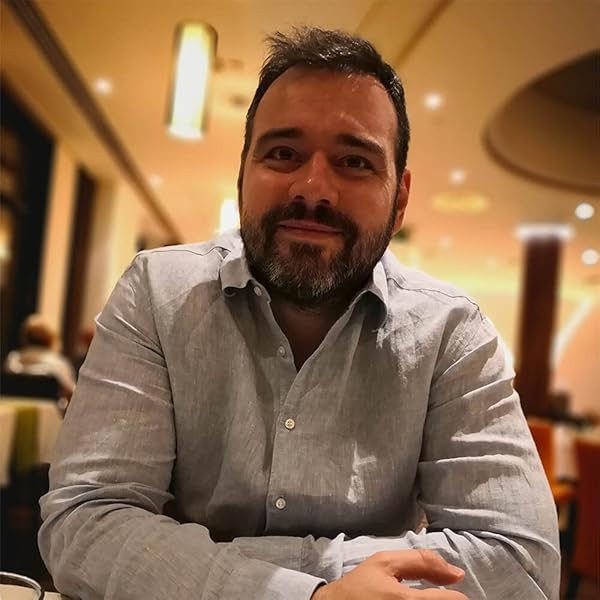
Steve the Zombie follows a seasoned detective infected with the undead plague who is trying to find a cure before he loses what is left of his humanity. What was the inspiration for the setup of your story?
Whenever I’ve read or watched a horror movie, I have always seen one perspective: the survivor’s perspective, their struggle, their will to survive. Then, once I watched a zombie horror movie where the unfortunate person who turned into a zombie had a past, a life, and a family, and was killed just because they turned into something they never wanted to be. This got me thinking: What happens if these people inside still retain some of their humanity? What if they can’t communicate it? In my opinion, good horror is when the main character is helpless, seemingly with no way out, so you have to root for the hero. And what could be more frightening than being surrounded by monsters, bound by something you can’t control, essentially helpless, and then the hero realizes they’ve become the monster too. This is how Steve the Zombie was developed – exploring what happens when someone realizes they’re no longer in control of their body, but still conscious, surrounded by monsters. As they roam with them, they become one of them. Deep within, while everyone wants to hunt them down, the hero tries to resist and survive. Getting into his perspective invokes the greatest fear, where horror isn’t just around the hero, but within the hero – the battlefield isn’t just the streets or the surroundings, but his own body as well.
Steve is not your typical zombie; rather, he holds on to his humanity and determination to save others. What were some driving ideals behind your character’s development?
To draw the line between good and bad, between human and monster, I needed to keep Steve’s core ideals from his former detective self, to set him apart from the monster he ultimately becomes. While he is aware he is a zombie, he must hold strong to his humanity, to not become the true monster everyone fears and that he also despises and fears. One of the core ideals was to present that even if someone appears monstrous on the outside, they can still be a hero, a good person on the inside. In the book, as seen in a few scenes, those who appear human are often more monstrous and cruel than the hero zombie himself.
What intrigues you about the horror and paranormal genres that led you to write this book?
I have always been drawn to the paranormal, the unexplainable. I’m only afraid of a handful of things, but I love to experience fear, like many others. I strive to find ways to scare even myself, which is likely why I write horror – to create scenarios that would frighten me too. Interestingly, my love for horror might have been influenced by my mother watching Alien in a theater while pregnant with me. Needless to say, the Alien franchise is a favorite of mine, with the second installment, Aliens, being my favorite movie. The blend of horror and action in that film resonates deeply with me. One of my other favorite scary movies is Screamers, notable for its isolation, where the heroes also have to confront the unsettling realization that anyone can turn into a terrifying evil monster.
Regarding the paranormal, as a child, I received a book filled with unexplainable mysteries, and I’ve always been captivated by the idea that there are things no one can rationalize, like the Bermuda Triangle or UFOs. Then came The X-Files, which brought visuals to many similar stories I had read and imagined. Horror and the paranormal are two intertwined genres for me, both dealing with the unattainable and often unexplainable. I have a passion for mysteries and constantly seek ways to uncover the enigmatic.
What is the next book that you are working on, and when will it be available?
My next book will be another monster story, but this time set in the Roman Empire. It follows a brave Praetorian Centurion tasked with discovering the true reason behind a madness that has befallen many emperors. The project’s working title is I, Praetorian, and I hope to have it completed this year.
Author Links: Goodreads | Amazon | Website
In a city ravaged by an undead plague, Steve, a seasoned detective, finds himself ensnared in unimaginable horror. His body, overcome by the infection, roams with the mindless horde. Yet, miraculously, his consciousness persists, distinguishing him as a unique aberration among the undead.
As his physical form drifts unchecked among the undead, his fragmented memories coalesce into a grim puzzle, providing vital clues about the onset of the apocalypse. Aware his time is limited, Steve’s mind strains relentlessly to decode the mystery of the epidemic that he failed to investigate and which has now seized his world.
Amid the unrelenting terror, he clings tenaciously to his dwindling humanity, driven by an insatiable need for answers and the faint glimmer of redemption before time runs out. His journey teeters on the precipice of danger; every breath he draws is borrowed, and each heartbeat could be his last, as survivors, determined to reclaim their city, pose a relentless threat.
Steve the Zombie invites you on a chilling, adrenaline-fueled journey into the heart of a dystopian nightmare. Witness a struggle where hope wrestles with despair, as a man trapped within his own body battles the living nightmare that’s consumed him to unearth the truth that eluded him in life. This haunting narrative exposes the stark reality behind the undead apocalypse, offering a perspective on horror that you’ve never experienced before.
Misguided Quest For Redemption

Armageddon: An Apache Story follows a demon who possesses humans and starts a reign of terror and destruction. What was the inspiration for the setup of your story?
Bal’am, the demon, wants to redeem himself through a process by which he takes over the well of the soul of an innocent. I found the idea intriguing that a physical space in the human body houses the soul. Some believe the soul rests in the subject’s pole, the source of consciousness; others feel the soul is held in the interior body; while others place it in the heart chakra. The presence of the soul makes man a unique being. This is why man is a privileged creature who can seek forgiveness; all others of God’s creation cannot. Angels and demons cannot ask or seek forgiveness for actions that they have committed. Therefore, Armageddon is about a soulless creature’s misguided quest for redemption. It is a false quest because Bal’am does not regret his offenses. He wants revenge and not forgiveness.
The other part of my journey with this book is the cast of characters – Native American and not. The cultures of the Hopi and their religious beliefs and the reality of their Kachina spirits become true for our other protagonist Luis, a half-breed, the most dangerous of all creatures because his feet are in both worlds. That is why the Catholic faith and Southwestern Indian traditions collide. This collision of faiths, the dedication of the members of the Apache Medicine Society, and their Catholic counterparts helped me see that we can all work together to fight evil in whatever form it may take. True evil maintains a presence in our world, and we must constantly do battle with it.
Was it important for you to deliver a moral to readers, or was it circumstantial to delivering an effective novel?
Yes, one faith, one perspective does not monopolize the truth. We all hold truth in the way we look at the world. When we first meet Luis, he is a boy who has lived on a farm or really a plantation. When his stepfather dies, he has no reason to stay there. His arc from orphan to possessed televangelist to priest, and to warrior is much like the arcs of many of us. We start in one place, and by the end of our story, we are somewhere else, with many stops along the way. The same goes for Cecilia, a rough street-wise woman searching for her people, becoming a mother, serving as a slave to Bal’am, and escaping those chains to fight for her daughter and grandson. It was important for me to develop each character fully and to show how they manage under harsh, unforgiving circumstances. I wanted them to be real people, and that is why I projected each character through different life experiences.
With the rich history surrounding Apache and Hopi traditions, did you find anything in your research of this story that surprised you?
Yes, the diversity in the Hopi pantheon and how it mirrored the pantheon of angels and saints of the Catholic Church surprised me. Another one was how we place the label Apache on a people who are diverse in their makeup: Apache of Oklahoma, Fort Sill Apache, Oklahoma Jicarilla Apache, New Mexico Mescalero, New Mexico San Carlos Apache, Arizona Tonto Apache, Arizona White Mountain Apache of the Fort Apache Reservation, Arizona Yavapai-Apache, with each group have different traditions stories and beliefs. All of the different sects have similar yet different oral traditions. I wanted to paint the canvas not with just one tradition but with all of the oral traditions of this diverse group.
Where do you see your characters after the book ends?
The struggle against evil is never-ending. Not only the evil that men do but the invisible hand that pushes us to do things that otherwise we’d never consider doing. I believe Luis, Cecilia, Ed Crow, and Marian will encounter pure evil again because Bal’am isn’t dead but waiting for his opportunity to lash out against the world. I believe that Bal’am will find allies in the underworld to help him break his chains and seek vengeance against Luis, his family, and his friends. Return to Armageddon has been written but is still in the pre-publishing stage, a work in progress, so I do not want to scoop the continuing story.
Author Links: Goodreads | Amazon | Website
Apache and Hopi traditions are woven artfully throughout this novel. Bal’am finally enters Luis and begins his reign of terror and destruction. Luis is incarcerated, and through Bal’am’s deceptions and brutality, he takes over the HAND (La Mano Negra), the Mexican Mafia. He also becomes Rev. Bronco, a televangelist who uses his position to give demons the opportunity to possess the innocent. Luis’s young daughter, Raven, becomes the object of Bal’am’s design. By impregnating her, he can dwell in the well of the soul. The possessed Luis thwarts that plan, however. The demon takes over Raven, finds a mate, conceives, and incarnates as Emmanuel, who leads a life of destruction as a child and young adult. With unwavering determination, a small band of believers use Apache and Christian traditions to hunt for the incarnation of evil. Time is running out. Will they defeat the Prince of Hell?


