Blog Archives
Mississippi Wizards


Kenneth Penn’s Mississippi Wizards is a supernatural horror novel built around two women whose lives are separated by time but connected by violence, grief, and a persistent ghost named Nancy. In the present-day storyline, Cassandra and her husband, Ben, head into Mississippi’s De Soto National Forest for what should be a quiet camping trip, only to become targets of a vicious group of white supremacists. Running alongside that ordeal is Liza’s story, set two years earlier, as she navigates family conflict, first love, racism, homophobia, and an escalating threat that follows her into the same wilderness. The alternating perspectives gradually reveal that these aren’t simply parallel stories. They’re pieces of one supernatural puzzle.
Cassandra is the novel’s strongest anchor. She’s funny, impatient, frightened, loving, and stubborn enough to keep moving long after most people would collapse. Her relationship with Ben gives the early chapters warmth and playful energy, which makes the brutality that follows feel personal. Penn also handles Cassandra’s belief that she has schizophrenia with care. For years, she’s understood Nancy as a hallucination produced by trauma, so discovering that the ghost is real doesn’t instantly erase the emotional and physical consequences of her diagnosis. That tension gives the haunting an unusually intimate quality.
Liza’s chapters bring a different kind of pressure. Her romance with Mary is tender and believable, while her relationship with her family, especially her cousin Avery, is full of affection, betrayal, fear, and compromised loyalties. The novel’s racism and homophobia are direct, ugly forces expressed through individual choices and family histories. Penn ties those forces to the supernatural plot without turning them into abstract symbols. Early in the book, Nancy observes, “Change always comes too late for the innocent,” a line that captures the story’s grief while also setting up its interest in whether the past can be confronted, altered, or redeemed.
The book moves like a survival thriller once Cassandra and Ben are attacked, with chases, beatings, escapes, crashes, and confrontations arriving in quick succession. Its horror is physical and graphic, but the stranger element is the gradual collapse of time around the forest. Images, songs, locations, and memories echo between Cassandra’s and Liza’s experiences until the two timelines finally meet. That structure rewards attention, and the final explanation gives earlier scenes new meaning. The book is generous with action and emotional intensity, though its extended confrontations sometimes leave little room to recover before the next crisis begins.
What stayed with me most was the novel’s belief in connection. Cassandra, Liza, and Nancy are all carrying pain that began with someone else’s cruelty, yet their eventual strength comes from trusting and helping one another. That makes Mississippi Wizards more than a story about escaping killers or solving a haunting. It’s a dark, energetic novel about trauma traveling through time, love surviving hostile circumstances, and people finding the power to change a tragedy that once seemed permanent. Its closing scene lands with a welcome sense of wonder, leaving the characters on the edge of a new relationship and one very strange story still waiting to be told.
Pages: 333 | ASIN : B0H8KBZR6R

A Survivor

Creatures of the Night follows an orphan fleeing captivity into the Yukon, where she finds a community of women and confronts human predators and a monstrous presence stalking them. What was the inspiration for the setup of your story?
I’ve wanted to write horror – and a werewolf horror in particular – since I’ve been writing. I was a little kid thinking about how scary werewolves are. But what scared me about them was not a big, menacing dog. I never really got into the stories about the person who has the werewolf curse. For me, I was always more sympathetic toward, or I was more scared for, whoever the other character was. I really loved The Werewolf of Fever Swamp. It scared me so much as a kid. That centralized the victims, not the predator, as werewolf stories tend to do. Talbot and such. We’re supposed to feel for them. And in the other movies, Jenny Agutter’s character, or Emily Perkins’ Brigitte, or Dee Wallace in The Howling, I was always so much more on their side or feeling for them because here was someone they loved and trusted who turned into an out-of-control beast and tried to kill them in their own homes. Of course, that is absolutely a very real and horrifying situation for many women and children out there in the world, especially women and children. So it had to be young women. And of course all kids go through puberty, but for women it’s this huge transition around them where they go from innocent, cute little doll to something to be preyed upon and sexualised, sometimes consciously but also unconsciously, and by members of their own family. The men and women in their own homes suddenly start treating them differently. All of a sudden the world is full of predators, and they are the prey. And it happens so young for them, you know, you listen to women talk about the first time a family member sexualised them, either by accident or deliberately, and it’s like, they’re kids. Children. I think that Little Red Riding Hood takes on a whole new meaning when you know that. The coat being red is a metaphor: the predator, the girl going out on her own. It’s such a vulnerable time.
So I had that. Little Red Riding Hood was the big one, but all of the stories that have used lycanthropy as a metaphor for adolescence. I am a huge fan of Angela Carter’s stories in The Bloody Chamber, and I love Ginger Snaps the movie, but I wanted to bring the concept back to the Red Riding Hood origins, where adolescence makes the girl a predator, which I think is a little unfair, and instead makes them vulnerable to society’s predators. And I needed a setting where all of that could come together, so to speak, with the men everywhere, and religion, and the authorities, all these patriarchal, male-dominated spheres. So a mining boom was perfect. And when I found Donald Trump’s connection to Klondike – his grandfather Frederick was a vile, sex-trafficking pimp and predator; that’s where the Trump fortune started – I had to, because who is the most prominent face of a predator of children today? Of course. Epstein’s number 1 fan and friend. Plus Yukon, Dawson City, it’s so remote, so cold, so isolated. I love Canada’s landscapes. I spend as much time as I can there, and I always feel like I’m going to be inspired by the surroundings. And I did follow the White Trail up to Dawson City, by car – I’m not crazy – and I couldn’t think of a better, or worse, situation to put these women in.
How did you approach writing Eliza’s transformation from the frightened Miss Laura into someone capable of defining her own identity?
As much as I love them and they are an inspiration, I’ve also always been a little offended by the metaphor of adolescence turning a girl into a monster. You see it a lot. Sometimes it’s done beautifully well, with great sensitivity, but I wanted to do the opposite. I wanted to have it, yes, make her vulnerable to predation, but also that feminine rage that comes upon so many girls in puberty; that’s a strength. That’s a defensive mechanism. And with everything I just described, how society just turns on so many girls, of course they lash out. Of course they scream and slam doors and go nuts. I wanted it to both make Eliza vulnerable but also be the defining difference that makes her a survivor and helps her stand up against the dangers.
The women in the novel have remarkably distinct voices and relationships; how did you develop them as individuals while maintaining the sense of a shared found family?
I worked in a women’s prison for three years as a teacher. I taught creative writing and various other literacy-based courses, and while I would never directly depict anyone’s personality with whom I met in there, there were certain dynamics among the women that were really inspiring. The depths of their character. It sounds silly, but women in prison are not only a cohort that are demonized, painted in very simple dimensions, but stupidly sexualised by predator filmmakers as well. But found families were everywhere in there. I saw women who hated each other come to one another’s aid if a vulnerable moment should have come upon them in the presence of the guards or something; the need to protect each other from predation – which the screws in that prison absolutely were – came before any other disputes between the women. It was amazing. Society never looks deep enough to see how amazing the dynamics are in a women’s prison. And who else gets treated like that? Sex workers. In horror especially, the genre has a lot to answer for; the sexual women always die horribly, and they’re never really explored. They don’t have origins or destinations. They’re just victim one, victim two, and the way they’re written, especially if you go back to slasher movies from say twenty to twenty-five years ago, there was almost a fetishised delight or voyeurism in watching these characters die.
So it was very important to get their individuality. I spent a lot of time on that. Who are these women, where do they want to be, where did they come from? I had a great cache of experiences to draw from since the prison.
Was the creature intended to represent the predatory behavior of the men in the story, or do you see it as having a different symbolic meaning?
It was a culmination of the predation by the men, yes, and the religious institutions, and the authorities. Once you open that door, you see it everywhere. Structural predation. Not just enabling predators, but maintaining the vulnerability of their prey. That’s why I had to have a culturally diverse cast. Because as bad as it could be in a Catholic orphanage, there were also residential schools, there were brothels run by Trump-esque men, there were police who used their authority and their positions to prevent people from protecting themselves while not protecting anyone as they should. And of course the fetishisation of Shuya’s culture. You see how a woman like Tigra could occur. I’m not asking for anyone to sympathise with Tigra, really, because she’s ultimately doing her share of awful things, but you can see how a person like that could be created by a world so fiercely predatory.
Author Links: GoodReads | Facebook | Amazon
They don’t know she is being followed. A beast out of mythology will stop at nothing to possess her forever. Or destroy her and everything she loves.
Linking Fiction and the Real World

Betwixt And Between follows a man who wakes up with a new identity, missing memories, a mysterious woman’s photograph, and clues leading him deeper into a world that seems to be rewriting itself. Where did the inspiration for this novel come from?
Betwixt And Between started out as a spy story, similar to a James Bond tale but with a comical twist. The trail I fleshed out in the outline didn’t feel right, and that led me to have the hero wake up in a cheap hotel with total amnesia, my way of letting my hero, Johnny Marathon, lead the way. I encountered some false starts, added and deleted some scenes before an idea struck me. Using the amnesia idea, it wouldn’t be physical or psychological trauma that had brought on Johnny’s memory loss; it was his author, a fledgling writer who built a familiar world (NYC) for his story but failed to consider his characters beyond a name, and even then had little consideration in naming some of his characters beyond descriptions. From there, the scenes and chapters followed what popped into my head, many of them complete surprises to me, like when Man In The White Suit kills Julie or Judy, or when I realized The Fat Man is not only a woman but also a little person.
The novel shifts dramatically in tone and structure early on. Was that twist part of the original concept from the beginning?
My original version started with my hero waking up in the cheap NYC hotel before he sets out to understand who he is and who his love is, but that created a problem – who was this man and why should the reader feel empathy for him when they know no more about him than he does about himself? That was remedied by the addition of five starting chapters that introduce Peter Noble and establishes the reason my story’s author transitions Peter to Johnny.
The novel contains several surprising shifts in perspective and reality. How did you keep the narrative coherent while embracing unpredictability?
I addressed the shift between Peter Noble’s world and that of Johnny Marathon by using a character’s dialogue to foreshadow a major shift in time/space. This is when my character Nick Peggoli makes a statement of fact: “What I can tell you,” Nick said in a near whisper, for her ears only, “is that if Peter’s body is not located, the world as we know it is at an end.”
Linking fiction and the real world was more of a crapshoot. I didn’t know if it would work. That concern changed when I found the reported existence of spirits, Tulpas, who are conjured by Tulpamancers through intense meditation. (See Google AI) That concept was the entry point I needed, with a boost of imagination, for my fiction characters to step across the line between their world and ours
What do you hope readers are still thinking about a week after they finish the book?
I hope readers of Betwixt And Between will appreciate the story my characters created and enjoy referencing the movie dialogue the story’s fictional author provided.
Author Links: GoodReads | X (Twitter) | Instagram | Facebook | Website | Amazon
Betwixt And Between

Steven Twitty’s Betwixt and Between is a wild, self-aware adventure that starts like an international spy thriller and gradually turns into something stranger, funnier, and more personal. The book opens with Peter Noble, a polished CIA operative tangled in danger, romance, and shadowy global threats. Then the story shifts into the bewildering life of Johnny Marathon, a man who wakes up with a new identity, missing memories, a mysterious woman’s photograph, and a trail of clues that keeps pulling him deeper into a world that seems to be rewriting itself as he moves through it.
What makes the novel work is the way it treats identity as both a mystery and a performance. Johnny isn’t just trying to figure out where he is or who’s chasing him. He’s trying to understand why he exists at all. The line “Let us be who we are” lands as more than a plea from one character to an author. It becomes the emotional center of the book, especially as Johnny begins to realize that love, memory, and free will may matter just as much to fictional people as they do to real ones.
The book has a playful and cinematic quality. Scenes move with the snap of a movie sequence, from seedy hotel rooms and snowy New York streets to mobster showdowns and oddball encounters with characters who feel like they’ve wandered in from several genres at once. The humor comes through in the names, the dialogue, and the absurd situations, but there’s also a sincere thread running through it. Johnny’s search for the woman in the photograph gives the chaos a steady heartbeat.
Twitty also has fun with the relationship between creator and creation. Andy Kromoski, the author inside the story, becomes more than a clever device. He’s the person Johnny needs to confront in order to understand the rules of his world. One of the book’s most fitting lines is, “Life is an unfinished story until you meet the author.” That idea gives the novel its shape, turning the adventure into a conversation about storytelling itself, and about whether characters can outgrow the plans made for them.
Betwixt and Between is a genre-blending novel about characters fighting for meaning inside a story that won’t sit still. It’s part spy tale, part urban chase, part comic fantasy, and part love story, with Johnny Marathon at the center as a man who becomes more fully himself the closer he gets to the truth. The result is offbeat, energetic, and surprisingly heartfelt, especially in the way it treats love as the one force strong enough to survive every rewrite.
Pages: 345 | ASIN : B0DSZ6KFK2
Creating a Unique Creature

JaqueJaw follows a broken, brilliant man with childhood trauma, a twisted fascination with chaos, and unchecked scientific ambition, who creates the ultimate predator and unleashes it on hikers and townsfolk, leaving a trail of death and destruction in its wake. What was the inspiration for the setup of your story?
The inspiration for the setup of the story: I had an image of one of my characters pop in my head before writing. Benji Crudry. I saw him talking to a group of scouts in my mind and the JaqueJaw was peering through mangled brush, as they were sitting upon logs around a campfire in the woods. In the final draft of JaqueJaw though, Crudry talks to Albie and Nathan and they see the JaqueJaw weave in and out of view. So, slight change.
Were you able to achieve everything you wanted with the characters in the novel?
I am generally happy with the characters I’ve created. This being noted, I think there could be room to delve deeper into each character and possibly create stories based upon the individual characters e.g. more of their lifestyles, their dreams/interactions, pre and post. There could be offshoots in other words depicting their minds and associated attributes including their various flaws/dysfunctions. The impetus of the story or the skeleton of the story, if you will, originally revolved around the premise of writing a simple type trope where a monster i.e. the JaqueJaw attacks a variety of people and kills them off mercilessly. I realized later on that I needed a type of storyline and other characters that could serve to embellish the story and flesh it out more to better entertain.
What were some themes that were important for you to explore in this book?
The theme of revenge seems to be embedded in human nature via jealousy and hate/rage. I am interested in understanding why people and why my characters do what they do and perhaps more importantly, how they do what they do, all in all. The theme of social interaction is big on my list as well to explore. How are the characters interacting with one another? What motivates them to act, and how do they treat one another based on their flaws and attributes in general? Additionally, another theme I found important to explore was/is the idea of JaqueJaw and how to make it frightening to readers. Consequently, I found that Bardd needed to be portrayed as having a type of “hypnotic romantic” relationship with JaqueJaw in terms of subjective creation and exploration of creating a unique creature, which even though frightens Bardd, still makes him proud and protective of his creation because he created it. So, in this way, there is a type of egomania and moxie in Bardd and also a curious contradiction here. That is, there’s an equation of fear and love that Bardd has for JaqueJaw, but also a willingness, especially towards the end, to give up and forget about his creation and even Darla, his sister, in the end. These aspects serve to provide David L. Bardd with more complexity I feel.
What is the next book that you are working on, and when can your fans expect it to be out?
I’m working on a romance story now. It’s too early for me to pin a date of release. To provide some context, JaqueJaw and A Love Refracted In A Stream took me about seven years to write(I started them both circa 2017) So, it will depend upon a couple of things, in terms of actual writing and editing. Also, the preparation and “finalization” of the manuscript (with a publishing group) may be an issue.
Author Links: GoodReads | X (Twitter) | Website | Amazon
Twists and Turns

Wolf’s Hyde follows a sheriff investigating several murders that don’t appear to have been committed by a human. What was the inspiration for the setup of your story?
I wanted to write a “different” story that gave nods to all my favorite tales in the genre. The movie The Usual Suspects is one of my favorite movies, and I wanted to create something that had that level of twists and turns. It was also very important for me to write a fast-paced book. I wanted to draw non-readers in. So, from the first page, it launches the reader into the fire and keeps them there until the end. If I can give them nightmares while still wanting to keep reading, then I have done my job… Hopefully.
How much and what kind of research went into the elements of folklore in your book?
Weeks that turned into Months. Burning my eyes out from internet searches and making sure I wasn’t going too far to be disrespectful of the Navajo culture. From the historical points to the folklore, I dug deep and wide, looking for anything I could pull ideas and inspiration from but was still broad enough that I could make it my own. I have Native American heritage that goes back through my family tree, so it is something that I have been drawn to since I was a kid.
What is it that draws you to write horror stories?
Being born in the late 70s, all we had in the 80s and early 90s growing up were paperback books. We didn’t have thousands of movies out as we do now that you can watch from the comfort of your bed to your toilet. If you were a horror fan, you read. That’s what we did. Horror has always been something that not only I was drawn to but my family as well. Saturday afternoon Thriller Features, Twilight Zone, and Tales from The Darkside were constantly on our TV while growing up. There is just something about being scared that draws me in for more. It’s like a roller coaster rush to me.
What is the next book that you are working on, and when will it be available?
Currently, I am wrapping up a novella titled “Sexbomb.” It is a story that takes place in the late 1970s Las Vegas. Where we find the famous singers Tom Jones and Billie Preston are vampire hunters. It’s a mixture of Fear and Loathing meets Fright Night. Lots of dark humor. I am shooting for the spring of 2025 for the release.
But have no fear. I have already started two follow-up books to “Wolf’s Hyde.” There is much, much more to come from Tanaka and Norman. As well as other characters from the book. I didn’t intend to make a series out of this story but as it came to the end I was like… yes… this needs to be a series. Even I wanted more.
Author Links: GoodReads | Facebook | Website | Amazon
From the author who brought you the horror story collection, Free Candy, comes the novel Wolf’s Hyde. From the trenches of Nazi Germany to the streets of Detroit. Follow one man’s crusade fueled by guilt and driven by wrath.
Wolf’s Hyde
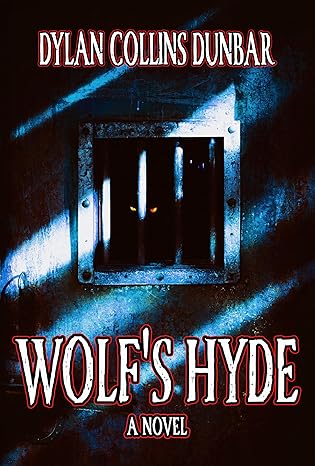

Skinwalker. Lycanthrope. Yee Naaldlooshii. Werewolf. By any name, Tanaka Chee had dedicated his life to hunting it down and destroying it. After a violent killing spree in Flagstaff, Arizona claimed his daughter as one of its victims, the creature became his singular target. As Tanaka connected fragments of his Native American heritage with tales of murder spanning the country, one truth became clear: the werewolf operating under the name Norman was cunning. Tracking where Norman had been proved far easier than predicting where he would strike next. Whether the creature’s elaborate game of cat and mouse was a blessing or a curse, Tanaka didn’t know. What he did know was this: he would stop him or die trying.
Wolf’s Hyde, by Dylan Collins Dunbar, is a supernatural thriller that wastes no time plunging readers into its dark and relentless narrative. From the chilling introduction of the werewolf to the heartbreaking presence of Barbara Chee and, later, her father Tanaka, the story maintains a constant undercurrent of dread. Native American folklore enriches the narrative, blending seamlessly with the timeless European legends of werewolves and monsters that have haunted humanity for centuries. Norman, the ever-elusive antagonist, moves through the story under various identities, but Dunbar reveals only what is necessary, precisely when it needs to be known. This masterful restraint adds layers to the book’s intrigue, keeping readers both captivated and unnerved.
At its core, Wolf’s Hyde is about a father’s grief and his relentless pursuit of closure. Tanaka’s love for his daughter drives the story, grounding the horror elements with emotional weight. The tension between hunter and hunted intensifies with every page as Norman and Tanaka close in on each other. Despite revenge being a familiar theme in literature, Dunbar makes it feel original and organic here, breathing fresh life into the narrative. The balance between emotional depth and raw suspense is handled with precision, ensuring neither element overshadows the other. Dunbar’s take on werewolf mythology is equally impressive. He honors classic lore while threading it with unique twists that keep the story vibrant and unexpected. Readers familiar with traditional supernatural tales will appreciate the nods to established mythology, while the incorporation of Native American legends adds a distinct and refreshing perspective. This fusion sets Wolf’s Hyde apart from other entries in the genre, elevating it beyond a mere creature feature.
The pacing is relentless. From the opening scenes to the book’s climax, Dunbar maintains an unyielding grip on the reader’s attention. The twists are clever and well-timed, often steering the plot in directions that surprise and delight. Just when the story seems predictable, it veers sharply, ensuring readers remain on edge. These unexpected turns are what transform a good thriller into an exceptional one. The conclusion, while inevitable and satisfying, left me conflicted, a testament to how deeply invested I became in the story. Whether it delivered the ending I wanted mattered little in the end; what mattered was the journey, and Dunbar delivered it brilliantly. I found myself torn between admiration for the book’s full-circle resolution and a lingering sense of wanting more—a feeling only the best stories evoke.
In Wolf’s Hyde, Dylan Collins Dunbar crafts a gripping tale of horror, vengeance, and human resilience. The seamless blend of folklore, emotional depth, and thrilling suspense ensures it lingers long after the final page. For fans of supernatural thrillers, this novel delivers everything one could hope for: tension, surprises, and a story that refuses to be put down. It is a worthy addition to werewolf lore, written with skill, heart, and just enough darkness to haunt its readers.
Pages: 306 | ASIN : B0DHYD4JXS
Patience, Imagination and Research

Magnanotron follows an elite military team who are tasked with testing a new defensive weapon and protecting it from those who are trying to steal the technology. What inspired the setup of your story?
In my Bond of Brothers stories, I like to use current events, things that happened or could happen in the world we live in today. I have my base in my characters and the idea comes to me. Patience, imagination and research, and the game is on.
The characters in your series are well-developed and interesting. What character did you enjoy writing for? Was there one that was more challenging to write for?
It’s Tex Larson, I can see him clearly, the way he moves, his imposing presence before me. This time it was Jason Patrick, his change to Commanding Officer in charge, took some time to see him clearly.
How did you balance the action scenes with the story elements and still keep a fast pace in the story?
This comes two ways for me. One way just seems natural to me as the storyline brings itself and builds into the action scenes. The other way is carefully placing the action scenes after the bulk of the story is written. This is done as I go through the story and flesh things out to give the writing the feel it needs.
I hope the series continues in other books. If so, where will the story take readers?
Our special forces are on call, they stand ready to protect us and so will my Delta team and the Bond of Brothers.
I’m sure something will hit the radar, start the wheels rolling. Bring the fight back to protect our freedom and the need for boots on the ground. Delta will be back.
Author Links: Goodreads | Twitter | Website | Amazon
Two years after the Black Water threat, Colonel Jason Patrick now lives a quieter life as commander of Fort Bragg Army base – but he longs to be back in the field with his Delta Team brothers, now under the steady and capable leadership of Tex Larson.
And it isn’t long before Delta Team is thrust back into the heart-pounding action, as they prepare to test the revolutionary Magnanotron, a defensive weapon that promises to change warfare forever; a literal forcefield around the soldier wearing it. The nano-magnetic technology is stirring amazement and excitement at the very highest levels of U.S. military and government.
But, as excitement mounts, enemies both foreign and domestic plot to seize Magnanotron for themselves. Russian President Baranov and his SRV operatives will stop at nothing to obtain this game-changing technology – even if it means kidnapping a brilliant American scientist and igniting an international crisis.
With tensions escalating and lives on the line, Delta Team springs into action, determined to rescue their comrade and safeguard the Magnanotron from falling into the wrong hands. In a race against time, Tex and his elite team must navigate deadly waters, and face off against cunning and ruthless adversaries.
Gripping and adrenaline-fueled, Magnanotron is a heart-stopping thriller that will leave readers on the edge of their seats until the very last page.


