Blog Archives
The Arts Council


When I finished The Arts Council, a satirical novel by Dolly Gray Landon, I felt like I’d been dropped into a carnival mirror version of the arts world. The book follows Honorée Oinkbladder, a gifted young artist raised inside a family business that quietly manufactures the physical tokens of achievement for institutions everywhere. Through her eyes, we watch a small city’s arts ecosystem twist itself into a tangle of ego, corruption, favoritism, and theatrical self-importance. Her tense rivalry with Modesty Greedance unfolds against a backdrop of inflated awards, misused donor funds, and a once-noble arts council that has drifted far from its original ideals. The result is a story that sits squarely in the literary satire genre, though it often reads like a character-driven dramedy with teeth.
The writing is lush, verbose in a way that feels deliberate, like Landon wants the excess itself to be part of the joke. There are long, winding sentences loaded with wordplay and invented terms, and then sudden needle pricks of clarity. It’s funny, but also strange, because the humor is threaded through moments that cut close to the bone: the way Honorée hides her beauty so she won’t attract the wrong kind of attention, or the way Modesty relies on spectacle instead of craft because spectacle is what the system rewards. The satire bites hardest when the book peels back the arts council’s history, revealing how a once-merit-driven institution slowly rotted after a leadership collapse. The contrast between past ideals and current dysfunction is one of the book’s most memorable tensions.
What I liked most was how much the novel asks us to think about value. Who gets to decide what counts as art. Who benefits from the illusion of fairness. Who learns to play the game and who refuses. Even the absurd elements feel purposeful: Honorée’s family literally manufactures the symbols that feed inflated egos, yet they see through them more clearly than anyone else. That irony gives the book a reflective core I didn’t expect. The novel also manages to be playful without losing its edge. It mocks the arts world, yes, but it also mourns what the arts can become when honesty gives way to self-interest. I found myself chuckling at one page and nodding in recognition on the next.
The Arts Council is a bold, brainy satire with a lot on its mind. I’d recommend it to readers who enjoy literary fiction that doesn’t mind being a little unruly, especially anyone curious about the messy intersection of art, ego, and institutions. If you like stories that mix humor with critique and aren’t afraid of dense, stylized prose, this one will keep you thinking. For readers who enjoy sharp, offbeat takes on creative culture, it’s a fascinating ride.
Pages: 558 | ASIN : B0G2TFBLHZ

Time to Publish

The Long Red Hair and Other Short Stories is a collection of short stories, flash fiction, essays, and some true stories, shifting seamlessly between humor, nostalgia, and reflection. What was the inspiration for this collection of stories?
I felt it was time to publish a collection.
How did you decide on the themes that run throughout your book?
There were no particular themes. The author notes best describe what happens in the book.
Were there any stories that were particularly difficult to write? If so, why?
Writing about both childhood and adult sexual abuse, such as in my story, “Evie’s Shadows,” was challenging.
What is the next book that you are working on, and when can your fans expect it to be out?
I am in the process of writing a novel. Sorry, no spoiler on the topic. It is going slowly. I hope to complete it within a year.
Author Links: GoodReads | Facebook | Website | Amazon
I am indebted to the many good folks taking part in various writing groups who have included me over many years. We shared our work, listened to others’ writing, and offered writing prompt suggestions; some of the fiction stories here originate from these suggestions.
SEVEN BLACKBIRDS
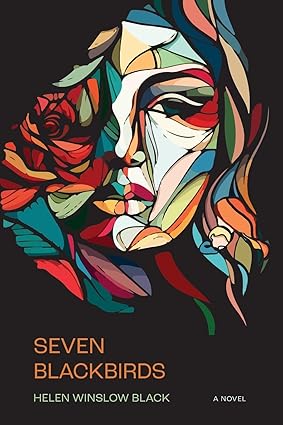

Seven Blackbirds tells the story of Kim, a woman trapped in an abusive marriage, struggling to protect herself and her infant son while trying to reconcile her past hopes with the starkness of her reality. The book moves through moments of violence, fear, and shame, but also into fragile glimpses of self-discovery and resilience. It shifts between memory and present action, weaving together family histories, friendships, and the slow, painful recognition of what love is not. At its heart, it is a book about survival and the small but vital sparks of strength that carry someone through darkness.
The writing is plainspoken, and that’s what makes it sting. There are no flourishes to soften the blows. The scenes of abuse hit hard because they’re described without sensationalism, just matter-of-fact, as if the narrator is bracing herself in silence. At times, I wanted to look away, but I couldn’t. I found myself angry, then sad, then oddly relieved when Kim found small moments of clarity. What struck me most was how the book captured the inner confusion, the push and pull of wanting to believe things will get better, even when the evidence piles up that they won’t. It’s uncomfortable, but it feels real.
Sometimes the pacing slowed in places. I’d get pulled deep into a scene, then taken through passages that felt more like personal notes. But life under control and abuse isn’t tidy. It’s messy, repetitive, and often without resolution. What I admired most was how the book carried its emotional weight without preaching. It didn’t tell me how to feel; it just put me in the room and let me sit there until I had to come up with my own reaction.
By the time I finished, I felt both heavy and grateful. This isn’t an easy book, but it’s an important one. I’d recommend it to readers who want a story that isn’t afraid of discomfort, people who are drawn to voices that speak plainly about pain yet carry a thread of stubborn hope. It would resonate with those interested in women’s stories, in survival, and in the quiet bravery of telling the truth when silence might feel safer.
Pages: 268 | ASIN : B0037UY4U2

The Night of the Animals

The Night of the Animals, by J.J. Pascal, follows René Navarro through a series of winding, strange, and often grim encounters after his mother’s death. The story begins with a bitter family truce and moves through bars, dusty basements, cramped apartments, and funeral parlors as René becomes entangled with a man named Pascal, a theater troupe, and an elusive family “treasure.” The narrative jumps between present action and memories, mingling bleak humor, oddball side characters, and moments of quiet despair. Death hovers everywhere, sometimes literally, sometimes just the decay of lives gone stale, and yet there’s always a sense that René is searching for something to give all of it meaning.
I found the writing to be wonderfully vivid and strange, the sort that can make a chipped coffee mug or a hole in the wall feel like a portal. Pascal doesn’t shy away from disturbing images or awkward moments, and I liked that honesty. There’s a dark comic undercurrent that kept me turning pages, bits of absurdity dropped into the middle of grief or poverty. At times, the style felt almost claustrophobic, piling sensory detail on top of emotional weight until I felt just as trapped as the characters. That density could be exhausting, but it also fit the mood perfectly.
Beneath all the odd errands and shifting conversations, there’s a constant pull toward identity. How much of who we are is built from family history, and how much is just chance? The book plays with doubles, echoes, and repetitions, as if lives can overlap without ever quite touching. Some moments hit hard: the little observations about aging, fear, and small cruelties landed more heavily than the plot twists. Other times, I wished the story would move faster, but I can’t deny that the slower pace gave room for its unique textures to sink in.
I’d recommend The Night of the Animals to readers who enjoy literary fiction that leans into the strange and the melancholy. If you like stories where humor and sadness share the same breath, where objects hold memories, and where characters feel like they’ve been living long before the first page, this one will reward your patience. It’s not a light read, but it’s the sort that stays with you, gnawing at the edges of your thoughts.
Pages: 129 | ASIN : B0F4Z78QXP
A Warped Sensibility

In Terrestrial Passions, an unsuspecting widow finds her life transformed by the extraterrestrial who arrives in her orchard via starship. What was the inspiration for the setup of your story?
I think that I’ve learned an important lesson writing this book. You see, it’s a satire. If you look at the reader reviews, about half of the readers are laughing their pants off, get the offbeat literary humor, and understand that all the detailed historical background is being used in the service of its outrageous, surreal humor. The other half are trying to read it in romance genre terms, and therefore thinking that it’s off-key. The lesson: committed Regency romance fans take their genre rather seriously and don’t laugh at it; science fiction fans, on the other hand, are more likely to get a kick out of it. The result: a large number of 5-star reviews from the Hitchhiker’s Guide, Life of Brian, and Black Adder crowd, plus Lit Majors who have spent many a long night with Jane Austen and feel liberated by being able to laugh…and bewildered negatives from those expecting a serious romance with a tinge of spice. Even Literary Titan’s own reviewer, who did an admirable job analysing the book’s historical accuracies, never mentioned that it’s funny – while some other reviewers, the humor is ALL they talk about.
This is on me, not on the readers. On the way the book is marketed and packaged. I’ll have to tweak the presentation so it reaches its intended audience I think.
My inspiration…yes, indeed, it comes from having read all six Jane Austen novels in school, in England. Loved them. But her early novel Northanger Abbey is a bit different…you could see her going the way of the wild, satirical fantasy adventure rather than the way she ended up being best known for. It’s this playful version of Jane that inspires this book (with a bunch of Dickens tropes thrown in). Then…
I was at Cambridge the same years as Douglas Adams. This book, in a sense, comes from a similar mental place…a warped sensibility…highly intellectual yet sardonically detached. It’s what Americans call “British humor,” I think. An odd thing since according to the Library of Congress, my works are classified as “fiction, American.” This is what you get for growing up in too many countries.
What was your approach to writing the interactions between your characters?
No matter how outlandish, as far as the characters are concerned, it’s really happening. That’s really the only to make a story this weird be believable.
Within this book, you flawlessly blend historical fiction and science fiction. It takes exceptional talent to blend the two genres. How did you go about blending the two genres without disrupting the story?
They are the two genres that have most influenced me since childhood, and I have done several quite serious stories set in the past with fantasy elements, like my multiple award-winning werewolf novel Moon Dance. When it comes to science fiction, however, I can’t seem to escape “comedy.” My Hugo-nominated Aquila series is about the Roman conquest of America, but it’s essentially a laugh-a-minute romp.
What is the next book you are working on, and when will it be available?
I am finishing the third volume of my Delicatus trilogy — historical fiction which isn’t comedic at all (despite some arch dialogue at times), and starting another trilogy, the Yrth series, for new New York publisher Brazen House.
Author Links: GoodReads | Facebook | Website | Amazon
A rollicking satire that blends the world of Jane Austen with the sci-fi universes of E.T. and The Day the Earth Stood Still by World Fantasy Award-winning author S.P. Somtow, this story has been a top faved ongoing serial in Amazon Vella.
Alien View: Where Science and Technology Meet Human Behavior
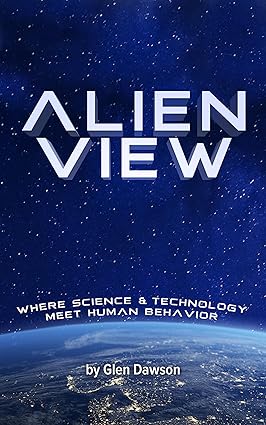
Alien View: Where Science and Technology Meet Human Behavior, by Dawson, presents a thought-provoking narrative that delves into the disparity between ideal human actions and reality. The book employs a blend of humor and symbolism to illustrate this gap, suggesting that to a hypothetically superior alien intelligence, human endeavors might appear trivial, comparable to our perception of our canine companions.
Dawson’s approach is far from disheartening. He skillfully utilizes humor to dissect major contemporary issues, offering a fresh perspective by incorporating abstract concepts and extraterrestrial viewpoints. The book confronts the absurdities inherent in many of today’s crises, presenting them in a novel light, enriching the reading experience while effectively conveying the message that the world is facing rapidly escalating challenges. At the heart of this book is the notion that the intellectual gap between humans and these imagined aliens is as vast as that between humans and dogs. These aliens, depicted as beings of superior intelligence, perhaps due to their longevity or species differences, view human struggles and their often inadequate resolutions with a mix of disappointment and disdain.
The central theme of the book is intriguing. The portrayal of the aliens, envisioned as advanced life forms, sometimes echoes the familiar tones of an impassioned social media user, adding a uniquely human dimension to their character. The narrative creatively mirrors a modern-day Everyman allegory, engagingly bringing abstract concepts and beings into conversation with humans. This inventive storytelling approach lends a fresh perspective.
Alien View stands as an inventive and thought-provoking work that blends science, technology, and human behavior in a unique and engaging way. Its fresh take on the allegorical narrative style and its insightful exploration of complex themes offers readers a stimulating journey through contemporary issues. The book invites introspection and discussion, making it a valuable addition for those interested in a novel perspective on the human condition and our place in the universe.
Pages: 223 | ASIN : B0CPS7GF8X



 LITERARY TITAN