Blog Archives
Oral Histories

Coal Dust on Purple Asters is a trilogy of short fiction centered around the hardship and hope found in the coal country of rural Kentucky. What was the inspiration for the setup of your story?
My mother grew up as a coal miner’s daughter in Knott County, Kentucky, during the 1930s and 40s. While her family’s reality was often defined by hardship and poverty, my grandmother’s stories also sparkled with the resilience of people who found dignity and contentment despite those struggles. As a writer, I felt a natural pull toward those memories. While the stories in this collection are fictionalized, there is a deep kernel of truth in each one that honors my family’s history.
Coal is both a livelihood and a threat throughout the book. What conversations or research influenced how you portrayed the tension between pride in mining and its human cost?
It is a profound contrast. In the 1920s and 30s, the mines were treacherous — thick with dust and the constant threat of roof collapses. Yet, for many, the mines offered a “decent” living that farming or blacksmithing simply couldn’t provide. There is a specific kind of pride in doing a dangerous, difficult job well, and the men who entered those tunnels with pickaxes felt that deeply. My portrayal of this tension was heavily influenced by the oral histories passed down through my mother’s family, capturing both the physical toll on the land and the quiet pride of the workers.
Despite loss and hardship, the book keeps returning to hope. How do you balance darkness and grace in your storytelling?
I believe the human spirit naturally gravitates toward the light. The mining families of that era faced immense obstacles, but they didn’t face them in isolation; they lived in tight-knit, fiercely supportive communities. By focusing on that communal strength, the “grace” emerges naturally. It’s about showing how people cling to one another in the dark, how the sun still manages to break through a cloud of coal dust.
What is the next book you are working on, and when will it be available?
I enjoyed the short story format so much that I am currently completing another trilogy of fiction. This new project remains in the same time period but shifts the setting to the farmlands of Northeast Tennessee. There isn’t a firm release date yet, but I’ll share more updates soon!
Author Links: GoodReads | Facebook | Website | Amazon
In “Rain on Chinquapin Holler,” Wiley Hicks’ heart is torn between his mountain-bred wife and a perfumed city woman who represents everything he both desires and despises. Meanwhile, bootleg whiskey offers both escape and enslavement. A devastating flood forces impossible choices that leave no one unscathed.
“A Sprig of Purple Asters” follows May Owens, whose unemployed miner husband vacillates between pride and despair while their sons’ bellies grow hollow. When her opportunistic brothers arrive, May’s desperate gamble saves her family by nearly destroying it.
The final story — “Red Snow in the Kentucky Woods” — follows young James Herald Gibson who, after losing his father and brother to a mine collapse, vows never to descend below ground himself, whatever the cost. His choice spirals into a decades-long mystery of family secrets and unbearable guilt.
Throughout, characters speak in the lilting cadence of mountainfolk whose poetic speech preserves the rhythms and phrases of their Elizabethan ancestors.
Coal Dust on Purple Asters: A Trilogy of Short Fiction
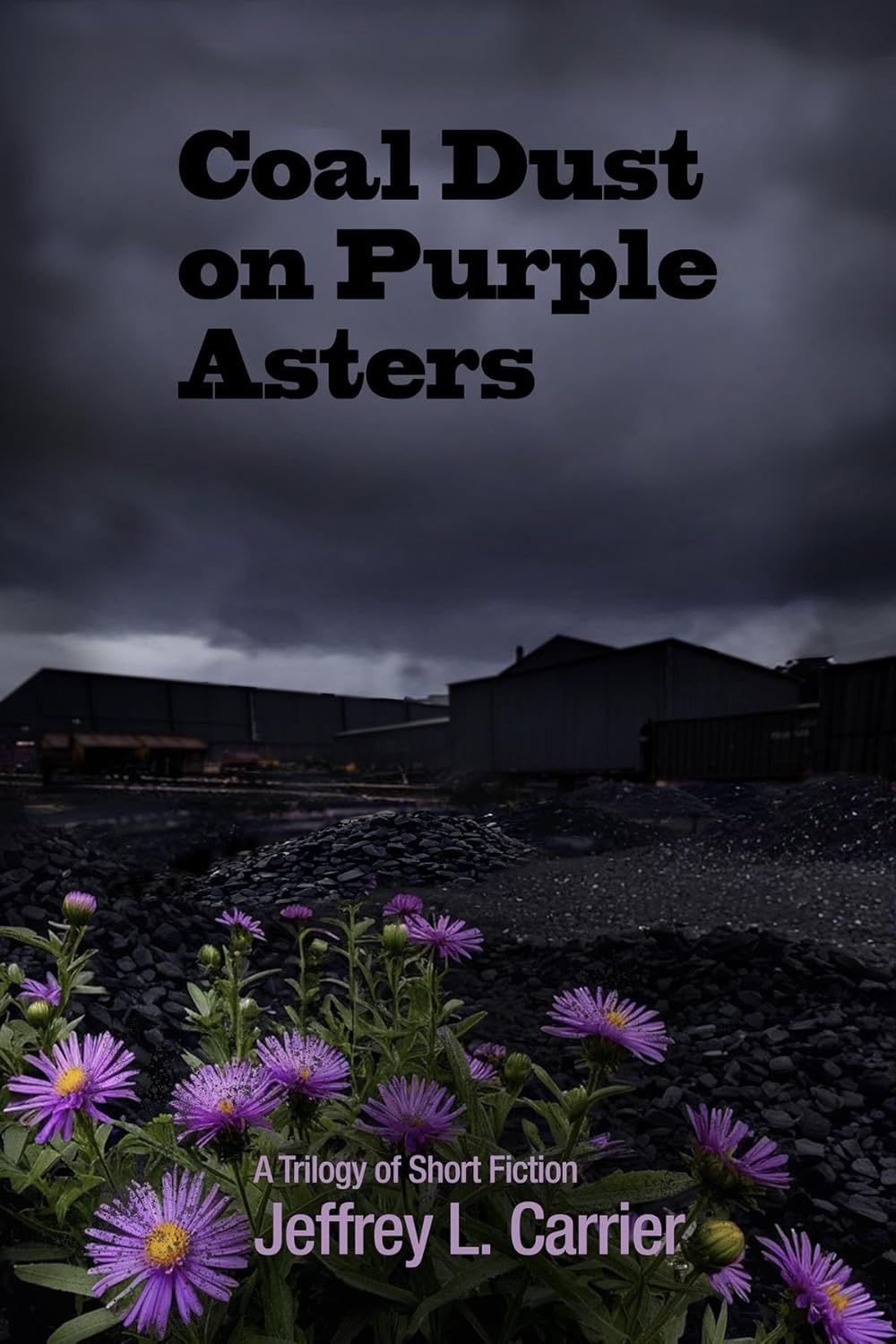

Coal Dust on Purple Asters is a linked trio of stories set in a small Kentucky coal county, framed by a brief, personal introduction from the author about his own mountain family and the memories that shaped him. We follow Vergie Hicks and her girls as a cheating husband, a sudden flood, and an act of sacrifice tear their home apart. Then we move into the Depression years with May and Zeke Owens, their hungry boys, two wild outlaw brothers, and a house fire that burns away more than old boards yet leaves a stubborn core of hope. In the final story, the focus widens to miners like Clarence Gibson, his friend Estill, and the schoolchildren in Jip Creek, and we see how coal, danger, and pride wrap around several generations in the same valley. Across all three pieces, the book keeps circling the same things: coal dust and purple asters, hard work and tiny bright bits of beauty. The result feels like one long family album, even when the characters change.
I felt the writing land in a very sensory way. The pages are full of simple images that linger, like hens clinging to rafters while floodwater rises, or a child hanging to a branch above churned mud, or a Purple Heart medal turning up in warm ashes beside a few cracked teacups. The scenes are clear in my head, almost like I watched an old film instead of reading a book. I liked how the dialogue keeps the Appalachian speech patterns without turning the characters into jokes. The rhythm of that talk feels loving and careful. Sometimes the descriptive passages run a little long for my taste, and the similes stack up, so a scene can feel heavy when the emotion is already strong. Even then, I never felt lost. The pacing in the flood chapter in particular stays tight, so the dread just builds and builds until the house finally goes. By the time Wiley dives back into that mess to reach his family, I was rooting for him and dreading what I knew was coming.
What I really liked, though, were the ideas underneath the stories. There is a hard look at men who drink, drift, and hurt the people who love them, but there is also room for them to be brave and soft in their last moments. Wiley is both the man who cheats and the man who saves. Zeke is the father who cannot keep steady work and also the man who stands in front of his burned-out house and says they will build again. I liked how the book never lets poverty turn into a simple tragedy tale. The people bend. They scheme. They do questionable things to keep food on the table and keep danger away from kids. May’s decision to set her own home on fire so her brothers will stay away is wild and a little shocking, and I could still feel the tight knot of fear that pushes her there. I also enjoyed the way the last story steps back and talks about mining itself, about pride in the work and the pull to leave for the sake of your lungs and your children. Hearing Clarence talk about coal like faith while Estill talks about coal like a slow death gave me that uneasy feeling you get when two truths sit side by side and both sound right.
The book would be a strong fit for readers who enjoy regional fiction, family sagas in short form, or historical stories about working people and small towns. If you like character-driven plots, clear scene-setting, and stories that do not flinch from trouble but still reach for grace, this will likely work for you. I would recommend Coal Dust on Purple Asters to anyone who wants to spend time in a vivid place with flawed, stubborn, loving people and to anyone curious about the human cost behind those old coal seams and mountain stories.
Pages: 89 | ASIN : B0G8RX9NV8



