Blog Archives
The Escape


The Escape, by Eve M. Riley, is a contemporary romance that follows two people on opposite sides of the country each trying to outrun parts of their lives that no longer fit. Aiden, a brilliant but emotionally guarded tech founder, sells the company he built from nothing and suddenly faces a terrifying blank space where his purpose used to be. Emma, a razor-sharp New York lawyer, sees the ground shifting under her feet when a ruthless colleague threatens the career she’s spent fifteen years building. Both of them are pushed toward escape, but in ways they didn’t expect and aren’t fully prepared to admit to themselves.
Riley builds her characters from the inside out, and that pulled me in. Aiden’s interior world feels both ordered and cracked, like a glass that has been knocked but not shattered. His past in the Romanian orphanage, the tremor in his hands, and the way he tries to manage his life by managing objects on his desk. Those details land with quiet force. Emma, on the other hand, is all sharp lines and forward motion until you glimpse the exhaustion under her competence. Her scenes with her family, her sister, even the texts from her mother, felt so real I could practically hear the phone buzz. The author lets their defenses show without stripping them of dignity, which kept me rooting for both of them long before their paths crossed.
What surprised me most was how much the book explores the idea of identity inside a romance-driven plot. Aiden’s wealth doesn’t free him; it disorients him. Emma’s success doesn’t shield her; it isolates her. Both are accomplished adults who still feel like they’re standing in the wrong rooms of their own lives. The writing makes space for that confusion. Some moments are clipped and almost businesslike. Others slow down and stretch out, like the narrator is finally taking a breath. The shift in tone feels intentional. It mirrors the way big life changes often come in waves that don’t match each other. I liked that the book didn’t rush to soothe anything too quickly.
The Escape is a contemporary romance novel, but it leans into emotional excavation more than tropey spectacle. I’d recommend it to readers who enjoy character-driven stories with grown adults who are messy, thoughtful, competent, and a little lost. If you like romance that blends heart with personal reckoning, this one will land well.
Pages: 312 | ASIN : B0FG2Z4ZZC

Sense of Unease

Friday at Four follows a researcher who happens upon an unexpected method for communicating with his dog and discovers what it means to truly be understood. What was the inspiration for the setup of your story?
I don’t know where the inspiration for this book came from. Somewhere on vacation in France, at some point, I was overcome by a great sense of unease. I had to go and buy a notebook and a pen, and I started writing. I just followed the flow of my thoughts.
Did you plan the tone and direction of the novel before writing, or did it come out organically as you were writing?
I never felt that I had any influence on this story. It was literally dictated to me. But I don’t know by whom or how. It was like a compulsion that had me in its grip for two years.
What experience in your life has had the biggest impact on your writing?
The slow death of a loved one.
What is the next book you are working on, and when will it be available?
I’m going to publish a very funny book about a failed art forger – before Christmas, I hope.
Author Links: GoodReads | X (Twitter) | Website | Amazon
Few novels capture with such honesty the way love can be eroded by silence and then, in the face of death, renewed in its most fragile and essential form. This is not just a story about a man caught between two women, but about how we confront loss, and how even in the darkest moments tenderness and clarity can emerge. It lingers in the mind as a stark yet luminous meditation on what it means to live, to love, and to let go.
Friday at four is a powerful novel about love, betrayal, and the courage to face loss — written with clarity, honesty, and unforgettable emotional force.
\
Friday at Four

Gert Richter’s Friday at Four opens as a story about a man, his marriage, and his dog, but it quickly becomes something far more mysterious. The narrator, David, is a researcher whose logical world begins to blur when he finds an unexpected way to communicate with his dog, Lea. What starts as an odd experiment turns into a quiet, haunting meditation on connection, identity, and what it really means to be understood. The novel moves gently between the ordinary and the uncanny, asking big questions in the smallest moments.
What I found most striking about this book is Richter’s ability to blend warmth with unease. The early scenes feel almost playful. David’s tone is ironic, funny, even a little smug, but slowly, the edges soften. There’s something raw and human beneath his intellect. Richter writes with an understated confidence that makes even the strangest moments feel believable. You can feel the pull between love and loneliness, curiosity and fear, running through every page.
The prose itself is clear and unhurried, yet full of quiet emotion. Richter’s descriptions of everyday things, a glance, a walk by the river, the silence after a conversation, carry a strange electricity. I found myself rereading certain lines just to feel their rhythm again. The book doesn’t lecture; it invites reflection. You sense the author’s fascination with how people and animals connect, how relationships can both reveal and dissolve who we are.
What makes Friday at Four memorable isn’t its plot, but its mood, the sense of drifting between clarity and confusion, between science and feeling. It’s not a loud book, but it lingers. I finished it feeling both calmed and unsettled, the way you might after a long, searching conversation that doesn’t quite end.
I’d recommend Friday at Four to readers who enjoy introspective fiction, books that take their time, that ask more questions than they answer. It’s especially for those who like stories that explore thought and emotion without ever spelling things out. If you’ve ever found yourself looking into your pet’s eyes and wondering what they see when they look back at you, this novel will feel strangely familiar.
Pages: 320 | ISBN : 978-2940364602
Starting Over

Second Chances in Brittany follows a retired professional who expected a romantic adventure in France with her husband but finds herself in a quiet battle for her own autonomy and identity. Where did the idea for this book come from?
Shortly after moving from Brussels to Brittany, I joined a group of English ex-patriates who met regularly for lunch. Their different motives for moving to Brittany were fascinating, as were their original expectations of what it would be like to live here, and their different ways of adapting (or refusing to adapt) to what they found. When driving home, I found myself working through storylines about people moving to Brittany.
What character did you enjoy writing for? Was there one that was more challenging to write for?
The two characters I most enjoy are the backbone of the series – Charles Pullen and Gérard Lemestre – but in this book they are in the background.
The most difficult character to write was Sarah herself. I wanted someone capable of planning and organising the perfect move to Brittany, but that’s a dull story on its own. I needed to create a flaw in her character to ensure that things didn’t go as planned, and settled on her adoration for a disastrous husband. Sarah wasn’t initially a sympathetic character, too business-like, too efficient, and yet stupidly deferring to James. But the more I understood her, the more she rounded out into someone worth knowing.
Did you plan the tone and direction of the novel before writing, or did it come out organically as you were writing?
The setting was planned and has never changed. But I initially wrote just to get all the stories I’d thought up interwoven into one coherent whole. That proved to need more than one book. Splitting my initial ideas into separate books entailed moving incidents to different dates and times of year. Something like arranging a large bunch of flowers between six vases!
What is the next book we can look forward to seeing from you?
The second book in the series is Pasts Present in Brittany, following a Canadian woman who moves to France and suffers too much bad luck before coming to Brittany and finding friends and Charles Pullen.
Author Links: GoodReads | X | Facebook | Website
A second honeymoon in France was supposed to save Sarah’s marriage. Instead, it changes her life forever.
Sarah Pullen arrives in the enchanting coastal town of Saint-Malo, ready to rebuild her relationship with her husband, James. With a dream penthouse, charming neighbors, and the romance of Brittany all around her, she dares to believe their love can be rekindled.
But then the cracks begin to show. Painful headaches. Lingering doubts. And finally, one devastating truth that shatters everything she thought she knew about her marriage.
Left alone in a foreign land, Sarah must summon the courage to start over. As she discovers friendship, resilience, and a hidden secret that reaches far beyond her own life, she realizes that endings can also be beginnings… and that hope has a way of finding you when you least expect it.
Second Chances in Brittany is the unforgettable first novel in Anne Morenn’s Romance in Brittany series, a poignant, uplifting story of love, betrayal, and the healing power of starting again.
Recipient of the Literary Titan’s Book Award
Second Chances in Brittany
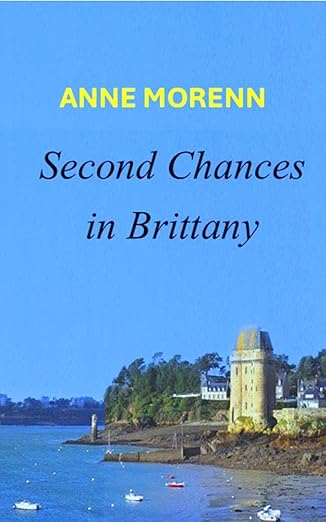

Second Chances in Brittany follows Sarah Pullen, a retired professional whose life in France with her husband James is anything but the romantic adventure she once imagined. What begins as a medical mystery about Sarah’s relentless headaches slowly unfolds into a deeply personal struggle for autonomy, identity, and renewal. Through Sarah’s quiet courage and resourcefulness, the story shifts from despair and control toward resilience and rediscovery, set against the evocative backdrop of Brittany’s landscapes, communities, and rhythms of life.
The writing itself struck me as unpretentious, direct, and steady. At times, the prose felt plain, but that plainness carried its own weight. It mirrored Sarah’s methodical thinking and gave her voice a grounded, believable tone. What I enjoyed most were the moments where the local community came alive, like the social clubs, the Qi Gong classes, and the warmth of neighbors. Those glimpses of ordinary joy felt like bursts of fresh air in Sarah’s otherwise suffocating marriage. I did wish that the book lingered a little more in those brighter spaces, but perhaps the contrast is what makes them stand out so strongly. It reminded me that healing often starts in small, overlooked places.
I found James exasperating. His constant belittling of Sarah and his obsessive control were difficult to witness. Yet this very reaction shows how vividly the author sketched him. Sarah, on the other hand, grew on me page by page. Her quiet defiance, her small acts of rebellion, and her longing for connection outside of her marriage carried a raw honesty that made me root for her. I admired the way she strategized like a project manager even while navigating deeply personal pain. It felt relatable in a way that made me both ache for her and cheer her on.
By the end, I found the book both sobering and uplifting. It’s a quiet story of a woman reclaiming herself after decades of silence, which I found moving. Second Chances in Brittany reminded me of The Awakening by Kate Chopin, since both novels capture a woman’s quiet but determined journey toward reclaiming her independence and sense of self against the weight of a controlling relationship. I’d recommend Second Chances in Brittany to readers who enjoy character-driven stories about resilience, reinvention, and the complicated textures of later life. It’s especially powerful for anyone who has felt overshadowed in a relationship and is looking for a narrative that validates the strength in carving out a new path.
Pages: 394 | ASIN : B0DTBZTH65
The Christmas Miracle

The Christmas Miracle follows Peter Travis, a man marked by grief yet blessed with resilience, who navigates a life shaped by loss, love, and small miracles. He runs Briana’s Bistro, a place that holds both memories of a past love and the heartbeat of his present family. Through tender moments with his wife Laura and their children, strained encounters with troubling figures like Stephen Hobbs, and the unexpected bond with a boy named Terry, Peter’s world becomes a tapestry of sorrow, second chances, and quiet redemption. At its heart, the book reflects on love’s endurance in the face of tragedy, and how the spirit of Christmas can illuminate even the darkest corners of life.
I found myself moved by the writing. Barbara Avon’s style has a rhythm that feels both intimate and unpolished in the best way. She doesn’t shy away from heavy emotion, and the words carry raw honesty. Sometimes the prose wanders, slipping into almost dreamlike passages, and while that can slow the pace, it also makes the story feel authentic. I felt like I was sitting at Peter’s kitchen table listening to him unspool his life, full of regrets and blessings tangled together. There were moments I had to pause, the weight of grief so vividly drawn that it pressed on my chest. Yet the warmth of family and the small, ordinary joys gave the story its balance.
What lingered most for me was the way the book treats memory. Ghosts of the past aren’t just haunting, they’re guiding, shaping how Peter learns to love again. I liked how the bistro itself became a character, almost a shrine, where the past and present collided. At times, the melodrama was heavy, but I couldn’t deny how much I cared about these characters. Their flaws, their resilience, their hunger for meaning, all of it struck a chord. The dialogue, especially between Peter and Laura, felt tender and believable. And the introduction of Terry added a fresh spark, a reminder of hope in unlikely places.
This isn’t a story of neat resolutions. It’s a reminder that miracles don’t erase pain, they stand alongside it. I’d recommend The Christmas Miracle to readers who want a heartfelt, emotional ride, especially those drawn to family dramas and holiday tales with depth. It’s not a light read, but it’s one that leaves you holding tighter to the people you love, and maybe seeing the season with softer eyes.
Pages: 199 | ASIN : B08BN6LY9X

What May Lie Ahead
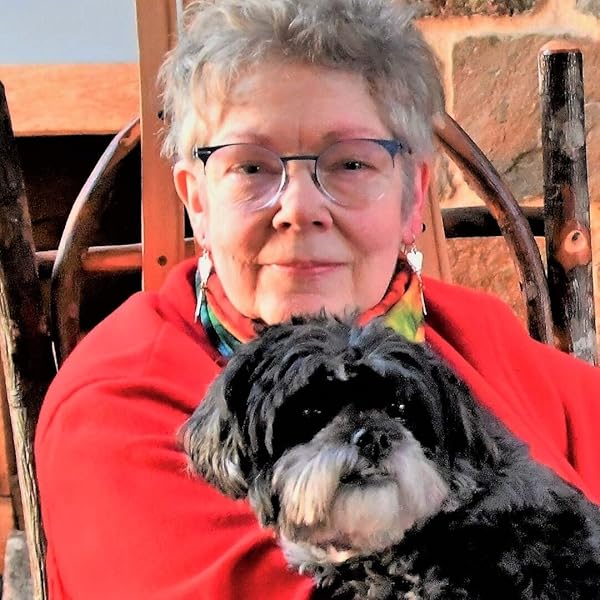
Life and Love on Mouse Island follows a 61-year-old New Yorker who inherits a dilapidated house on a remote island, leading her to sell her NYC home and move where she goes on a journey of rediscovery, connection, and an adventure starting life over. What was the inspiration for the setup of your story?
Over the years, I have visited a number of islands both here and abroad. All seem to share certain qualities in common: a powerful sense of community, self-sufficiency, and strength that I find very appealing. That kind of interaction and interdependency enables people to reach out and count on each other to a degree that living in a large metropolitan area often doesn’t provide.
I knew I wanted to write a book for older women. Too often I have found romance novels focus on younger women in their 20s or 30s at the beginning of their lives. I wanted to focus on mature, grown-up women who had been through a variety of life experiences but were still looking forward to what may lie ahead.
My story ideas come from a number of different places. I have a varied work history (TV/radio producer, talk show host, writer/photographer, stand-up comedian) that comes in handy for background information.
My experiences help to add depth to my characters. In addition, I am an avid dog-lover and have worked with rescue and service dogs. So, dogs always play a role in my books.
I find that, while writing, you sometimes ask questions and have the characters answer them. Do you find that to be true? What questions did you ask yourself while writing this story?
I really enjoy writing dialogue for my characters. It helps to define who they are and I relish the free-flowing interactions. Writing dialog can be both challenging and exciting as the characters’ voices can lead you in different directions you never expected.
Occasionally, a character will wander off track and I have to round them up and bring them back into the story. When that happens, the result can be fresh and fun. I generally keep to an outline I have in my head about what the theme of the book is going to be and who’s going to do what. When I am trying to plot a scene, especially a pivotal one, I sometimes daydream about it like a short film. I take a walk, a nap, or listen to music and let my mind wander. If I have trouble with an opening sentence and it is not perfect I insert a basic line, what I consider a spacer sentence. And come back to it when I have a better feel for it.
Probably the biggest source of questions that I ask myself when I’m writing is, “Is this authentic? Is this true?” The authenticity of the characters and of their voices and how they interact with each other is vitally important to me. I will often read sequences aloud to make sure that they sound the right note.
Will there be a follow-up novel to this story? If so, what aspects of the story will the next book cover?
My next book which I’m getting ready to start will be a sequel to this one and will focus on many of the characters that are featured in Life and Love on Mouse Island.
One of the main characters in the upcoming book will have Parkinson’s. I myself have Parkinson’s. It was diagnosed over 17 years ago. I want to focus on people living fulfilling lives regardless of the challenges they face.
Taking emotional risks when you are older feels scarier and more vulnerable than when you are in your twenties. Yet the rewards can be so much stronger and richer. It is well worth the risk especially when love enters the picture.
Author Links: GoodReads | Amazon
That’s what sixty-one-year-old Isabel wants to know. A lifelong introvert, she gets the shock of her life when a woman she has never met leaves her a house. After a lifetime plagued by anxieties and worry, Isabel decides to take a leap of faith, sells everything, and moves from NYC to Mouse Island.
There are difficulties along the way. But with the help of new friends and a three-legged rescue dog, she begins to get in touch with an inner strength she didn’t know she had. Then there’s the question of who left her the house… the answer to that mystery may be hidden within the house she has come to know and love. And speaking of love…along the way, Isabel meets a man who could well be the love of her life.
Fall in love with Mouse Island.
Life and Love on Mouse Island
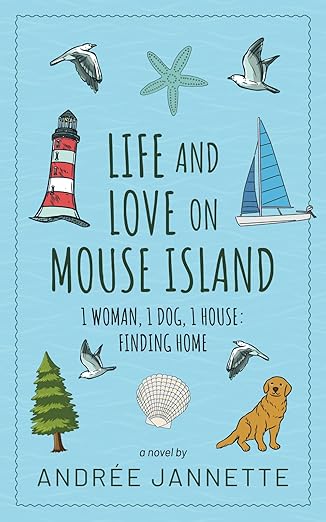
Life and Love on Mouse Island is a heartwarming tale about Isabel Flynn, a sixty-something New Yorker who inherits a dilapidated house on a remote island off the coast of Maine. Looking to start over after a long career in the city, Isabel arrives on Mouse Island only to be immediately challenged by everything from the rough sea journey to a crumbling front step and, eventually, a three-legged rescue dog. What unfolds is a story of rediscovery, connection, and the often messy but beautiful process of building a new life from the ground up.
Jannette’s writing is clear and inviting, with a warm tone that wraps around you like a knitted scarf on a cold morning. Isabel isn’t some glamorous heroine; she’s real. She’s insecure, unsure of herself, stubborn, messy. And yet, that’s what makes her so relatable. There were moments that made me laugh—especially her battle with an ancient toaster oven—and others that genuinely moved me. Watching Isabel slowly open up, face her fears, and grow into someone more courageous and whole was a journey that felt both authentic and uplifting. I found myself rooting for her the whole way.
But what really hit me hard was the quiet beauty of the relationships. They sneak up on you. A helpful handyman with unexpected depth. A mysterious artist with green eyes and a past. And of course, Sadie, the injured puppy who becomes the heart of the story. These characters aren’t flashy or overly dramatic, they’re gentle, flawed, and kind. And that’s exactly why it works. It feels like real life. Honest, complicated, and occasionally magical.
If you’re someone who’s ever thought about starting over or needed a nudge to believe you could, Life and Love on Mouse Island will speak to you. It’s perfect for readers who enjoy cozy, character-driven fiction with a touch of humor and heart. I’d especially recommend it to fans of Eleanor Oliphant Is Completely Fine or The Shell Seekers. It’s a reminder that it’s never too late to make a new beginning, fall in love, or rescue a dog, or maybe even yourself.
Pages: 312 | ASIN : B0F6T924SK



 LITERARY TITAN