Blog Archives
Damnatio Memoriae


Somtow’s Damnatio Memoriae is the final, emotionally raw, and beautifully written chapter of the Nero and Sporus saga. It’s a deeply personal journey told through the voice of Sporus, a former slave and imperial concubine, who relives his (and her) rise and fall at the edges of empire, identity, and power. This isn’t your average Roman epic—it’s visceral, surreal, darkly poetic, and hauntingly queer. With Nero’s collapse and Rome’s chaos as the backdrop, Sporus reflects on life, gender, betrayal, and the myth of love, all while waiting to be executed in a packed arena. It’s intense.
What hit me first was how lyrical the writing is. It reads like a fever dream soaked in garum and incense. Somtow doesn’t hold back—there’s real pain here, but also twisted humor and staggering beauty. The opening monologue, for example, where Sporus describes the reek of sand, blood, and beast dung in the arena, while cracking dry jokes about makeup and waiting for a death scene, felt like Oscar Wilde doing Gladiator cosplay. And yet, it’s achingly tragic. And then there’s the ring scene in the marketplace, where a carved image of Persephone triggers a spiritual collapse and sparks an impromptu imperial crucifixion crisis. Absolutely brilliant and brutal.
That said, this book isn’t an easy read. It expects a lot from you—emotionally, intellectually, even morally. Nero is magnetic and monstrous, sometimes at the same time, and the dynamics between him and Sporus swing from disturbing to tender. Somtow nails this complexity. But the heartbreak really comes from how aware Sporus is of their own powerlessness, even while being dressed up as a goddess or cherished as a boy. In “Clipped Wings,” the metaphor of the clipped doves—meant to be freed in a religious ritual but secretly recaptured—just gutted me.
If you like your historical fiction brutal and beautiful, if you’re into mythology reimagined through a queer lens, if you can handle morally messy characters and poetic trauma—this is for you. Fans of Mary Renault, Madeline Miller, or even Game of Thrones at its sharpest will probably find something to love here. But it’s also for people who want to feel something deep and uncomfortable. I’m not gonna lie, it’s sometimes hard to stomach—but I didn’t want to look away.
Pages: 232 | ASIN : B0F2YZ1HRH

Outlet For My Grief
To Kill a Cockroach is an evocative and deeply introspective memoir that captures your turbulent journey through significant personal and historical challenges. Why was this an important book for you to write?
My passion for painting has been a gift I received from early on. Painting was more entertaining as a child than any toy or amusement park. Unfortunately, the passing of my mother, who became my best friend towards the end of her life, left me unable to paint at all. I would sit in front of a canvas and pray, and nothing. This added to the already tremendous grief I was experiencing. It was then that I sat down to write To Kill a Cockroach. To write became an incredible outlet for my grief. As a staunch believer in something much greater than myself, which I call God, he answered my prayer in disguise, and To Kill a Cockroach was born. Looking back, as usual, it was God’s plan that I write and put the paint brushes down, at least while I healed from my loss. As painful as it often was, writing the book brought me back to life. I was able to not only process the grief but look back at my life and see the hand of God carrying me through life. Yet again, God showed up at the right time and in the proper form.
What was the most challenging part of writing your memoir, and what was the most rewarding?
The most challenging part, without a doubt, was having to relive some of the horrendous times of my life. Interestingly enough, reliving these horrible memories was also a gift in disguise. Writing it down and pouring it onto the paper was cleansing my soul. I felt very proud of my life for the first time. In some small way, I was honoring my parent’s sacrifice and my very own journey.
How has writing your memoir impacted or changed your life?
There is an incredible sense of freedom that I have never felt before. As a child, having been sexually molested created an incredible sense of shame that I carried with me throughout my entire life. Writing about the sexual molestation for the world to read was incredibly scary and yet very empowering. I am no longer a victim of what happened to me, and this is perhaps one of the greatest gifts God wanted to reveal to me through my writing.
What do you hope is one thing readers take away from your story?
Hope is, without question, what I would love readers to receive from reading my story. As I write in my book, there is hope even until our last breath. And that may be the most significant metamorphosis yet: our crossing over.
Author Links: GoodReads | Amazon
To Kill a Cockroach
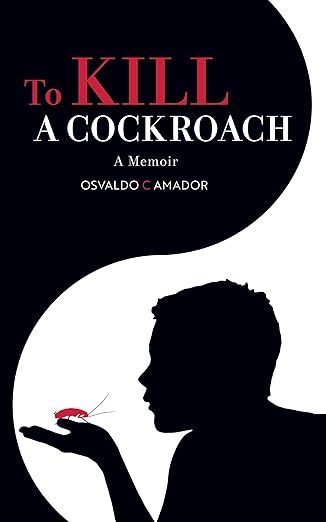
Osvaldo Calixto Amador’s To Kill a Cockroach is a deeply personal and philosophical memoir that weaves together themes of identity, survival, and self-acceptance. Through a series of poetic reflections, autobiographical vignettes, and existential musings, the author recounts his life’s journey—from childhood struggles and societal alienation to moments of revelation and healing. Drawing inspiration from To Kill a Mockingbird and Black Beauty, Amador uses their themes of injustice and compassion as a lens to examine his own existence. The book is less about a linear story and more about peeling back layers of experience to reveal the universal quest for love and understanding.
I enjoyed this book’s lyrical, almost dreamlike writing style. Amador tells his story with emotions and sensory details. One passage that lingers in my mind is his recollection of watching To Kill a Mockingbird and his visceral reaction to Atticus Finch’s words about killing blue jays but sparing mockingbirds. His discomfort with this moral distinction spirals into a philosophical dilemma: why kill at all? This moment becomes a metaphor for larger existential questions—who decides what has value and what is deemed expendable? The writing here is raw, reflective, and unapologetically introspective, which makes it both beautiful and unsettling.
Another powerful aspect of the book is its exploration of love and self-acceptance. Amador, a gay man who struggled with societal rejection and personal trauma, writes with haunting honesty about the pain of being an outsider. His connection with animals, particularly the birds and dogs he cares for, becomes a form of redemption. One of the most touching moments is his bond with his dog, Toto, and the grief that follows her passing. His emotions are palpable, and the way he describes love—whether for a pet, a friend, or the self—is heartbreakingly sincere.
The book is brimming with poetic depth. The stream-of-consciousness style can be overwhelming at times. That said, this isn’t a book that’s meant to be read for plot. It’s an experience—sometimes chaotic, sometimes deeply thoughtful. The disjointed nature might frustrate some readers, but for those who appreciate literature that leans more on introspection than structure, it offers a rewarding and emotional ride.
To Kill a Cockroach is for readers who enjoy poetic memoirs, philosophical musings, and emotionally raw storytelling. If you’ve ever wrestled with identity, love, or belonging, this book will speak to you.
Pages: 280 | ASIN : B0CTJ6LJRY
Transformational Betterment

I’m Not Dead…Yet shares your journey through the adversities of cancer, addiction, mental health struggles, and time in prison, ultimately leading to self-acceptance and redemption. Why was this an important book for you to write?
For several years, I’ve had a few different thoughts and ideas for writing manuscripts, but the one story I felt would be the most difficult to write was the story of my own life. I say this because, it is obviously so close to my heart and so raw, that a potential rejection of the book itself could easily be construed as a rejection of myself. For this and several other reasons, I had to make sure that I was removed from these past atrocities of my life just enough to ensure I wasn’t re-traumatizing myself and could bear the possibility of being judged. I made the “mistake” of trying to write this memoir a few years ago. I would start writing and soon after start weeping so badly I couldn’t see the page in front of me. This happened a few times, and I refused to relent because in my heart I knew there would be other people out there who could benefit from my story. This is the main reason why I knew it had to be written. Also, I wanted to get my “toughest” story out into the universe so that I could begin the process of writing those other stories I’ve wanted to complete. In my mind, I thought, if I can make it through this memoir, I can make it through anything else I decide to write.
I appreciated the candid nature with which you told your story. What was the hardest thing for you to write about?
I wish I could whittle it down to just one thing. The truth is, there are a few different scenarios that were very difficult to write about. It’s one thing to generally talk about hard times with people I know during a conversation. It’s much harder to reveal the details of these situations to complete strangers, most of whom I will never meet. This is especially so for the most intimate details that have scarred my soul, yet make me the person I am today. In the end, the potential reward of helping others have hope weighed more heavily than the potential for embarrassment and rejection.
What were some ideas that were important for you to share in this book?
Outside of the litany of situations that contributed to a deleterious cycle in my life, I felt it was just as important to imbue some humor when appropriate — at least my hope is that it comes across as appropriate. Also, I felt it was important to show that transformational betterment is possible, no matter how bad things get for us. It’s not easy to change for the better, but it is absolutely necessary and crucial for us to survive and flourish. I also feel very strongly that people need as many chances as possible to make things “right” for themselves and those they may have hurt. For this reason, I don’t believe in “second” chances; but instead, take every failure as an opportunity to become closer to the change I want and need, no matter how many times it takes to make the change stick in the long term.
What do you hope is one thing readers take away from your story?
Everyone has a past. Everyone must endure hardships, no matter who we are. While I’ve likely experienced more difficulties than the typical person out there, that doesn’t make me better than anyone else. No matter what we must endure in life, there is always hope and opportunity for betterment, and I am living proof of that. Bottom line: don’t ever give up on yourself.
Author Links: GoodReads | X(Twitter) | Facebook | Website | Amazon
This memoir is an open invitation into Joshua’s life, a connection point for those facing or who have faced similar hardships, and a beacon of hope and empowerment for anyone in need of strength. Through his experiences, Joshua illustrates that despite monumental setbacks, it is possible to emerge stronger and more resilient.
Readers will glean valuable insights into the power of resilience, the lessons inherent in adversity, and the importance of self-acceptance free from judgment. Joshua’s narrative offers coping mechanisms for societal taboos, strategies for managing mental and physical health challenges, and a profound message about the significance of self-acceptance.
As a cisgender, gay Puerto Rican survivor, Joshua’s perspective is both unique and universal. His memoir speaks to individuals seeking inspiration, understanding of the human condition, and guidance on navigating various challenges, especially those within the LGBTQ+ community.
The writing style is marked by maturity, heartfelt introspection, vivid descriptions, and relatable anecdotes that evoke a spectrum of emotions. Themes of survival, empowerment, overcoming adversity, self-discovery, and the journey toward self-love and acceptance resonate throughout the narrative.
While there are other books covering similar topics, “I’m Not Dead…Yet” distinguishes itself as a deeply personal account that resonates on a profound level. Joshua’s memoir is not just a story; it is a testament to the resilience of the human spirit and the transformative power of embracing one’s truth.
For readers seeking solace, inspiration, and the courage to confront their own challenges head-on, “I’m Not Dead…Yet” is a must-read. Joshua’s memoir is poised to make a meaningful contribution to the literary landscape, offering hope and healing to all who turn its pages.
Outside Voices: A Memoir of the Berkeley Revolution

Outside Voices by Joan Gelfand is a candid memoir that delves into the author’s experiences during the vibrant and transformative 1970s in Berkeley. Gelfand navigates through her adventures, marked by involvement in the feminist movement, an exploration of her sexuality, and the pursuit of her artistic passions. Her narrative oscillates between her carefree social life, including encounters with drugs and diverse romantic relationships, and her deeper, more introspective struggles with family loss and societal expectations.
Gelfand’s prose is notably rich and evocative, breathing life into her experiences with a flair that goes beyond mere storytelling. Her ability to convey complex emotions and thoughts is particularly striking, as she uses vivid imagery and poetic language to share insights, such as her introspection about mortality and fear. The memoir gracefully weaves through various phases of Gelfand’s life, from an idyllic childhood marked by a close relationship with her father to the sorrow and adjustment following his passing. The narrative is peppered with captivating anecdotes, encompassing fleeting romances, detailed observations of her surroundings, and reflections on art, history, and culture. This blend offers readers a textured and multi-faceted view of the era and Gelfand’s journey within it. While the book’s multifaceted nature can occasionally feel overwhelming due to the multitude of themes and elements introduced, this complexity also contributes to the richness of Gelfand’s story. Her evolution from a youthful, rebellious spirit to a more grounded individual seeking stability and self-identity is a compelling aspect of the memoir.
Outside Voices is particularly resonant for readers interested in historical contexts, especially those pertaining to women’s roles and societal changes in the 20th century. Gelfand’s story is a blend of the personal and the historical, offering both an intimate look at her life and a broader reflection on a dynamic period of social change. The memoir stands out for its vivid storytelling, historical insights, and its exploration of personal growth and identity in times of societal upheaval.
Pages: 256 | ASIN : B0BYXGCQXZ
The Core of Innocence

Imperatrix: The Empress Who Was Once a Slave follows a young slave thrust into the decadence and danger of Nero’s court as he strives to survive and find his place in a world ruled by an insane emperor. What inspired you to choose Nero’s Rome as the backdrop for Imperatrix?
Growing up in England in the 1960s, I was one of the last generation to receive a “classical education” in which subjects like Latin were compulsory. So, the history of imperial Rome was almost as familiar to me as real life — and, compared to real life in a British boarding school, almost as weird, too. I was surrounded by fictional depictions of Nero’s Rome, in literature and film, yet they generally are as much about the mores and culture of the time they were written in as about Rome. I wanted to try to achieve the real alienness of this pagan culture while at the same time showing that these people are clearly recognizable to us in the modern world. One important difference is the entire societal treatment of sexuality and sexual morality which was in many ways more permissive than today, but also more restrictive in other ways. Relationships today are seen as two-way; in Roman times “maleness” was about doing, and “femaleness” was about being done to. Everything has to be interpreted in that light. “Of course” one could do anything to a slave, no matter what their gender or age — they were owned. Yet a modern, two-way gay relationship where the partners were equal might have been seen as eccentric, somehow un-Roman. When this one pillar of modern moral discourse — the idea of relationships being equal, going both ways — is altered, every little thing in society is seen through a different lens. That was the challenge — not to allow a modern sensibility to be interjected into characters’ attitudes — while at the same time showing characters that modern people share common humanity with.
Sporus is a complex and captivating character. Can you share the process of developing his personality and how you balanced his vulnerability and resilience throughout the story?
So many bad things happened to Sporus that he could not have survived without a great deal of native wit and real intelligence. To survive in Nero’s court was tough even for people who had been raised and bred for it. To develop his character, I imagined him talking to me, letting me share his innermost, often contradictory thoughts. It’s the core of innocence that people around Sporus love — the thing they themselves do not possess. But that innocence is constantly besieged by the realities of his world. I think that making this a first-person narrative makes you constantly strive to understand the realities of that world. It’s an imaginative exercise in chanelling if you will.
How did you approach crafting Nero’s character, and what were the challenges in depicting his divine madness and capricious nature?
Of course, we know a lot more about Nero than we do about Sporus. This means not only that it’s easier to create a character people would recognize as Nero, but also harder to bring out qualities that might be concealed behind the very well-known persona. Nero was not raised to be an Emperor, so on some level, he must have been able to understand how ordinary people felt. The evil madman image is to some extent anti-Julio-Claudian propaganda — followed by Christian propaganda. He was, almost to the end, rather popular, but the mob was fickle.
Can you give us any insights into what we can expect in the next installment of this enthralling trilogy?
In a way, the big events are all in the third part, a large part of which is set during a single year in which four emperors came to the throne, and Sporus’s fortunes ping pong rapidly. Nymphidius “took” Sporus for a while but his bid to become emperor did not work out. Otho, like Nero, married Sporus (and of course both were Poppaea’s ex-husbands.). The first part of Book III, the Grecian tour, is also an immense spectacle. So I hope the third volume will be suitably climactic.
I didn’t mean to do this in three volumes. It’s just that at my age, I worry about not finishing big fat books, so breaking them up is a way that least parts of them reach the audience. At about 180,000 – 200,000 words the three volumes together are a pretty fat work, but they are continuous, so it may also be necessary to do an omnibus edition.
Author Links: GoodReads | Amazon
Imperatrix, the second volume of the tale, takes us into the heart of the Imperial palace with all its intrigue, depravity, and splendor.


