Blog Archives
Love is a Lifetime Commitment

In And It Only Took 100 Years…, you share the trials of your youth, your career in show business, and your enduring love story that has defied all odds. What made you decide to share your story with readers?
Seventeen years ago, our friend Joan Rivers gave a dinner party at her house near ours in Connecticut to celebrate New Year’s. She insisted that we go around the table and each person had to say what they were thankful for. She began by saying she was thankful that her daughter and grandchild were well and happy; a guest from England, who owned a huge farm, was thankful for a splendid harvest; a young man said he was thankful for a puppy he had been given for Christmas. Then it came to me, and I said, “I am thankful that Norman and I have been together for 50 years.” Although we lived openly together, I had never alluded to how long our relationship had lasted in such a public way, and there was a moment of shock and then congratulations. Afterward, the boy who’d talked about the dog came over to me. “I’ve been with the man who is my husband for fifteen years, but you two are an amazing example of what I hope we can become. You really have changed my life.” On the way home, I reminded Norman of the articles we had been reading about young gays committing suicide because they felt there was no future in being gay. “If we are an example, maybe we have the responsibility to tell people how wonderful our life can be….” We wrote a book called “Double Life” about our relationship that is still read today. And recently, I decided to tell my story from age 15 to 100 to show how life has changed for me, from World War II to the present day, as well as for the world I lived in. I hope people suffering from doubts about long-lasting love can take heart from my story and know that it is possible.
You write about figures like Bette Davis, Helen Hayes, and Barbra Streisand without losing your own narrative center. How did you balance telling your story without being overshadowed by theirs?
From the time I was a young actor, I was involved with celebrities in some way. I acted with Maurice Evans, who was a huge star in his time. So was Katherine Cornell when I was in her company of “Antony and Cleopatra”. They were part of my life as I worked with them eight times a week. Of course, they were stars and not my buddies, and they were my bosses, but still, they were part of my everyday life. Helen Hayes became a friend when I wrote “The Snoop Sisters” for television. She and Katharine Hepburn were down-to-earth people with decided tastes and enormous talent. Streisand, I watched grow from a plain young girl to a huge screen star. I worked with young actors like Charleston Heston and Tony Randall before they became stars, and when I turned to casting, actors like Dustin Hoffman or Al Pacino, I came into contact with them before they were stars. My book is not about their lives unless they affect mine in some way. I was in on the beginning of Streisand’s life, but it was part of my development, not only hers. Helen Hayes sent for me from Hollywood, and it affected my life more than hers. My book is my story, and certainly Marlon Brando played a role, but as a supporting player in my story of leaving the New School and taking a small part in the War. But finally, I wrote about what I know – my own life, not the star’s, unless it affected me in some important way.
Your relationship with Norman feels like the emotional anchor of the book. What did you learn about love that you couldn’t have understood earlier in life?
I learned that love is a lifetime commitment. It becomes your family, your friends, your mornings, your evenings, your health, and your sickness. Norman and I married when the law allowed us to, but many years after we had been together. We didn’t need the emotional security, but we did it mainly to join the gay movement into the mainstream. But as I heard the word “commitment” from the woman who married us, I began to cry. I think the realization was dawning on me that she was talking about LIFE, not just being together for passion, attractiveness, fun, and games. This was for life, swearing under the stars and the heavens, but also forever, eternity. That had not been part of the thoughts in my head when I first saw Norman, but they were now what I knew was the truth.
If you could speak to that young boy looking through shop windows, what would you tell him?
I would tell my young self to have courage, be brave, and not be with people who put you down, even if they are your own family. Follow your dream, but remember that sometimes fate will help you along the way. You have to work your ass off all the time – it is never easy. And if you ever get to the point where what you have worked so hard for is not going to work out for you, don’t be afraid to stop and try something else. It’s better than being always disappointed or chasing a will-o’-the-wisp. Never forget that life is love as well as work. Most importantly, God, whoever that is, is there to help you. You are not alone.
Author Links: Instagram | Facebook | X | Website
Yet the real story unfolds far from the lights of Broadway or Hollywood. It’s found in his six-decades-long partnership with artist Norman Sunshine, a love story that endured secrecy, prejudice, and time itself. Together they created a shared life filled with beauty, humor, and devotion, proving that the most extraordinary thing of all is the quiet miracle of lasting love.
Only about 0.03% of Americans ever reach 100, and fewer still arrive there with such grace, insight, and gratitude. Reflective, wise, and deeply human, AND IT ONLY TOOK 100 YEARS… is a celebration of work, love, and the mysterious force that binds them-the hard-won truth that, in the end, a full life is its own masterpiece.
And It Only Took 100 Years…


And It Only Took 100 Years… is, on its face, a show business memoir, but it’s really the story of a life slowly claimed from fear, class anxiety, secrecy, ambition, and time itself. Alan Shayne begins with a lonely, yearning boy in Falmouth, watching the world through shop windows and trying to understand his own desire, then carries us through acting, television, Broadway, casting, production, Hollywood power corridors, and finally into the long, durable companionship of his life with Norman. The book moves from furtive early encounters and humiliations to rooms full of stars, from the sting of his grandmother telling him his nose is too big to the strange dignity of growing old enough to look back and say, with some hard-earned calm, that work and love were the real architecture of his life.
What I admired most is how unvarnished Shayne is about loneliness. That early material has a bruised, searching quality I found very affecting. The scenes with Dudley, Lenny, Roger, and the antique dealer Dave Garland aren’t presented as neat awakenings or tidy milestones. They’re confusing, charged, half-understood, and often sad. That felt true. So did the social texture around them, the bad meals, the grandmother’s cluttered shop, the humiliating hunger to be seen, the way a beautiful room or a handsome stranger can seem to promise an entire future.
Later, when the memoir opens into theater and Hollywood, the book never loses that earlier ache, and I think that’s why the celebrity material lands. The stars are there, yes, but they don’t swallow the man telling the story. Even when he’s writing about Bette Davis, Helen Hayes, Barbra Streisand, or the mechanics of Warner Brothers, the deeper subject remains the same: what it costs to make a self, and what it costs even more to keep one.
I also found myself responding to the book’s ideas, which are wiser and less glib than the title might lead you to expect. Shayne is not peddling a “life lessons at 100” pose. In fact, one of the book’s strengths is its resistance to easy wisdom. He keeps circling back to effort, luck, erotic secrecy, professional endurance, and the odd mystery of survival. I liked that he can describe casting Cicely Tyson, watching blacklisted actors slip back into work almost by accident, or helping shape television careers, and still end up talking not about triumph in some grandiose sense, but about responsibility, taste, loyalty, and stamina. His prose isn’t always polished in a high literary way, but it is vivid, direct, and alive with remembered detail. When it works best, it has the crispness of someone who spent a lifetime noticing entrances, voices, rooms, and timing. There are stretches where the pace becomes brisk and episodic, especially once career anecdotes begin to stack up, but even then I felt the pulse of a real consciousness behind it, amused, wounded, vain, observant, generous, and finally very tender.
What stayed with me wasn’t any single famous name, though there are plenty, but the through-line from the frightened boy who sensed “some mystery” in the world to the old man who can finally name the cornerstones as work, love, and the mystery that carries them. I found that moving and unexpectedly grounding. I’d recommend And It Only Took 100 Years to readers who like memoirs with both cultural history and emotional candor, especially anyone interested in queer lives across the twentieth century, old Hollywood, television, and the slow making of a shared life.
Pages: 328 | ASIN : B0GCVCMSWC

Our Lives Mattered

In Stateless in Paradise, you share your family history, personal struggles, and your fight for recognition. Why was this an important book for you to write?
Stateless in Paradise was important for me to write because for most of my life, my existence was defined by paperwork I didn’t have, borders I couldn’t cross freely, and decisions made about me without my voice. When you are stateless, your story is often reduced to a case number, a detention file, or a legal problem. Writing this book was my way of reclaiming my humanity.
I wanted to document my family history and personal struggles, not out of self-pity, but out of responsibility. Statelessness is usually invisible. Millions live it, yet very few stories are told from the inside—from the fear of detention, the humiliation of deportation, the loneliness of exile, and the quiet resilience it takes just to survive. By telling my story, I wanted to put a human face on a condition that is too often discussed only in legal or political terms.
The book was also a way to honor the people who shaped and saved me: my mother, who raised me with dignity despite displacement; the strangers who showed compassion when governments did not; and the few mentors and loved ones who believed in me when the system erased me. Their presence in the book is my way of saying that survival is never a solo act.
Finally, Stateless in Paradise was an act of resistance. Writing it was my fight for recognition—not just for myself, but for others who live in legal limbo. I wanted to leave a record that says: we were here, our lives mattered, and our stories deserve to be heard.
I appreciate the candid nature with which you share your experiences. What was the most difficult thing for you to share?
The most difficult thing for me to share was not a single event, but the emotional truth behind them—the shame, fear, and sense of invisibility that came with being stateless.
It was hardest to write about the moments when I felt completely powerless: sitting in detention knowing my fate depended on signatures and stamps, being deported without dignity, or living in exile in American Samoa, where time felt suspended, and my life reduced to waiting. Those experiences stripped me not only of freedom, but of identity. Admitting how deeply that broke me—how close I came at times to losing hope—was far more painful than describing the physical circumstances.
Equally difficult was exposing the quiet loneliness. Statelessness isolates you in ways that are hard to explain: you cannot plan a future, you hesitate to form attachments, and you learn to survive emotionally by numbing yourself. Writing about that emotional survival mechanism meant confronting parts of myself I had long buried just to keep going.
I also struggled with writing about my family, especially my mother. Her strength, sacrifice, and the weight of what she endured as a refugee still carry deep emotional gravity for me. Putting that on the page meant reopening wounds that never fully healed.
But I chose to include these truths because anything less would have been dishonest. If the book was going to matter, it had to reflect not only what happened to me, but what it did to me. And in sharing that vulnerability, I hoped readers might better understand the real human cost of statelessness—not as an abstract issue, but as a lived reality.
What is one piece of advice someone gave you that changed your life?
What stayed with me—and ultimately became my guiding principle—was very simple advice: stand for yourself. Fight for yourself, because in the end, no one else is going to do it for you. When you are stateless, you learn very quickly that you are on your own. Sympathy is rare, and systems don’t protect people without status.
There was also a sentence someone once said— I don’t even remember who—that became my personal motto: try to take everything from this life, whether it’s good or bad, because one day you’ll turn around and realize the game is over. That thought struck me deeply. It forced me to stay awake, to stay present, even in the worst conditions.
That mindset carried me through six months in a detention center in Houston, through one year and five months of exile in American Samoa, and through nearly twenty years of being stateless in the United States. When everything is taken from you—your documents, your freedom, your future—the only thing left is your will to keep going.
So the advice I lived by was not romantic or comforting. It was survival advice: fight, don’t give up, and keep moving forward, even when you’re exhausted, even when the system is against you. Because stopping means disappearing—and I refused to disappear.
What is one thing you hope your readers take away from Stateless in Paradise?
If there is one thing I hope readers take away from Stateless in Paradise, it is this: a person’s worth is not defined by their legal status.
I want readers to understand that behind every label—stateless, undocumented, refugee, detainee—there is a full human being with dreams, love, intelligence, and dignity. Statelessness is not a failure of character; it is a failure of systems. And yet, even inside those broken systems, people continue to endure, resist, and find meaning.
I also hope readers walk away with a sense of responsibility. Not guilt, but awareness. Awareness that freedom, mobility, and belonging are privileges many take for granted—and that these can be taken away overnight. When readers recognize that, compassion stops being abstract and becomes personal.
Finally, I want the book to leave people with courage. If someone who was erased by borders, detained, deported, and exiled could keep fighting and keep moving forward, then maybe readers facing their own battles—visible or invisible—will feel less alone. If the book does that, then telling this story was worth it.
Author Links: GoodReads | X (Twitter) | Facebook | Website | Instagram | Amazon
Stateless in Paradise is the deeply human journey of a man living between borders. From the South Pacific to West Africa, from Eastern Europe to the United States, Mikhail’s life is shaped by movement, uncertainty, and the constant negotiations required of someone without a recognized nation.
Forced into detentions, threatened with deportations, and stranded for months in American Samoa, he confronts the global systems that decide who belongs — and who does not. Yet this memoir is also filled with connection: the kindness of strangers, the discovery of chosen family, the beauty of cultures encountered, and the love story that becomes his safe harbor.
Stateless in Paradise: A Stranded Soul’s Fight for Freedom

Stateless in Paradise tells the true story of Mikael Okuns, whose ordinary holiday trip turns into a year and a half of involuntary exile in American Samoa. The book moves from his childhood in Soviet Azerbaijan through his awakening identity, his escape from collapsing political structures, and his eventual entanglement in the American immigration system. It settles into a gripping account of what it means to have no legal country at all, no embassy to rely on, and no way home. The memoir blends family history, personal struggle, and a long fight for recognition. It becomes a record of survival and resilience inside a system that rarely sees the individual behind the paperwork.
When I first started reading, I expected a straightforward immigration story. Instead, I found something raw and relatable. Okuns writes with a kind of steady honesty that caught me off guard. He describes Soviet childhood scenes in warm detail, like the tiny library in the woods where he borrowed books or the crowded apartment where seven people shared two bedrooms. He also shares unsettling moments, like the political pressure he faced after writing to Margaret Thatcher as a schoolboy or the tightening fear that grew as war pushed his family from their home. His voice feels calm on the page, yet the emotion underneath builds quietly. I felt myself leaning in as he described life in exile in American Samoa, clinging to McDonald’s Wi-Fi to contact anyone who might help. The writing is simple and clear, and that simplicity gives his pain and confusion even more weight.
Okuns refuses to flatten his life into a neat arc. He shows messy parts of himself. He talks about desire, fear, and identity with a sort of brave directness. He brings forward the parts of coming-of-age that many memoirs rush past, and he does it without apology. I appreciated that vulnerability. It gave the whole book a pulse. Some chapters feel almost like small confession rooms. Others feel like travel logs written by someone who never meant to travel this far. And there were stretches where I sat with a tight feeling in my chest, especially when he describes what it is like to be truly stateless, to watch the world decide whether you belong anywhere at all. It is rare to read a memoir that mixes political reality with such personal tenderness, but this one does it.
Stateless in Paradise would be a strong fit for readers who want more than a travel story or a political drama, because it offers a deeply personal look at what it means to lose your place in the world and fight to find it again. It is especially good for people who enjoy memoirs rooted in resilience, LGBTQ+ identity, immigration challenges, and the complicated mix of family, culture, and selfhood. I would also recommend it to anyone who wants to understand statelessness on a human level rather than a legal one, since Okuns brings that reality to life with clarity and heart.
Pages: 470 | ASIN : B0FDYGFHS7
One Perfect Daughter: He Was The Perfect Son. Until She Wasn’t
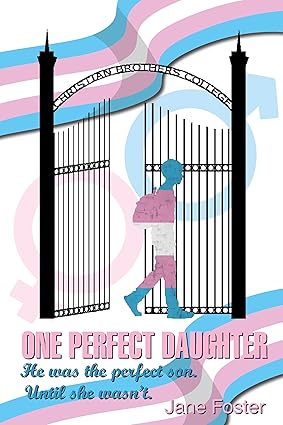

One Perfect Daughter is a raw, intimate memoir chronicling Jane Foster’s journey through parenthood, heartbreak, and ultimately transformation, as her “perfect” son Julian becomes Jules, her daughter. What starts as a tale of maternal pride in a brilliant, sweet, high-achieving child, twists into a deeply personal struggle with change, identity, and acceptance. The book charts Jane’s emotional turbulence as she tries to reconcile the child she thought she knew with the one they were becoming and herself with the mother she now had to be.
Reading this book, I often felt like I was sitting across from Jane as she told her story over coffee, unfiltered, messy, and sometimes uncomfortable. What stood out to me most was Foster’s unwavering honesty. When Jules first reveals she is a girl, Jane’s reaction is devastating: “I want to die,” she writes in a passage that is deeply painful to read but profoundly important. That level of raw vulnerability is uncommon. Foster resists the urge to present her experience in a tidy, resolved narrative. Instead, she exposes every fracture, every contradiction. Even when her words are difficult to read, even when her responses made me uncomfortable, they felt undeniably authentic.
The writing swings wildly between rage, sarcasm, humor, despair, and love, and while that might sound chaotic, it mirrors the emotional rollercoaster she’s riding. One moment she’s joking about calling autism “the tism,” the next she’s sobbing on the kitchen floor while her son, now daughter, is breaking down upstairs. Some parts were so raw they made me tear up, like when Jules says, “I think I need professional help.” Other times, I laughed out loud, like her reaction to the “gluten intolerance” revelation. She is not always gentle in her reflections and at times, her words are harsh, even cutting. Yet she remains unapologetically authentic throughout, and that authenticity gives her story its power.
The way she wrote about her daughter River, who has autism, also resonated with me. Jane is fiercely protective but often overwhelmed. Her love comes with frustration, exhaustion, and even resentment, which, again, makes her story feel all the more authentic. And then there’s Sally, the girlfriend turned scapegoat. Jane blames her for just about everything, and while it’s obvious this relationship triggered deep changes in Jules, I couldn’t help but feel Jane was reaching for control in the only place she thought she still had it. Her bitterness is loud, but beneath it, there’s fear. Fear of losing her child. Fear of not being enough. It’s messy, complicated love, and it’s painfully human.
By the end, I didn’t feel like Jane had wrapped things up or found closure, because life doesn’t work that way. What she offers instead is vulnerability. If you’re a parent, especially one grappling with identity shifts, mental health challenges, or just trying to love your kids through the chaos, this book might just gut you, but in a good way. One Perfect Daughter isn’t for the faint of heart, and it’s not always easy to like the narrator.
Pages: 191 | ASIN : B0DFBMF7LS

One Perfect Daughter: He Was The Perfect Son. Until She Wasn’t

One Perfect Daughter, by Jane Foster, is a raw, candid, and emotionally turbulent memoir by Jane Foster, chronicling her journey as a mother grappling with her child’s gender transition and mental health crisis. The narrative opens with pride and joy as Jane watches her high-achieving son, Julian, graduate. That moment quickly spirals into turmoil as Julian comes out as transgender, becoming Jules. What follows is a painful and intimate account of confusion, grief, love, and resistance as Jane struggles to reconcile her expectations with her daughter’s evolving identity, all while navigating the complex terrain of mental illness, family dynamics, and societal change.
This book hit me like a freight train. I felt gutted, enraged, helpless—sometimes all on the same page. Jane’s writing is so open that it borders on raw nerve. She holds absolutely nothing back, which can be both powerful and uncomfortable. There were times I wanted to scream at her, times I wept with her, and times I just sat in stunned silence. Her pain is real. So is her love. But her reactions—her denial, her blame-shifting, her open contempt for her daughter’s partner—were at times hard to digest. And yet, I kept turning the pages because underneath it all was a mother who was simply lost in a world she didn’t recognize anymore, trying her best to understand a child she no longer knew.
The book doesn’t flinch from portraying Jane in an unflattering light. She’s honest, sometimes shockingly so. Her anger can be vicious. Her judgment–brutal. But that’s what makes this story feel so relatable. Jane is not a polished narrator—she’s confused, contradictory, heartbroken, and often wrong. And that’s what makes her voice linger. There are moments of humor and deep tenderness, too, especially in her memories of Jules as a child. But this is not a comfortable read. It’s messy and often painful, but it’s real.
I would recommend One Perfect Daughter to anyone trying to understand the emotional fallout of identity shifts within families, especially those dealing with transgender issues, mental health, or just the loss of what they imagined their future would look like. This book is not a guide. It’s not politically correct. But it is an unfiltered look at a mother’s love, fear, and grief. If you’re looking for honesty—ugly, complicated, vulnerable honesty—this book will stay with you long after the final page.
Pages: 191 | ASIN : B0DFBMF7LS
Colloquialism and Exoticism

Damnatio Memoriae is the final, emotionally raw, and beautifully written chapter of the Nero and Sporus saga. How do you feel now that you have completed Sporus’s story, and were you able to achieve everything you wanted with the characters in the novel?
This is really one long novel, but now that I’ve reached an advanced age, I always worry about being able to finish things so I decide to do it as a trilogy so that even if I were to pass away, that would still be some parts of the book out as separate books. Because of this, I’ve lived with the characters for a very long time. One thing though is that we do know how the story ends, and we’ve always known it because it’s one of the few things that the historical record actually tells us. One problem with releasing the story in smaller chunks has been people getting the last chunk and complaining bitterly about the protagonist’s fate. Unfortunately, it’s one of the few things I couldn’t change without violating the whole idea of a historical novel.
What goals did you set for yourself as a writer in this book?
My largest aim was to truly inhabit the world of the first century and completely eschew any kind of moral or philosophical biases I might have as an inhabitant of our modern era. This is very difficult because so many things that were taken for granted are now shocking, and something that taken for granted today would’ve shocked the Romans. For example, the idea of people actually being equal would have been astonishing. Sex and violence, so much a cause of societal uproar today, were not only not that profound, they were even mostly entertainment. One reader complained bitterly that I didn’t use archaic language. But the Romans didn’t know they were ancient! I had to strike a balance between colloquialism and exoticism. Everyone doing what I do has to find their own happy medium. I hope that that which is exotic or horrific about the Roman world comes across most successfully when it is treated as completely commonplace.
What experience in your life has had the most significant impact on your writing?
Bringing up a child who was completely comfortable as either gender and had no qualms about switching whenever he felt like it. This book is actually dedicated to him. I use the word him because the language I usually speak to him in is Thai, a language in which most pronouns are gender-neutral. People who grow up in this culture simply don’t suffer any agony about pronouns.
What is the next book that you are working on, and when can your fans expect it to be out?
I’m returning to science fiction and fantasy at the moment with a new post-holocaust trilogy set among wolves. I’m also doing a sixth novel in a series that I’ve been working on for over 40 years. It was very popular in the 80s and I’m reviving it. It’s one of those vast Galactic Empire kind of things.
Author Links: GoodReads | Facebook | Website | Amazon
Captured by pirates as a boy and trafficked to the slave markets of Rome, Sporus rose from a poet’s plaything to one of the most powerful figures in the Roman Empire.
The historian Suetonius tells us that the Emperor Nero emasculated and married his slave Sporus, the spitting image of murdered Empress Poppaea. But history has more tidbits about Sporus, who went from “puer delicatus” to Empress to one Emperor and concubine to another, and ended up being sentenced to play the Earth-Goddess in the arena.
The decadence of Imperial Rome comes to life in S.P. Somtow’s Literary Titan Award-winning trilogy about one of ancient history’s wildest characters.
Late Bloomer Baby Boomer: A Collection of Humorous Essays About Being Gay Back in the Day and Finally Finding My Way

This book is a wild, hilarious, deeply personal ride through the life of Steve Milliken—a gay man navigating everything from awkward high school moments to dating disasters in the digital age. Told through a series of essays, it captures a lifetime of mishaps, misunderstandings, and moments of clarity. It’s part coming-of-age memoir, part comedic stand-up routine, with a little social commentary sprinkled in for good measure. Milliken reflects on growing up queer, teaching in tough school environments, dealing with Grindr misadventures, and just trying to survive the everyday weirdness of life.
Steve Milliken is funny. Like, really funny. Not in that overly polished, trying-too-hard kind of way. He’s more like that friend who always tells the best stories at brunch and makes you spit out your mimosa. For example, in the chapter “Plenty of Fish, but Still a Fish Out of Water,” he dives into the absurd world of online dating and it’s painfully relatable. His description of being a middle-aged man on apps meant for twenty-somethings had me actually laughing out loud. He doesn’t hold back, but it never feels mean or bitter—it’s just honest in that “oh God, I’ve been there” kind of way.
But it’s not all laughs. Milliken slips in some emotional moments too, like in “A Father’s Love” or “Changing Closets,” where he explores the heavy stuff—family, acceptance, the fear of being vulnerable, the late-bloomer shame. It’s raw and beautiful and made me tear up more than once. I think what I loved most is how he swings between funny and heartfelt without warning, like you’ll be chuckling at a joke about Ambien-induced chaos one second, and the next you’re hit with a truth about aging, loneliness, or identity that just… lands. Hard.
Honestly, I think Late Bloomer Baby Boomer is perfect for anyone who’s ever felt like they missed the boat on figuring life out “on time.” Queer folks, obviously, will see themselves in a lot of these pages, but really, anyone who’s navigated awkwardness, insecurity, or change will find something here. If you like David Sedaris or Augusten Burroughs but wish they talked more about disco, bad hookups, and classroom chaos, this one’s for you. I finished it feeling like I’d spent a few hours with an old friend who wasn’t afraid to get messy and vulnerable—and I loved every minute of it.
Pages: 228 | ASIN : B0BQ6HC4P2


